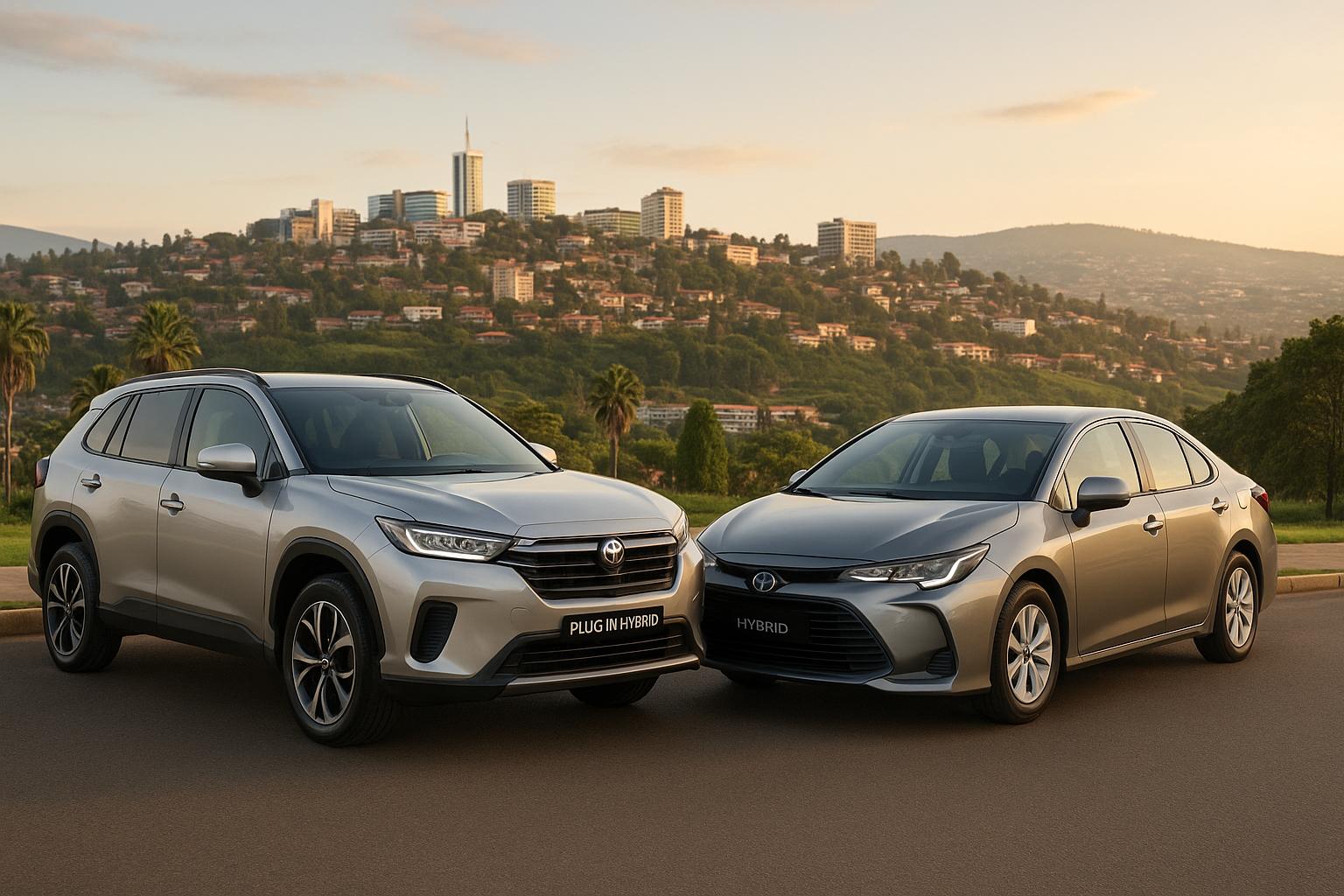
When choosing between Plug-In Hybrid Electric Vehicles (PHEVs) and Hybrid Electric Vehicles (HEVs) in Rwanda, the decision largely depends on your driving habits and access to charging infrastructure. Here’s the short answer:
- PHEVs: Great for urban drivers with short commutes and access to charging stations. They can run on electric power for short distances, reducing gasoline use significantly. However, the limited availability of public charging stations outside Kigali can be a challenge.
- HEVs: Ideal for drivers in rural areas or those traveling longer distances. They don’t require external charging and rely on regenerative braking to stay efficient, making them more practical given Rwanda’s current infrastructure.
Quick Comparison
| Feature | PHEVs | HEVs |
|---|---|---|
| Charging Method | External plug-in required | Self-charging (regenerative braking) |
| Electric Range | Longer for short trips | Limited to brief bursts |
| Fuel Savings | Higher with regular charging | Consistent savings |
| Infrastructure Needs | Charging stations required | No external charging needed |
| Best For | Urban commutes with charging access | Long trips and rural areas |
For now, HEVs are the more practical choice for most drivers in Rwanda due to their self-charging capability and the limited charging network. However, as infrastructure improves, PHEVs may become a better option for city dwellers seeking lower emissions and fuel costs.
Hybrid VS Plug In Hybrid? Which Is REALLY Better & Saves More Money?
How Plug-In Hybrid and Hybrid Vehicles Work
Let’s dive into how these two types of vehicles operate and why their differences matter, especially for Rwanda’s unique conditions.
By understanding how each works, Rwandan drivers can make informed choices that align with their needs. This knowledge also sets the stage for comparing costs and daily usage.
What Are Plug-In Hybrid Electric Vehicles (PHEVs)?
PHEVs combine two power sources: an electric motor and a gasoline engine. What makes them stand out is their ability to recharge from an external power source, thanks to a larger battery pack that enables extended electric-only driving.
When plugged into an outlet, the battery charges up. For shorter trips, like navigating Kigali’s streets or other urban areas, PHEVs can run solely on electric power without burning any gasoline. But once the battery runs low, the gasoline engine kicks in automatically.
This dual system is great for both city commutes and longer road trips. However, in Rwanda, where charging stations are still limited, taking full advantage of the electric-only mode can be challenging.
What Are Hybrid Electric Vehicles (HEVs)?
HEVs also feature an electric motor paired with a gasoline engine, but they work differently. They don’t need to be plugged in because they generate electricity internally. This is done through regenerative braking and power from the engine itself.
Many HEVs come with an "EV mode", which allows for short bursts of electric-only driving – ideal for places like parking lots or quiet neighborhoods. Plus, the electric motor makes these vehicles run more smoothly and quietly.
Main Differences Between PHEVs and HEVs
The key differences between these two types of vehicles lie in how they’re powered and their electric driving capabilities – factors that are especially relevant given Rwanda’s current infrastructure.
The biggest distinction is in charging. PHEVs need external power sources like outlets or charging stations, while HEVs generate their own electricity. This makes HEVs a better fit for Rwanda, where public charging options are still scarce.
When it comes to electric driving, PHEVs offer a longer range for daily trips, while HEVs are limited to very short distances in electric-only mode. Both, however, deliver fuel savings of 20–50% compared to traditional gasoline cars.
PHEVs can potentially eliminate gasoline use on short commutes if charged regularly. Meanwhile, HEVs always rely on gasoline, but they use it more efficiently by combining gas and electric power.
| Feature | PHEVs | HEVs |
|---|---|---|
| Charging Method | Requires external plug-in | Self-charging via regenerative braking |
| Electric Range | Extended electric-only driving | Limited electric-only operation |
| Infrastructure Needs | Depends on public charging stations | No external charging required |
| Fuel Savings | 20–50% fuel reduction | 20–50% fuel reduction |
Given the current lack of charging stations in Rwanda, HEVs are often the more practical choice. Their ability to self-charge without external infrastructure makes them a convenient option for many drivers, even though PHEVs offer the advantage of extended electric driving when charging is accessible. For now, practicality often outweighs the benefits of longer electric range, especially when considering fuel costs and daily usage patterns.
Fuel Costs and Savings in Rwanda
As Rwanda moves toward greener transportation policies, understanding costs is essential for drivers. Factors like fuel prices, electricity rates, and policy changes play a big role in determining the overall expenses of owning plug-in hybrid electric vehicles (PHEVs) and hybrid electric vehicles (HEVs). These costs, along with potential savings, help shape the long-term affordability of these vehicles.
Fuel Use and Money Saved
Hybrid vehicles are well-known for their fuel efficiency, helping drivers save money by cutting down on gasoline consumption in Rwanda. Although local data is somewhat limited, HEVs consistently reduce fuel usage without requiring an external charging source. On the other hand, PHEVs can deliver even greater savings when driven primarily in electric mode. However, these savings depend heavily on having access to a reliable charging network, which is still developing in the country.
Electricity Prices and Charging Costs
Electricity prices are another key factor for PHEV owners in Rwanda. Charging typically happens at standard residential electricity rates. While the government is taking steps to encourage electric mobility, such as exploring reduced electricity rates for EV charging, these programs are still in the planning stages. Until such measures are implemented, charging costs remain an important consideration for PHEV users.
Total Ownership Costs
Reduced import taxes have made owning hybrid and electric vehicles more affordable. Starting in 2025, both PHEVs and HEVs benefit from lower import duties compared to conventional gasoline-powered cars. This policy change has already made an impact, with hybrid car imports skyrocketing – growing 237 times between 2021 and 2024.
| Cost Factor | PHEVs | HEVs |
|---|---|---|
| Import Taxes | Lower rates (effective 2025) | Lower rates (effective 2025) |
| Fuel Savings | Higher potential savings with electric use | Consistent savings through fuel efficiency |
| Electricity Costs | Additional charging expenses | No charging costs |
For the latest updates on tax benefits and import duties, drivers are encouraged to check with the Rwanda Revenue Authority (RRA).
Charging Stations and Daily Use in Rwanda
Owning a plug-in hybrid electric vehicle (PHEV) in Rwanda comes with its challenges, particularly due to the limited availability of charging stations. Outside of Kigali and other major urban areas, the infrastructure remains sparse, making it a key consideration for potential PHEV owners.
Charging Stations Available Now
Currently, most public charging stations are concentrated in Kigali. Beyond the capital, PHEV owners often have to rely on home charging setups. This reliance can be inconvenient for those without access to home charging solutions. On the other hand, hybrid electric vehicles (HEVs) have a distinct advantage – they recharge themselves through regenerative braking. This eliminates the need for external charging stations, as long as gasoline is available, making HEVs a more practical option in areas with scarce charging infrastructure.
Daily Use: PHEVs vs. HEVs
The limited charging network significantly impacts the daily practicality of PHEVs. For urban drivers with easy access to charging points, PHEVs can handle short commutes using only electric power. However, when charging options are unavailable, drivers must depend on the gasoline engine, which diminishes the electric benefits of the vehicle.
HEVs, on the other hand, offer consistent performance regardless of charging infrastructure. Their ability to recharge automatically makes them a reliable option for drivers traveling into regions where public charging stations are few and far between. This reliability highlights their practicality in a country like Rwanda, where the charging network is still developing. As the infrastructure evolves, the choice of vehicle technology will remain closely tied to accessibility and convenience.
sbb-itb-7bc66b5
Emissions and Rwanda’s Vehicle Policies
Rwanda has made reducing vehicle emissions a key part of its environmental goals, and plug-in hybrid electric vehicles (PHEVs) and hybrid electric vehicles (HEVs) present a cleaner alternative to traditional gasoline-powered cars.
Beyond practical considerations like fuel efficiency, emissions and government policies play a big role in shaping the preferences of Rwandan drivers.
Lower Emissions and Cleaner Air
PHEVs shine in urban settings like Kigali, where they can run entirely on electric power for short distances, producing zero tailpipe emissions during those trips. However, their environmental impact depends on how often they’re charged and the energy source used for electricity. When the electric range is exhausted, the gasoline engine takes over, but overall emissions still remain lower compared to standard gasoline vehicles.
HEVs, on the other hand, offer consistent emission reductions through features like regenerative braking and optimized engine performance. Their adaptability makes them suitable for both city driving and rural roads. This efficiency is especially valuable during Rwanda’s dry season when dust and particulates in the air are more noticeable, contributing to cleaner air quality.
Government Support for Clean Vehicles
The Rwandan government actively promotes eco-friendly vehicles with programs like the Rwanda Green Fund and tax incentives, such as reduced import duties for low-emission cars.
Through initiatives like the National Strategy for Transformation (NST1) and expanded infrastructure projects, Rwanda is pushing for sustainable transportation options to cut its carbon footprint. The long-term Vision 2050 plan underscores the importance of PHEVs and HEVs in lowering greenhouse gas emissions. These policies not only align with environmental priorities but also make it easier for drivers to balance their ecological concerns with everyday practicality.
Best Choice for Different Rwandan Drivers
With Rwanda’s automotive landscape evolving, the decision between Plug-in Hybrid Electric Vehicles (PHEVs) and Hybrid Electric Vehicles (HEVs) often comes down to driving habits, access to infrastructure, and daily needs. Here’s how these options stack up for different driving scenarios in Rwanda.
City Driving and Short Trips
For urban drivers navigating Kigali’s busy streets or residential neighborhoods, PHEVs can be a practical choice. They’re ideal for short, daily commutes, especially if you have access to reliable charging facilities. In city traffic – where stop-and-go driving is common – PHEVs shine by running mostly on electric power and using regenerative braking to recharge the battery. This can significantly reduce gasoline consumption. However, regular charging is essential to fully benefit from a PHEV’s capabilities. For drivers who occasionally take longer trips or lack convenient charging options, HEVs might be a better fit.
Long Trips and Rural Areas
If you frequently travel long distances or live in areas with limited charging options, HEVs offer a more dependable solution. Their self-charging system ensures they’re ready to go without the need for external charging. Whether you’re traveling between Kigali and rural regions or transporting goods to local markets, HEVs provide consistent fuel efficiency. They’re particularly well-suited for families on weekend getaways or anyone balancing both city and rural driving needs.
Available Models in Rwanda
The choices available in Rwanda reflect the country’s infrastructure and economic considerations. Popular HEV models include the Toyota Corolla Cross Hybrid, Toyota RAV4 Hybrid, Honda CR-V Hybrid, Toyota Prius, and Hyundai Tucson Hybrid. On the other hand, PHEV options are still limited, largely due to the higher upfront costs and the developing charging infrastructure in the region. This makes HEVs a more accessible and practical choice for many Rwandan drivers today.
Conclusion: Choosing Right for Rwanda
Deciding between PHEVs and HEVs in Rwanda ultimately depends on your driving habits, budget, and access to charging facilities. Both options benefit from government incentives, making it essential to consider what fits your daily routine and needs.
For most Rwandan drivers, HEVs seem to be the more practical choice at the moment. The surge in hybrid imports – from just 28 vehicles in 2021 to an impressive 3,726 in the first nine months of 2024 – shows a clear shift in the market and highlights the growing preference for more sustainable transportation options.
The market trends and supportive government policies play a significant role in shaping these decisions. Urban drivers with regular commutes and access to charging at home or work might find PHEVs appealing for their fuel efficiency and lower emissions. On the other hand, those traveling long distances, living in rural areas, or lacking reliable access to charging infrastructure may lean toward HEVs, which offer self-charging capabilities and dependable performance.
Adding to this dynamic, the Rwanda Revenue Authority reported a revenue loss of around $10.36 million over the past four years due to tax exemptions, underscoring the government’s commitment to promoting greener transportation.
When choosing, consider factors like your daily mileage, trip lengths, access to charging, and long-term financial plans. Rwanda’s automotive sector is evolving quickly, and selecting the right hybrid technology today not only meets your current needs but also sets you up for a more sustainable future. As infrastructure continues to improve, these considerations will remain essential in navigating future advancements in vehicle technology.
FAQs
What should Rwandan drivers consider when choosing between a Plug-In Hybrid and a Hybrid vehicle?
When choosing between a plug-in hybrid (PHEV) and a traditional hybrid, Rwandan drivers should weigh a few important considerations:
- Fuel efficiency: Traditional hybrids combine a gasoline engine with an electric motor, delivering better fuel economy compared to standard cars. PHEVs take it a step further by running solely on electricity for short trips, which can cut fuel use significantly – provided charging is easily accessible.
- Charging availability: PHEVs need reliable access to charging stations or a steady electricity supply at home to fully utilize their potential. In Rwanda, it’s essential to think about the availability of charging points and the stability of the local power grid.
- Upfront and long-term costs: PHEVs often come with higher purchase prices but could save you money over time if electricity is more affordable than fuel and charging is convenient. Traditional hybrids, meanwhile, tend to be less expensive initially, making them a more budget-conscious option upfront.
The ideal choice depends on your driving patterns, access to charging, and overall budget. Both options support Rwanda’s efforts toward greener transportation solutions.
How does Rwanda’s limited charging infrastructure affect the practicality of owning a Plug-In Hybrid vehicle?
Rwanda’s charging infrastructure is still in its early stages, which can make owning a plug-in hybrid vehicle a bit challenging, especially in areas outside major cities like Kigali. Many regions lack easily accessible charging stations, which means drivers may not always be able to take full advantage of their vehicle’s electric driving features.
That said, the government is actively working to address this. There are plans underway to expand the network of charging stations into rural and suburban areas. In the meantime, plug-in hybrid owners might find themselves relying more on the fuel-powered engine. For now, traditional hybrids could be a more practical choice for areas where charging options remain scarce.
What incentives and policies does the Rwandan government offer to support hybrid vehicle adoption?
The Rwandan government has taken steps to make hybrid and electric vehicles more accessible and appealing to buyers. For hybrid cars, there’s a 25% reduction on import duties, which helps lower their overall price. On the other hand, electric and hybrid vehicles enjoy a 0% import duty rate, making environmentally conscious choices even more affordable.
That said, there’s a recent change to keep in mind: VAT has been reinstated on hybrid vehicles. This move aligns with Rwanda’s broader strategy to encourage the adoption of fully electric vehicles, reinforcing its dedication to cleaner transportation and reducing environmental harm. These policies highlight Rwanda’s push toward a greener future by supporting the shift to energy-efficient vehicles.
Related Blog Posts
- Popular Hybrid and Electric Cars in Rwanda
- How EV Imports Affect Used Car Sales in Rwanda
- Electric vs Petrol cars in Rwanda
- Car Price Trends in Rwanda: Petrol vs Hybrid vs Electric