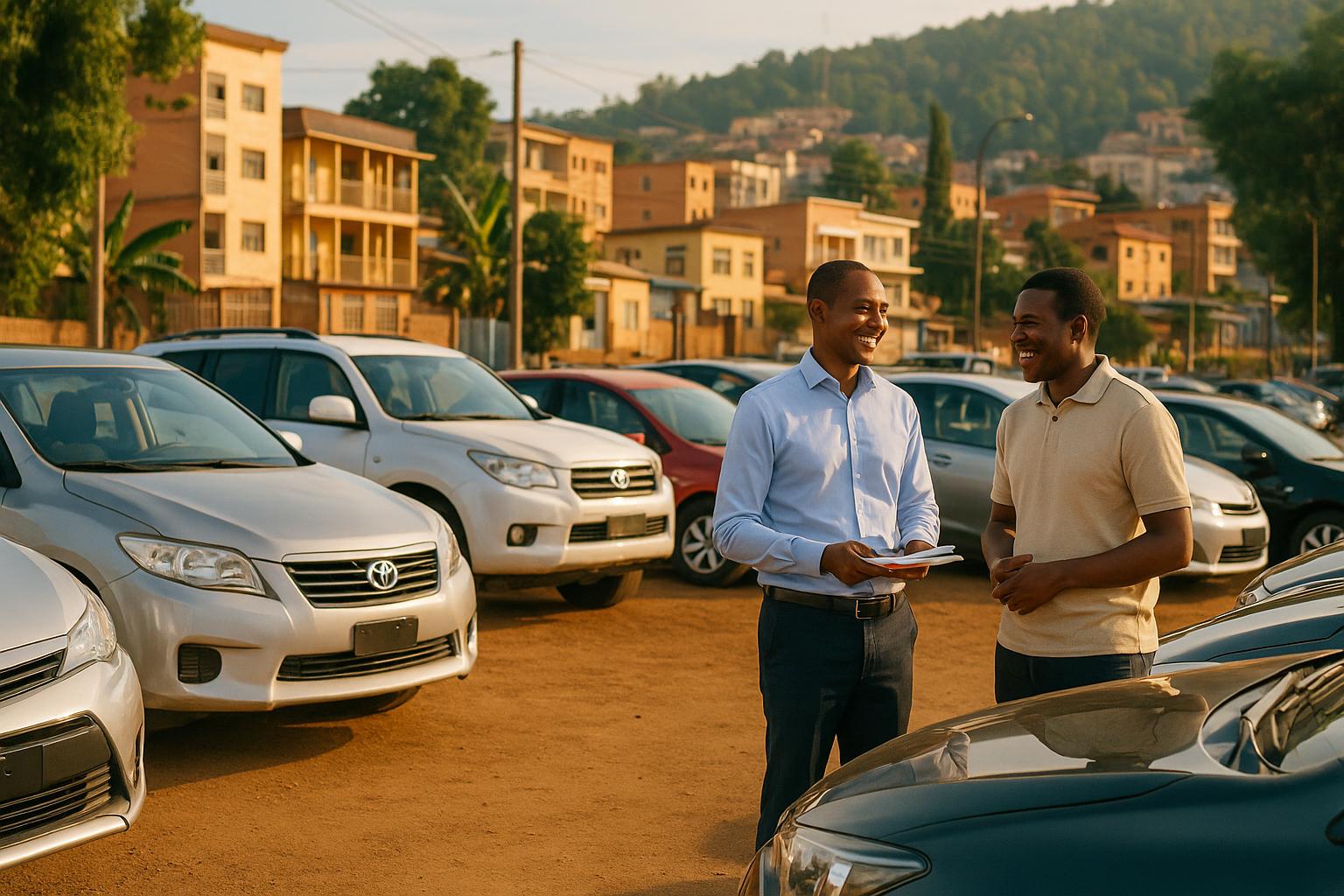
When buying a used car in Rwanda, understanding prices, inspection methods, and legal steps is crucial. Here’s a quick guide:
- Market Prices: Costs vary by vehicle type, age, mileage, and condition. Hatchbacks are budget-friendly, sedans are mid-range, while SUVs and luxury cars cost more. Import taxes and fuel type also affect prices.
- Inspection: Check for dents, rust, leaks, and test-drive for performance. Review service records and ensure all documents are accurate.
- Negotiation: Research similar listings and use inspection findings to justify your offer. Stay professional and set a clear budget.
- Sellers: Choose trusted dealerships or verified online platforms. Avoid incomplete listings or suspicious offers.
- Legal Steps: Complete registration with Rwanda Revenue Authority (RRA), secure insurance, and verify ownership documents.
Current Used Car Prices in Rwanda
Rwanda’s used car market features a wide variety of vehicles, catering to different budgets and needs. Knowing the typical price ranges and what influences them can make car shopping a lot easier. Here’s a breakdown of prices by vehicle type and the key factors shaping those costs.
Price Ranges by Vehicle Type
For budget-conscious buyers or urban commuters, entry-level hatchbacks from brands like Toyota and Suzuki are often the most affordable choice.
Sedans occupy the mid-price range, with popular models such as the Toyota Corolla, Honda Civic, and Nissan Sylphy being favored for their dependability and performance. European sedans, on the other hand, tend to cost more, reflecting their advanced features and brand reputation.
SUVs and pickup trucks are typically found in higher price brackets. Compact SUVs may be relatively affordable, but larger and more rugged models often demand a premium due to their durability and ability to handle Rwanda’s varied terrain. These vehicles also tend to have strong resale values.
Luxury cars, including brands like BMW, Audi, and Mercedes-Benz, are available but come with higher price tags. While they offer prestige and advanced features, they also bring higher maintenance costs and limited availability of spare parts.
Fuel type can also influence a car’s price. Diesel-powered vehicles, for instance, may cost more because of their perceived fuel efficiency and durability.
What Affects Used Car Prices
Several factors contribute to the wide range of prices in Rwanda’s used car market:
- Vehicle Age and Mileage: Newer models and cars with lower mileage generally command higher prices. However, older vehicles in good condition can still offer solid value.
- Import Tariffs and Taxes: Fees tied to a car’s age, engine size, and compliance with environmental standards significantly impact pricing.
- Brand Popularity and Reliability: Cars from brands known for longevity – especially many Japanese models – tend to hold their value better over time.
- Transmission Type: Automatic transmissions are often preferred in urban areas, leading to slightly higher prices compared to manual versions.
- Condition and Maintenance History: A well-maintained car with a full service history can fetch a higher price, while visible wear or missing records might lower it.
- Market Demand: Economic conditions, fuel price fluctuations, and seasonal trends can all influence demand and, by extension, pricing.
How to Check a Used Car’s Condition
Inspecting a used car thoroughly can save you from unexpected repairs and ensure you’re getting your money’s worth. It’s important to evaluate both the car’s appearance and its mechanical health.
Physical Inspection Steps
Start with the exterior. Walk around the car and look for any dents, scratches, or signs of previous accident repairs. Pay close attention to rust, especially around the wheel wells and door edges, as it can spread and weaken the car’s structure. Don’t forget to check the mirrors, windshield, and wipers for cracks or damage.
Next, move to the interior. Examine the seats and dashboard for wear and tear, and ensure the seatbelts retract properly and are free of fraying. Check the airbags to confirm they are intact and verify that no dashboard warning lights remain on. Test all electronic features, such as the windows, locks, air conditioning, and radio, to make sure they’re functioning correctly.
Under the hood, inspect the engine for leaks, corrosion, or loose connections. Look for oil or coolant stains, which could point to bigger problems. Check the fluid levels for engine oil, brake fluid, coolant, and transmission fluid, and note any unusual colors or textures that might signal neglect. Examine the battery terminals for corrosion and inspect belts and hoses for cracks or excessive wear.
Don’t skip the framework and undercarriage. Check the tires for even wear and sufficient tread depth. Press down on each corner of the car to test the suspension; it should rebound smoothly, indicating the shocks are in good shape. Inspect the undercarriage, frame, axles, and exhaust system for rust or damage.
Finally, take the car for a test drive. Before starting, confirm that all dashboard lights briefly illuminate and then turn off after the engine starts. Listen for any strange sounds, such as knocking or grinding, and ensure the engine starts smoothly. During the drive, observe the engine’s performance – it should run quietly at idle and respond quickly when you accelerate. Automatic transmissions should shift seamlessly, while manual transmissions should have a firm clutch and crisp gear changes. Test the brakes to ensure they stop the car in a straight line and listen for any grinding noises. Evaluate the steering by making turns at different speeds to confirm it’s responsive and smooth. If you’re unsure about anything, consider hiring a mechanic for a professional inspection.
Once you’ve assessed the car’s physical condition, it’s time to verify its history through proper documentation.
Checking Service Records and Documents
After inspecting the car, review its paperwork to confirm its history. Ask the seller for the original logbook and verify that all details are accurate. The name on the logbook should match the seller’s identification exactly. Request maintenance records to see if the car has been regularly serviced. While missing records don’t always mean trouble, they do increase uncertainty about the car’s upkeep.
Make sure the seller provides a valid roadworthiness certificate to confirm the car meets safety standards. Be cautious of any documents that look altered or fake. Additionally, check the car’s legal status through official records to ensure it’s not stolen or tied to unpaid debts. Before finalizing the purchase, insist on a written sales agreement. This document should include the purchase price, vehicle identification number (VIN), and details of both parties. It provides legal proof of the transaction and protects your interests.
How to Negotiate the Best Price
Once you’ve thoroughly inspected the car and verified its history, the next step is honing your negotiation skills to strike a fair deal. Negotiating is a common practice in Rwanda’s used car market, so it’s important to approach it thoughtfully. A well-prepared counteroffer can help you secure a good price while maintaining a positive rapport with the seller.
Research Comparable Listings
Before diving into negotiations, take time to research the average market price for the car you’re interested in. Look for listings of the same make, model, and year, and pay attention to factors like mileage, condition, and extra features. Details such as low mileage, recent servicing, or replaced parts can influence the price, so be sure to review maintenance records as well.
This research gives you a solid foundation for your offer. For instance, if similar vehicles are priced between $8,000 and $10,000 but the seller is asking significantly more, you can use this information to justify a lower counteroffer. Having data on your side makes your argument more persuasive.
Once you’re confident about the market value, you can shift your focus to the timing and approach of your negotiation.
When and How to Negotiate
Your research will guide your negotiation strategy, but timing is just as important. In Rwanda, there’s no specific season for negotiating used cars – it’s simply part of the process. The best time to negotiate is after you’ve inspected the car and identified any issues, such as worn-out brake pads, a cracked windshield, or signs of oil leaks. These repair costs can serve as leverage to request a price reduction. Missing or incomplete documentation also strengthens your case for a lower offer.
Set a clear budget that accounts for the car’s purchase price, registration, insurance, and potential repairs. If the seller’s price exceeds your budget, be ready to walk away. This shows you’re a serious buyer with firm limits.
When making your offer, start with a lower counteroffer to leave room for negotiation. Back up your proposal using the market research you’ve done and any issues uncovered during your inspection. For example, if similar cars are listed at $9,000, offering $8,500 is a reasonable starting point.
Throughout the negotiation, keep your tone professional and respectful. Avoid aggressive tactics or dismissive remarks, as these can derail the process. If the seller counters your offer, listen carefully to their reasoning. They might mention recent repairs or upgrades that could justify a higher price – evaluate this information thoughtfully.
Transparency is crucial, so request essential documents like the logbook, technical inspection certificate, and service records. A seller who provides complete and clear documentation signals good faith, which can make the negotiation smoother and more trustworthy.
sbb-itb-7bc66b5
Finding Trustworthy Sellers and Platforms
Once you’ve got your negotiation strategies down, the next step is identifying reliable sellers and platforms. In Rwanda’s automotive market, you’ll find a mix of private sellers, established dealerships, and online platforms. Taking the time to thoroughly vet your seller is crucial – it can help you avoid scams, hidden mechanical issues, or incomplete documentation.
How to Evaluate Dealerships
Physical dealerships often provide a more structured buying process than private sellers, but their level of professionalism can vary widely. Start by checking customer reviews and ratings on credible platforms. If you notice recurring complaints about hidden fees, undisclosed damage, or poor after-sale support, those are clear red flags.
A reputable dealership will always be upfront about vehicle documentation. They should be able to provide complete and verifiable paperwork, such as inspection reports and valid insurance documents. If a dealer hesitates to show these during your first visit, it’s a strong signal to walk away.
Another way to gauge a dealership’s reliability is by looking at the warranties and after-sale services they offer. Quality dealerships typically include some form of warranty, even if limited, and provide maintenance support for a set period after the purchase. Be sure to ask what the warranty covers, how long it lasts, and what repair services are available if problems arise shortly after you buy.
It’s also worth checking the dealership’s physical location and business registration. Established dealers usually have verifiable addresses in Kigali or other major cities and can readily provide their business registration documents. If a dealer seems reluctant to share this information, they may not be trustworthy.
Pay attention to how the dealership presents its listings. Professional dealers often provide well-photographed vehicles, detailed descriptions, and consistent contact information. Dealers with a solid history of detailed, professional listings are generally more reliable than those with sparse or inconsistent information.
While dealerships are a popular choice, online platforms have also made it easier to compare vehicles and evaluate seller credibility.
Trusted Online Marketplaces
Online platforms have revolutionized Rwanda’s used car market, making it simpler to research vehicles, compare prices, and communicate directly with sellers. When choosing an online marketplace, prioritize platforms that feature verified listings with detailed specifications like mileage, fuel type, and transmission type.
Good platforms often include verification tools to help you assess seller reliability. Look for sites that track posting histories and transaction records, as these can give you a sense of the seller’s credibility. Listings with recent posting dates are particularly useful for finding fresh opportunities to negotiate. Most listings will also include the seller’s phone number or WhatsApp contact – don’t hesitate to ask about the car’s service history, documentation, and the reason for selling.
Stay vigilant for potential red flags when browsing online. Avoid sellers who request payment before you’ve had a chance to inspect the vehicle. Be cautious of listings that lack essential details, such as engine condition or transmission type, or those with minimal contact information. High-quality photos, thorough descriptions, and consistent contact details are usually signs of a trustworthy seller.
Lastly, comparing multiple listings for similar vehicles can be one of the best ways to gauge fair market prices. This approach helps you spot overpriced options and identify deals that might be too good to be true.
Financing and Legal Requirements
Once you’ve agreed on a fair price for the car, it’s time to finalize payment and ownership. This involves reviewing financing options and completing the registration process to ensure everything is in order. These steps follow your vehicle inspection and negotiation.
Financing Options for Used Cars
After settling on the price, think about how you’ll pay for the car. Many buyers in Rwanda choose financing options instead of paying the full amount upfront. The main options include bank loans, leasing, and installment plans offered by car dealers.
Bank loans are a popular choice. Many banks and microfinance institutions in Rwanda offer loans tailored for buying used cars. These typically require proof of income and collateral. For example, banks like I&M Bank Rwanda offer such loans. Be sure to compare interest rates, repayment terms, and required documents, which usually include proof of income and a valuation report.
The valuation report is crucial – it confirms the car’s market value, providing security for both you and the lender.
Leasing is another option, available through some car dealerships. With leasing, you essentially rent the car for a set period, with the option to buy it later. Some dealers also offer installment payment plans, allowing you to pay monthly without involving a bank. Always review the terms, including interest rates, before committing to any financing agreement.
When planning your budget, remember the purchase price is just the beginning. You’ll also need to account for registration fees, mandatory insurance, and possible repairs or maintenance soon after purchase. Make sure your financing choice covers both the car’s cost and these additional expenses.
Registration and Legal Steps
After making the payment, your next focus should be on legal compliance and registration. In Rwanda, all vehicles must be registered with the Rwanda Revenue Authority (RRA). If your paperwork is complete, this process usually takes 2–5 working days.
Before paying, ensure the seller provides all necessary documents. Double-check that the logbook matches the seller’s ID to avoid any issues.
For registration, you’ll need to prepare your own documents, including proof of purchase (an invoice or a written sales agreement) and your national ID. If you’re buying on behalf of a business, company registration documents are required. A written sales agreement is essential as official proof of the transaction.
In Rwanda, car insurance is mandatory and must be secured before driving the vehicle or completing registration. Rates vary depending on factors like the car’s age, value, and your driving record, so it’s worth shopping around for quotes. You’ll need your insurance documents when visiting the RRA.
Registration fees depend on the car’s type and value. If you’re importing a car, additional import duties and taxes apply, based on the vehicle’s age, engine size, and value. For locally purchased cars, don’t forget to budget for annual costs like insurance and road maintenance fees.
The ownership transfer is handled by the Rwanda Revenue Authority. To complete this, bring your sales agreement, proof of payment, ID, and insurance papers to the RRA office. Staff will guide you through paying the necessary taxes and fees. Once everything is processed, the vehicle will officially be registered in your name.
Finally, make sure the car has a valid roadworthiness certificate. If not, schedule an inspection before completing the registration process.
Conclusion
Buying a used car in Rwanda takes careful planning, but with the right steps, you can make a smart choice. Start by researching market prices and comparing similar listings. This helps you set a realistic budget and spot fair deals, as prices can vary depending on the car’s make, age, mileage, and condition.
A thorough inspection of the car is a must. Bring in a trusted mechanic to check for hidden mechanical problems that could lead to costly repairs later. Look into the car’s service records and maintenance history – cars with a documented history of upkeep are often more dependable. Also, double-check that all ownership documents are legitimate, and make sure the logbook matches the seller’s ID to avoid any legal troubles.
Choosing trustworthy sellers and platforms is another key step. Reputable dealers and established online marketplaces provide more transparency about a car’s history and pricing, making your search safer and more efficient. These precautions not only protect you from scams but also set you up for smoother negotiations.
When it’s time to discuss pricing, having done your homework gives you confidence. Always insist on a written sales agreement to officially document the transaction. Take your time – compare options, ask detailed questions, and don’t hesitate to walk away from deals that seem suspiciously good. Finally, ensure your financing is in order and complete all legal registrations to secure your investment.
FAQs
What should I look for when inspecting a used car in Rwanda?
When looking at a used car in Rwanda, it’s important to pay attention to a few critical details to ensure you’re making a sound investment. Begin by reviewing the make and model, year of manufacture, and mileage. These elements play a big role in determining the car’s overall value and condition.
Next, take a close look at the car’s physical and mechanical state. Check the engine, brakes, and suspension for any signs of wear or potential issues. Examine the interior to see if it’s clean and all features are in working order. On the exterior, watch out for dents, scratches, or rust that could indicate past damage or neglect.
Finally, don’t skip the test drive. This is your chance to see how the car handles on the road and to listen for any odd sounds that might signal trouble. If anything seems off or if you’re uncertain about the car’s condition, it’s a good idea to bring in a reliable mechanic for a detailed inspection before sealing the deal.
How do taxes and import duties impact the cost of used cars in Rwanda?
Taxes and import duties have a big impact on the final price of used cars in Rwanda. For starters, buyers face key charges like a 25% customs duty, 18% VAT, and a 5% withholding tax. On top of that, there’s a consumption tax, which varies depending on the car’s engine size and type.
The car’s age also comes into play. Older vehicles often qualify for depreciation rates, which can reduce the taxable value. Don’t forget about registration fees either – these are usually linked to the engine size of the car. When you add up all these costs, they can significantly affect the total price. That’s why it’s essential to include them in your budget when planning to buy a used car.
What should I do to legally transfer ownership when buying a used car in Rwanda?
To transfer ownership of a used car in Rwanda, the first step is to confirm that the seller’s ID matches the information on the car’s logbook. Double-check that all ownership documents are genuine and current. It’s also essential to sign a written sales agreement that clearly details the terms of the transaction.
Once the purchase is finalized, head to the relevant local authority to officially register the car under your name. This process is critical to prevent any potential disputes or legal complications down the road. Be sure to keep copies of all documents for your personal records.
Related Blog Posts
- 5 Tips for Negotiating Car Prices in Rwanda
- Car prices in Kigali this year
- Where to buy a certified used car in Rwanda
- Why Second-Hand Cars Dominate Rwanda’s Market