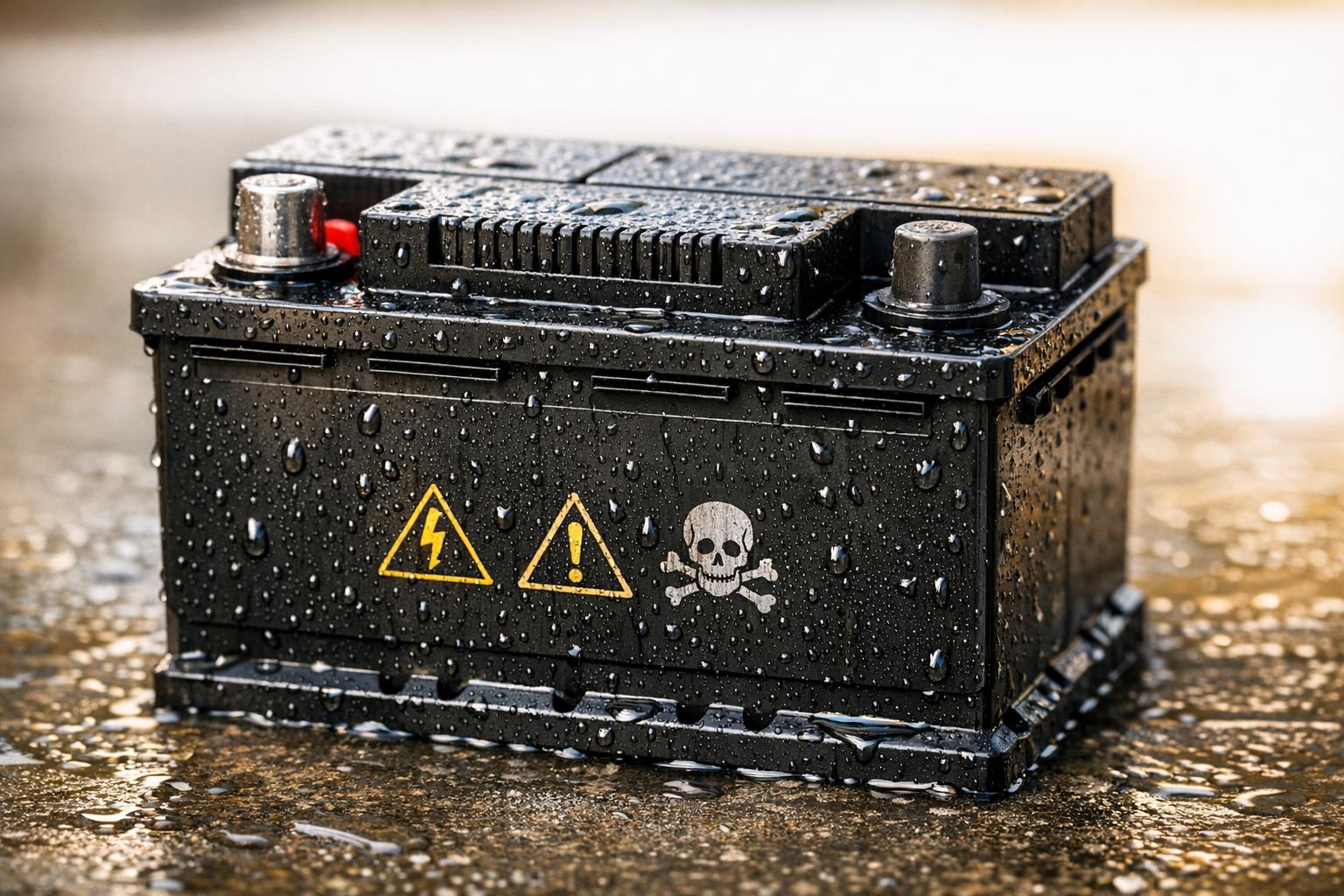
If your car battery gets wet, it can lead to electrical issues, corrosion, and even safety hazards like chemical burns or fires. Here’s what you need to know:
- Immediate Actions:
- Never start the car if the battery or engine bay is wet – it can cause severe damage.
- Disconnect the battery, starting with the negative terminal, to avoid short circuits.
- Safety First:
- Wear gloves, goggles, and long sleeves to protect against acid and electrical risks.
- Work in a well-ventilated area to prevent hydrogen gas buildup.
- Drying the Battery:
- Remove the battery carefully and inspect it for damage like cracks or leaks.
- Use a microfiber cloth to wipe it down and let it air dry completely.
- Testing and Reinstallation:
- Check for physical damage and test the voltage (healthy range: 12.4V–12.7V).
- If damaged or showing low voltage, replace the battery instead of reinstalling it.
- Prevention Tips:
- Clean terminals regularly, apply protective grease, and park in dry areas.
- For long-term storage, disconnect the battery and use a trickle charger.
Key Reminder: A wet battery can be dangerous. If you’re unsure about its condition, consult a professional. Taking quick and proper steps can save you from costly repairs.

5 Steps to Safely Handle a Wet Car Battery
Safety Precautions to Take First
Identifying the Hazards
A wet car battery brings several risks that need immediate attention. One major concern is short circuits – if a conductive object bridges the terminals, it can result in burns, fires, or even explosions. The Canadian Centre for Occupational Health and Safety highlights another danger:
Hydrogen gas is produced during normal battery operation. This easily ignitable gas can escape through the battery vents and may form an explosive mixture in the atmosphere around the battery in poorly ventilated areas.
Additionally, the sulfuric acid in the battery becomes even more hazardous when wet, increasing the chance of chemical burns and serious eye injuries. If you notice a "rotten egg" smell, it could mean the battery is leaking gas – often a sign of overcharging or internal damage – and it should be checked immediately. While a 12-volt battery is generally considered low-risk, even a small current passing through your body can disrupt cellular functions, cause involuntary muscle contractions, or lead to tissue damage.
Wearing the Right Safety Equipment
Before handling the battery, make sure you’re properly equipped. Always wear splash-proof safety goggles to protect your eyes, along with chemical-resistant gloves and long-sleeved clothing. Trojan Battery emphasizes the importance of protective gear:
Always wear protective clothing, gloves and goggles, when handling batteries, electrolyte, and charging your battery.
If battery acid makes contact with your skin or eyes, immediately flush the area with lukewarm water for at least 30 minutes. Remove any metal jewelry, such as rings or watches, to avoid accidental short circuits. Afterward, rinse your gloves before taking them off and wash your hands thoroughly.
How to Disconnect the Battery
When it’s time to disconnect a wet car battery, work in a well-ventilated area to ensure any hydrogen gas can safely dissipate. Begin by turning off the ignition, removing the key, setting the transmission to Park (or first gear for manual vehicles), and engaging the parking brake. Locate the negative terminal (marked with a minus sign or black color) and the positive terminal (marked with a plus sign or red color).
Always disconnect the negative cable first. This step breaks the ground connection to the car’s chassis, reducing the risk of sparks if your tool touches the frame. Use the correct-sized wrench to loosen the terminal nut – forcing it may damage the posts. Once the negative cable is detached, secure it away from the terminal (wrapping it in a dry rag works well). Then, remove the positive cable.
Renogy provides a critical reminder:
Erroneous disconnection or connection can permanently destroy the battery, blow fuses, impair the computer modules of the car, and severely injure you.
With the battery safely disconnected, you can move on to drying and inspecting it in the next steps.
Steps to Dry a Wet Car Battery
Taking the Battery Out of Your Car
Start by disconnecting the battery cables, then remove any hold-down brackets or bars securing the battery to its tray. Use the appropriate wrench or socket to avoid damaging the fasteners. Before lifting the battery, check the casing for any signs of damage that could indicate acid leakage.
Car batteries are heavy, so lift carefully to avoid injury and prevent any remaining acid from spilling. As Chris Hardesty, Senior Advice Editor at Cox Automotive, advises:
Lift the hood and disconnect the 12-volt battery while wearing dry gloves to prevent electrical shorts and further damage to the car’s complex electrical system.
Place the wet battery on a stable surface away from the vehicle to avoid damaging the car’s paint or components with dripping acid or moisture. With the battery safely removed, you can now move on to drying it to prevent further corrosion.
Drying the Battery Properly
Use a microfiber cloth to wipe down the battery’s exterior, paying extra attention to the areas around the terminals. For hard-to-reach spots, use a hairdryer on a cool setting – avoid high heat, as it can warp the casing or harm internal components.
Once wiped, let the battery air dry in a well-ventilated area until it’s completely dry. Chris Lang from The Home Upgrade highlights the importance of this step:
Moisture is the enemy of batteries.
Make sure every part of the battery, including the compartment, is fully dry before reinstalling it. Once dry, turn your attention to cleaning the terminals for optimal electrical performance.
Cleaning the Battery Terminals
With the battery dry, inspect the terminals for corrosion. Look for white, ashy, or greenish-blue residue. To clean, mix 1 tablespoon of baking soda with 1 cup of water and use an old toothbrush to scrub the terminals and clamps until clean. Bob Lacivita, an ASE-certified technician, explains:
Even minor corrosion between the inside of the battery terminal and the battery post can reduce alternator output and lower available voltage to the starter motor.
After scrubbing, rinse the terminals with clean water and dry them thoroughly with a microfiber cloth. Any leftover moisture could lead to re-corrosion. Once fully dry, apply a thin layer of petroleum jelly or dielectric grease to the outside of the terminals (but never between the post and clamp) to protect against future moisture.
Cleaning Up a Leaking Car Battery Mess!
Checking the Battery After Drying
Once you’ve completed the drying process, it’s time to assess the battery’s condition before putting it back into use. This involves carefully inspecting its physical state and testing its electrical performance.
Looking for Physical Damage
Start by wiping the battery case with a damp cloth to uncover any potential damage. Check for cracks, bulges, or leaks. Swelling, bloating, or warping of the case could point to internal damage caused by freezing or overcharging. According to Kevin Feather from AAA:
A swollen or bloated battery case is a sign of internal damage caused by overcharging or extreme temperatures. This condition can be dangerous, and the battery should be replaced immediately.
Pay close attention to any signs of electrolyte leakage or residue, as these can indicate internal issues. Examine the terminals for corrosion and ensure they are clean and intact. If your battery has an indicator eye, a black or clear reading often signals that it’s completely discharged and possibly damaged. For non-sealed batteries, remove the vent caps to confirm that the electrolyte is still covering the internal lead plates.
Testing the Battery’s Voltage
Allow the battery to rest for 6–24 hours before conducting a voltage test. Set your multimeter to DC voltage (20V range), and connect the red probe to the positive terminal and the black probe to the negative terminal. A fully charged, healthy battery should show a reading between 12.4V and 12.7V. If the reading falls below 12.0V, it usually means the battery is either discharged or failing.
Keep in mind, though, that a voltage test doesn’t provide the full picture. Many auto parts stores offer free load testing services, which assess whether the battery can sustain its voltage under stress. During such a test, the voltage should not drop below 10V. Alternatively, you can run your headlights for 10–15 minutes; if they dim significantly when starting the engine, the battery may be failing. If these tests highlight any issues, avoid reinstalling the battery and move on to further steps.
When You Shouldn’t Reinstall the Battery
Certain conditions make a battery unsafe to reuse. If the case is cracked, leaking, or bulging, it’s time for a replacement. A strong, unpleasant odor suggests a gas leak, which also warrants immediate disposal. Additionally, a battery that has been frozen is no longer safe to use – freezing can permanently damage its internal cells, especially if the battery was fully discharged, as it can freeze at 32°F (0°C).
If the voltage remains low even after charging, or if the built-in indicator eye shows a black or clear reading, do not reinstall the battery. For hybrid or electric vehicles exposed to saltwater, the risk of delayed battery fires makes reinstallation particularly dangerous. When in doubt, consult a professional to test the battery before deciding on its usability.
sbb-itb-7bc66b5
When You Need a New Battery
Warning Signs of a Failing Battery
Even after drying and testing your battery, some signs make it clear that it’s time for a replacement. Physical issues like a bulging or swollen case, cracks, or leaks indicate severe internal damage. These problems not only mean the battery is beyond repair but also pose a fire risk, requiring immediate action.
Performance problems are another red flag. If your engine cranks slowly, your headlights dim when idling, or your dashboard lights flicker, your battery may not be delivering enough power. Hearing a clicking noise when you turn the key? That’s often a sign the battery doesn’t have enough juice to power the starter. Michael Crossen, Lead Technician at Consumer Reports Auto Test Center, emphasizes:
A healthy battery should last between three and five years.
If your battery is nearing or past this age and showing these symptoms, it’s time for a replacement.
Low electrical readings are another clue. A battery that shows less than 12.4V after charging or dies within days is likely suffering from internal damage. Persistent heavy corrosion, even after cleaning, can point to acid leaks or fume emissions. And if you notice a rotten egg smell, that’s a serious warning – it could mean dangerous gas leakage from internal damage or overcharging.
Once you confirm these issues, finding a reliable replacement becomes a top priority.
Where to Buy a Replacement Battery in Rwanda
If you’re in Rwanda and need a new battery, AutoMag.RW is a trusted option for high-quality replacements. They offer batteries for both gasoline and electric vehicles. When choosing a battery, make sure it matches your vehicle’s group size and has the right Cold Cranking Amperage (CCA) rating to ensure dependable starts. For vehicles with start-stop systems or higher electrical needs, Enhanced Flooded Batteries (EFB) or Absorbent Glass Mat (AGM) batteries are often better choices.
If your battery is over 4 years old, the risk of sudden failure increases. Replacing it proactively can save you from unexpected breakdowns.
How to Prevent Water Damage to Your Battery
Protecting Your Battery from Moisture
Once you’ve dealt with any immediate water damage, it’s time to focus on preventing future issues. To keep moisture away from your battery terminals, apply a protective layer. After cleaning, use a thin coat of petroleum jelly, dielectric grease, or a commercial terminal protectant spray on both terminals and cable ends to create a barrier.
Dirt and grime on the battery casing can hold moisture, leading to short circuits. Make it a habit to clean the battery top monthly. Use a damp cloth or a solution of baking soda and water (mix 1/3 cup baking soda with 2/3 cup water) to neutralize any acid residue. Kevin Feather from AAA emphasizes:
Neglecting your car battery can lead to unexpected breakdowns and costly replacements.
Taking these small steps can help you avoid expensive repairs and extend the life of your battery.
Storing Your Vehicle Correctly
Where you park your vehicle matters. Choose a cool, dry spot like a garage or carport to shield your battery from rain and humidity. For long-term storage, aim to keep your vehicle in temperatures between 32°F and 80°F. Extreme heat, for instance, can cut battery life in half with just an 18°F increase above 77°F, while extreme cold can freeze a discharged battery.
If you’re storing a battery separately, place it on a shelf or table to keep it away from ground moisture. For vehicles parked in uninsulated garages during winter, an insulation blanket can help maintain a stable temperature. Planning to store your car for weeks or months? Disconnect the negative cable to prevent electrical drain, and use a battery tender or trickle charger to maintain the charge. Keep in mind, a fully charged battery won’t freeze until temperatures hit -76°F, but a discharged battery can freeze at just 32°F.
These storage practices, combined with regular care, can go a long way in preserving your battery’s health.
Regular Battery Maintenance
Routine checks are key to keeping your battery in good shape. Inspect it every three to six months for signs of bulging, leaks, or corrosion. Make sure the battery is securely fastened with brackets and clamps. Kevin Feather advises:
A loose battery can cause vibrations that lead to internal damage and reduced lifespan. Make sure your battery is securely fastened in its tray.
Tighten the terminal connections to 95-105 in-lb to minimize the risk of moisture getting inside. If you have a non-maintenance-free battery, check the fluid levels monthly and top it off with distilled water, keeping the level about 1/8 inch below the vent well. Lastly, drive your car for at least 20 minutes every two weeks. This gives the alternator enough time to fully recharge the battery.
Conclusion
Taking swift action is crucial when dealing with a wet car battery. Start by disconnecting the battery right away to avoid electrical shorts. And whatever you do, don’t attempt to start a car that’s been submerged – water in the engine’s cylinders can lead to serious damage. As Chris Hardesty, Senior Advice Editor at Kelley Blue Book, aptly states:
Prompt and appropriate action can reduce the impact of your car’s flood damage.
After addressing immediate risks, focus on drying and cleaning. Make sure the battery is completely dry, and clean the terminals using a mixture of baking soda and water. This helps neutralize any battery acid and clears away corrosion. Even if the battery appears fine, have a professional check its voltage before reinstalling it. Internal damage isn’t always visible to the naked eye.
To avoid future issues, prevention is your best bet. Regular inspections and small steps – like applying terminal protectant and parking in dry areas – can go a long way. Keep in mind that a fully charged battery can withstand temperatures as low as -76°F, but a discharged one may freeze at just 32°F. Driving your car for at least 20 minutes every two weeks helps maintain the battery’s charge and readiness.
FAQs
What should I do if I think my car battery is leaking acid?
If you think your car battery might be leaking acid, your first step should be to focus on safety. Stop driving right away and park your vehicle in a well-ventilated spot, away from any open flames or sparks. Avoid using electrical accessories to minimize risks.
Make sure to wear protective gear, such as safety glasses, chemical-resistant gloves, and long sleeves, to shield yourself from the acid. If you notice the leak, carefully contain it using disposable materials like paper towels. Steer clear of using metal tools, as they could create sparks. To neutralize the spill, mix baking soda with water and gently clean the affected area. Once done, dry it thoroughly.
Check the battery for visible signs of damage, like cracks, bulging, or corrosion. If the battery is damaged or the leak continues, replacing it is the safest option. Dispose of any contaminated materials properly by taking them to a hazardous-waste facility. For bigger leaks or if you’re unsure how to handle it, reach out to a professional mechanic or roadside assistance for expert help.
What’s the safest way to check my car battery’s voltage after it gets wet?
First, ensure the battery is completely dry. Use a clean cloth to wipe it down, then let it air-dry thoroughly. Always prioritize safety by wearing gloves and safety glasses to protect yourself from any potential risks. Once the battery is dry, disconnect the negative (-) terminal first, followed by the positive (+) terminal. This order helps prevent accidental short circuits.
Next, grab a multimeter and set it to the 20V DC range. Place the red probe on the positive (+) terminal and the black probe on the negative (-) terminal. Be careful to avoid letting the probes touch each other or any nearby metal. A fully charged and healthy battery should read around 12.6V. If the reading drops below 12.4V, the battery may require recharging or further inspection. Once you’ve completed the test, reconnect the terminals in reverse order – positive (+) first, then negative (-) – and make sure both are securely tightened.
How can I tell if my car battery needs to be replaced after getting wet?
If your car battery has come into contact with water, keep an eye out for warning signs that it might need replacing. Look for corrosion on the terminals, a swollen or misshapen case, visible cracks or leaks, or discolored electrolyte fluid. Other red flags include a sulfur-like rotten-egg smell or powdery residue forming around the battery.
These issues often indicate that the battery’s condition has been compromised. It’s a good idea to have it checked by a professional right away to avoid further damage to your vehicle and to maintain safety.
Related Blog Posts
- How to Keep Your Car Battery Alive in the Wet Season
- Monthly Maintenance Routine Every Car Owner Should Follow
- Top 7 most common car breakdowns in Rwanda (and how to avoid them)
- How to prepare your car for a weekend escape in Rwanda