Navigating Rwanda’s roads can be challenging due to steep terrain, unpredictable weather, and rural conditions. Whether you’re driving in Kigali or venturing into remote areas, preparation is your best defense against emergencies. Here’s what you need to know:
- Emergency Numbers: Save key contacts like 112 (general emergencies), 113 (traffic accidents), and 912 (ambulance).
- Essential Kit: Carry a spare tire, jack, jumper cables, flashlight, fire extinguisher, first aid kit, water, snacks, and a portable phone charger.
- Pre-Drive Checks: Inspect tires, lights, fluids, and brakes; ensure documents like your CARDEX and insurance are up to date.
- Driving Tips: Avoid night driving on rural roads, slow down in rainy seasons, and use offline maps in areas with poor connectivity.
Stay safe by planning ahead, keeping emergency contacts handy, and driving cautiously. Always prioritize safety over speed.
Emergency Kit Items Every Driver Needs
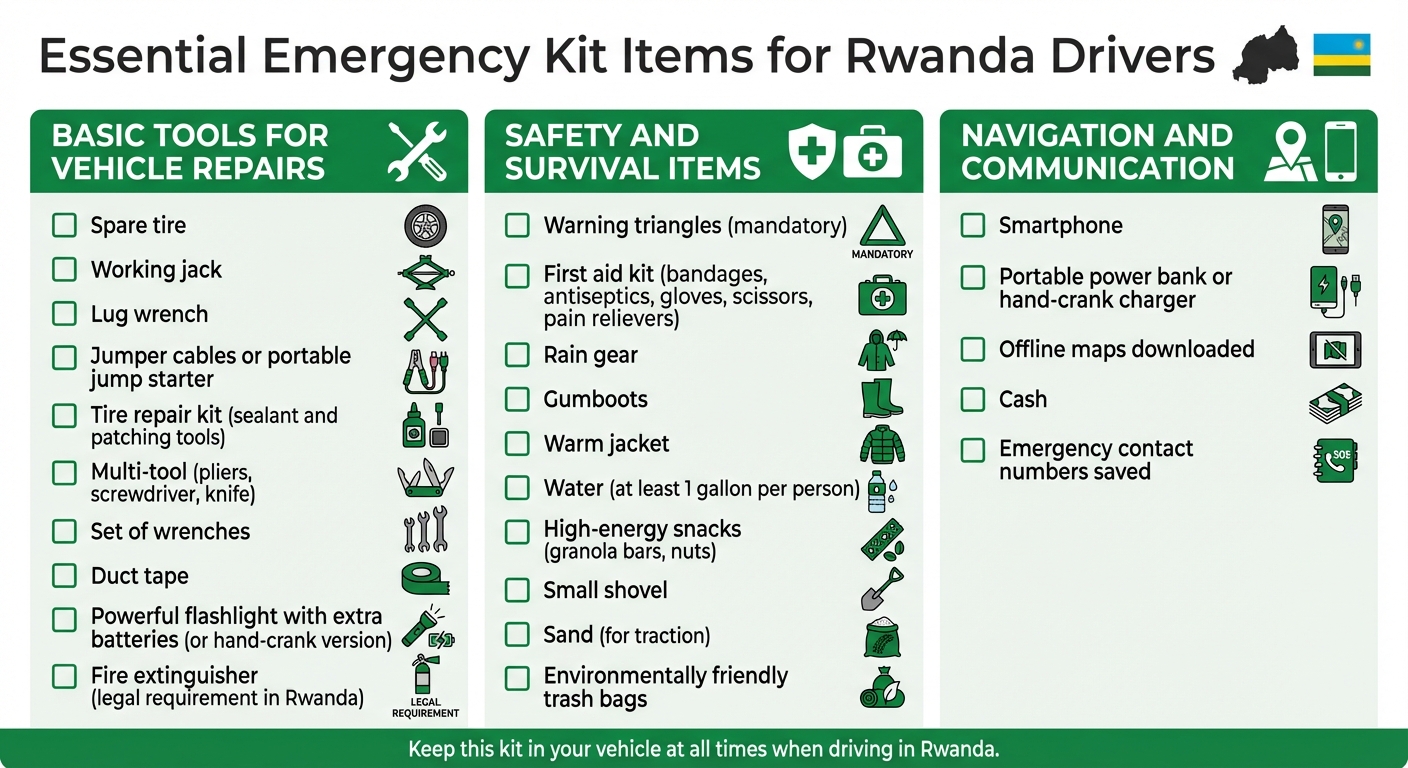
Essential Emergency Kit Items for Rwanda Drivers
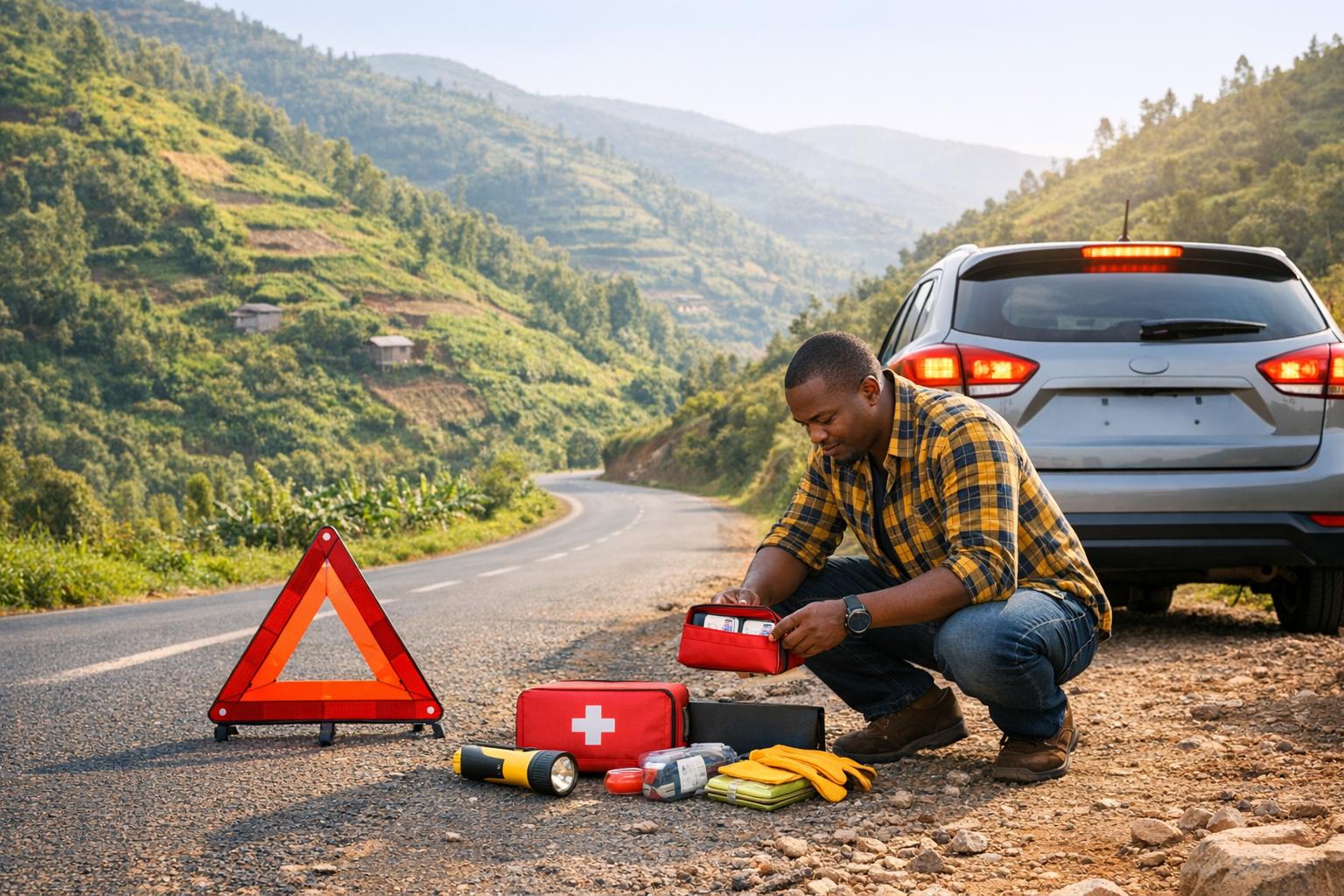
Navigating Rwanda’s remote and rugged roads can be challenging, but having a well-stocked emergency kit can turn potential disasters into manageable inconveniences. Whether you’re dealing with a flat tire or an unexpected delay, being prepared is key.
"A well-equipped emergency car kit is a simple step you can take today to ensure that you’re ready for anything, no matter where the road takes you." – Red Cross
Let’s dive into the essential tools, survival gear, and navigation aids every driver should have on hand.
Basic Tools for Vehicle Repairs
A few reliable tools can make all the difference when your car needs a quick fix. Start with the basics: a spare tire, a working jack, and a lug wrench. To prepare for dead batteries, pack jumper cables or a portable jump starter. For tire punctures, a repair kit with sealant and patching tools can provide a temporary solution until you reach the nearest garage.
A multi-tool (with pliers, a screwdriver, and a knife) and a set of wrenches are handy for minor adjustments. Don’t overlook duct tape – it’s perfect for quick fixes like securing a loose side mirror or insulating exposed wires. Also, a powerful flashlight with extra batteries (or a hand-crank version) is a must for nighttime repairs.
"A powerful flashlight can mean the difference between driving away or waiting for a repair or tow." – Penske Automotive
Lastly, don’t forget a fire extinguisher, which isn’t just practical – it’s also a legal requirement for all vehicles in Rwanda.
Safety and Survival Items
Your kit should also include items to keep you safe and comfortable during emergencies. Warning triangles are mandatory for signaling your position during breakdowns or accidents. A first aid kit is essential – stock it with bandages, antiseptics, gloves, scissors, and pain relievers, and check expiration dates regularly.
Rwanda’s weather can be unpredictable, so pack rain gear, gumboots, and a warm jacket to stay dry and warm. Carry at least one gallon of water per person and high-energy snacks like granola bars or nuts in case you’re stuck for hours in a remote area. For muddy terrain, a small shovel and sand can help you regain traction. Lastly, comply with Rwanda’s plastic ban by using environmentally friendly trash bags for waste disposal.
Navigation and Communication Equipment
Staying connected is just as important as staying mobile. Your smartphone is your lifeline in emergencies, but it’s only useful if it’s charged. Bring a portable power bank or a hand-crank charger to ensure you can make calls when needed. Download offline maps before venturing into rural areas where connectivity is spotty.
Keep cash on hand for situations where card payments aren’t an option. Save critical contact numbers, such as your rental agency’s 24/7 roadside assistance and Rwanda’s ambulance service (912). If you’re traveling through specific regions, include local police brigade numbers like Musanze (078-831-1146), Rubavu (078-831-1149), or Huye (078-831-1127).
Pre-Drive Checks and Planning
Taking a few moments to inspect your vehicle and plan your route can make all the difference when driving in Rwanda. With its hilly terrain and remote areas, being prepared is more than just a good idea – it’s essential. A breakdown in an isolated spot could leave you stranded for hours or even longer.
"A healthy car, keeps travelers safe on the road." – 4×4 Car Rental Rwanda
Beyond making sure your car is in good shape, mapping out your journey ahead of time helps you avoid surprises and ensures you’re ready for Rwanda’s unique driving challenges.
Vehicle Inspection Checklist
Start by checking your tires. Look at the pressure and tread depth on all four wheels, and don’t forget the spare. Rwanda’s steep, winding roads demand tires in top condition. Also, make sure your jack and lug wrench are easy to find and in working order.
Next, inspect all lights – headlights, brake lights, and turn signals. Remember to switch to low beams at least 200 meters (656 feet) before encountering oncoming traffic. Test your windshield wipers and refill the washer fluid if needed.
Pop the hood and check your fluid levels: engine oil, coolant, and brake fluid. Low levels of oil or coolant can cause your engine to overheat, especially on steep climbs in the "Land of a Thousand Hills". Make sure your fuel tank is sufficiently filled, particularly if you’re heading to remote areas where gas stations are scarce.
Inside the car, ensure that all seatbelts are functional. Seatbelt use is mandatory for everyone in the vehicle – front and back – and fines for non-compliance can reach up to RWF 30,000 per passenger. Test your horn and confirm you have your CARDEX (vehicle registration) and valid insurance documents on hand. Police roadblocks are common, so having these ready will save time.
Once your vehicle passes inspection, you’re ready to focus on planning your route.
Planning for Long Trips
Before you hit the road, take time to research your route. While GPS apps like Google Maps and Waze work well in urban areas, they can be unreliable in rural regions. To avoid getting lost, download offline maps or carry a physical map as a backup.
Plan stops for refueling along the way. If your journey takes you to remote areas like Akagera or Nyungwe, gas stations can be few and far between. Topping off your tank in major towns before heading out can prevent the hassle of running out of fuel in isolated areas.
Check the weather forecast, especially during Rwanda’s rainy seasons. Heavy rains can turn unpaved roads into muddy, slippery tracks. If the forecast looks rough, consider delaying your trip or allotting extra time for slower travel. In mountainous regions, use lower gears when descending steep hills to maintain control and avoid straining your brakes.
Lastly, avoid driving at night on unlit rural roads whenever possible. If you must, slow down and stay extra alert.
How to Handle Road Emergencies
Emergencies on the road can happen to anyone, and knowing how to respond can make all the difference. Whether you’re dealing with a vehicle breakdown, an accident, or navigating difficult terrain, having a plan is key – especially on Rwanda’s roads, which range from steep mountain passes to remote rural stretches. Here’s how to handle these situations effectively.
What to Do When Your Vehicle Breaks Down
If your car breaks down, the first step is to pull over to a safe spot. Turn on your hazard lights to alert other drivers. Once you’ve stopped, switch off the ignition and have everyone exit the vehicle from the side away from traffic. Move to a safe area off the road.
To warn other drivers, place a warning triangle at a safe distance behind your car. Before stepping out, put on a high-visibility jacket to ensure you’re easily seen. In remote areas, roadside assistance might take longer to arrive, so prioritize visibility and safety.
Make sure to call for help. Dial 112 for general emergencies or 113 to reach the traffic police. If you’re in a specific region, you can contact local police brigades directly. For instance, call 078-831-1146 for Musanze, 078-831-1149 for Rubavu, or 078-831-1127 for Huye.
Steps to Take After an Accident
Dealing with an accident requires a different approach. First, stop immediately and secure the scene. Turn on your hazard lights and, if possible, move your vehicle to the roadside. However, leave vehicles in place until the police arrive to document the scene.
Check if anyone is injured. If medical attention is needed, call 912 for ambulance services or 113 for traffic police. For fire-related emergencies, dial 111. By law, you must notify authorities right after a collision.
While waiting, document the incident. Take clear photos of all involved vehicles, including license plates, damages, and the surrounding area. These photos will be essential for insurance claims and police reports. Don’t move any vehicles until the police give you the go-ahead. Always carry your original driver’s license, passport (if you’re visiting), and your vehicle’s registration certificate (CARDEX).
If you experience any misconduct from officers during the investigation, report it by calling 116 or 3511.
Driving on Difficult Terrain
Rwanda’s diverse landscapes require extra caution and specific driving techniques. For steep descents, rely on engine braking by shifting to a lower gear instead of overusing your brakes. This helps prevent overheating and brake failure.
Avoid overtaking on blind curves or winding mountain roads where visibility is limited. During the rainy seasons (March–May and October–November), slow down to 40–60 km/h on unpaved or pothole-ridden roads. Wet conditions can turn dirt roads into slippery or muddy paths, and a 4×4 vehicle may be necessary in some cases.
When driving through rural areas, be mindful of livestock on the road. Slow down to about 30 km/h and stop if needed to let the animals pass. In foggy or misty areas, like those near Volcanoes National Park, turn on your headlights and reduce your speed significantly.
Night driving on unlit rural roads should be avoided if possible. If you must drive at night, use high beams for better visibility, but switch to low beams at least 656 feet (200 meters) before approaching another vehicle to avoid blinding other drivers. These precautions can help you stay safe, whether navigating mountain roads or rural stretches.
| Service | Phone Number |
|---|---|
| General Emergency | 112 |
| Traffic Accidents | 113 |
| Ambulance (SAMU) | 912 |
| Fire and Rescue | 111 |
| Traffic Police (Inquiries) | 118 or +250 788 311 155 |
sbb-itb-7bc66b5
Emergency Contacts and Local Services
Having the right emergency contacts saved can make a world of difference when time is critical. In Rwanda, emergency response times have significantly improved, now averaging about 15 minutes compared to 60 minutes back in 2000. Below are the essential numbers every driver in Rwanda should have on hand.
Key Emergency Numbers
Here’s a quick list of numbers to save on your phone for various emergencies:
- 112: For general emergencies involving immediate threats to life or safety.
- 113: Connects you to traffic police for accidents or road-related issues.
- 912: Medical emergencies are handled by SAMU ambulance services via this number.
- 111: For fire and rescue situations.
- 118 or +250 788 311 155: For questions related to traffic regulations or driver’s licenses.
Other useful numbers include:
- 114: General health services.
- 110: Maritime emergencies, particularly if you’re near water.
- 997: Report corruption-related issues.
- 3511 or 116: To report police misconduct or bribery.
- 2222: The Rwanda Utilities Regulatory Authority (RURA) hotline for transport-related inquiries.
Roadside Assistance and Preparedness
For non-urgent breakdowns, your first call should be to your insurance provider. Make sure your insurance is up to date before hitting the road – Rwandan authorities use Automated Number Plate Recognition (ANPR) systems to check your insurance status and traffic history during roadside inspections. Rental car agencies also provide 24/7 roadside assistance, so be sure to save their hotline numbers before starting your journey.
If you’re unsure where to find reliable towing services or mechanics, resources like AutoMag.RW can point you toward verified providers. Preparing ahead of time ensures you’re not scrambling for help when you need it most.
Conclusion
Effective road safety in Rwanda comes down to being prepared, staying cautious, and responding quickly when needed. Safe driving starts with regular vehicle maintenance – pay special attention to brakes, tires, and lights – and keeping an emergency kit on hand to tackle unexpected situations.
Knowing how to handle accidents, as discussed earlier, can save you from unnecessary complications and lengthy legal troubles. Rwanda’s roads come with their own set of challenges. Whether it’s navigating around livestock, dealing with steep terrain, or driving through poorly lit rural areas, it’s best to avoid night driving when possible and stay alert for pedestrians and cyclists sharing the road.
The country’s high traffic fines emphasize the importance of following safety rules, as ignoring them can lead to serious consequences. By keeping your documents up to date, your emergency kit ready, and your attention sharp, you’ll be better equipped to handle any surprises on Rwanda’s roads. Drive smart, stay prepared, and prioritize safety at all times.
FAQs
What should I include in an emergency car kit for driving in Rwanda?
An emergency car kit is a must-have for navigating Rwanda’s varied roads, especially when dealing with breakdowns, flat tires, or sudden weather changes. Keep your kit in a spot that’s easy to reach, like the trunk, and check it regularly to make sure everything is in good condition.
Some key items to include are: a spare tire along with the necessary tools like a jack and lug wrench, a first-aid kit stocked with essentials such as bandages and any personal medications, and a reflective safety vest to ensure you’re visible. A flashlight with extra batteries and jumper cables are also crucial. For added safety, pack a fire extinguisher designed for vehicle fires, a blanket, water bottles (around 1 liter per person), and a multi-tool for minor fixes. Lastly, a cell phone charger or power bank can be a lifesaver for staying connected and calling for help when needed. With these essentials, you’ll be better equipped to handle unexpected challenges on the road.
How can I get my car ready for Rwanda’s unique roads and driving conditions?
Driving through Rwanda, often called the "land of a thousand hills", means being ready for a mix of city streets, steep rural roads, and the occasional livestock or wildlife crossing. Before hitting the road, give your vehicle a thorough check. Pay close attention to your brakes, lights, and windshield wipers, but especially your tires – make sure the pressure and tread depth are suitable for the diverse terrains you’ll encounter. With daytime temperatures averaging around 79°F (26°C) and cooler evenings, it’s also wise to ensure your cooling system is filled and your battery is in top shape.
Pack an emergency kit that includes essentials like a spare tire, jack, lug wrench, fire extinguisher, first-aid kit, high-visibility vest, and a reflective warning triangle. Always have your vehicle registration, proof of insurance, and a valid driver’s license with you. For added peace of mind, carry extra fuel, bottled water, and a fully charged phone with local emergency numbers saved – dial 112 for police or ambulance services. A dependable GPS or a printed map and a portable charger can also be lifesavers, especially when traveling through remote areas. With these preparations, you’ll be ready to tackle Rwanda’s roads with confidence and ease.
What emergency phone numbers should I save when driving in Rwanda?
If you’re driving in Rwanda, it’s crucial to have these emergency numbers saved for quick access:
- 113: To report traffic accidents or vehicles causing obstructions.
- 118: For traffic police support or immediate road hazard reports.
- 112: A general emergency line for police, fire, or medical services.
- 912: For urgent medical help or ambulance services.
- 110: To contact the police for issues like theft or assault.
- 114: For non-urgent medical advice or health-related questions.
These numbers are toll-free and work across all mobile networks. Save them in your phone and keep a written copy in your vehicle. Whether it’s a breakdown, accident, or another road emergency, having these at hand can make all the difference.
Related Blog Posts
- 10 Tips for Long Drives in Rwanda
- Ultimate Guide to Off-Road Driving in Rwanda
- Vehicle Inspection Checklist for Rwandan Drivers
- Checklist Before Every Long Drive Outside Kigali