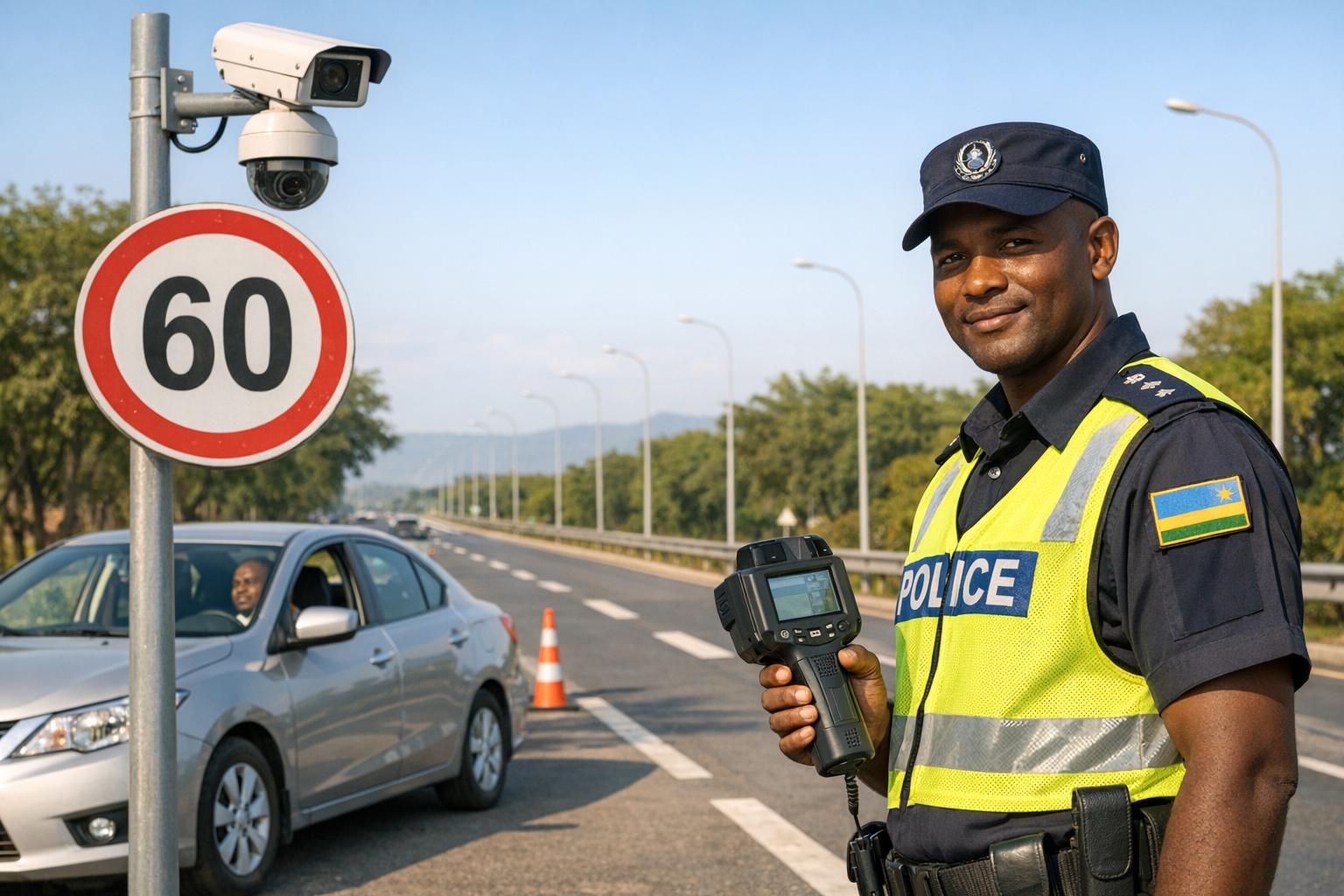
Rwanda’s roads are under strict traffic enforcement to ensure safety for all users. The Rwanda National Police (RNP) uses advanced tools like traffic cameras and ANPR systems to monitor violations. Key rules include:
- Speed Limits: 30 km/h in residential areas, 40 km/h in urban zones, and 80 km/h on highways. Speeding fines can reach RWF 50,000 (~$37 USD).
- Seatbelts: Mandatory for all passengers. Non-compliance results in RWF 10,000 fines (~$7.50 USD).
- Alcohol Limit: BAC limit is 0.08% for most drivers, with zero tolerance for new and professional drivers.
- Pedestrian Right of Way: Drivers must stop at zebra crossings.
Violations are tracked and penalized using automated systems, with fines linked directly to vehicle records. Drivers can check their traffic status via the RNP website or by dialing *127#. Staying compliant involves following speed limits, maintaining vehicles, and ensuring all documents are up to date.

Rwanda Traffic Rules: Speed Limits, Fines and Key Regulations
Rwanda National Police: Enhancing Road Safety by AI-Powered Traffic Violation Detection
Traffic Rules and Regulations in Rwanda
Rwanda has clear and strictly enforced traffic laws designed to ensure safety on the roads. Familiarizing yourself with these rules can help you avoid fines and contribute to safer driving conditions.
Speed Limits and Monitoring
Rwanda’s speed limits are as follows: 30 km/h (19 mph) in residential areas, 40 km/h (25 mph) in urban zones, and 80 km/h (50 mph) on highways. These limits might differ from what you’re used to in the U.S., so always pay close attention to posted signs. Following these limits is not just about avoiding fines – it’s about keeping everyone safe on the road.
To enforce these rules, the Rwanda National Police employs radar guns and advanced surveillance tools. Automated Number Plate Recognition (ANPR) systems and traffic cameras are installed along major routes. Additionally, certain vehicles must be equipped with speed governors to prevent exceeding legal limits. If you’re caught speeding, fines can go up to RWF 50,000 (about $37 USD).
"There are two ways to check the traffic status of your automobile; through the RNP website (www.police.gov.rw) or by dialing *127# on your mobile phone and follow the prompts." – CP John Bosco Kabera, RNP Spokesperson
Seatbelt and Mobile Phone Laws
Seatbelt use is mandatory for all passengers, not just those in the front seats. Failing to wear one can result in a fine of RWF 10,000 (around $7.50 USD) per unbuckled passenger. Compliance is monitored by both law enforcement and automated systems, so make sure everyone in the vehicle is secured before setting off.
Using a mobile phone while driving is prohibited unless you’re using a hands-free system like Bluetooth. If you need to make a call or send a message, pull over to a safe location and come to a complete stop. Distracted driving is treated with serious concern, especially in areas with high pedestrian activity or intersections.
Zebra Crossings and Intersection Rules
Pedestrians always have the right of way at zebra crossings. Drivers are required to stop completely when someone is waiting to cross. In Kigali, you’ll often find designated paths for pedestrians and cyclists – respect these spaces to avoid penalties and ensure the safety of vulnerable road users.
At intersections, strict adherence to traffic signals and road signs is non-negotiable. Running a red light or ignoring a stop sign can result in fines, as these violations are often captured by surveillance cameras equipped with ANPR technology. These systems also check your vehicle’s registration and flag any outstanding offenses in real time.
Traffic Violations and Penalties
Rwanda’s penalty points system is designed to ensure strict compliance with traffic laws, with serious consequences for repeat offenders. Under this system, accumulating 12 points within a year leads to a three-month license suspension. Continued violations can even result in permanent license revocation. Supported by advanced enforcement technology, this system delivers swift penalties for infractions. Below are key penalties every driver should know.
Speeding and Drunk Driving Penalties
Speeding fines escalate based on how much you exceed the speed limit. Police checkpoints frequently use breathalyzers to monitor drivers for alcohol consumption. The legal Blood Alcohol Concentration (BAC) limit for most drivers is 0.08%. However, professional drivers, operators of heavy vehicles, and those with less than two years of driving experience must adhere to a zero-tolerance policy (0.00% BAC). Violating these limits can lead to fines, license suspension, or even imprisonment. A second drunk driving offense within a year carries harsher consequences, including confiscation of your driving permit and referral to the Rwandan Public Prosecution Authority for further legal action.
Next, let’s explore how automated systems monitor junctions and traffic signals.
Yellow Box Junction and Traffic Light Violations
Automated cameras equipped with ANPR (Automatic Number Plate Recognition) technology keep a close watch on yellow box junctions and traffic lights. These cameras capture violations like running red lights or stopping within a yellow box junction when your exit is blocked. Such infractions result in automatic fines, ensuring that offenders are held accountable.
Understanding right-of-way rules is just as important for avoiding penalties.
Failure to Yield or Stop Penalties
Failing to yield to pedestrians at marked crosswalks not only endangers lives but also leads to fines and penalty points on your record. At roundabouts, vehicles already circulating have the right of way, and failing to yield or stop at intersections is closely monitored by cameras. These violations disrupt traffic flow and jeopardize pedestrian safety, making adherence to these rules critical for all drivers.
sbb-itb-7bc66b5
Enforcement Tools and Technology
Modern enforcement tools have revolutionized how traffic violations are detected and managed, making the process more efficient and accurate.
Rwanda stands out as the first low-income African country to implement a nationwide Automated Speed Enforcement (ASE) system. This system automatically identifies traffic violations using cameras, linking fines directly to the vehicle’s record.
Traffic Cameras and Surveillance Systems
Fixed traffic cameras operate around the clock, keeping a constant watch on road activity. These cameras work hand-in-hand with Automated Number Plate Recognition (ANPR) systems, which instantly verify critical information like insurance status, inspection validity, and any prior traffic offenses. Research highlights that Rwanda’s ASE system has led to a noticeable reduction in average driving speeds across the country.
In addition to stationary cameras, the Rwanda National Police employs both fixed and mobile technical control units. These units, located in places like Remera and Gishali, can inspect up to 700 vehicles daily to ensure they meet road safety standards. Officers also rely on tools like speedometers, breathalyzers for detecting alcohol use, and mandatory speed governors for heavy vehicles. By 2017, around 300,000 smart driver’s licenses had been issued, enabling authorities to efficiently track and manage driving records. Together, these systems simplify violation processing and ensure prompt fine payments.
E-Fines and Payment Methods
When a violation is recorded by a camera, the fine is automatically linked to the vehicle’s license plate. For vehicles with foreign plates, the Rwanda National Police (RNP) website provides a dedicated "foreign and other vehicles" option, which doesn’t require a TIN number.
Paying fines is straightforward but requires prompt action. Once you receive a billing ID (starting with 88 or 87), you must complete the payment within an hour. Payment options include MTN, Airtel, bank transfers, Visa/MasterCard, or smart card payments via handheld devices used by officers. However, delays come with a late fee of RWF 10,000 (roughly $7.50).
CP John Bosco Kabera underscores the value of staying on top of your vehicle’s status: "This process also helps you to always be updated on the status of your automobile in as far as traffic offences are concerned, if the vehicle or motorcycle is in the hands of your driver or another person". Regular monitoring not only helps avoid surprises at police checkpoints but also ensures you don’t accumulate penalties unnecessarily.
How to Stay Compliant and Avoid Fines
Staying on the right side of Rwanda’s traffic laws takes some planning and regular attention to your vehicle’s legal status. Here’s how you can keep things in check.
Planning Your Route and Driving Habits
Before hitting the road, familiarize yourself with Kigali’s road network. Ride-hailing apps can be a helpful tool for learning popular routes and spotting areas that might pose challenges. Steering clear of peak traffic hours can make your drive smoother and help you avoid rushed decisions that could lead to mistakes.
It’s also smart to regularly check your vehicle’s record. You can do this through the Rwanda National Police (RNP) website (www.police.gov.rw) or by dialing *127# on your phone. If you spot any violations, address them right away. Stick to posted speed limits and use hands-free devices if you need to make calls while driving.
Vehicle Maintenance Requirements
Keeping your vehicle in good shape is just as important as knowing your routes. Rwanda uses automated systems to check if your vehicle has passed its required safety inspections. For personal vehicles, inspections are due every 12 months. Commercial vehicles, however, need to be inspected every six months. New vehicles get a two-year grace period before their first inspection.
To make life easier, the Rwanda National Police sends SMS reminders a month before your inspection is due, so make sure your contact information is up-to-date. When booking an inspection through the Irembo platform, remember to pay any outstanding fines first – unpaid tickets will block your appointment. If your vehicle doesn’t pass the inspection, you’ll have 14 days to make repairs and return for a re-inspection at just 20% of the original fee.
Navigating Police Checkpoints
Police checkpoints are a common part of driving in Rwanda, so it’s best to be prepared. Officers use Automated Number Plate Recognition (ANPR) machines to instantly access your vehicle’s record, including details like insurance status, inspection validity, and unpaid fines. To avoid unnecessary delays or penalties, always carry these essential documents: your driver’s license, vehicle registration certificate, current insurance papers, and your logbook (carte jaune).
Conclusion
Rwanda’s approach to road safety combines strict enforcement with clear regulations, creating a system that prioritizes the well-being of everyone on the road. Tools like traffic cameras and ANPR systems have enhanced monitoring, while the Rwanda National Police has significantly improved emergency response times – from 60 minutes in 2000 to just 15 minutes by 2017. Key measures, such as enforcing speed and alcohol limits, remain central to reducing accidents, with penalties designed to encourage responsible driving.
Staying on the right side of the law is simple: regularly check your vehicle’s condition, ensure your documents are up to date, and keep your car well-maintained. You can instantly access your driving record at ANPR checkpoints and quickly resolve fines through Irembo or by dialing *909#. These small steps not only help you avoid penalties but also support Rwanda’s mission to create safer roads for everyone – drivers, pedestrians, and cyclists alike.
FAQs
How can I check if I have any traffic fines in Rwanda?
To check traffic fines in Rwanda, you can use official platforms provided by the Rwanda National Police (RNP) or IremboGov. Here’s how you can do it:
- Online via IremboGov: Head over to the IremboGov website or use their app. Navigate to the Traffic Fines section, then input your vehicle’s license plate number and the Tax Identification Number (TIN) from your yellow registration card. You’ll be able to view and pay any fines right away.
- USSD Codes: Dial 909# or 127# on your phone. Follow the instructions and enter your license plate number to check for any violations tied to your vehicle.
- Rwanda Police Website: Visit their website, access the Traffic Fines service, and enter your plate number and TIN to review any outstanding fines.
These options are accessible 24/7, and you’ll receive electronic receipts for your records. Regularly checking ensures you stay on top of any fines and avoid additional late fees.
What happens if you accumulate too many traffic penalty points in Rwanda?
In Rwanda, racking up too many traffic penalty points can have serious repercussions, like the suspension or even revocation of your driver’s license. The severity of the penalties varies based on the type and number of violations committed. Staying out of trouble means following traffic laws – stick to speed limits, avoid reckless driving, and follow alcohol-related regulations.
If you’re unclear about your penalty points or need more information, it’s a good idea to reach out to the Rwanda Police or check the most recent traffic regulations to ensure you’re up to date and driving within the law.
How does Rwanda’s automated system monitor and enforce speed limits?
Rwanda has implemented an Automated Speed Enforcement (ASE) system to keep drivers within speed limits. This system uses a combination of fixed and mobile speed cameras to monitor vehicle speeds in real-time. When a vehicle goes over the limit, the system captures the license plate and automatically issues a traffic violation notice.
The Rwanda National Police handles the processing of these notices, and drivers are fined based on the violation. This efficient system plays a key role in improving road safety and ensuring drivers follow traffic laws throughout the country.
Related Blog Posts
- 10 Common Road Signs in Rwanda
- Rwanda Traffic Rules: Full Guide for New Drivers
- Updated Rwanda Road Traffic Regulations 2025
- Rwanda Vehicle Inspection Rules: What to Expect