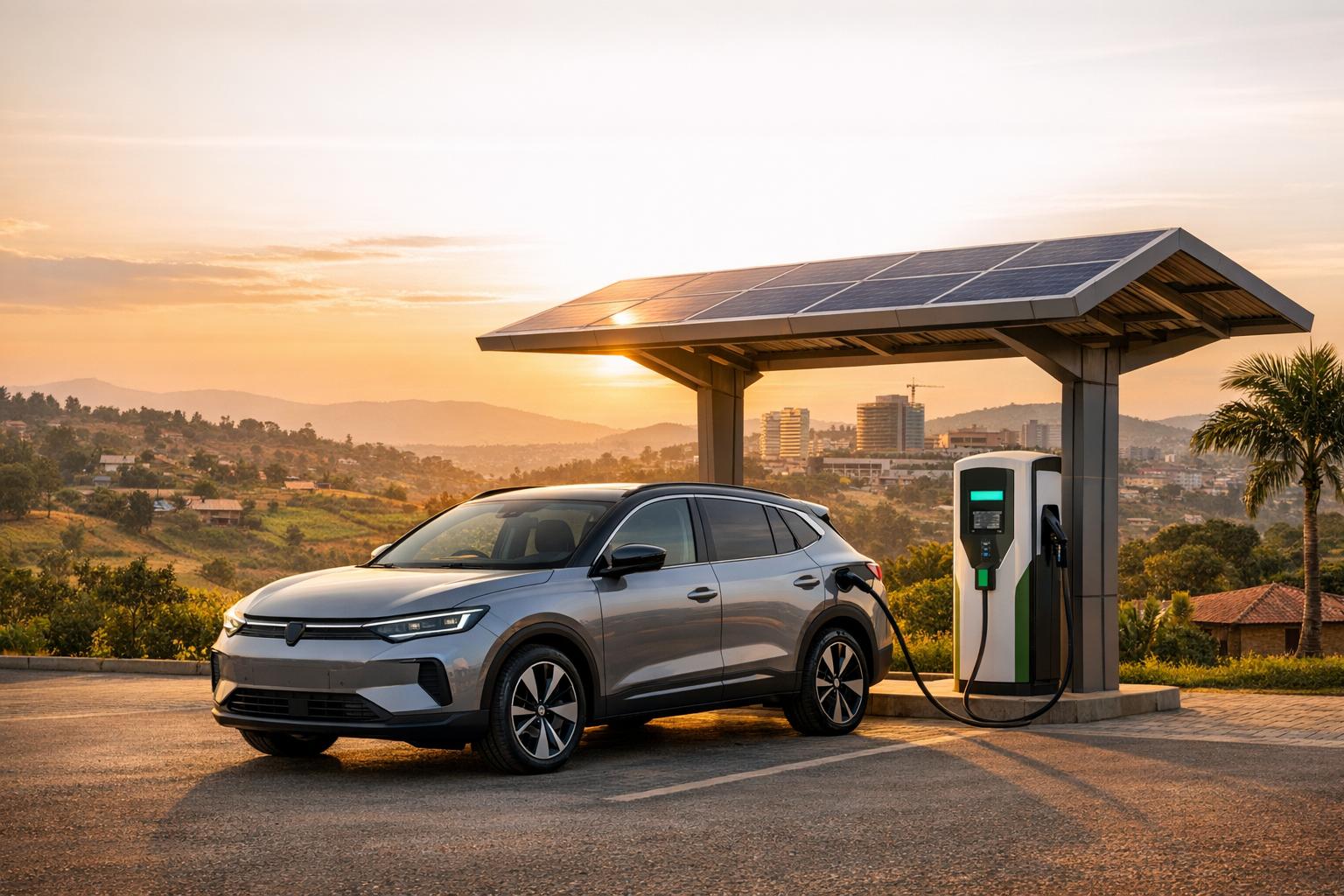
Electric SUVs are gaining traction in Rwanda, driven by policy shifts, improved infrastructure, and demand for efficient, reliable vehicles. Four standout models dominate the 2026 market:
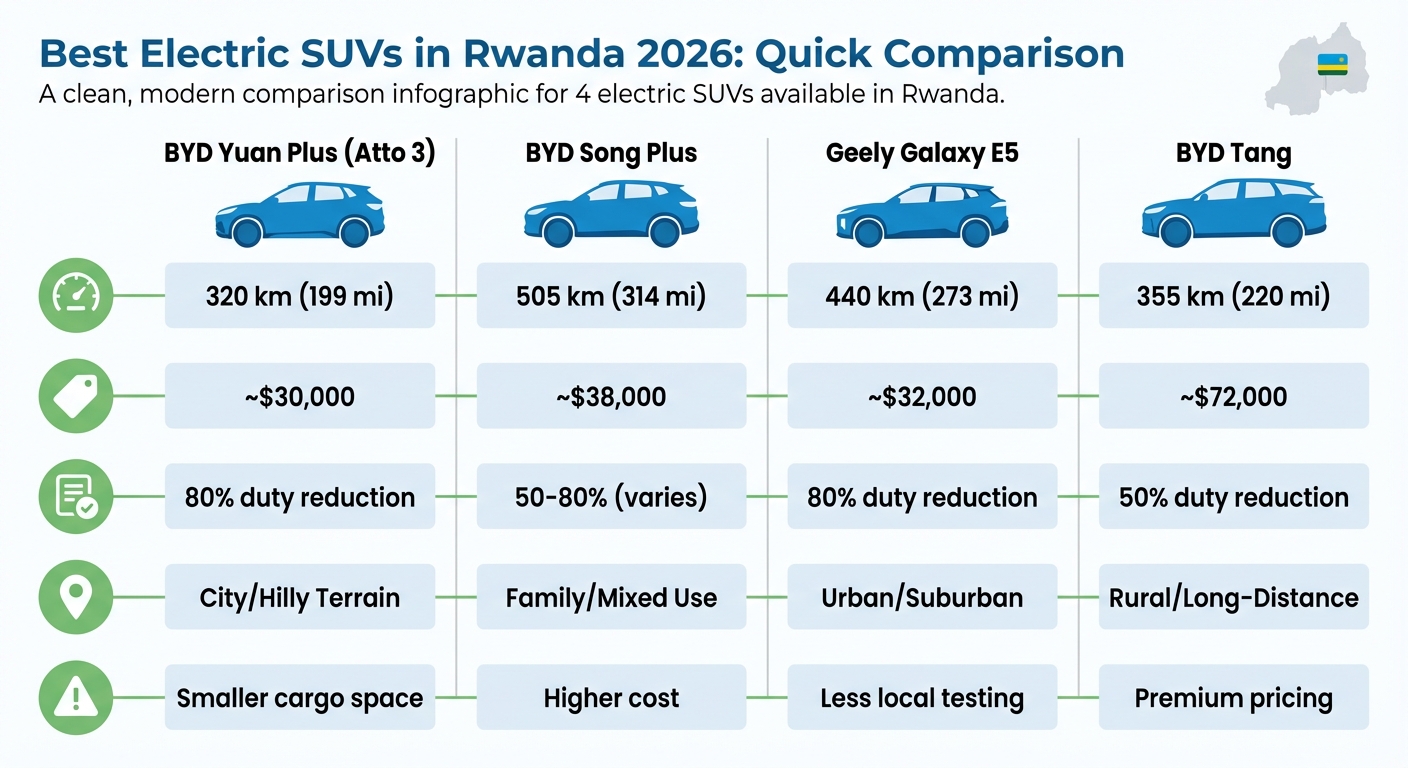
- BYD Yuan Plus (Atto 3): Affordable, compact, with a range of 320 km (199 mi) and fast-charging capabilities. Ideal for city driving and hilly terrain.
- BYD Song Plus: Spacious and versatile, offering up to 505 km (314 mi) range and advanced features. Suited for families or mixed-use.
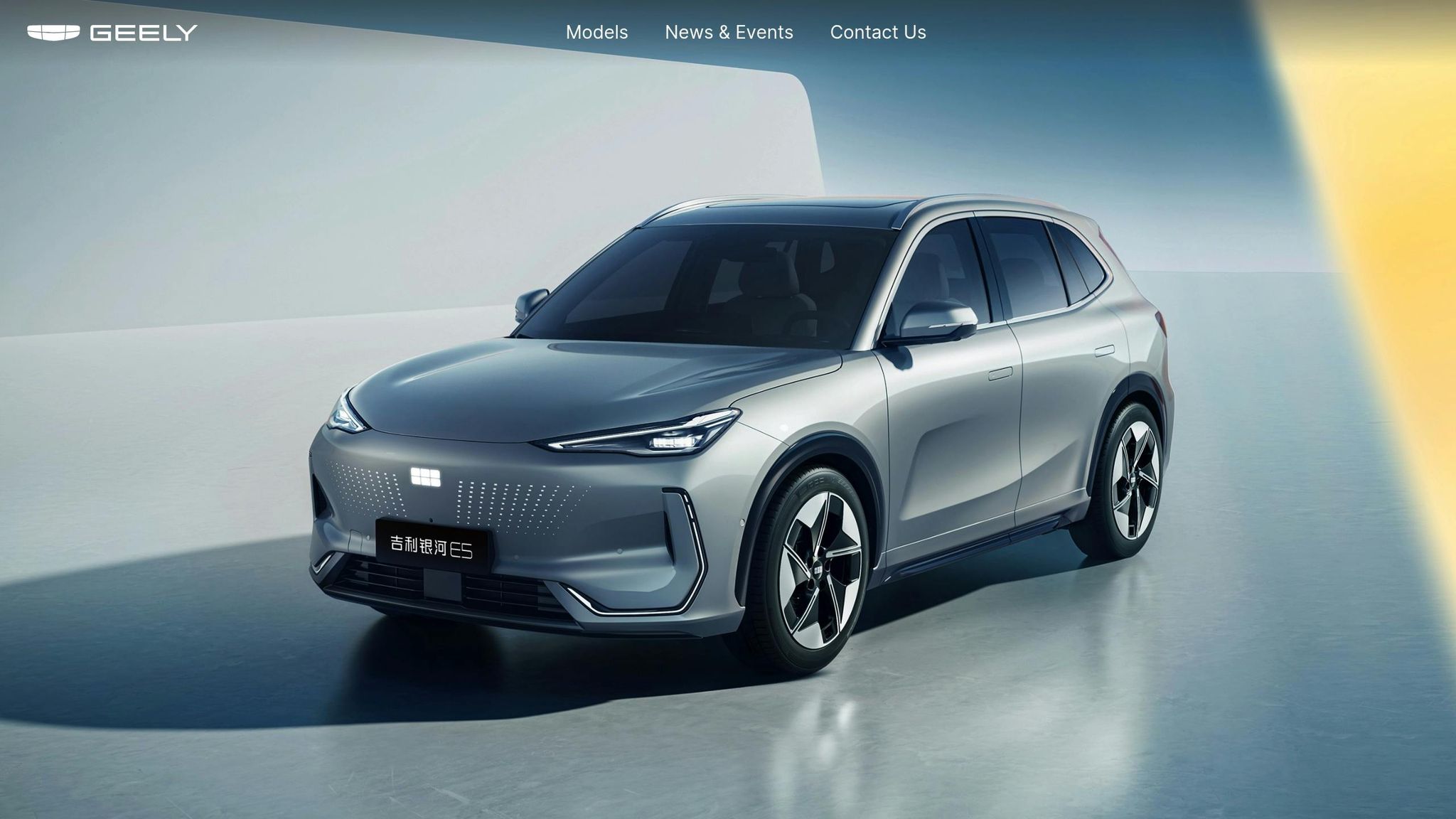
- Geely Galaxy E5: Balances price and performance with a range of 440 km (273 mi). Great for urban and suburban commutes.
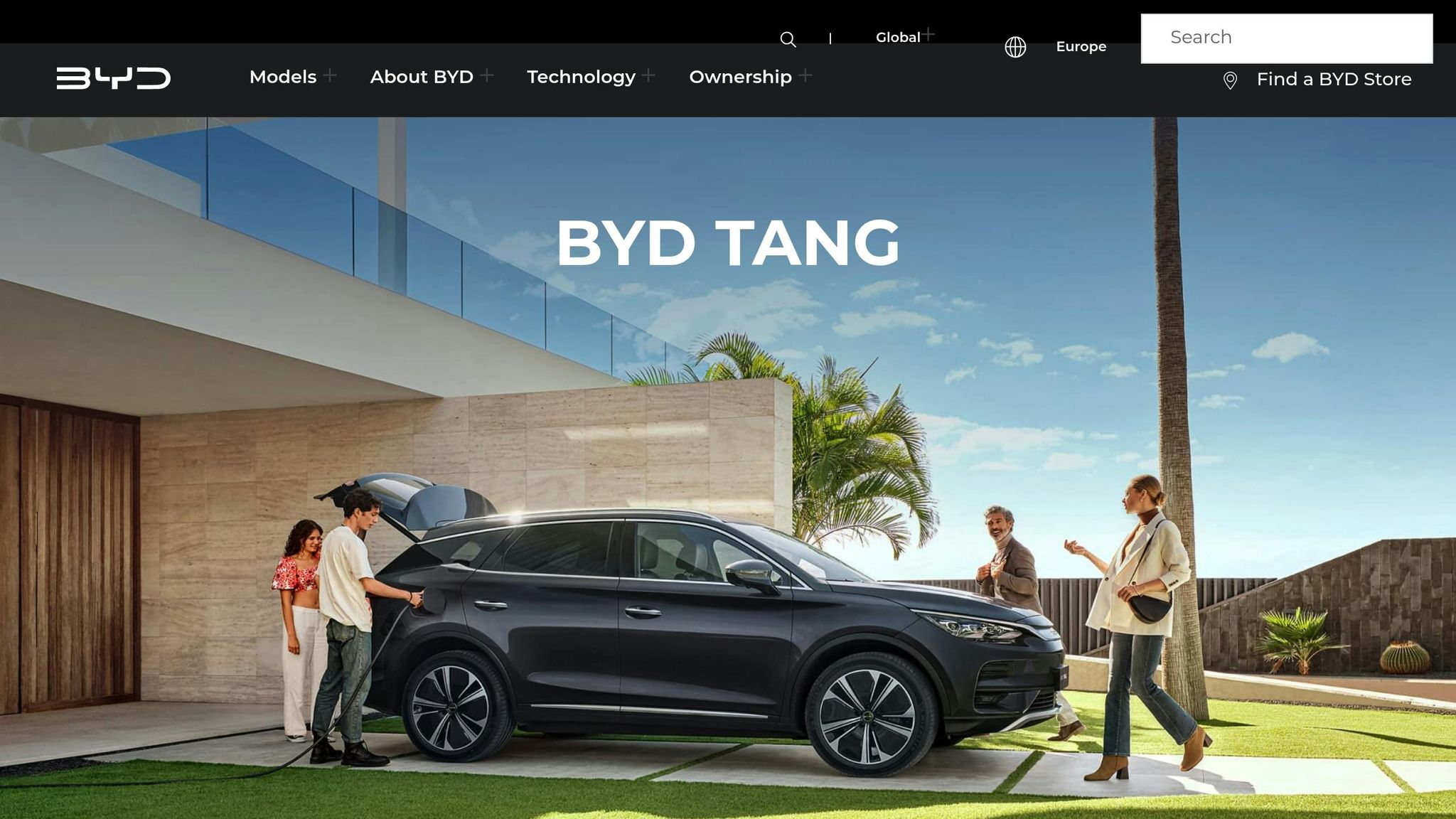
- BYD Tang: Premium SUV with AWD and 355 km (220 mi) range. Best for rural areas and long trips but comes at a higher price.
Key Insights:
- Charging infrastructure is expanding, with Kigali hosting most stations. Home charging is crucial for convenience.
- Government incentives, including up to 80% import duty reductions, make EVs more accessible.
- EVs reduce operating costs by 70% compared to gas-powered cars, benefiting from Rwanda’s renewable energy grid.
Quick Comparison:
| Model | Range (Avg) | Starting Price | Tax Incentive | Best For | Limitation |
|---|---|---|---|---|---|
| BYD Yuan Plus | 320 km (199 mi) | ~$30,000 | 80% duty reduction | City/Hilly Terrain | Smaller cargo space |
| BYD Song Plus | 505 km (314 mi) | ~$38,000 | 50–80% (varies) | Family/Mixed Use | Higher cost |
| Geely Galaxy E5 | 440 km (273 mi) | ~$32,000 | 80% duty reduction | Urban/Suburban | Less local testing |
| BYD Tang | 355 km (220 mi) | ~$72,000 | 50% duty reduction | Rural/Long-Distance | Premium pricing |
Rwanda’s EV market is growing rapidly, offering diverse options for different needs. Whether you prioritize affordability, range, or luxury, there’s an electric SUV to match your lifestyle.
Electric SUV Comparison Rwanda 2026: Range, Price and Tax Incentives
1. BYD Yuan Plus (Atto 3)
Range
The BYD Yuan Plus comes with two battery options: a 49.92 kWh pack offering a CLTC range of 430 km (267 miles) and a 60.48 kWh pack with a range of 510 km (317 miles). However, in real-world driving conditions, the range typically falls between 350 km and 380 km (217–236 miles) under mixed driving scenarios. The extended version has an official WLTP range of 420 km (261 miles), but Rwanda’s warm climate and frequent air conditioning use can reduce this by about 23.8%, bringing it closer to 320 km (199 miles).
At a steady speed of 90 km/h (56 mph), the range averages around 341 km (212 miles), while at 120 km/h (75 mph), it drops to 252 km (157 miles). With a ground clearance of 175 mm (6.9 inches), the Yuan Plus is well-suited for navigating both urban speed bumps and the rougher roads found in peri-urban areas. These range capabilities make it a strong contender in its price category.
Price
Positioned as a competitive entry-to-mid-level electric SUV, the Yuan Plus has earned global recognition, including the title of "2023 Drive Car of the Year Best EV under $70,000." In 2022, it accounted for 25% of BYD’s total battery electric vehicle sales. The vehicle is packed with value, boasting a 5-star Euro NCAP safety rating (with 91% adult occupant protection), the durable BYD Blade Battery, and standard features like a heat pump and advanced driver assistance systems. These features, combined with its reasonable pricing, make it an attractive option for buyers. Charging convenience is another highlight.
Charging Compatibility
The Yuan Plus is equipped with CCS2 connectors for DC fast charging and Type 2 connectors for AC charging, both of which are standard at Rwanda’s charging stations. The extended-range model supports DC fast charging at up to 88 kW, enabling a charge from 30% to 80% in just 29 minutes. A full charge from 0% to 80% using an 80 kW DC charger takes about 45 minutes. For home charging, the vehicle comes with a standard 7 kW AC charger, with an optional upgrade to 11 kW available. To extend battery life in Rwanda’s hot climate, slow overnight charging is recommended, along with maintaining the battery level above 20% whenever possible.
Performance on Rwandan Roads
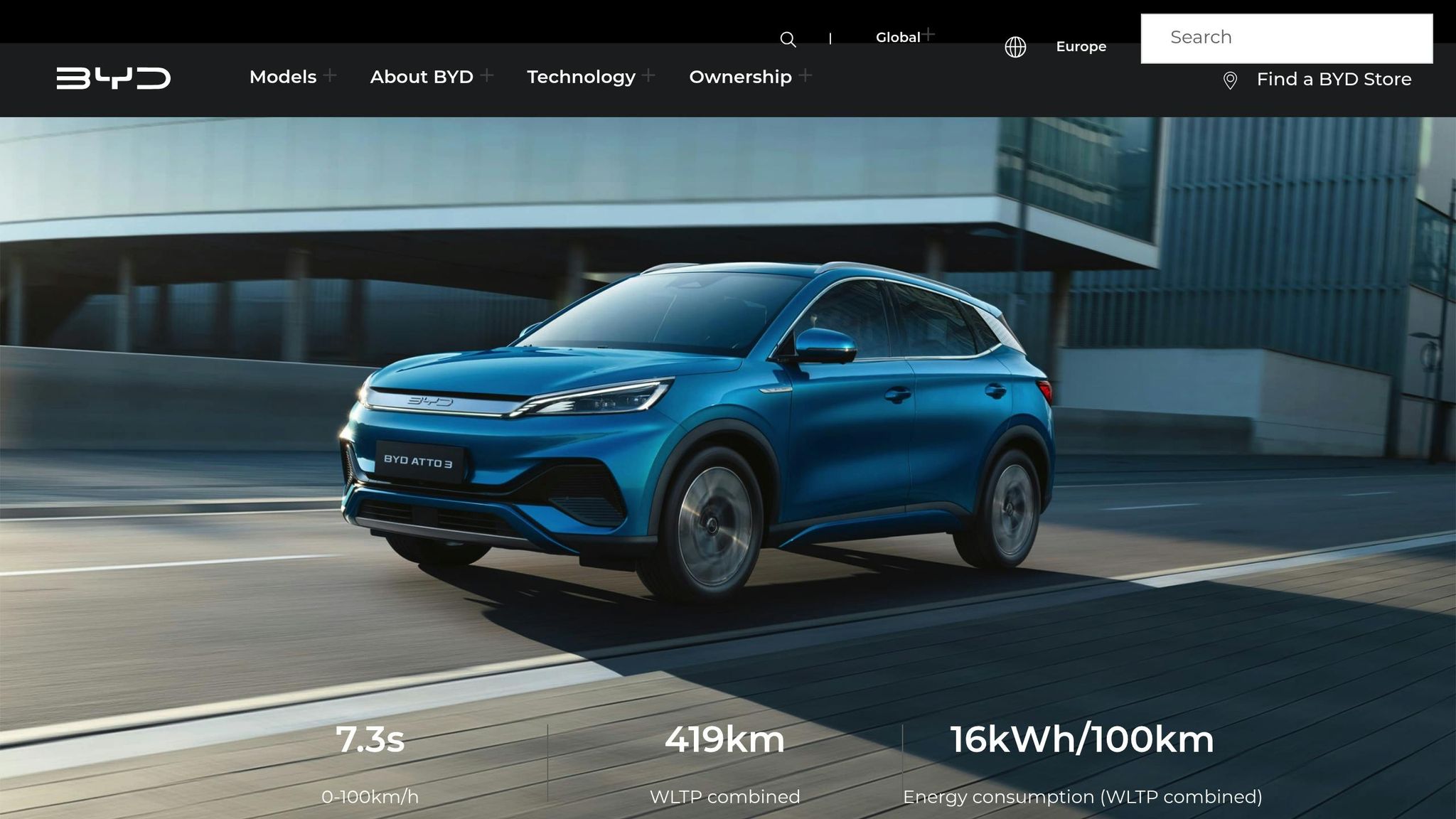
The Yuan Plus combines its impressive range and charging capabilities with solid performance tailored to Rwanda’s diverse road conditions. Its 150 kW (201 hp) motor delivers 310 N⋅m of torque, allowing it to accelerate from 0 to 100 km/h (0 to 62 mph) in 7.3 seconds. The MacPherson strut front suspension and multi-link rear suspension work together to handle the bumps and uneven surfaces commonly found on Rwandan roads. Features like Hill Descent Control and Intelligent Power Braking provide extra stability for navigating Kigali’s hilly terrain.
On the practical side, the Yuan Plus offers a 440-liter (15.5 cubic feet) trunk, which expands to 1,338 liters (47.2 cubic feet) when the rear seats are folded down. It also includes a Vehicle-to-Load (V2L) function, capable of supplying up to 3.6 kW to power external appliances, adding extra versatility.
2. BYD Song Plus
Range
The BYD Song Plus offers an impressive upgrade from the Yuan Plus, with two battery options to suit different needs. The standard 71.8 kWh battery delivers a range of 520 km (323 miles) under CLTC standards, while the larger 87.04 kWh version stretches this to 605 km (376 miles). That’s 95 km more than the Yuan Plus, putting it ahead in its category.
A key feature is its high-efficiency heat pump, which uses residual heat from the powertrain and battery to manage climate control. This ensures the range remains consistent, even with frequent air conditioning use – an important factor for Rwanda’s warm weather. The BYD Blade Battery is another highlight, designed to last over 5,000 cycles, offering years of dependable performance. These features make the Song Plus a strong contender when considering range and durability.
Price
The 2025/2026 BYD Song Plus EV starts at around $33,800, positioning it in the mid-range electric SUV market. It offers more space and range than the Yuan Plus for a slightly higher price. Buyers also benefit from a comprehensive 6-year or 150,000 km (93,206 miles) warranty that covers both the vehicle and its battery.
The 2023 facelift version, also known as the Seal U in Europe, has earned a 5-star Euro NCAP safety rating, with an impressive 90% score for adult occupant protection. This focus on safety adds to its overall appeal.
| Feature | Standard (71.8 kWh) | Flagship |
|---|---|---|
| CLTC Range | 520 km (323 miles) | 605 km (376 miles) |
| Motor Power | 150 kW (204 hp) | 160 kW (218 hp) |
| Max Torque | 310 N⋅m | 330 N⋅m |
| 0-100 km/h | 9.3 seconds | 9.6 seconds |
Charging Compatibility
The Song Plus supports DC fast charging at up to 90 kW, which can recharge the battery from 30% to 80% in just about 30 minutes. It uses CCS2 connectors for DC charging and Type 2 connectors for AC charging, ensuring it integrates seamlessly with Rwanda’s current EV charging network.
One standout feature is its Vehicle-to-Load (V2L) technology, which allows the car to act as a mobile power source, capable of charging external devices or appliances. For Level 2 charging, the battery can be fully recharged in 3 to 8 hours. These capabilities make it a practical choice for Rwanda’s expanding EV infrastructure.
Performance on Rwandan Roads
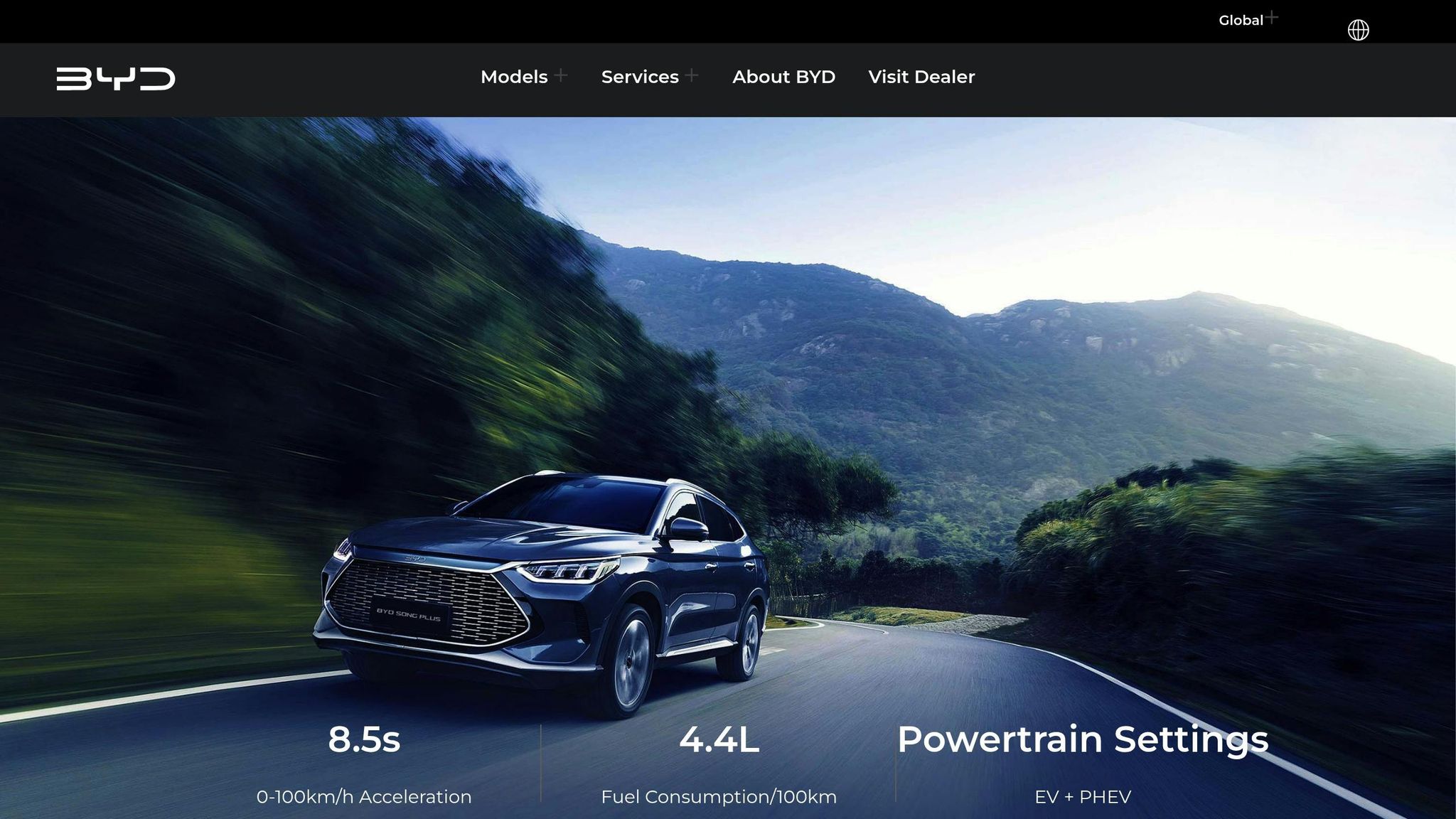
The Song Plus is built to handle Rwanda’s diverse road conditions with ease. With up to 160 kW (218 hp) of power and advanced suspension, it’s well-suited for both Kigali’s urban streets and the country’s hilly terrain. A tight 5.55-meter turning radius makes it especially maneuverable in crowded city areas like Kigali.
For tackling steep hills or rough roads, the Song Plus includes Hill Start Control, Hill Descent Control, and multiple driving modes, such as Eco, Normal, Sport, and Snow mode for slippery or uneven surfaces. Its regenerative braking system is particularly effective on Kigali’s steep descents, recovering energy while reducing wear on the brakes.
Additionally, a 360-degree high-definition holographic imaging system helps drivers navigate tight spaces and avoid obstacles, making it a practical choice for challenging road conditions. These features highlight the Song Plus’s ability to combine advanced tech with everyday usability, making it a strong fit for Rwanda’s roads.
3. Geely Galaxy E5
Range
The Geely Galaxy E5, also known internationally as the Geely EX5, offers a WLTP range of 410–430 km (255–267 miles). In everyday combined driving conditions, you can expect a range closer to 330–370 km (205–230 miles). Interestingly, in Kigali’s warm urban environment, the range can extend up to 490 km (304 miles) [17,18].
This EV is equipped with "Aegis Short Blade" Lithium Iron Phosphate (LFP) batteries, valued for their durability and thermal stability. The energy consumption is rated at 14.0–14.7 kWh per 100 km under WLTP conditions. The Galaxy E5 is powered by a 160 kW (218 hp) front-wheel-drive motor [17,20], making it a competitive option in Rwanda’s growing electric vehicle market.
Price
The Galaxy E5 is priced at approximately $40,000 [17,18], offering a blend of affordability and features. Safety is a strong selling point, with the vehicle achieving a 5-star Euro NCAP safety rating, scoring 86% for adult occupant protection and 87% for child occupant protection [18,20]. It has also earned a 5-star ANCAP rating [19,20]. Inside the cabin, the noise level remains low at 68.3 dB even at speeds of 120 km/h, and the space utilization is efficient at 67.2% [18,19].
Charging Compatibility
Charging the Galaxy E5 is convenient, thanks to its support for DC fast charging at speeds of up to 100–110 kW. This allows the battery to go from 10% to 80% in just 28–30 minutes [17,18,20]. For home or office setups, an 11 kW AC charger can fully charge the battery in about 5.5–6.5 hours, while a standard 7 kW charger takes around 9 hours [17,18,20]. Additionally, its Vehicle-to-Load (V2L) technology provides up to 6 kW of power, making it handy for powering external devices. These features complement Rwanda’s expanding EV charging infrastructure.
Performance on Rwandan Roads
With a 160 kW motor, the Galaxy E5 accelerates from 0 to 100 km/h in 6.9 seconds. Its MacPherson front struts and multi-link rear suspension ensure a smooth ride, even on Kigali’s hilly terrain [17,18,20]. The motor delivers 320 Nm of torque [17,18,20], providing ample power for highway merging and navigating Rwanda’s steep roads. A ground clearance of 170 mm (6.7 inches) makes it suitable for both paved city streets and well-maintained secondary roads. Its drag coefficient of 0.269 enhances efficiency on highways.
For steep climbs in Kigali, switching to Sport mode sharpens throttle response, while Eco mode prioritizes range for longer drives. A built-in heat pump system boosts energy efficiency, and the panoramic sunroof includes advanced insulation to shield against UV rays and heat – an essential feature in Rwanda’s sunny climate.
The Galaxy E5 offers a maximum payload capacity of 475 kg (1,047 lbs) and a trunk space of 461 liters (16.3 cubic feet), which can expand to 1,877 liters (66.3 cubic feet) by folding down the rear seats [17,18]. This combination of performance, practicality, and comfort makes it a strong contender for Rwanda’s EV enthusiasts.
sbb-itb-7bc66b5
4. BYD Tang
Range
The BYD Tang boasts a claimed range of 635 km (395 miles). However, real-world testing of its previous 86.4 kWh version paints a different picture, with an average range of 355 km (220 miles). Under ideal city driving conditions, it can stretch up to 515 km (320 miles), but on highways, it drops to about 255 km (158 miles). Powered by a dual-motor setup, the Tang delivers 380 kW (517 hp) and 680 Nm (502 lb-ft) of torque. Its all-wheel drive system dynamically adjusts traction, making it reliable for hill climbs and varied terrains. These features highlight the Tang’s effort to balance range with robust performance, appealing to those seeking a premium electric SUV.
Price
With a starting price of around $72,000, the BYD Tang offers a luxurious experience. It comes with Nappa leather seats, a 15.6-inch rotatable touchscreen, and a Dynaudio Hi-Fi sound system featuring 12 speakers. Built with 77.4% high-strength steel, it also incorporates BYD’s Blade Battery, which has passed stringent thermal safety tests.
Charging Compatibility
Charging flexibility is one of the Tang’s strengths. It includes a Type 2 AC port and a CCS Combo 2 DC port, enabling a fast charge from 10% to 80% in about 40 minutes at 120 kW. For home charging, its 7.4 kW onboard charger takes roughly 13 hours and 45 minutes for a full charge, while using a standard 2.3 kW outlet extends the time to over 44 hours.
Performance on Rwandan Roads
The BYD Tang accelerates from 0 to 100 km/h (0-62 mph) in just 4.4 seconds. Its DiSus-C intelligent damping system and adaptive all-wheel drive ensure steady handling on steep hills and wet roads. Safety features like Brembo calipers, uphill start assist, downhill control, and a 360-degree HD surround-view camera enhance its suitability for challenging conditions. With up to 1,655 liters (58.4 cubic feet) of cargo space when the rear seats are folded, the Tang proves to be versatile. However, its "1-Stop Range" test, achieving an average of 342 km on a single 15-minute fast charge, suggests it may not be ideal for extended road trips.
Pros and Cons
Here’s a breakdown of how each model stacks up in Rwanda’s growing EV market, highlighting their key advantages and drawbacks in terms of performance, affordability, and local incentives.
The BYD Yuan Plus is a standout for navigating Kigali’s steep terrain, thanks to its solid hill-climbing capabilities. It also benefits from an 80% import duty reduction, making it a more affordable option for urban drivers. Similarly, the Geely Galaxy E5 takes advantage of the same tax incentives, along with a full VAT exemption, making it an attractive choice for city dwellers with predictable daily commutes.
For those venturing beyond the city, the BYD Tang is an excellent option. Its higher ground clearance and all-wheel drive make it ideal for rural areas and long-distance trips. However, as a plug-in hybrid (PHEV), it only qualifies for a 50% import duty reduction, which slightly affects its affordability. Meanwhile, the BYD Song Plus offers flexibility with both EV and PHEV versions, letting buyers choose based on their charging needs and travel habits.
Rwanda’s mild climate is a win for all these models, as it helps maintain battery efficiency and lifespan, avoiding the issues seen in extreme weather conditions. Additionally, with over 50% of Rwanda’s electricity coming from renewable sources, EVs boast operating costs that are approximately 70% lower than gasoline vehicles over five years. However, the initial purchase price of EVs remains higher than traditional cars, and rural areas still face challenges with limited charging infrastructure compared to Kigali’s nearly 200 stations.
Home charging plays a crucial role, as 80–90% of EV owners in Rwanda rely on charging at home or work. Installing a Level 2 home charger costs between 300,000–800,000 RWF ($340–$910) and significantly cuts charging time from 8–15 hours down to 3–8 hours. Below is a quick comparison of the models:
| Model | Real-World Range | Starting Price | Tax Incentive | Best For | Key Limitation |
|---|---|---|---|---|---|
| BYD Yuan Plus | 320 km (199 mi) avg | ~$30,000 | 80% duty reduction | City/hilly terrain | Limited cargo space |
| BYD Song Plus | 505 km (314 mi) avg | ~$38,000 | 50–80% (varies) | Family/mixed use | Higher price point |
| Geely Galaxy E5 | 440 km (273 mi) avg | ~$32,000 | 80% duty reduction | City/suburban | Less proven locally |
| BYD Tang | 355 km (220 mi) avg | ~$72,000 | 50% duty reduction | Rural/long-distance | Premium pricing |
Conclusion
When choosing an electric SUV in Rwanda, it’s important to align your decision with your driving habits and the country’s growing EV infrastructure. For city drivers, compact options like the BYD Yuan Plus (Atto 3) are a great fit. These models are easy to navigate through Kigali’s streets and come with appealing government incentives, making them an excellent choice for everyday commutes.
If you’re looking for more space or versatility, other models might better suit your needs. For instance, the BYD Tang, a plug-in hybrid with higher ground clearance, is well-suited for families or those planning to travel beyond Kigali. However, keep in mind that charging stations are mostly located in urban areas, which could be a consideration for long-distance trips. On the bright side, subsidized electricity at $0.10 per kWh keeps operational costs low and makes the five-year total cost of ownership very competitive. These advantages highlight why switching to an electric vehicle in Rwanda is a practical and forward-thinking choice.
FAQs
What are the key advantages of owning an electric SUV in Rwanda?
Owning an electric SUV in Rwanda comes with a host of perks. Government incentives, such as duty-free imports and tax exemptions, make these vehicles more accessible to buyers. Plus, Rwanda’s expanding EV infrastructure – featuring over 24 public charging stations and 49 battery-swap sites – ensures that recharging is convenient and quick, keeping downtime to a minimum.
When it comes to operating costs, electric SUVs are a smart choice. Drivers can save up to $840 annually on fuel and maintenance compared to traditional gas-powered vehicles. Electricity costs hover around $0.20 per kWh, significantly cheaper than the $1.30 per liter price of fuel. On top of that, Rwanda’s mild climate helps maintain battery performance and extends its lifespan, while the country’s focus on renewable energy makes EVs an eco-friendly option.
With ranges exceeding 400 kilometers, models like the Tesla Model Y and Skoda Elroq are perfect for both navigating Kigali’s daily commutes and taking on longer road trips. These SUVs are built to handle Rwanda’s hilly terrain and narrow streets with ease, offering smooth acceleration and enhanced safety features.
How well does Rwanda’s charging network support electric SUV owners?
Rwanda’s network of charging stations is expanding quickly, making it more practical than ever to own and drive an electric SUV. By 2024, the country boasts 24 public charging stations strategically located in key areas like Kigali and along major travel routes. On top of that, there are 49 battery-swap facilities, which allow drivers to swap out depleted batteries in minutes – a particularly handy feature for larger SUVs tackling longer journeys. To make things even better, 38 new charging stations are set to roll out, ensuring more coverage and easing concerns about range, especially in Rwanda’s hilly regions.
Most of these stations offer fast-charging speeds ranging from 80 kW to 250 kW. This means popular models like the Tesla Model Y and Skoda Elroq can regain a substantial amount of range in less than an hour. Combined with Rwanda’s subsidized electricity rates and tax exemptions on EV imports, owning an electric SUV isn’t just convenient – it’s also a smart financial choice, cutting costs on both fuel and maintenance.
What incentives does the Rwandan government offer for buying an electric SUV?
The Rwandan government has introduced a range of financial incentives to make electric SUVs more accessible. Since April 2021, pure-electric vehicles (EVs) have been eligible for a 0% import duty, a full VAT exemption, and a waiver on excise and withholding taxes for both the vehicles and their components. These policies eliminate the usual 25% import duty and 18% VAT, significantly lowering the upfront cost of EVs.
Beyond purchase incentives, EV owners in Rwanda benefit from tax-free registration and annual vehicle tax waivers, perks that gas-powered car owners don’t receive. To further promote e-mobility, the government supports the development of charging infrastructure by offering rent-free land for charging stations, special electricity tariffs for EV users, and a lower corporate tax rate (15%) for businesses investing in EV-related infrastructure. These initiatives not only make electric SUVs more affordable but also reduce the long-term costs of ownership and operation.
Related Blog Posts
- Top 5 Compact EVs for Rwanda in 2025
- Top 5 Electric Cars sold at AUTO24 Rwanda
- This Electric Car Is Turning Heads in Rwanda ⚡️
- Electric Cars in Rwanda: Models and Charging Points