Electric vehicle (EV) insurance in Rwanda for 2026 is more expensive than insurance for gas-powered or hybrid cars, mainly due to high battery replacement costs, limited repair facilities, and the advanced technology in EVs. Annual premiums range from FRW 350,000 to FRW 1,500,000, depending on the vehicle’s value. While government incentives like VAT and import duty exemptions lower the initial cost of EVs, insurance premiums remain 5–10% higher compared to traditional cars of the same value.
Key Takeaways:
- Cost Factors: High battery prices ($15,000–$22,000), specialized repairs, and theft risks drive premiums up.
- Premium Ranges:
- Under $30,000: FRW 350,000–650,000
- $30,000–$60,000: FRW 500,000–1,500,000
- Over $60,000: FRW 1,500,000+
- Savings Tips:
- Install anti-theft systems for discounts.
- Opt for bundled policies or higher deductibles.
- Maintain a clean driving record for up to 60% no-claim discounts.
Insurance Providers:
- Radiant Yacu Insurance: Offers EV-specific plans like "Bboxx Protect" with lower rates for electric motorcycles.
- Britam Insurance Rwanda: Provides motor insurance with discounts for claim-free renewals.
- Prime Insurance: Features quick claims processing and tiered plans for EVs.
Rwanda’s VAT exemption on EVs (valid until 2028) reduces insured values, making some policies more affordable. However, choosing the right coverage tailored to EV needs – like battery and charging equipment protection – remains critical for long-term savings.
What Affects EV Insurance Prices in Rwanda
Electric vehicle (EV) insurance premiums in Rwanda tend to be higher than those for traditional cars, even with government incentives in place. The reasons boil down to repair costs, unique risks, and infrastructure challenges. Let’s dive into the key factors, starting with the cost of EV batteries.
Battery Replacement and Repair Costs
The battery pack is the most expensive part of an EV, with replacement costs ranging from $15,000 to $22,000 if it’s out of warranty. For example, replacing the battery in a Tesla Model 3, including labor, can cost around $15,799. This hefty price tag creates a significant challenge for insurers. Even small accidents that damage the battery pack often result in the vehicle being declared a total loss rather than repaired.
Adding to the issue, Rwanda faces a shortage of skilled EV mechanics and repair facilities. This lack not only increases labor costs but also prolongs repair times, both of which insurers factor into their premium calculations.
Import Rules and Theft Concerns
While Rwanda offers a 0% import duty on EVs to make them more accessible, insurance premiums are still influenced by the high CIF (Cost, Insurance, and Freight) values of advanced EV models. The government also provides incentives for EVs with CIF values exceeding $60,000 to encourage imports. However, these high-value vehicles require greater insurance coverage, driving up premiums.
Additionally, when vehicles transition from tax-exempt to private ownership, customs duties are applied, increasing the vehicle’s appraised CIF value. This, in turn, raises the cost of insurance. Many EV owners also opt for comprehensive coverage instead of basic third-party liability, aiming to safeguard their expensive imports against theft or damage.
Road Infrastructure and Local Conditions
Rwanda’s evolving road infrastructure, stricter traffic laws, and diverse driving conditions also influence EV insurance costs. On top of this, the East African Community (EAC) depreciation schedule plays a role. Under this schedule, a vehicle’s insured value drops by 20% after the first year and can decrease by up to 80% over a decade. This depreciation impacts how premiums are calculated over time.
EV Insurance Costs in Rwanda for 2026
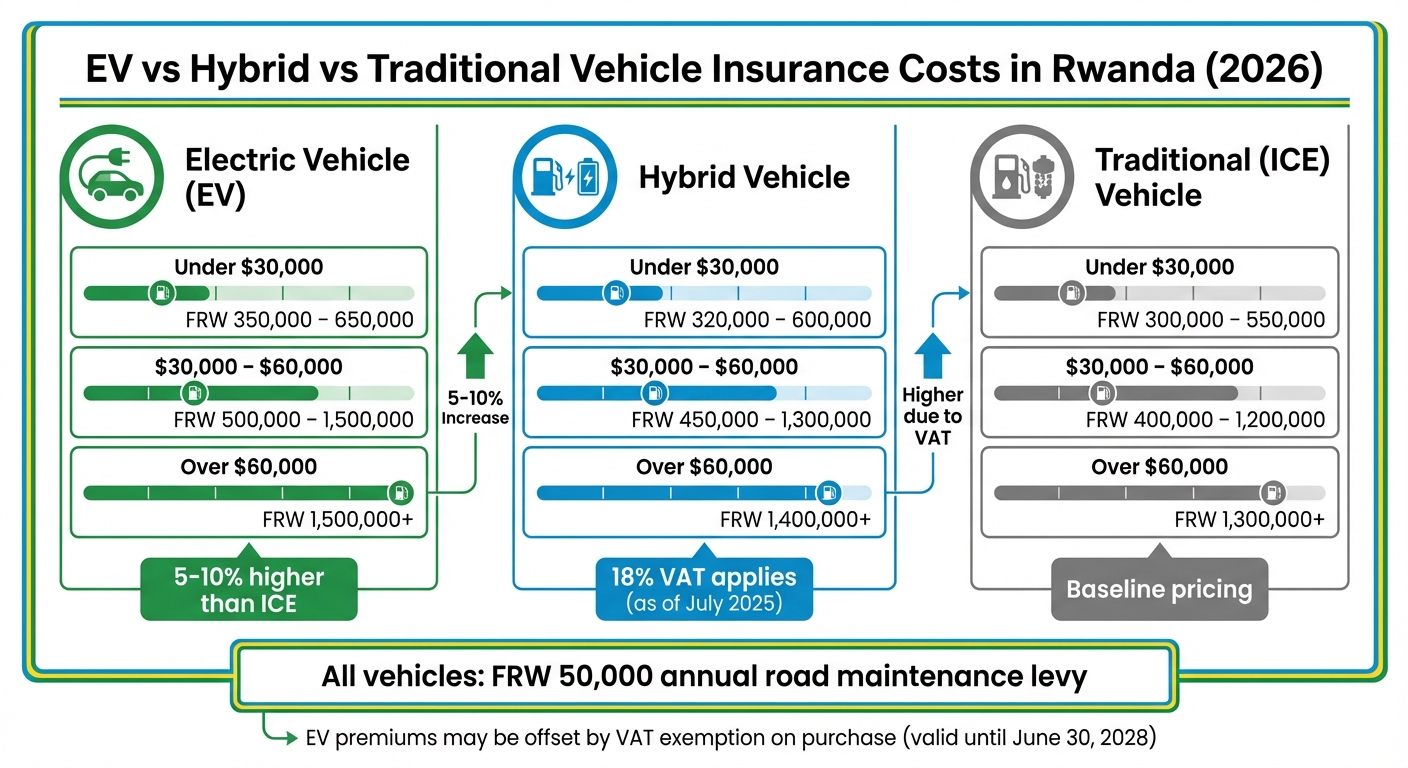
EV vs Hybrid vs Traditional Vehicle Insurance Costs in Rwanda 2026
In 2026, insuring an electric vehicle (EV) in Rwanda ranges from FRW 350,000 to FRW 1,500,000 annually, depending on the vehicle’s value. For mid-range EVs priced between $30,000 and $60,000, insurance costs typically fall between FRW 500,000 and FRW 1,500,000. Additionally, all vehicles are subject to a fixed annual road maintenance levy of FRW 50,000.
Rwanda’s VAT exemption for fully electric vehicles, effective until June 30, 2028, helps reduce the upfront purchase price and the insured value of EVs. However, EV insurance premiums are still 5% to 10% higher than those for traditional vehicles of the same value. This difference is due to factors like specialized repair requirements and battery-related costs, as discussed earlier.
As of July 1, 2025, hybrid vehicles no longer qualify for the VAT exemption and are now subject to an 18% VAT along with excise duties ranging from 5% to 15%, depending on the vehicle’s age. This policy shift has brought hybrid insurance premiums closer to those of EVs, reflecting the broader market trend toward electrification. Below is a comparison of insurance costs for EVs, hybrids, and traditional internal combustion engine (ICE) vehicles in 2026.
Cost Comparison: EV vs. Hybrid vs. Traditional Vehicle Insurance
Here’s a breakdown of annual insurance premiums by vehicle type and value range for 2026:
| Vehicle Value Range | Electric Vehicle (EV) | Hybrid Vehicle | Traditional (ICE) Vehicle |
|---|---|---|---|
| Under $30,000 | FRW 350,000 – 650,000 | FRW 320,000 – 600,000 | FRW 300,000 – 550,000 |
| $30,000 – $60,000 | FRW 500,000 – 1,500,000 | FRW 450,000 – 1,300,000 | FRW 400,000 – 1,200,000 |
| Over $60,000 | FRW 1,500,000+ | FRW 1,400,000+ | FRW 1,300,000+ |
Note: EV premiums are generally 5–10% higher than those for traditional vehicles of the same value. However, the VAT exemption on EVs in Rwanda may result in a lower insured value for an EV compared to a hybrid or ICE vehicle with the same manufacturer’s suggested retail price (MSRP).
For premium vehicles priced above $60,000, the insurance cost gap between EVs and traditional cars narrows significantly. This is partly because traditional vehicles in this price range are exempt from the 25% import duty, a policy aimed at boosting Rwanda’s tourism industry.
How to Lower Your EV Insurance Costs in Rwanda
Electric vehicle (EV) insurance in Rwanda can feel pricey, largely because of advanced technology and battery-related expenses. But don’t worry – there are several ways to keep your premiums manageable without skimping on coverage. These strategies can help you strike the right balance between affordability and protection, even with the unique challenges EVs bring.
Choose Comprehensive Coverage Wisely
For EV owners in Rwanda, comprehensive insurance is a smart investment. While these policies might seem expensive upfront, they save you from hefty costs like battery replacements or charging equipment repairs. Here’s a bonus: fully electric vehicles and charging station equipment are exempt from VAT until June 30, 2028. This tax break helps insurers manage claims more efficiently, which could mean savings for you. Look for policies that specifically cover battery damage and charging infrastructure – especially since replacing a battery can cost up to 30% of your vehicle’s value. On top of that, using tech to reduce risks can also help bring premiums down.
Install Anti-Theft Systems
Adding telematics or advanced monitoring systems to your EV is another way to cut costs. These devices not only improve security but also help insurers assess risks more accurately. For instance, in January 2026, Bboxx and Radiant Yacu Insurance launched "Bboxx Protect" for electric motorcycles in Rwanda. This plan offers comprehensive coverage at rates 40% lower than the market average. Such systems use real-time data to prevent accidents and improve risk management, which allows insurers to offer better rates. Plus, they can qualify you for usage-based discounts. If you maintain a clean driving record, you could also earn non-claim discounts of up to 60% over time.
Bundle Policies and Adjust Deductibles
Once you’ve reduced risks with anti-theft measures, you can save even more by managing your policy smartly. Bundling your EV insurance with other policies or insuring multiple vehicles can lower your overall costs. Many insurers in Rwanda offer fleet discounts for customers with multiple vehicles. Another option is to choose a higher deductible, which reduces your premium. Just make sure you’re financially prepared to cover the deductible if you ever need to make a claim. Also, check if your insurer provides bundled payment plans, which can simplify your payments and potentially save you money.
sbb-itb-7bc66b5
Insurance Companies Offering EV Coverage in Rwanda
In 2026, finding insurance for your electric vehicle (EV) in Rwanda has become much simpler, thanks to a growing number of providers offering tailored coverage. These specialized policies now include protection for batteries, charging equipment, and more, often at competitive rates.
Companies with EV-Specific Coverage Options
Radiant Yacu Insurance leads the way with its Bboxx Protect plan, locally known as Bboxx Ingoboka, launched in December 2024. Designed in partnership with Bboxx, this pay-as-you-go insurance model caters specifically to electric motorcycles.
What sets Bboxx Protect apart is its use of smart data monitoring to predict accidents and adjust premiums accordingly. The policy covers material damage, fire, third-party liabilities, life insurance, and total permanent disability. Speaking about the initiative, Radiant Yacu’s CEO, Ovia K. Tuhairwe, shared:
"By offering affordable, comprehensive coverage specifically tailored for EVs, we are not only enabling a safer and greener economy for the future, but also addressing Rwanda’s low insurance penetration".
Other major insurers are also stepping up with competitive EV-focused options.
Britam Insurance Rwanda provides comprehensive motor insurance for EV fleets. Their policies cover accidental damage, fire, and theft, and they offer up to 60% discounts for claim-free renewals. Additionally, Britam waives "Controller Technique" fees during policy renewals. The company has also partnered with local districts to support Rwanda’s green mobility agenda.
Prime Insurance offers tiered plans – Platinum, Passenger, and Solo – allowing EV owners to choose coverage based on their preferences and budgets. Prime Insurance is known for its quick claims process, settling amounts under RWF 500,000 (about $365) within an hour, and resolving larger claims within two working days. They also provide 24-hour roadside assistance, a critical feature for EV users who may require specialized help.
How Insurance Policies Work with Rwanda’s EV Tax Benefits
Rwanda’s tax incentives for EVs also play a role in shaping insurance costs. Pure electric vehicles are exempt from VAT, withholding tax, excise duty, and import duty. These exemptions significantly reduce the initial purchase price of EVs, which in turn lowers the insured value. As a result, insurers calculate premiums based on these reduced values, making comprehensive coverage more affordable.
Additionally, the government’s 15% corporate income tax rate for e-mobility sector investors has encouraged insurers to create specialized EV policies. This synergy between tax benefits and insurance options allows EV owners to channel their savings from tax breaks into more comprehensive insurance plans. For instance, policies like Bboxx Protect are now priced more than 40% below average market rates, making them an attractive option for EV owners.
Summary: What You Need to Know About EV Insurance in 2026
Here’s a quick rundown of the key points about EV insurance in Rwanda as we look ahead to 2026.
Electric vehicle (EV) insurance is becoming more affordable and accessible, thanks to government incentives that help lower insured values and, in turn, reduce premiums. These measures align with Rwanda’s growing focus on greener transportation options.
There are practical ways to cut costs even further. For instance, keeping a clean driving record can lead to no-claim discounts of up to 60%. Bundling multiple policies or selecting comprehensive plans can also provide better value for your money.
Insurance providers like Britam and Prime Insurance now offer policies tailored for EVs. These plans include coverage for battery replacement, charging equipment, and third-party liabilities – features that cater specifically to the needs of EV owners.
The EV insurance market is expected to grow at an annual rate of 1.49% through 2030. This growth is driving more competitive pricing and the rise of digital platforms that simplify policy comparisons. Usage-based insurance, which uses telematics to reward safe driving with lower premiums, is also gaining momentum. These options complement the specialized policies already available.
To make the most of your EV insurance, consider comprehensive plans that include coverage for batteries and charging equipment, and take advantage of tax exemptions to reduce your insured value. Choosing the right policy not only protects your vehicle but also contributes to Rwanda’s commitment to sustainable mobility.
FAQs
Why are EV insurance premiums in Rwanda typically higher than those for traditional cars?
In Rwanda, insurance premiums for electric vehicles (EVs) tend to be higher, largely because they’re calculated based on the car’s total value. Since EVs often come with a hefty price tag – thanks to the costly batteries that power them – this directly pushes up insurance rates.
Another factor driving these premiums is the expense of repairing or replacing EV-specific components, such as batteries and other specialized parts. These costs are typically higher compared to traditional vehicles. However, as more people embrace EVs and repair networks expand, these expenses could level out over time, potentially making premiums more competitive.
What are some ways to lower the cost of EV insurance in Rwanda?
To bring down the cost of electric vehicle (EV) insurance in Rwanda, start by leveraging the government’s tax incentives. Imported EVs enjoy customs duty exemptions and zero VAT, which reduce the taxable value of the vehicle. This, in turn, lowers your insurance premium. Be sure to provide customs clearance documents to your insurer to confirm your eligibility for these benefits.
You can also cut costs further by adopting these practical tips:
- Shop around for quotes: Compare offers from multiple insurers to find the most competitive rate.
- Increase your deductible: Opting for a higher deductible can reduce your monthly premium.
- Bundle your policies: Combining your EV insurance with other policies, like home or health insurance, can unlock discounts.
- Drive safely: A clean driving record often leads to lower premiums, as insurers reward safe drivers.
- Install safety features: Anti-theft devices or advanced safety systems can qualify you for additional discounts.
By pairing these strategies with Rwanda’s tax breaks, you can keep your EV insurance affordable while ensuring solid coverage.
What should I look for in an EV insurance policy in Rwanda?
When selecting EV insurance in Rwanda, it’s crucial to ensure your policy addresses both legal requirements and the specific needs of your electric vehicle. Start with third-party liability coverage, which is mandatory by law. This covers any injuries or property damage you might cause to others while driving.
For extra peace of mind, consider adding fire and theft coverage. This is especially important given the high cost of EV batteries, as it protects against theft or fire-related damages. Opting for a comprehensive policy is a wise choice too. It not only covers third-party incidents but also safeguards your vehicle against damages from collisions, vandalism, natural disasters, and more.
You might also want to explore policies that include bodily injury coverage for you and your passengers. Additionally, look for add-ons like battery and accessory protection, which can cover removable items such as charging cables and the battery pack.
By combining these coverages, you can protect your EV comprehensively while staying compliant with Rwanda’s insurance laws.
Related Blog Posts
- Car prices in Kigali this year
- Car insurance costs in Rwanda
- Comprehensive car insurance in Rwanda: What you need to know in 2025
- EV Policy Updates for 2025/2025 in Rwanda