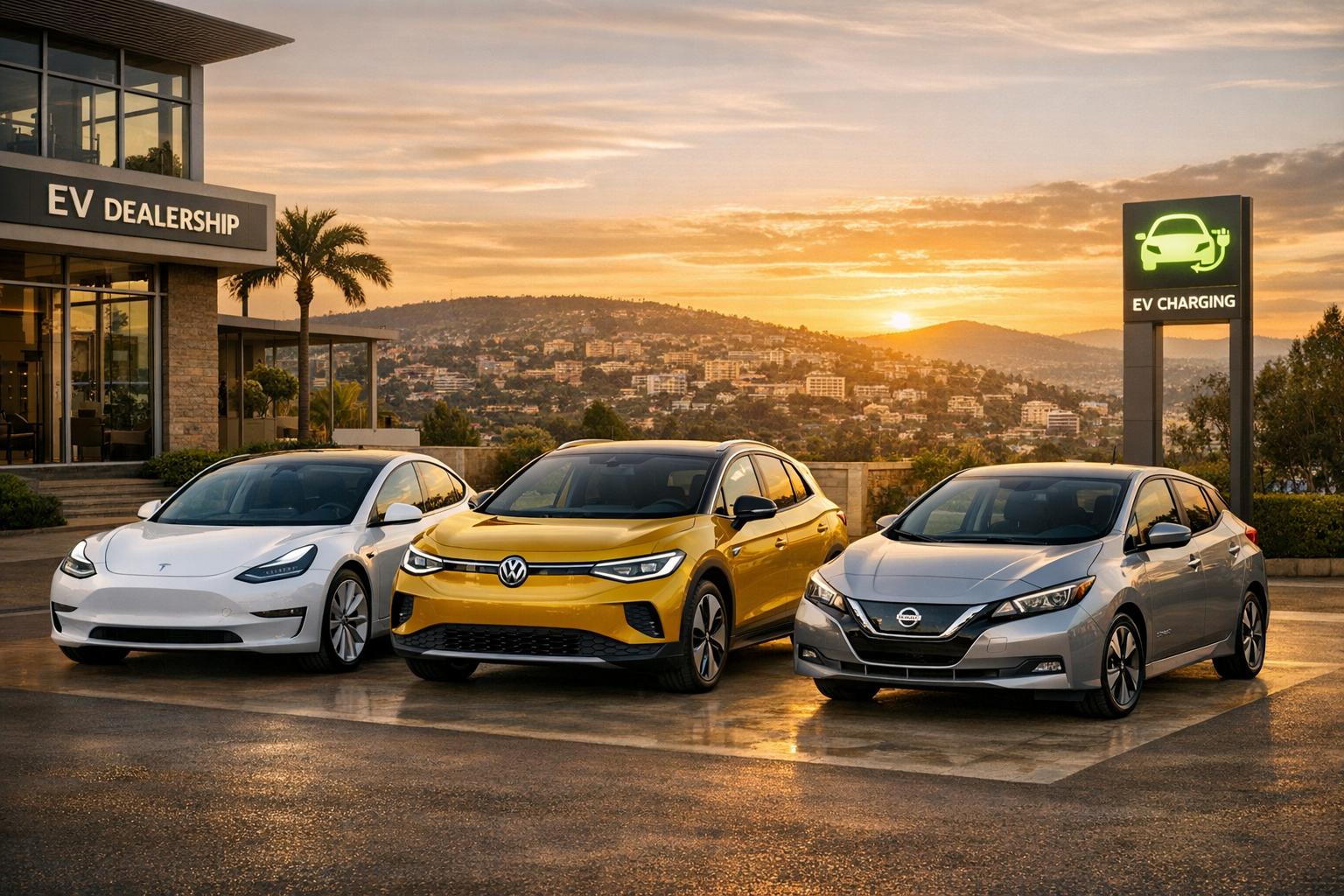
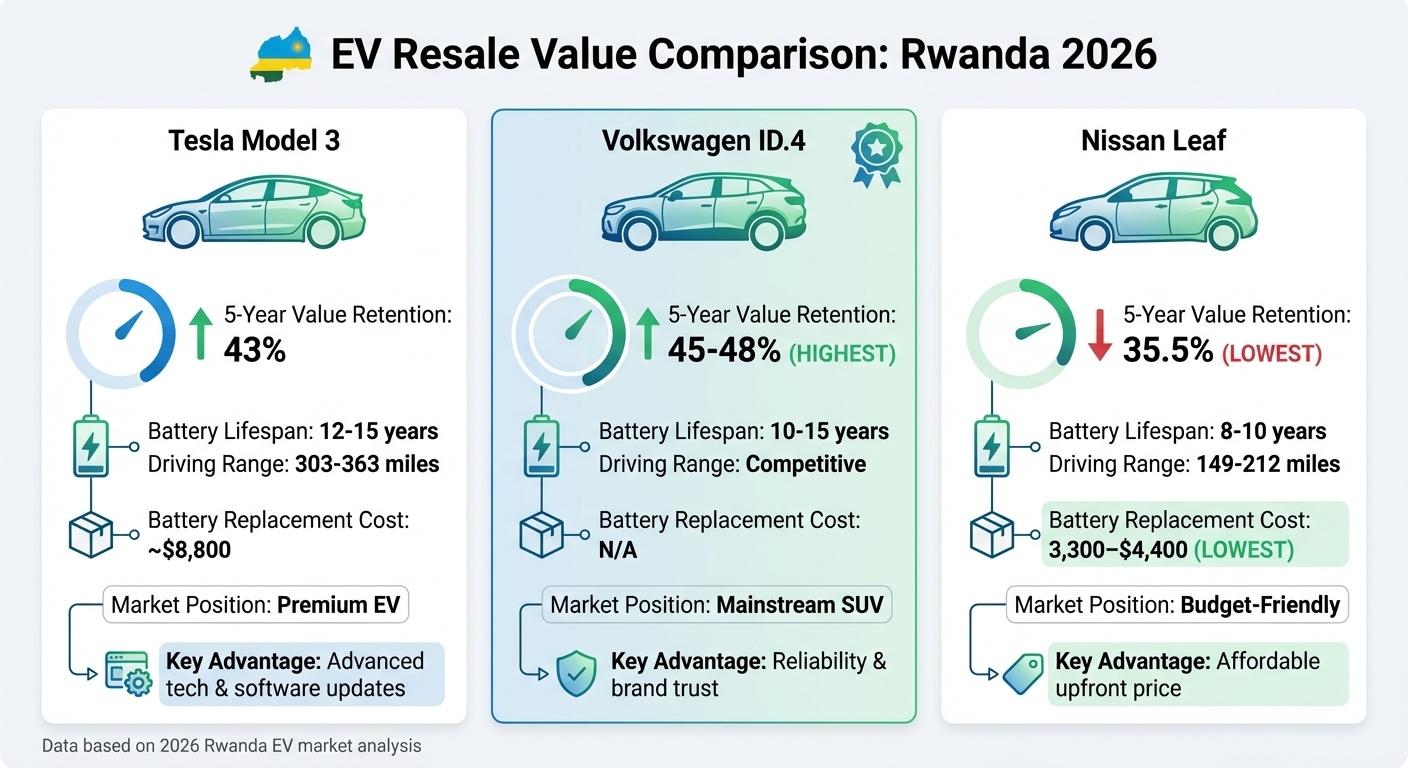
The resale value of electric vehicles (EVs) in Rwanda varies significantly depending on the model. In 2026, the Tesla Model 3, Volkswagen ID.4, and Nissan Leaf dominate the market, but they perform differently in terms of depreciation, battery life, and demand:
- Tesla Model 3: Retains ~43% of its value after five years. Known for advanced battery technology, long range (303–363 miles), and strong demand.
- Volkswagen ID.4: Holds 45–48% of its value after five years. Reliable with a balanced range and lower maintenance costs.
- Nissan Leaf: Retains ~35.5% of its value after five years. Affordable upfront but depreciates faster due to shorter range (149–212 miles).
Quick Comparison
| Feature | Tesla Model 3 | Volkswagen ID.4 | Nissan Leaf |
|---|---|---|---|
| 5-Year Value Retention | ~43% | 45–48% | ~35.5% |
| Battery Lifespan | 12–15 years | 10–15 years | 8–10 years |
| Range (Miles) | 303–363 | Competitive | 149–212 |
| Battery Replacement Cost | ~$8,800 | N/A | $3,300–$4,400 |
| Market Position | Premium EV | Mainstream SUV | Budget-Friendly |
For buyers, the Tesla Model 3 offers long-term value and advanced features. The Volkswagen ID.4 provides a solid middle ground with reliability and moderate costs. The Nissan Leaf is a practical choice for budget-conscious buyers but comes with higher depreciation. Always check battery health and service history before purchasing a used EV.
EV Resale Value Comparison: Tesla Model 3 vs VW ID.4 vs Nissan Leaf in Rwanda 2026
1. Tesla Model 3
Resale Value Retention (%)
The Tesla Model 3 stands out as a leader in value retention within Rwanda’s EV market. Generally, vehicles aged 4–5 years in Rwanda lose about 50% of their value under the Rwanda Revenue Authority‘s standardized depreciation schedule. However, the Model 3 performs better, retaining approximately 46% of its value after three years and 43% after five years. In some cases, three-year-old units have depreciated as little as 10% – a remarkable feat for any vehicle. On average, a five-year-old Model 3 is valued at around $22,854, with prices ranging from $18,999 to $33,998. This strong resale value is largely attributed to its advanced battery technology.
Battery Longevity
The Model 3 is a standout in battery performance, offering an impressive range of 303 to 363 miles. This is particularly beneficial in Rwanda, where hilly landscapes and a developing charging infrastructure can pose challenges for EV owners. Tesla batteries have an annual degradation rate of just 1.8%, which is an improvement from the previous 2.3%, ensuring they maintain over 90% of their capacity even after five years. Additionally, Tesla’s federal battery warranties, which cover eight years or 100,000 miles, provide extra assurance for buyers in the used market. These reliable battery metrics make the Model 3 an appealing choice for EV buyers in Rwanda.
Market Demand
The Model 3’s technical advantages translate into strong demand within Rwanda’s premium EV segment. Tesla’s ability to provide over-the-air software updates ensures that even older models remain technologically up-to-date. As Eva Fox of Tesmanian notes:
One reason Teslas defy the high depreciation of the EV segment is because over-the-air software updates help keep even the older versions current.
In transitional markets like Rwanda, U.S. and European EV brands generally retain 17.6% to 19.2% more value compared to Chinese models. Among Tesla’s lineup, the Model 3 leads in value retention, surpassing the Cybertruck (40%) and Model Y (39.2%). The Model 3’s lower operating costs also contribute to its popularity. Fuel expenses are estimated to be 50% lower, and repair costs are 60% lower compared to traditional vehicles, making it a competitive option in Rwanda’s growing EV market.
2. Volkswagen ID.4
Resale Value Retention (%)
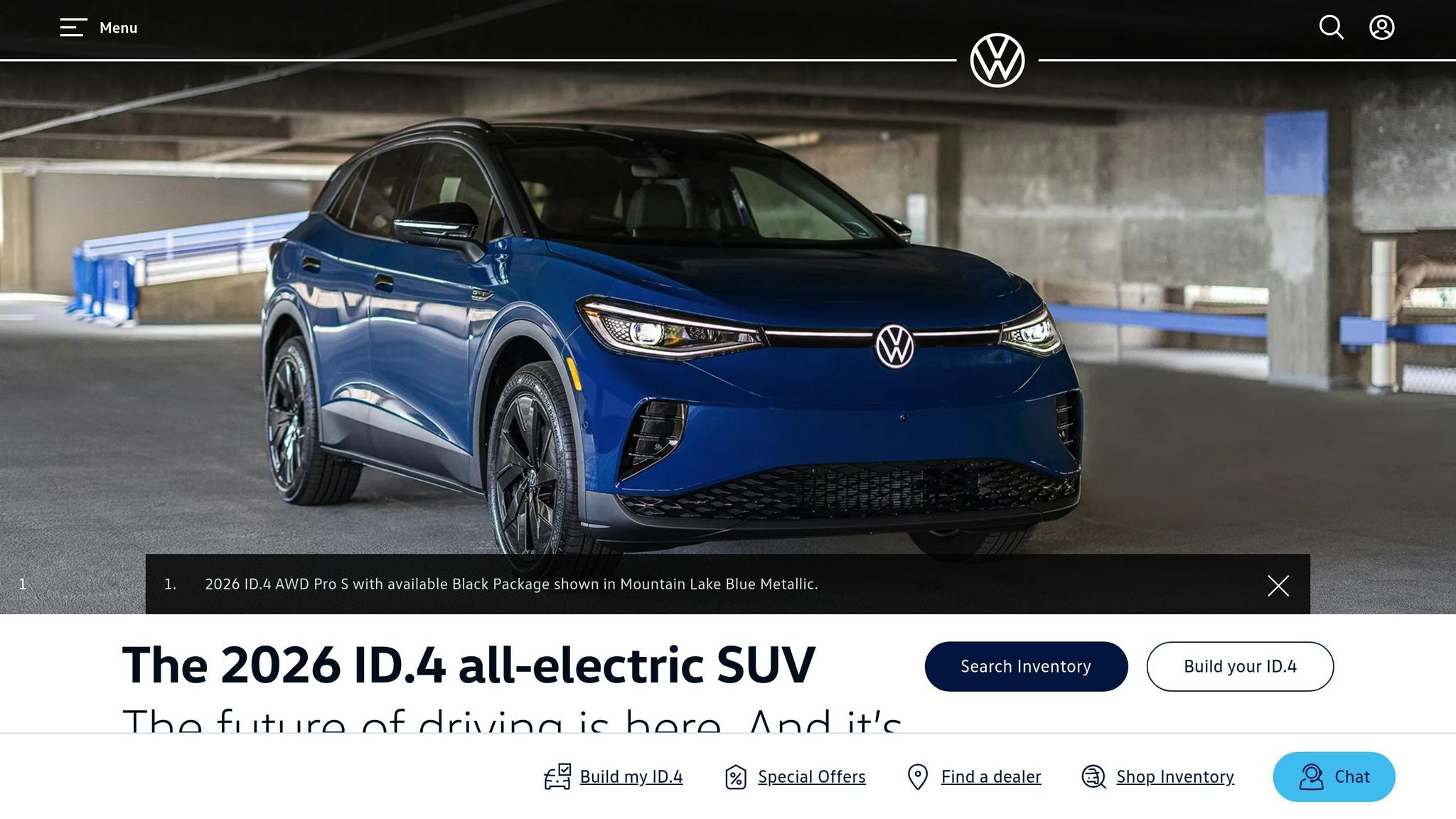
The Volkswagen ID.4 aligns with the Rwanda Revenue Authority’s depreciation framework. According to the official EAC schedule for 2026, the ID.4 retains 60% of its original value after three years and 45% after five years. However, real-world data paints a slightly different picture. The 2025 ID.4 is expected to hold onto 60-62% of its value after three years and 45-48% after five years, an improvement from earlier predictions of 40-43%. This shift highlights advancements in battery technology and growing consumer trust in Volkswagen’s electric vehicle (EV) lineup. The fact that the ID.4 is manufactured in Germany also contributes to its strong resale value, as European-made EVs tend to retain their worth 19.2% better than Chinese models in markets like Rwanda. These factors position the ID.4 as a strong contender in Rwanda’s growing EV market.
Battery Longevity
Battery health is a critical factor for the ID.4’s resale value, making up 30% to 50% of the vehicle’s total cost. The ID.4’s battery is projected to experience some performance decline after 6 to 10 years, which coincides with the period when resale values typically stabilize at their lowest point. Volkswagen offers an 8-year/100,000-mile battery warranty, which, when combined with Rwanda’s mild climate, helps maintain battery capacity over time. The country’s moderate temperatures avoid the extreme heat that often accelerates battery degradation, giving locally driven ID.4 models an edge in longevity compared to global averages. As Jean-Claude N., an EV Technician, explains:
An EV battery doesn’t die overnight. It gradually loses capacity, just like your smartphone battery.
This steady decline emphasizes the importance of battery care and warranty coverage for Rwandan ID.4 owners.
Market Demand
Volkswagen Rwanda’s solid market presence enhances the ID.4’s appeal and trust among buyers. Demand has also been bolstered by the rapid expansion of Rwanda’s charging infrastructure, which grew by 134.6% between 2023 and 2024, providing one charging station for every 14.8 electric or plug-in hybrid vehicles. This growth has eased range anxiety, making used EVs, including the ID.4, more attractive. Additionally, the ID.4’s use of Volkswagen’s shared MEB platform ensures better aftermarket support compared to less common EV models, helping to stabilize its value over time. Maintenance costs for the ID.4 average around $5,000 by year five, a manageable figure for many buyers. Diane Uwase, an EV Sales Expert, offers this advice:
Always request a battery health report before purchasing a second-hand EV.
This tip is especially useful for Rwandan buyers navigating the emerging secondary EV market, where transparency about battery health can make all the difference.
3. Nissan Leaf
Resale Value Retention (%)
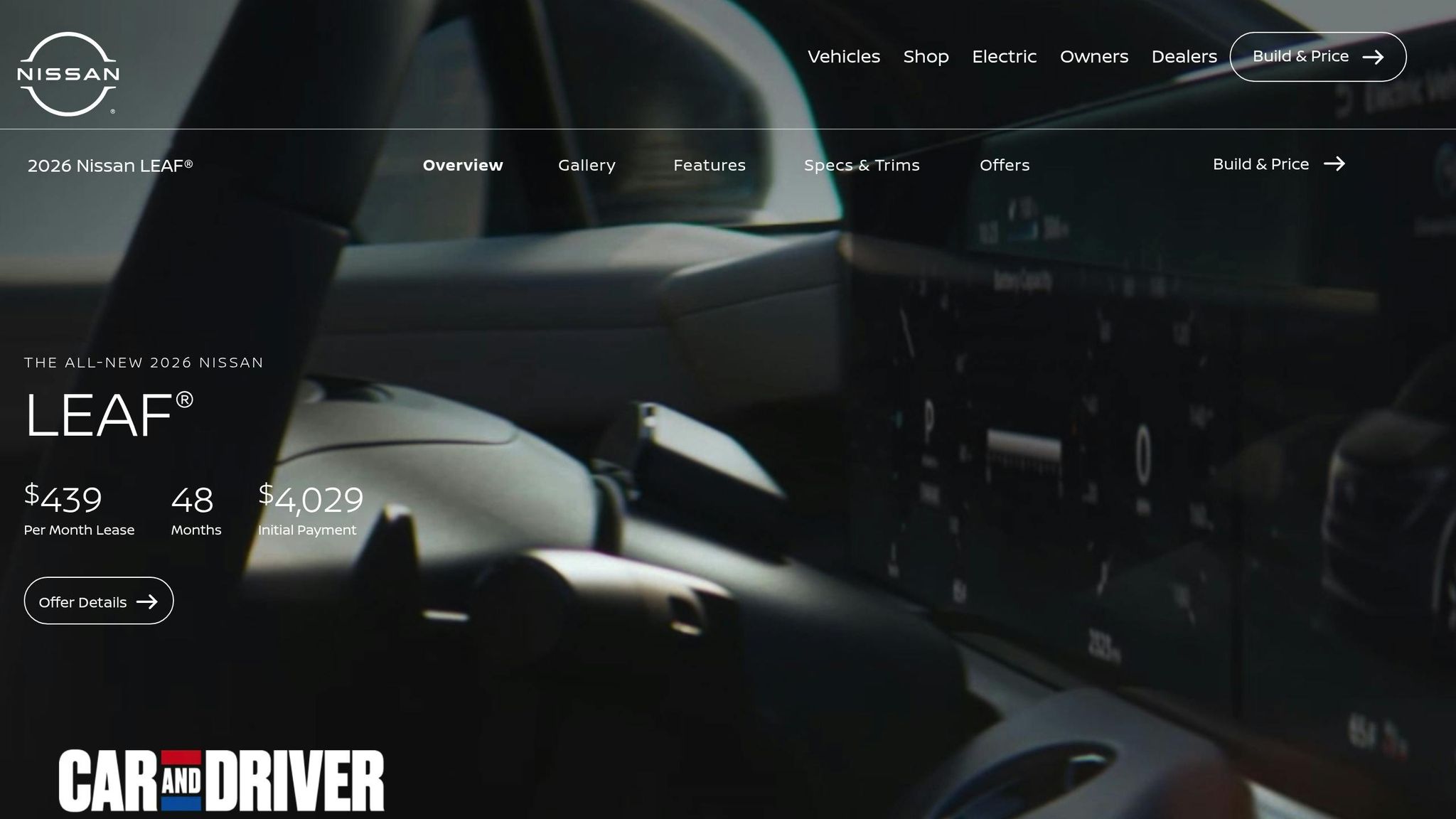
The Nissan Leaf stands out as Rwanda’s most affordable family EV, though it doesn’t hold its value as well as premium electric models. After five years, the Leaf retains only 35.5% of its original price. This trend is evident in real-world pricing: a three-year-old 2022 Leaf typically sells for around $16,680, while a five-year-old 2020 model averages $15,188. Despite these lower resale numbers, the Leaf remains a popular choice in Rwanda, largely due to its accessible starting price. For 2026, new models are priced at $29,990.
Battery Longevity
Battery performance plays a huge role in the Leaf’s resale value, as the battery accounts for up to half of the car’s total cost. The 2026 Leaf comes equipped with a 75 kWh liquid-cooled lithium-ion battery, delivering an EPA-estimated range of up to 303 miles – a noticeable improvement over earlier air-cooled versions. On average, a Nissan Leaf has a lifespan of about 8.2 years or 65,808 miles. It also includes an 8-year/160,000 km warranty for added peace of mind. Rwanda’s temperate climate and hilly terrain work in the Leaf’s favor, helping to preserve battery performance by reducing heat-related wear and taking advantage of regenerative braking on slopes.
Replacing a battery, however, is no small expense, with costs ranging from RWF 4.5 million to RWF 6 million (roughly $3,300–$4,400). As Francois Habimana, an EV Fleet Manager, points out:
Replacing a battery is costly, but with proper care, most Rwandan EV drivers won’t need to think about it for at least a decade.
These advancements in battery technology and proper maintenance practices help maintain the Leaf’s appeal, even with its modest resale value.
Market Demand
The Leaf’s affordability continues to drive its popularity in Rwanda, where it ranks as the top choice among budget-friendly EVs for 2026. The latest model includes Vehicle-to-Load (V2L) technology, which provides up to 1,500 watts of power – ideal for running appliances or serving as an emergency power source for homes. It also offers versatile charging options, such as a NACS port for Tesla Superchargers, a J1772 port for standard Level 1 and 2 charging, and a portable cable compatible with 120V and 240V outlets.
Rwanda’s growing charging network and the increasing availability of battery "State of Health" (SoH) reports in the second-hand market further enhance the Leaf’s practicality. For budget-conscious buyers looking to manage their total cost of ownership effectively, the Leaf remains a solid and dependable choice.
sbb-itb-7bc66b5
Why EVs Depreciate Faster Than Gas Cars
Pros and Cons
Here’s a breakdown of how the Tesla Model 3, Volkswagen ID.4, and Nissan Leaf stack up in terms of resale value, battery performance, and market appeal within Rwanda:
| Feature | Tesla Model 3 | Volkswagen ID.4 | Nissan Leaf |
|---|---|---|---|
| 5-Year Value Retention | ~43% | 45–48% | ~35.5% |
| Battery Lifespan | 12–15 years | 10–15 years | 8–10 years |
| Battery Warranty | 8 years / 192,000 km | 8 years / 160,000 km | 8 years / 160,000 km |
| EV Range | 303–363 miles | Competitive | 149–212 miles |
| Rwanda Climate Suitability | Best – Advanced thermal management | High – Strong brand positioning | Moderate – Improved in 2nd generation |
| Battery Replacement Cost | Over RWF 12M (~$8,800) | N/A | RWF 4.5M–6M (~$3,300–$4,400) |
| Market Position | #1 Affordable Luxury EV | Mainstream SUV | #1 Affordable Family EV |
| Key Advantage | Software updates and strong brand appeal | Reliability and brand trust | Affordable price point |
| Key Drawback | Higher replacement costs | – | Steeper depreciation |
Each model brings its own strengths and challenges to the table, making the choice highly dependent on individual needs and preferences. The Tesla Model 3 stands out for its long-term value retention and impressive battery lifespan, making it a strong contender for buyers seeking durability and advanced features. The Volkswagen ID.4, with its dependable performance and trusted brand reputation, offers a well-rounded option for those looking for a reliable SUV. Meanwhile, the Nissan Leaf appeals to budget-conscious buyers with its lower upfront costs and affordable battery replacement, though it comes with faster depreciation.
In Rwanda, the Tesla Model 3’s advanced thermal management system is particularly well-suited to the local climate and hilly terrain, helping to extend battery life. On the other hand, the second-generation Nissan Leaf has addressed earlier battery concerns, making it a more viable choice in similar conditions. Ultimately, selecting the right EV in this market requires balancing your budget with your expectations for performance and long-term reliability.
Conclusion
A closer look at the data reveals that while the Volkswagen ID.4 and Tesla Model 3 hold strong resale values, the Nissan Leaf falls behind. Specifically, the ID.4 retains about 45% of its value after five years in Rwanda, with the Model 3 close behind at 43%. On the other hand, the Leaf lags with a resale value of 35.5%, likely due to its shorter driving range and market positioning. These numbers align with the Rwanda Revenue Authority’s depreciation model of 45–50%. The narrowing depreciation gap between EVs and traditional vehicles reflects advancements in battery technology and a growing demand for pre-owned electric cars.
For buyers looking to make the most of their EV investments, focusing on models with reliable battery health and longer driving ranges is key. These factors significantly impact resale value. As Diane Uwase, an EV Sales Expert, advises:
Always request a battery health report before purchasing a second-hand EV.
For sellers, maintaining a detailed service history and following best practices for battery care can help preserve value. This includes sticking to the 20–80% charging rule and opting for Level 2 home charging over frequent fast charging, which can accelerate battery wear. Rwanda’s unique conditions, like its temperate climate and hilly terrain, also play a role in extending battery life through efficient regenerative braking.
Government initiatives, such as tax incentives on EV imports, are further boosting the secondary market by making electric vehicles more accessible. Whether you’re buying or selling, understanding these trends and following battery maintenance tips can help you navigate Rwanda’s evolving EV market with confidence.
FAQs
Why does the Tesla Model 3 have such a strong resale value in Rwanda?
The Tesla Model 3 holds its ground in Rwanda as a standout choice for its impressive resale value, primarily due to its slower depreciation rate compared to other electric vehicles. On average, the Model 3 retains about 43% of its original value after five years, putting it ahead of many other cars in the market. This means owners can recoup a larger portion of their initial investment when it’s time to sell.
What drives this strong performance? A combination of factors: Tesla’s well-established brand reputation, consistent demand for its advanced battery technology, and the perception of dependable, long-lasting performance. Additionally, Tesla’s regular software updates ensure that even older models stay relevant and up to date, a feature that resonates strongly with buyers.
By 2026, these qualities cement the Tesla Model 3 as one of the most desirable EVs in Rwanda’s used-car market, giving both buyers and sellers confidence in their investment.
How does Rwanda’s climate impact the lifespan of EV batteries?
Rwanda’s mild and steady climate offers an excellent environment for electric vehicle (EV) batteries. Unlike areas with extreme heat, which can speed up the degradation of lithium-ion cells, Rwanda’s moderate temperatures naturally help keep batteries cooler, preserving their capacity for longer.
This consistency in temperature means EV owners can make the most of the standard battery lifespan, typically ranging from 8 to 15 years as intended by manufacturers. Plus, the lower demand for heavy thermal management – whether during charging or driving – helps maintain battery performance and efficiency over time.
What should you look for when buying a used EV in Rwanda?
When purchasing a used electric vehicle (EV) in Rwanda, one of the first things to evaluate is the battery health. This is crucial since the battery determines the car’s range and its long-term value. Most EV batteries are built to last between 8 and 15 years, with warranties typically covering 8 years or 100,000 miles. To get a clear picture, ask for a recent battery capacity report, confirm any remaining warranty, and check on the previous owner’s charging habits. Frequent use of fast chargers can shorten a battery’s lifespan. While Rwanda’s moderate climate and hilly terrain can actually help extend battery life through regenerative braking, it’s still wise to ensure the car was primarily charged using home or Level 2 chargers.
Another important factor is the overall cost of ownership and the vehicle’s potential resale value. In Rwanda, used EV prices generally range from 5,000,000 RWF to 20,000,000 RWF. Be sure to review the car’s mileage, service history, and whether it’s part of a certified pre-owned program, which often includes inspection reports and limited warranties. Vehicles from brands with strong reputations and dependable after-sales support tend to maintain their value better. Additionally, Rwanda’s tax incentives for EVs and the growing network of charging stations can significantly reduce running costs and make the car more attractive to future buyers.
Related Blog Posts
- AUTO24 and the Rise of Luxury EVs in Rwanda
- Top 5 Compact EVs for Rwanda in 2025
- Top 5 Electric Cars sold at AUTO24 Rwanda
- Buying a used electric car in Rwanda: guide for first-time buyers