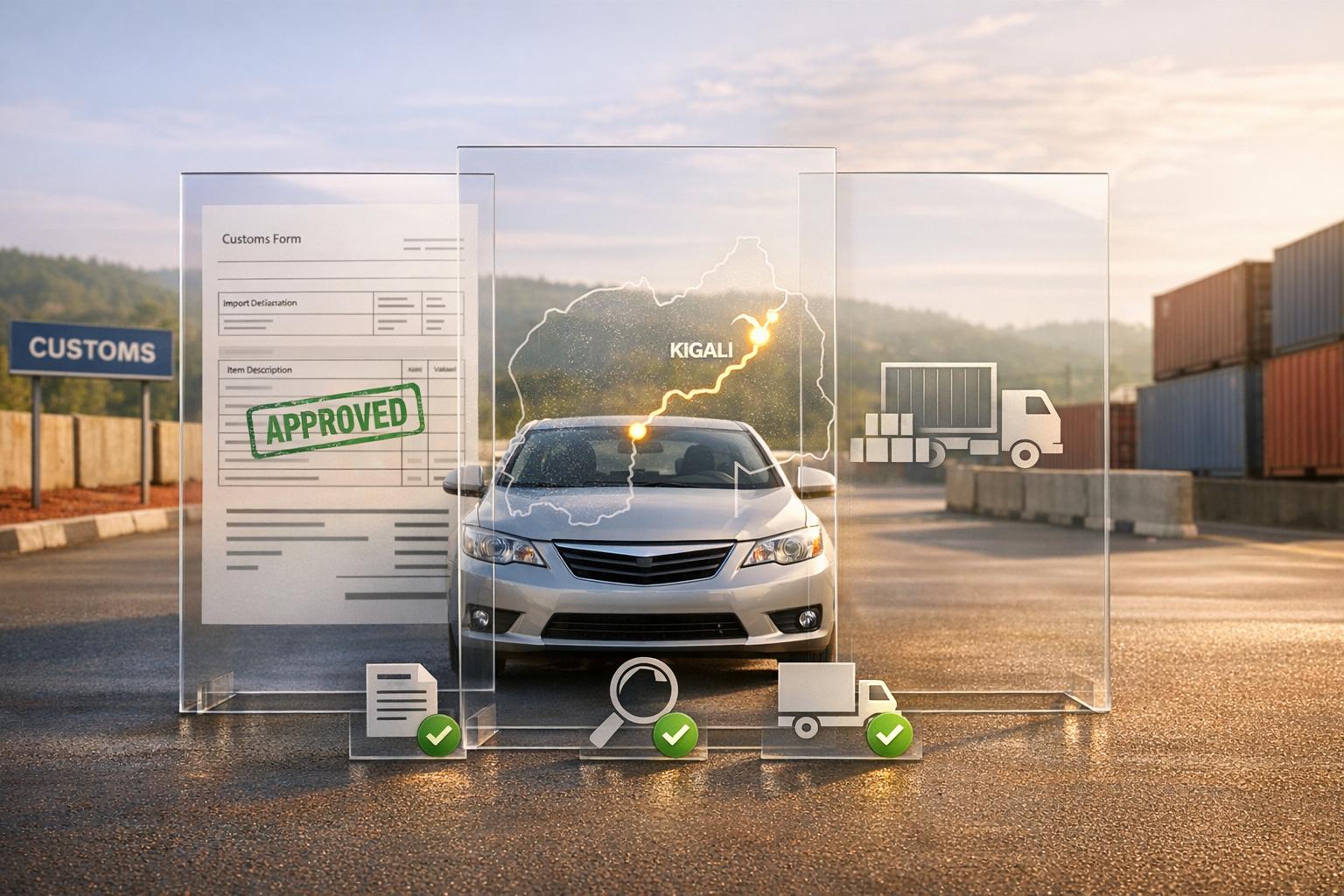
When importing cars into Rwanda, delays at customs can lead to higher costs and frustration. These delays, which can last from 24 hours to 2 months, are often caused by incorrect documentation, challenges in verifying product origins, and logistical issues tied to Rwanda’s landlocked location. High transportation costs, demurrage fees, and disrupted supply chains are common consequences.
To address this, Rwanda has implemented reforms like electronic clearance systems and standardized documents under the East African Community (EAC) framework. However, gaps remain, especially in verifying product origins. Solutions include using digital tools for accurate documentation, working with experienced customs brokers, and planning imports during less busy periods. Efficient clearance processes not only save time and money but also improve Rwanda’s economic competitiveness.
Main Causes of Car Clearance Delays in Rwanda
Customs System Problems
One of the major hurdles in Rwanda’s customs system is verifying the rules of origin for imported vehicles and their components. Customs officials often face difficulties in determining the exact proportion of imported materials in a product, which creates delays in the clearance process. While reforms like single-point clearance systems, electronic risk assessments, and published customs rights have reduced transaction costs, the issue of accurately verifying product origins remains a sticking point. Past instances of corruption and inefficiencies in administration led to these reforms, but challenges in regulatory processes persist.
Complicated Regulatory Requirements
Rwanda’s regulatory framework has made strides since joining the East African Community (EAC) customs union. Previously, inconsistent clearance documents and product descriptions across member states caused confusion and delays. The introduction of standardized documentation has simplified many processes, but verifying the origin of products continues to pose significant challenges. Surveys show strong support for further improvements in cargo clearance procedures. Despite these advancements, the difficulty of confirming product origins still slows down the process.
Logistical Problems at Borders and Ports
Rwanda’s landlocked position adds another layer of complexity to vehicle clearance. Transportation costs are high, and overland routes are lengthy, putting the country at a disadvantage compared to its coastal EAC partners. This dependency on regional ports not only increases expenses for vehicle importers but also extends clearance times significantly. These logistical hurdles, combined with internal inefficiencies, make the process more time-consuming and costly.
sbb-itb-7bc66b5
How Much Does It Cost to Ship a Car to Rwanda? | A-1 Auto Transport Pricing & Shipping Guide
Solutions to Reduce Car Clearance Delays
How to Reduce Car Clearance Delays in Rwanda: A Step-by-Step Guide
Tackling clearance delays requires a mix of smarter systems and better preparation by car owners. Here’s how both can work together to streamline the process.
Process Improvements
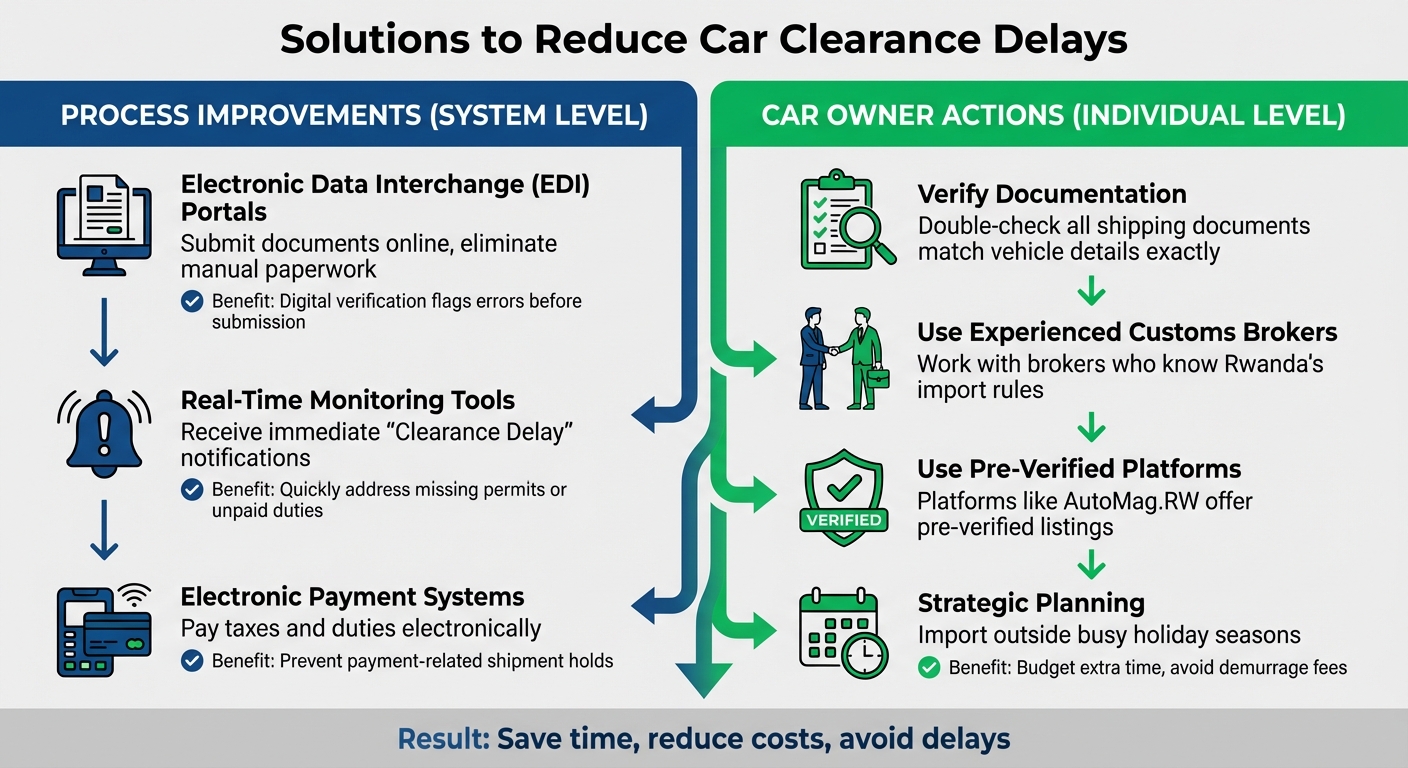
Digital tools are transforming how customs clearance works. For instance, Electronic Data Interchange (EDI) portals let car owners and brokers submit documents online, cutting down on manual paperwork. This is crucial because incorrect or incomplete documentation is one of the leading causes of delays at customs. Digital verification systems can flag errors before submission, ensuring all merchandise details are accurate.
Real-time monitoring tools also make a big difference. Importers can get immediate alerts, like "Clearance Delay" notifications, which allow them to quickly address issues such as missing permits or unpaid duties. On top of that, electronic payment systems for taxes and duties ensure shipments aren’t held up due to payment errors. While these tech upgrades are game-changers, individual attention to detail is just as important.
Resources for Car Owners
Car owners can play a key role in avoiding delays by taking a few proactive steps. Start by double-checking all shipping documents – vehicle details, addresses, and descriptions must perfectly match the imported car. Working with experienced customs brokers who know Rwanda’s import rules can also help sidestep costly mistakes.
For those buying vehicles, platforms like AutoMag.RW offer pre-verified second-hand car listings, reducing the chance of clearance headaches. They also provide regular updates on changes to clearance procedures, keeping importers informed and prepared. Another tip? Plan imports outside of busy holiday seasons and budget extra time for unexpected delays. This can save you from racking up hefty demurrage fees or detention costs.
The Cost of Delays: Time and Money Comparisons
Customs delays don’t just eat up time – they can also hit your wallet. When clearance takes longer than expected, car owners often face extra expenses like increased storage fees, demurrage charges, and additional service fees from brokers.
On the flip side, a smooth and efficient clearance process can save both time and money. By reducing waiting times and avoiding unnecessary holdups, car owners can sidestep these hidden costs. The financial difference between delayed and efficient clearances becomes clear when you consider how streamlined documentation and procedures help prevent these added expenses.
These comparisons highlight just how crucial it is to implement the improvements discussed earlier.
Conclusion: Improving Car Clearance in Rwanda
Addressing car clearance delays in Rwanda calls for teamwork across multiple sectors. Government bodies, customs officials, and logistics companies need to align their efforts to implement practical solutions. These include streamlining processes through single-point clearance systems and using uniform documentation across the East African Community (EAC).
There’s reason to be optimistic. A recent survey revealed that 95.83% of participants appreciate the current cargo clearance procedures under the EAC framework, with over half strongly agreeing that these systems are working effectively. This shows that when all parties commit, regional collaboration can deliver results.
"The Partner States agree to simplify their trade documentation and procedures in order to facilitate trade in goods within the Community." – European Journal of Business and Management Research
This shared commitment across the EAC is a solid foundation for further progress.
Looking ahead, the focus should remain on reducing unnecessary bureaucracy and refining risk assessment processes. Car owners can contribute by ensuring their documentation meets EAC standards and seeking help from experienced customs brokers for complicated shipments. Authorities, on the other hand, should continue providing clear guidance on customs rights and responsibilities to minimize confusion.
For Rwanda, efficient vehicle clearance isn’t just a procedural goal – it’s a critical factor for economic growth. By ensuring businesses and individuals can import vehicles without undue delays or costs, the country strengthens its competitiveness. The tools and strategies are already in place; the key is consistent implementation with strong collaboration.
FAQs
What documents are most likely to delay car clearance in Rwanda?
While there isn’t specific information pinpointing which documents are most likely to cause delays in car clearance in Rwanda, making sure all required paperwork is both complete and accurate can go a long way in avoiding unnecessary setbacks. Paying close attention to detail during the documentation process can help streamline the procedure.
How can I prove a vehicle’s origin to avoid rules-of-origin delays?
To prevent any delays related to rules-of-origin requirements, make sure to supply clear and detailed documentation that confirms where the vehicle was manufactured or assembled. This could include official certificates of origin, manufacturer’s declarations, or export certificates that clearly state the country of origin. Double-check that all documents are accurate and current to help smooth out the customs clearance process and avoid hold-ups caused by verification problems.
What can I do to reduce demurrage and storage fees if clearance stalls?
To keep demurrage and storage fees low, it’s crucial to have all customs documentation accurate and submitted on time. Make sure to complete the home consumption entry and settle duties, taxes, and fees as soon as possible. Stay in regular communication with customs officials and arrange paperwork in advance to prevent unnecessary delays. Taking these steps early can significantly reduce the time your vehicle spends in storage, saving you from additional costs.
Related Blog Posts
- 5 Common Car Shipping Issues to Rwanda
- Vehicle Clearance at Rwandan Customs: Step-by-Step Guide
- Special EV Customs Rules: What Importers Need to Know
- Why Some Cars Are Rejected at Rwanda Customs (And How to Avoid It)