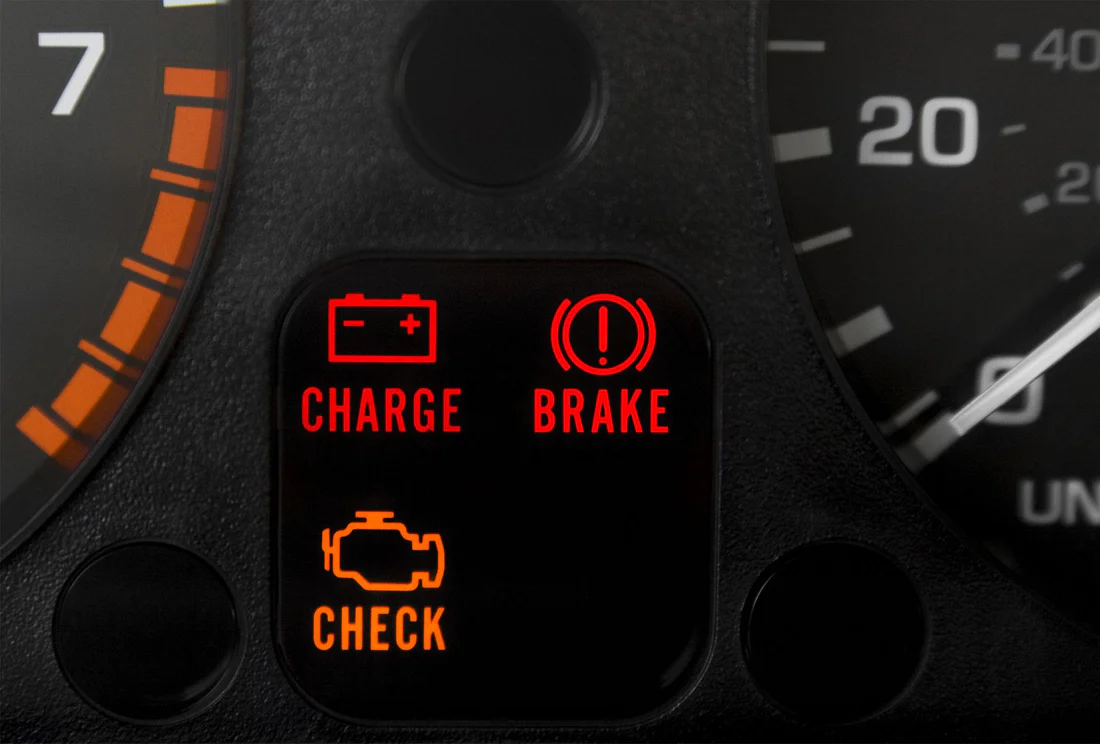
Picture this: you’re navigating Kigali’s morning rush on KN 5 Road, your favourite radio station is on, and somewhere on your dashboard, a small amber light has been glowing quietly for the past three weeks. You’ve noticed it. You meant to ask about it. But life is busy, the car seems to be running fine, and — well, it’s probably nothing serious.
This is one of the most common and costly mistakes drivers make in Rwanda.
Dashboard warning lights are not decorations. They are your car’s nervous system, communicating directly with you — telling you something needs attention before it becomes something much worse. Ignoring them doesn’t make the problem disappear. It almost always makes it bigger, more expensive, and sometimes dangerous.
This article breaks down the warning lights Rwandan drivers most commonly dismiss, what each one actually means, and what you should do the moment one appears on your dashboard. Whether you drive a Toyota Premio, a Mitsubishi RVR, a Suzuki Alto, or any other car on Rwanda’s roads, this guide applies to you.
Why Dashboard Lights Get Ignored in Rwanda
Before diving into specific lights, it’s worth understanding why so many drivers choose to ignore them in the first place. It’s not carelessness — there are real, understandable reasons.
“The car still drives fine.” This is the most common justification. Many warning lights illuminate well before a problem becomes noticeable in how the car drives. By the time you feel the difference, you’re already looking at a significant repair.
Uncertainty about what the light means. Most drivers were never taught what dashboard symbols mean. If you don’t know whether a light is urgent or minor, the temptation is to assume it’s minor.
Cost concerns. In Rwanda, where many car owners are managing tight budgets, the fear of what a mechanic might find — and charge — can make it easier to look the other way. Unfortunately, this almost always leads to far higher costs down the road.
Limited access to diagnostics. Outside Kigali and major towns, finding a mechanic with a proper OBD-II diagnostic scanner can be difficult. Without knowing exactly what triggered the light, some drivers feel they have no actionable information.
Understanding these barriers is the first step to overcoming them. Now, let’s talk about the lights themselves.
1. The Check Engine Light — The Most Ignored Light in Rwanda
What it looks like: An outline of an engine, sometimes with the word “CHECK” or “ENGINE.”
Colour: Amber/orange (steady) or amber/orange (flashing — more urgent)
This is the number one most ignored warning light on Rwandan roads — and the one with the widest range of possible causes, from a loose fuel cap to a misfiring engine cylinder.
Here’s what makes it so easy to dismiss: the car often continues driving perfectly normally when this light first appears. No unusual sounds, no loss of power, nothing obviously wrong. So drivers assume it’s a glitch and keep going.
The problem is that without a diagnostic scan, you have absolutely no way of knowing what triggered it. A steady check engine light could mean a faulty oxygen sensor (not immediately dangerous but damaging to fuel economy and catalytic converter over time) or it could mean a serious emissions or engine management issue.
A flashing check engine light is a different story entirely. This indicates an active engine misfire — combustion is failing in one or more cylinders, and raw fuel is being passed into the exhaust. This can destroy your catalytic converter within minutes of driving. If your check engine light is flashing, stop driving as soon as it is safe to do so.
What to do: Find a mechanic with an OBD-II scanner and get a fault code reading. Many garages in Kigali offer this service at minimal cost. The scan tells you exactly which system triggered the light, giving you — and your mechanic — actionable information.
2. The Oil Pressure Warning Light — Never Drive With This On
What it looks like: A red oil can with a drop falling from the spout.
Colour: Red
If there is one light on this entire list that you should treat as an immediate emergency, it is this one.
The oil pressure warning light means your engine is not receiving adequate oil pressure — which means its internal components are not being lubricated. Metal is grinding against metal. Every second you continue driving, you are causing potentially irreversible damage to your engine’s bearings, camshaft, and crankshaft.
Many Rwandan drivers confuse this light with a routine reminder to top up oil. It is not a reminder. It is an emergency signal.
What to do: Pull over safely and immediately. Turn off the engine. Check your oil level using the dipstick. If the oil is critically low, add oil if you have some available — but do not restart the engine until you understand why the oil is low. If the level appears normal, do not drive the car at all. Call a mechanic. You may have a failing oil pump, a blocked oil passage, or an internal leak — all of which require professional diagnosis before the car moves another metre.
Driving with the oil pressure light on is one of the fastest ways to turn a minor problem into a complete engine replacement.
3. The Temperature Warning Light — Common on Rwanda’s Hills
What it looks like: A thermometer submerged in wavy lines (representing liquid).
Colour: Red
Engine overheating is a common problem on Rwandan roads — and for good reason. The country’s hilly terrain means engines work significantly harder than they would on flat roads. Combined with stop-and-go traffic in Kigali, ageing cooling systems in many used cars, and occasional inconsistencies in coolant quality, overheating is a real and present risk.
When this light comes on (or your temperature gauge needle climbs into the red zone), your engine is operating at a dangerously high temperature. Continued driving risks warping the cylinder head, blowing the head gasket, or — in extreme cases — seizing the engine entirely. All of these are expensive repairs.
What to do: Turn off the air conditioning immediately (this reduces load on the engine) and, if safe, turn the heater to maximum — this draws heat away from the engine. Pull over as soon as possible and turn off the engine. Do not open the radiator cap while the engine is hot — pressurised coolant can spray and cause serious burns.
Let the engine cool for at least 30 minutes before investigating. Check the coolant level in the overflow reservoir once cool. If it is low, top it up with the correct coolant-to-water ratio. If the car overheats again shortly after, you have a more serious problem — a failing thermostat, water pump, or head gasket — and the car needs professional attention before being driven further.
4. The Battery Warning Light — More Than Just a Dead Battery
What it looks like: A simple rectangle with a plus (+) and minus (−) symbol — the shape of a battery.
Colour: Red
Many drivers see this light and immediately think: “Time to replace the battery.” But in reality, the battery warning light rarely means the battery itself is the main problem.
This light indicates that your car’s charging system is not functioning properly. The most common culprit is a failing alternator — the component responsible for recharging the battery while the engine runs. A worn serpentine belt (which drives the alternator) can also trigger this light.
When this light is on, your car is running solely on battery power. Depending on the battery’s charge level, you may have anywhere from a few minutes to half an hour of driving time before the car loses electrical power entirely — which can mean power steering failure, loss of dashboard instruments, and eventually the engine cutting out.
What to do: Reduce electrical load immediately — turn off the air conditioning, radio, heated seats, and any other non-essential electrical systems. Drive directly to the nearest mechanic without making unnecessary detours. Do not turn the engine off, as restarting may not be possible once the battery is depleted. Have the charging system (alternator, belt, and battery) tested professionally.
5. The TPMS Light — Tyre Pressure Matters More Than You Think
What it looks like: A cross-section of a tyre with an exclamation mark inside, sometimes with the letters “TPMS.”
Colour: Amber/yellow
The Tyre Pressure Monitoring System (TPMS) light is one of the most consistently ignored warning lights in Rwanda — often dismissed as a sensor glitch or something to “deal with later.”
Driving on under-inflated tyres is dangerous. It affects braking distance, steering responsiveness, and fuel consumption. On Rwanda’s mix of paved city roads and rougher rural routes, under-inflated tyres are also significantly more vulnerable to sidewall damage and blowouts — particularly at highway speeds on roads like RN1 or RN4.
What to do: Check all four tyre pressures (plus the spare if your car has an external spare) at a petrol station. Inflate to the recommended pressure found on the sticker inside your driver’s door or in your owner’s manual. Note that TPMS lights sometimes also illuminate when a tyre is significantly over-inflated. If the light remains on after correctly inflating all tyres, you may have a slow puncture or a faulty sensor — both worth investigating.
6. The Brake Warning Light — Don’t Gamble With Your Brakes
What it looks like: An exclamation mark inside a circle, often surrounded by curved bracket shapes, sometimes with the word “BRAKE.”
Colour: Red
The brake warning light has two common triggers, and it’s important to distinguish between them:
First — the handbrake is still engaged. This is the most innocent explanation. If you’ve just started driving and this light is on, check that your handbrake is fully released. If it is, the light has a more serious cause.
Second — low brake fluid level. Brake fluid is part of a sealed hydraulic system, so a low level almost always means there is a leak somewhere in the system, or your brake pads have worn down to the point where the callipers have extended and drawn more fluid from the reservoir.
Either way, low brake fluid means compromised braking performance — one of the most dangerous conditions a car can be in, particularly on Rwanda’s steep hills where braking force is regularly tested.
What to do: If the handbrake is released and the light is still on, do not ignore it. Check the brake fluid reservoir under the bonnet. If it is low, do not simply top it up and drive on — investigate why it is low. Have a mechanic inspect the entire braking system: fluid lines, callipers, and pad thickness.
7. The Power Steering Warning Light — Increasingly Common in Newer Cars
What it looks like: A steering wheel with an exclamation mark, sometimes with the letters “EPS.”
Colour: Amber or red
Many cars in Rwanda — particularly newer Japanese imports — are equipped with Electric Power Steering (EPS) rather than the older hydraulic system. The EPS warning light indicates a fault in this system.
When the power steering system fails, the steering wheel becomes significantly heavier and harder to turn — particularly at low speeds or when parking. For drivers on steep Kigali streets or navigating tight urban roads, this is a genuine safety concern.
What to do: Have the system diagnosed promptly. EPS faults are often caused by a software glitch resolvable by resetting the system, but they can also indicate a failing electric motor or steering column sensor that requires replacement.
8. The Airbag / SRS Warning Light — A Safety Issue, Not a Minor Fault
What it looks like: A seated person with a circle in front of them (the airbag deploying), sometimes with the letters “SRS” or “AIRBAG.”
Colour: Amber/red
This light is frequently dismissed because, again, the car drives normally when it is on. But what drivers don’t realise is that when the airbag warning light is illuminated, the airbag system is disabled. In the event of a collision, your airbags will not deploy.
In Rwanda, where road safety statistics are a genuine concern and accidents on national roads do occur, this is not a light to live with.
What to do: Have the SRS system scanned and diagnosed. Common causes include a faulty seat belt pre-tensioner, a loose connector under a seat (often dislodged when car mats are moved), or a failing airbag sensor. Many of these are straightforward and affordable to fix.
9. The Glow Plug Light (Diesel Vehicles) — Don’t Start the Engine Yet
What it looks like: A coiled wire or spring shape, sometimes resembling a corkscrew.
Colour: Amber
This light is specific to diesel vehicles — which are common in Rwanda, including popular models like the Toyota Land Cruiser Prado, Mitsubishi Pajero, and Nissan Patrol that see regular use on Rwanda’s varied terrain.
When you turn the key or push the start button, this light should illuminate briefly and then go out — that’s normal. It means the glow plugs are heating the combustion chambers to facilitate cold starting. You should wait for it to go out before cranking the engine.
If the light stays on after the engine has started, or if it flashes, there is a fault in the glow plug system or the engine management system. This can cause hard starting, rough running, and increased emissions.
What to do: Have the glow plugs and their associated relay and wiring tested. Replacing glow plugs is a relatively affordable maintenance task that is often overlooked until the car refuses to start on a cold Kigali morning.
10. The Fuel Level Warning — The One Everyone Knows But Still Ignores
What it looks like: A petrol pump icon, sometimes with an arrow indicating which side your fuel filler is on.
Colour: Amber
This one needs little explanation — you’re running low on fuel. But it earns its place on this list because habitually running your car on a very low fuel level causes real damage over time.
The fuel pump in most modern cars sits inside the fuel tank and relies on the fuel itself for cooling and lubrication. Running the tank to near-empty repeatedly causes the pump to overheat and wear faster. Fuel sediment that settles at the bottom of the tank also gets drawn into the pump and fuel lines when the level is very low.
In Rwanda, where some rural routes between Kigali, Musanze, or Huye can have longer stretches without petrol stations, running low can also leave you stranded in inconvenient locations.
What to do: Refuel before the light comes on. Keep the tank at least a quarter full as a habit.
A Colour-Coded Reference: Red vs. Amber vs. Green
Not all warning lights are equal. The colour system is designed to communicate urgency at a glance:
- Red lights indicate serious or potentially dangerous conditions. Stop driving or investigate immediately. Examples: oil pressure, engine temperature, brake warning, battery.
- Amber/yellow lights indicate conditions that require attention soon but are not necessarily an immediate emergency. Address within days, not weeks. Examples: check engine, TPMS, airbag, power steering.
- Green and blue lights are informational — they indicate that a system is active (headlights, turn signals, cruise control). No action required.
When in doubt: if it’s red, don’t ignore it.
How to Know What Your Specific Warning Light Means
Every car is slightly different, and while most warning lights follow international standards, some manufacturers use unique symbols or colours. Your first reference should always be your owner’s manual — a booklet that comes with every car and that most drivers in Rwanda never open after buying the vehicle.
If you’ve bought a second-hand car and don’t have the manual, most owner’s manuals are available as free PDF downloads online. Simply search for your car’s make, model, year, and “owner’s manual PDF.”
For a wide selection of reliable used cars in Rwanda — many with documented service histories that can help you understand a vehicle’s maintenance background before you buy — auto24.rw lists certified second-hand vehicles including models like the Toyota RAV4, Mazda Demio, Suzuki Swift, and Mitsubishi Outlander, giving buyers a transparent starting point.
Prevention Is Always Better Than Cure
The best way to avoid dashboard warning lights becoming a source of stress is to stay ahead of your car’s maintenance schedule. Many warning lights can be prevented entirely with regular servicing:
- Oil and filter changes at the correct intervals prevent oil pressure warnings
- Coolant system flushes and thermostat checks prevent overheating lights
- Brake fluid replacement every two years prevents moisture-related brake system warnings
- Regular tyre pressure checks — monthly — prevent TPMS lights
- Annual electrical system checks including battery and alternator testing prevent charging system warnings
Think of your service schedule not as an optional expense but as insurance against the much higher costs that warning lights — left unaddressed — eventually produce.
For in-depth guides on maintaining your car in Rwanda’s specific driving conditions, Automag.rw offers practical, locally relevant automotive advice, car reviews, and road guides written specifically for Rwandan drivers and enthusiasts.
A Look Ahead: Electric Vehicles and Warning Lights
It’s worth noting that as Rwanda’s automotive landscape evolves, so do dashboard warning systems. Electric vehicles have their own set of warning indicators — battery charge levels, regenerative braking system alerts, and thermal management warnings — that are quite different from those in combustion engine vehicles.
For Rwandan drivers curious about making the transition to electric mobility — and inheriting a new but simpler set of dashboard indicators — EV24.africa offers import options for electric cars, expanding choices for drivers who want to explore cleaner, lower-maintenance vehicles suited to Rwanda’s growing urban road network.
Final Thoughts
Your dashboard is not trying to alarm you — it is trying to protect you. Every light that illuminates is your car asking for attention before a small problem becomes an expensive repair or, worse, a safety risk on Rwanda’s roads.
The next time a warning light appears, resist the urge to cover it with a piece of tape, make a mental note to “deal with it later,” or assume it will go away on its own. Get it checked. The diagnostic scan might reveal something minor. It might reveal something that saves your engine, your brakes, or your life.
Drive informed. Drive safe.