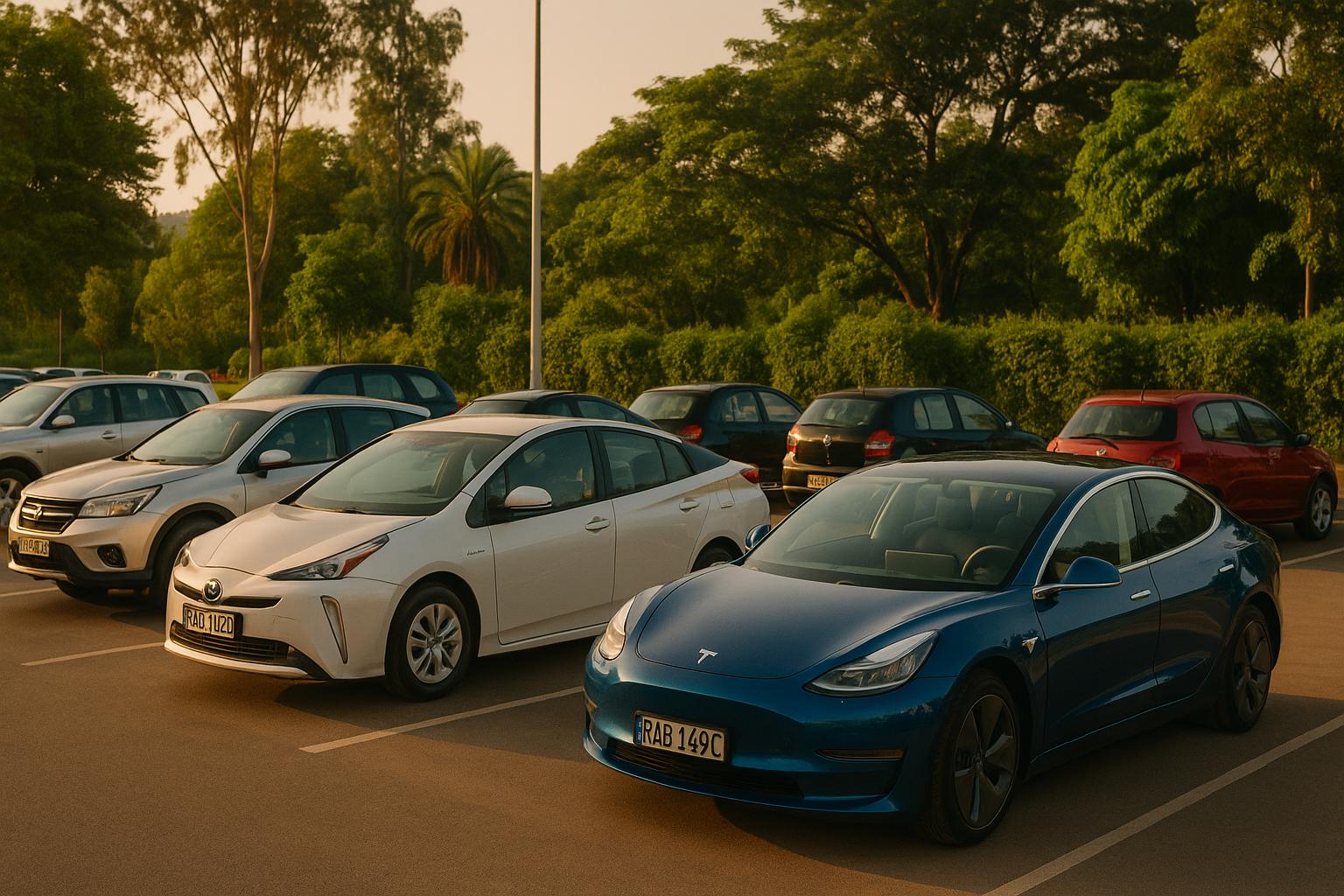
When buying a car in Rwanda, understanding taxes is crucial because they significantly impact the total cost. Here’s what you need to know:
- Electric Vehicles (EVs): Fully exempt from import duty, VAT, withholding tax, and excise duty. These exemptions make EVs the most affordable option.
- Hybrid Vehicles: Starting February 19, 2025, hybrids will face VAT, withholding tax, and excise duty. Costs will vary based on engine size and vehicle age.
- Fuel-Powered Vehicles: Subject to all taxes, including import duty, VAT, withholding tax, and excise duty, resulting in the highest tax burden.
- Import Duties: Calculated based on the vehicle’s CIF value (purchase price, insurance, and freight). EVs and hybrids currently benefit from reduced or zero import duty rates.
- Additional Fees: Include a 1.5% Infrastructure Development Levy, 0.2% African Union Levy, and 0.2% Quality Inspection Fee.
If you’re importing a car, factor in extra costs like customs clearance, transportation, and registration. Rwanda’s tax system emphasizes eco-friendly vehicles, offering financial incentives for EVs while gradually increasing costs for hybrids.
Quick Comparison:
| Vehicle Type | Import Duty | VAT | Withholding Tax | Excise Duty | Overall Tax Burden |
|---|---|---|---|---|---|
| Pure Electric | Exempt | Exempt | Exempt | Exempt | Minimal |
| Hybrid (Post-2/19/25) | Exempt | Applied | Applied | Applied | Moderate |
| Fuel-Powered | Applied | Applied | Applied | Applied | High |
For the smoothest process, use Rwanda’s Electronic Single Window system to manage import documentation and payments. EV buyers also enjoy perks like cheaper charging rates and duty-free spare parts. By choosing wisely, you can save money and support Rwanda’s clean energy goals.
Rwanda passes law exempting taxes on electric vehicles
How Rwanda’s Car Tax System Works
In Rwanda, the car tax system is managed by two main entities: the Rwanda Revenue Authority (RRA) and the Ministry of Finance and Economic Planning. The RRA oversees the collection of various car-related taxes, including import duties, VAT, withholding tax, and excise duties. On the other hand, the Ministry of Finance and Economic Planning establishes tax policies, sets rates, and determines exemptions – such as those for electric vehicles. Together, these agencies ensure that tax regulations are updated and implemented effectively. For car buyers, most of the process, from payments to documentation, is handled through RRA offices.
Here’s a closer look at the main components of Rwanda’s car tax framework:
Main Tax Types
- Import Duties: These vary depending on the vehicle’s country of origin and are added alongside customs fees.
- Value Added Tax (VAT): Calculated based on the vehicle’s assessed value.
- Withholding Tax: Applied at specific rates during vehicle transactions.
- Excise Duty: Rates are influenced by factors like the vehicle’s age and engine specifications.
Vehicle Types and Tax Rates
Different types of vehicles are taxed at varying rates, and the total tax burden depends on the kind of vehicle being purchased. For instance, environmentally friendly vehicles, such as electric cars, benefit from government policies that offer exemptions. Meanwhile, conventional gasoline and diesel vehicles are taxed at standard rates without such incentives. Buyers should familiarize themselves with the latest tax policies to understand how these rules might affect the overall cost of their vehicle.
Main Taxes on Car Purchases
When importing a car to Rwanda, several taxes come into play, significantly impacting the overall cost. Understanding how each tax is calculated can help you plan your budget more effectively. Here’s a closer look at the key tax components.
Import Duties and Tariffs
Import duties are a cornerstone of Rwanda’s car taxation system. These are calculated based on the vehicle’s CIF value, which includes the purchase price, shipping, and insurance. The duty rates depend on the vehicle’s type and country of origin. For the 2024/2025 fiscal year, the Rwandan government introduced a major incentive: a zero import duty rate for electric and hybrid vehicles. This policy provides a financial advantage for buyers opting for environmentally friendly vehicles.
VAT and Withholding Tax
Value-added tax (VAT) is applied to most vehicle imports, along with a withholding tax as part of the overall cost structure. However, pure electric vehicles are completely exempt from both VAT and withholding tax. Hybrid cars, on the other hand, will still be subject to these taxes starting February 19, 2025. This distinction highlights the government’s focus on promoting fully electric options.
Excise Duty by Vehicle Age and Type
Excise duty is another tax calculated based on the type and age of the vehicle. As part of Rwanda’s push toward sustainable transportation, pure electric vehicles are fully exempt from excise duty. These exemptions align with the country’s broader efforts to encourage the adoption of eco-friendly transport solutions.
Tax Costs by Vehicle Type
As discussed earlier, Rwanda’s tax policies for vehicles differ significantly depending on the type of vehicle.
Pure electric vehicles enjoy full exemptions from import duty, VAT, withholding tax, and excise duty until the end of the 2024/25 fiscal year. This means pure electric vehicles come with a minimal tax burden, making them an attractive option for buyers.
Hybrid vehicles, however, will face VAT, withholding tax, and excise duty starting February 19, 2025. This change introduces moderate tax costs for hybrid vehicle owners.
Fuel-powered vehicles are subject to all applicable taxes, including import duty, VAT, withholding tax, and excise duty, resulting in a significantly higher tax burden compared to electric or hybrid options.
Over the last four years, these tax exemptions have led to a revenue shortfall of around $10.36 million. During the same period, hybrid vehicle imports saw a dramatic increase, surging 237-fold between 2021 and 2024. In the first nine months of 2024 alone, 218 pure electric vehicles were imported, compared to a striking 3,726 hybrid vehicles.
This tax structure highlights the government’s efforts to promote cleaner transportation options while reflecting the policies discussed earlier.
Vehicle Tax Comparison Chart
Here’s a quick breakdown of how taxes differ across vehicle types:
| Vehicle Type | Import Duty | VAT | Withholding Tax | Excise Duty | Overall Tax Burden |
|---|---|---|---|---|---|
| Pure Electric Vehicles | Exempt | Exempt | Exempt | Exempt | Minimal |
| Hybrid Vehicles (from Feb 19, 2025) | Exempt | Applied | Applied | Applied | Moderate |
| Fuel-Powered Vehicles | Applied | Applied | Applied | Applied | High |
This tax structure gives buyers a compelling reason to choose fully electric vehicles, offering significant cost savings while supporting Rwanda’s push for cleaner and greener transportation solutions.
sbb-itb-7bc66b5
How to Calculate Total Import Costs
To figure out the total import cost, start with the Customs Import Value (CIV). This is the combined total of the vehicle’s purchase price, insurance, and freight charges. These elements form the foundation for Rwanda’s tax rates, which vary depending on the type and age of the vehicle. Since tax rates can differ, it’s a good idea to check with official sources or consult a customs clearance expert to get the most accurate numbers. Once you have a handle on the CIV, reviewing a sample calculation can help clarify the process.
Other Fees to Include
Don’t forget to account for additional fees beyond the CIV. These include charges for port and customs clearance, vehicle registration, transportation from the port, insurance, and agent services. Adding these costs will give you a more complete picture of the total import expense.
Required Documents and Rules
Getting your paperwork in order before importing a vehicle into Rwanda is crucial. The Rwanda Revenue Authority (RRA) has a clear list of required documentation, and missing even one can delay customs clearance.
Here’s a breakdown of what you’ll need:
Documents You Need
Shipping Documentation:
- Air Waybill (for airfreight) or Original Bill of Lading (for sea freight)
- Packing List detailing the shipment contents
Financial and Legal Documents:
- Original Commercial Invoice with the purchase price and transaction details
- Import Declaration Form (IDF)
- Tax Identification Number (TIN) and VAT Numbers
Vehicle Documentation:
- Original Certificate of Title and Registration from the country of purchase
- Registration/De-registration Card (for used vehicles)
Personal Documentation:
- Copy of passport and driver’s license (for personal imports)
- International Insurance Policy (green card) covering transit
Special Circumstances:
- Duties and Taxes Exemption Certificates (if applicable for tax relief)
- Gift Certificates (for donated vehicles to organizations)
- Certificate of Origin (for vehicles from COMESA countries)
One Single Electronic Window System
Rwanda’s import process is further simplified through the Rwanda Electronic Single Window (ReSW) system. Introduced by the RRA in 2012, this digital platform has significantly reduced the time and hassle of filing import declarations. Instead of visiting multiple offices, you can now handle everything online.
Since its launch, the system has made a noticeable impact. Import clearance times have dropped from 2 days 18 hours to 1 day 15 hours – a 40% reduction. Similarly, export clearance times have improved, going from 2 days 16 hours to 1 day 4 hours, a 55% improvement.
The ReSW allows you to submit a single declaration that meets all regulatory requirements across various agencies. This means less paperwork, faster communication with customs officials, and real-time updates on your shipment’s status.
To use the platform effectively, you or your customs agent must be registered as an authorized user. Make sure to upload clear, digital copies of all required documents – such as your Import Declaration Form, TIN, commercial invoice, and vehicle registration – to avoid errors and delays.
Many importers prefer working with experienced clearing agents who are familiar with the ReSW system. These professionals can help ensure your documentation is accurate and guide you through any tricky parts of the clearance process.
Electric Vehicle Tax Benefits
Rwanda is setting the pace for clean transportation in East Africa, with the government offering substantial support for electric mobility. Among the most impactful measures are tax incentives designed to make pure electric vehicles more affordable.
Electric Vehicle Tax Relief
Pure electric vehicles enjoy complete exemptions from import duties, VAT, excise duties, and other associated costs, including spare parts, batteries, and charging equipment. On top of that, EV owners benefit from reduced tariffs for charging and access to rent-free land for building charging infrastructure. This favorable setup makes EV ownership far more accessible compared to other vehicle types, particularly hybrids.
Electric vs. Hybrid Tax Treatment
From February 19, 2025, hybrid vehicles will face VAT, withholding tax, and excise duties, putting them on the same tax footing as traditional gasoline and diesel cars. In contrast, pure electric vehicles will continue to be entirely tax-exempt. This sharp difference in tax treatment creates a clear financial advantage for buyers choosing fully electric options. Beyond reducing upfront costs, these tax policies align with Rwanda’s broader goals of promoting cleaner, more sustainable transportation systems.
Making Smart Car Purchase Decisions in Rwanda
Understanding Rwanda’s car tax rules can help you save money and make environmentally conscious choices. The country’s tax system encourages the adoption of cleaner transportation by offering financial incentives for eco-friendly vehicles. By comparing the costs and benefits of electric and hybrid cars, you can decide which option best meets your needs.
If you’re leaning toward electric vehicles (EVs), you’re in luck. EVs are completely exempt from VAT and Customs Duties, making them a highly cost-effective choice. This means you can enjoy significant savings while contributing to Rwanda’s push for greener transportation.
For those considering hybrid vehicles, it’s important to account for excise duties when calculating the total cost. These duties vary based on the engine size and the age of the car:
- 5% for hybrids with engines under 1,500cc that are no more than 3 years old
- 10% for hybrids with engines between 1,500–2,500cc or cars aged 3–8 years
- 15% for hybrids with engines over 2,500cc or cars older than 8 years
Unlike EVs, hybrids don’t qualify for tax exemptions, so these excise rates need to be factored into your budget. Even so, hybrids still align with Rwanda’s environmental objectives, offering a middle ground between traditional and fully electric vehicles.
Timing your purchase is another key consideration. Since excise duty rates depend on the vehicle’s age, deciding between a newer or older model can impact your overall costs. Planning strategically can help you maximize savings.
FAQs
What tax benefits are available for electric vehicles in Rwanda compared to hybrid and fuel-powered cars?
In Rwanda, electric vehicles (EVs) benefit from VAT exemptions, making them easier on the wallet compared to traditional cars. On the other hand, hybrid vehicles come with an excise duty of 5% to 15%, depending on their age. For fuel-powered vehicles, the tax burden is heavier, with charges like import duties, VAT, and excise taxes. These taxes are calculated based on factors such as engine size and the vehicle’s age.
The goal of these tax policies is clear: to boost the use of eco-friendly vehicles, cut carbon emissions, and support greener initiatives across the country.
What steps and documents are required to import a car into Rwanda, and how does the Electronic Single Window system make it easier?
To bring a car into Rwanda, you’ll need to follow a few essential steps and have specific documents ready. These include the original vehicle title, registration papers, bill of sale, an Import Declaration Form (IDF), a copy of your passport, and compliance certificates such as the Pre-export Verification of Conformity (PVoC). Additionally, you’ll need to collaborate with an RRA-approved clearing agent to ensure everything goes smoothly.
Rwanda has streamlined customs clearance with its Electronic Single Window system, which lets you submit and track all required documents online. This system helps cut down on delays, making the car importation process much more straightforward.
What are the financial and environmental advantages of choosing an electric vehicle over a hybrid or gas-powered car in Rwanda?
Electric vehicles (EVs) in Rwanda come with clear financial perks. Thanks to exemptions from import duties, VAT, and excise taxes, owning an EV becomes a much more budget-friendly option over time. On top of that, their running costs are notably lower than those of hybrid or gas-powered vehicles, as electricity tends to be cheaper than traditional fuel.
From an environmental perspective, EVs shine by producing zero tailpipe emissions. This means cleaner air and a smaller carbon footprint. Opting for an EV also aligns with Rwanda’s push for green energy and its broader sustainability goals, paving the way for a healthier and greener future.
Related Blog Posts
- Rwanda’s EV Incentives: What Drivers Need to Know
- Rwanda Vehicle Registration: Tax and Duty Breakdown
- Car import duties in Rwanda: Updated costs and procedures for 2025
- How to Import a Car to Rwanda: Step-by-Step and Costs