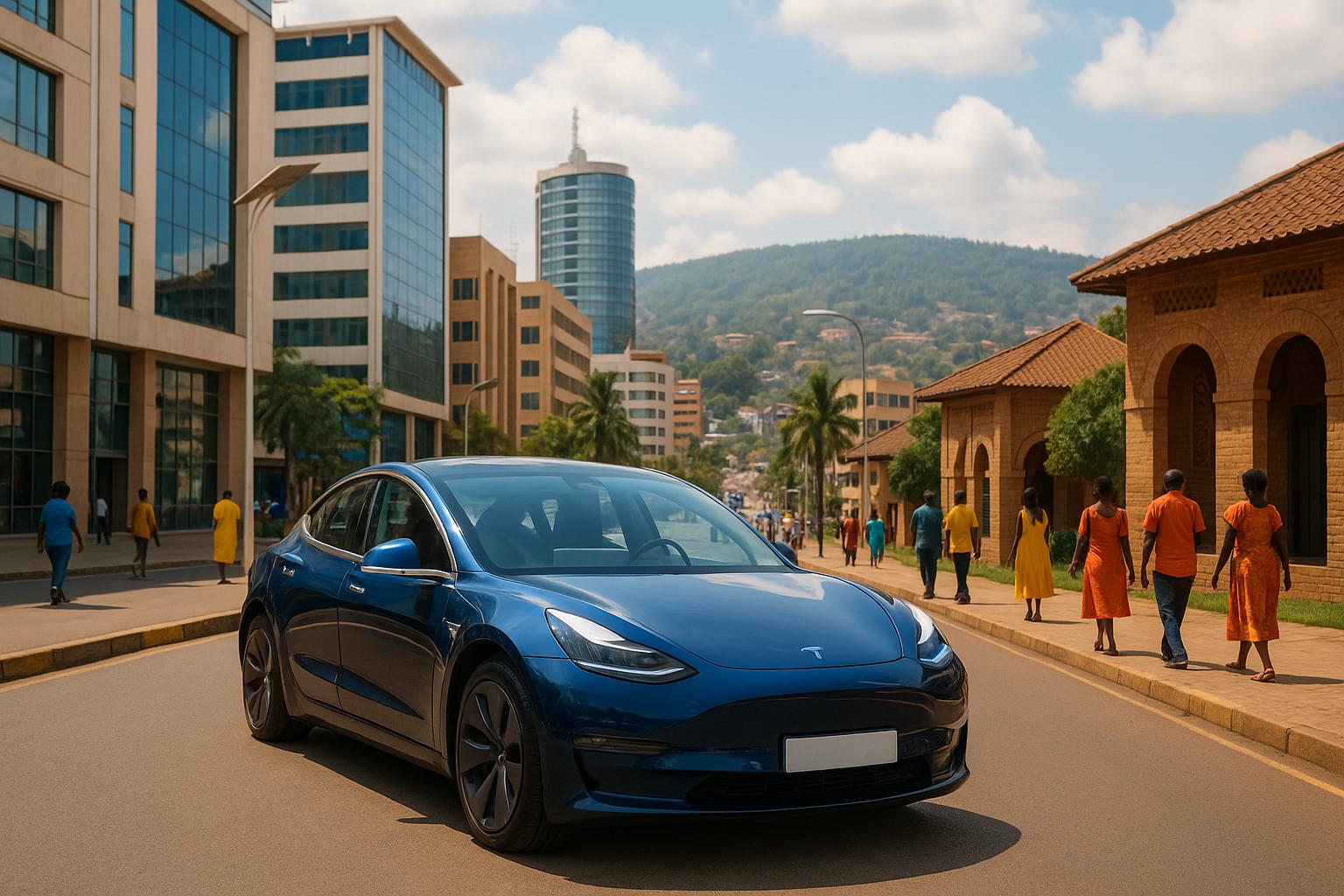
Tesla could potentially thrive in Rwanda, but several factors need to align for this to happen. Rwanda’s commitment to clean energy and its supportive policies, such as zero import duties on electric vehicles (EVs), create a welcoming environment for Tesla. However, challenges like limited charging infrastructure and the high upfront cost of Tesla vehicles remain obstacles.
Key Takeaways:
- Policy Support: Rwanda offers tax exemptions on EVs and charging equipment, making imports more affordable.
- Charging Infrastructure: Public charging stations are limited, with most located in Kigali. Rapid-charging options, like Tesla’s Superchargers, are not yet available.
- Electric Grid: Rwanda’s grid, powered by hydropower and solar, is expanding but needs upgrades to handle increased EV demand.
- Market Demand: Interest in EVs is growing, but Tesla ownership is primarily accessible to affluent individuals and businesses.
- Costs: Beyond the purchase price, Tesla owners face expenses for shipping, registration, home charging setup, and occasional maintenance.
For Tesla to succeed, it must collaborate with local stakeholders to expand infrastructure, reduce costs, and capitalize on Rwanda’s push toward green mobility. Rwanda’s policies and growing EV market provide a promising foundation, but significant investments in infrastructure and partnerships are crucial for Tesla’s long-term success.
Inside KABISA: Rwanda’s EV Revolution | WIB Documentary
Tesla‘s Global and African Plans
Tesla produces its vehicles and energy storage systems in Gigafactories located in Nevada, Shanghai, Berlin, and Texas. The company’s goal is to speed up the shift to clean energy by making electric vehicles more accessible worldwide. Across Africa, governments are stepping up efforts to cut carbon emissions and push for cleaner energy solutions. Although Tesla hasn’t announced specific plans for the African market yet, the growing emphasis on renewable energy in the region could open doors for future opportunities. These global and regional shifts provide an interesting backdrop to consider Tesla’s potential role in Rwanda.
Rwanda’s EV Infrastructure Status
Rwanda’s electric vehicle (EV) infrastructure is still in its early stages, presenting both hurdles and potential for companies like Tesla. While strides have been made in renewable energy, the current charging network and grid capacity require significant upgrades to accommodate widespread EV adoption.
Charging Station Availability
Public charging options in Rwanda are limited, with most stations concentrated in Kigali. The Rwanda Energy Group has introduced Level 2 charging stations, but there are no rapid-charging facilities akin to Tesla’s Supercharger network yet. For EVs to become more practical across the country, the charging network needs to expand into urban hubs and along major highways. This gap highlights the pressing need for broader improvements to the grid.
Electricity Grid and Renewable Energy
Rwanda’s electricity grid is powered primarily by hydropower and solar energy. Efforts are underway to boost grid reliability and capacity as the country anticipates growing EV charging demands. The Rwanda Utilities Regulatory Authority is exploring smart grid upgrades to improve load management, while modernization projects aim to reinforce the overall energy framework. These developments could pave the way for Tesla to enter and thrive in Rwanda’s evolving EV market.
Import Barriers and Policy Issues
Rwanda has taken a forward-thinking stance on electric vehicle (EV) imports, eliminating common obstacles through its zero-rated, duty-free policy introduced in April 2021. This policy exempts duties, excise taxes, and VAT on electric vehicles, along with their spare parts, batteries, and charging station equipment. By implementing these measures, Rwanda has significantly lowered the cost of EVs, making the country an appealing destination for premium electric vehicles.
According to the Rwanda Revenue Authority (RRA), these tax exemptions led to an estimated revenue loss of Rwf13.8 billion (around $10.8 million) during the 2022/23 fiscal year. Despite the financial impact, this move highlights Rwanda’s dedication to fostering a favorable market for electric vehicles.
The country’s regulatory framework also minimizes import restrictions, enabling companies to enter the market with fewer bureaucratic challenges. These fiscal and regulatory advantages could help reduce Tesla’s costs of entering Rwanda, aligning with the company’s sustainability goals.
For example, AUTO24 Rwanda imported the 2024 Tesla Model Y Long Range in March 2024 at a price of $58,000 (approximately Rwf74.1 million). This showcases how these incentives directly influence the affordability of EVs while reinforcing Rwanda’s push for environmentally friendly transportation.
That said, expanding the charging network and improving the power grid remain critical priorities. Strengthening grid capacity and building more charging infrastructure will be essential to maintaining and building on these advancements.
sbb-itb-7bc66b5
Tesla Ownership Costs in Rwanda
Rwanda’s favorable import policies set the stage for Tesla ownership, but there’s more to the financial picture than just the purchase price. Owning a Tesla also involves costs like import fees, charging infrastructure, and maintenance.
Vehicle Pricing and Import Costs
While Rwanda’s policies help keep the base price of electric vehicles (EVs) like Teslas more accessible, there are additional costs to consider. Shipping, processing, documentation, and local registration fees all add to the final price tag. These extra charges can significantly impact the overall cost, so buyers should account for them when budgeting.
Charging and Maintenance Costs
Setting up home charging is an essential step for Tesla owners in Rwanda. This includes purchasing charging equipment, installation, and possibly upgrading your home’s electrical system. Since public fast-charging infrastructure is still developing, most Tesla owners are likely to rely heavily on home charging. Electricity rates in Rwanda will also play a role in determining energy costs.
On the maintenance side, Teslas require less routine servicing compared to traditional gas-powered cars. You won’t need to worry about oil changes or engine-related repairs. However, occasional expenses like tire replacements or out-of-warranty battery servicing could arise, so it’s important to factor these into your long-term ownership plan.
5-Year Ownership Considerations
While Teslas come with a steep upfront cost, the savings on fuel and reduced maintenance over time can balance things out. That said, specialized repairs and parts may lead to higher insurance premiums, which is worth keeping in mind.
Owning a Tesla in Rwanda requires thoughtful financial planning. From import fees to setting up charging infrastructure, the initial investment is significant. However, the potential for long-term savings on running costs, combined with supportive import policies, makes Tesla ownership an appealing option for those ready to make the leap.
Market Demand and Consumer Interest
In Rwanda, growing awareness of environmental issues is making premium electric vehicles (EVs) increasingly attractive. However, Tesla ownership is largely limited to affluent individuals such as high-income earners, expatriates, and business leaders. This specific consumer base opens the door to examining how policies and market dynamics could shape Tesla’s future in the country.
Potential Tesla buyers include government officials, entrepreneurs, and employees of international organizations who are drawn to cutting-edge, eco-friendly technology. Kigali, the capital, is home to numerous NGOs, tech firms, and international businesses, creating a community of early adopters who prioritize sustainability and innovation. This aligns well with Rwanda’s broader push toward environmental responsibility.
Rwanda’s Vision 2050 strategy underscores the nation’s commitment to green growth and environmental sustainability. Policies like the ban on plastic bags and a focus on clean energy reflect a cultural shift toward eco-conscious living. These efforts, combined with ongoing infrastructure improvements and favorable import policies, create fertile ground for Tesla’s market entry.
Interest in EVs is already on the rise. AutoMag.RW has been a trailblazer in importing Tesla vehicles, alongside other electric brands like Leapmotor and ROX, offering an early glimpse into consumer enthusiasm. These pioneering imports suggest a growing curiosity and openness to EVs among Rwandan consumers.
Kigali’s urban design could also work to Tesla’s advantage. Its compact layout makes it easier to develop charging infrastructure, addressing range concerns that are often more pronounced in rural areas. Additionally, corporate fleets may help drive initial demand, as companies with strong environmental goals could see Tesla vehicles as ideal for executive transportation and client-facing activities.
However, financing remains a challenge. Local banks have limited experience with EV-specific loans, and traditional auto financing models may not fully capture the unique appeal and value of Tesla vehicles. Despite this hurdle, Tesla’s reputation for innovation and Rwanda’s dedication to sustainability create a compelling narrative for market growth.
Tesla’s blend of technological advancement and environmental responsibility aligns seamlessly with Rwanda’s aspirations for a greener, more progressive future.
How Tesla Could Enter Rwanda’s Market
For Tesla to successfully enter Rwanda, tapping into local advantages and aligning with government incentives will be crucial. Strategic partnerships and supportive policies could help Tesla navigate the market effectively. By building on Rwanda’s growing EV infrastructure and increasing consumer interest, Tesla can establish a strong foothold in the region.
Partnership Opportunities
The arrival of the Tesla Model Y through AUTO24 Rwanda has already shown that there’s a demand for Tesla vehicles locally. Instead of starting from scratch, Tesla could collaborate with local energy companies, real estate developers, and shopping centers to roll out its Supercharger network in a cost-efficient manner.
Tesla can also draw inspiration from its supply chain experience in Morocco. In Rwanda, similar partnerships could involve working with local mining operations for sourcing raw materials, teaming up with educational institutions to train technical staff, and utilizing labor platforms to build a skilled workforce. Additionally, Tesla could co-market its vehicles alongside sustainable energy solutions, aligning with Rwanda’s renewable energy ambitions. These partnerships would be even more effective when combined with strong government backing.
Role of Government Support and Policies
Rwanda’s government has already introduced incentives such as VAT and import duty exemptions, subsidized electricity rates for EV charging, and rent-free land for infrastructure development. These measures create a favorable environment for companies like Tesla.
The Ministry of Infrastructure has also laid out a comprehensive plan for EV charging infrastructure, aiming to ensure that no vehicle is more than 31 miles away from a charging station. Over 226 potential charging sites have been identified. This, coupled with the rapid rise in EV adoption – electric cars increasing from 19 in 2020 to 512 by 2024, and hybrid vehicles growing from 28 in 2021 to 6,660 by 2024 – shows that Rwanda is becoming an increasingly attractive market for electric vehicles. Tesla could leverage this momentum to establish itself as a key player in the country’s transition to electric mobility.
Conclusion: Tesla’s Future in Rwanda
Tesla entering Rwanda feels like a natural progression as the country accelerates its shift toward electric vehicles (EVs). The growing demand for EVs, paired with the government’s clear commitment to sustainable mobility, creates a promising environment for Tesla’s expansion.
Rwanda’s duty-free policies on EVs highlight the government’s proactive stance. On top of that, the Ministry of Infrastructure has mapped out over 226 potential charging station locations, ensuring that no vehicle would need to travel more than 31 miles (50 km) without access to a charging point. These policies lay a solid foundation for future partnerships and infrastructure development.
To make the most of this opportunity, Tesla can build on existing collaborations, such as its relationship with AUTO24 Rwanda, to strengthen its energy network and charging infrastructure.
"It is essential for the private sector to invest in charging infrastructure to support the growing shift towards EVs", says Ivan Ruzibiza, Country Manager at AUTO24 Rwanda.
The success of Rwanda’s EV transition hinges on teamwork between the private and public sectors. The government must follow through on its charging station master plan, especially in rural regions, while private companies focus on expanding fast-charging networks to meet the needs of a growing EV market.
For Tesla, Rwanda offers more than just a market – it’s a gateway to East Africa’s push for sustainable transportation. With the right partnerships, steady government backing, and smart infrastructure investments, Tesla could position Rwanda as a central hub for green mobility in the region, advancing both its business goals and Rwanda’s vision for a cleaner, greener future.
The challenge lies in uniting all stakeholders to turn this potential into a lasting success.
FAQs
What challenges could Tesla face in bringing its vehicles to Rwanda?
Tesla might encounter a few hurdles if it decides to enter Rwanda’s electric vehicle (EV) market. First, high import taxes on vehicles could drive up the price of Tesla cars, making them less affordable for a significant portion of the population. This could limit the brand’s appeal and accessibility.
Another challenge is Rwanda’s limited charging infrastructure. Without enough charging stations, owning an EV could become inconvenient, potentially discouraging adoption among consumers.
On top of that, the local demand for electric vehicles remains relatively low. Many Rwandans still lean toward gas-powered cars, largely due to their familiarity and lower initial costs. Addressing these obstacles would likely require Tesla to invest in infrastructure, collaborate with the government, and launch initiatives to educate the public on the advantages of EVs.
What is the Rwandan government doing to encourage the use of electric vehicles like Tesla?
The Rwandan government is taking bold steps to encourage the use of electric vehicles (EVs) by introducing a range of incentives. Among these are tax exemptions on EV imports, spare parts, batteries, and charging equipment. By lowering these costs, the government aims to make the switch to electric mobility more affordable for both individuals and businesses.
For companies in the e-mobility industry, there’s an added benefit – a reduced corporate income tax rate of 15%, which provides a financial boost to businesses investing in this growing sector.
To ensure the necessary infrastructure is in place, the government has also made rent-free land available for building charging stations on state-owned properties. On top of that, electric vehicles and motorbikes are taxed at zero percent, further slashing costs for consumers and businesses alike.
These initiatives highlight Rwanda’s dedication to advancing sustainable transportation and making EVs a practical choice for its citizens.
How can Tesla overcome Rwanda’s limited charging infrastructure?
Tesla has an opportunity to tackle Rwanda’s limited charging infrastructure by collaborating with both the government and private organizations to establish a dependable network of charging stations. To make these stations accessible, they should be strategically located in key areas such as cities, highways, and even rural regions.
On top of that, Tesla could consider integrating renewable energy solutions, like solar-powered charging stations. This approach would align with Rwanda’s commitment to sustainability while also easing reliance on the national power grid. These initiatives wouldn’t just benefit Tesla owners – they could also inspire wider adoption of electric vehicles across the country.
Related Blog Posts
- How Rwanda’s Hills Affect EV Range
- AUTO24 and the Rise of Luxury EVs in Rwanda
- Electric vs Petrol cars in Rwanda
- Rwanda’s EV Road Projects: Progress and Impact