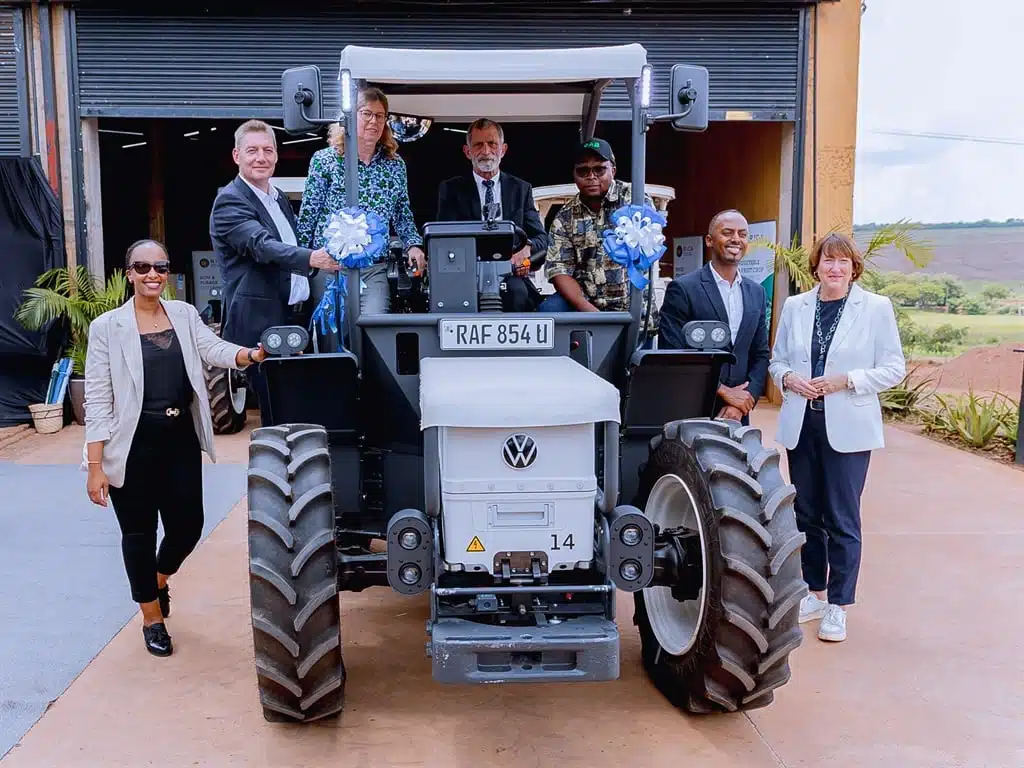
Rwanda’s commitment to electric mobility extends far beyond Kigali’s bustling streets and moto-taxis; it is reaching into the nation’s agricultural heartland. In a groundbreaking move, Volkswagen (VW) Group Africa has launched the GenFarm Project, a pilot initiative that introduces electric tractors (e-tractors) and a holistic e-powered ecosystem designed to modernize and decarbonize Rwandan farming.
This project, based in the Gashora area, is a powerful demonstration of how automotive innovation can be repurposed to address the core economic and environmental challenges facing the agricultural sector, which accounts for approximately 25% of Rwanda’s GDP.
1. GenFarm: A Holistic Ecosystem for Rural Electrification
The GenFarm Project, a collaboration between Volkswagen Mobility Solutions Rwanda, the VW Group Innovation Centre Europe, and local partners like the Rwanda Institute for Conservation Agriculture (RICA), is not merely about selling tractors. It is about creating a comprehensive, sustainable service model:
- The Empowerment Hub (e-Hub): Set to be fully operational in the first half of 2025, the e-Hub is the nerve center of the project. It is equipped with photovoltaic (solar) power systems and integrated energy storage. This means the e-tractors are charged using clean, locally generated renewable energy.
- The E-Tractor as a Service: The project eliminates the high upfront cost of machinery for individual farmers. Instead, farmers can book an e-tractor, complete with a trained driver, for affordable, efficient tilling and planting services. This tractor-sharing model ensures the technology benefits entire farming cooperatives in the Bugesera district.
- Rural Mobility Solutions: The e-Hub also provides clean energy and charging services for electric scooters and other mobility options, facilitating the reliable transport of farm goods and people in rural areas.
2. The Innovation: Swappable Batteries and Lower Costs
The core innovation driving the e-tractor’s viability in Rwanda is the use of a battery swap system, similar to what is successfully deployed for electric moto-taxis.
- Zero Downtime: Instead of waiting hours for a tractor to charge in the field, a depleted battery is quickly swapped for a fresh one at the e-Hub. The used battery then becomes a part of the hub’s stationary energy storage system, creating a powerful synergy between the agricultural and energy sectors.
- Reduced Operational Cost: Field trials in Rwanda have demonstrated that the operational cost of the e-tractor is significantly lower than that of a conventional diesel tractor. By eliminating expensive diesel fuel and requiring less maintenance (fewer moving parts), the technology boosts the farmer’s profit margin.
Practical Tip: Soil Health and Electric Traction
For farmers adopting or using mechanized services, understanding the interaction between the machinery and the soil is critical for long-term yield.
Actionable Advice: The torque delivery of electric motors is often smoother and more consistent than diesel engines. Ensure the e-tractor operators use proper ballasting techniques to match the implement load. Smooth acceleration and even distribution of power reduce wheel slippage, which in turn minimizes soil compaction and erosion—two major threats to soil health in mechanized farming.
For more technical insights on sustainable farming practices and equipment maintenance, consult the resources available at .
3. The Bigger Picture: Aligning with National Goals
Volkswagen’s GenFarm Project perfectly aligns with Rwanda’s broader national vision:
For private individuals looking to integrate modern EVs into their operations, particularly those requiring reliable transport between rural production sites and urban markets, offers import options for electric cars, expanding choices in Rwanda’s sustainable transport market.
4. The Automotive Market Intersection
While the e-tractor operates in the specialized agricultural machinery sector, its success directly influences the perception and adoption of electric technology across all vehicle classes. It proves that EVs can handle the rugged, high-demand work of the rural sector.
Even with this pioneering new technology, the reliable second-hand market remains vital for farm-to-market logistics. Used pickup trucks, reliable 4x4s, and rugged SUVs like the Nissan X-Trail or Toyota Hilux are the current workhorses for transporting produce. To find durable, second-hand utility vehicles suitable for the varied terrain of Rwanda, check out the listings at .
The Agri-Volt movement, pioneered by Volkswagen in Gashora, is a sign that Rwanda is systematically transforming every sector of its economy into a sustainable, electrified future, ensuring that its green leap is truly comprehensive.