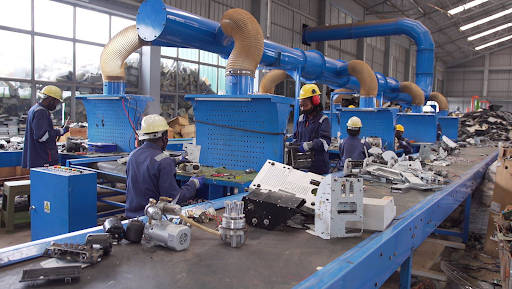
Rwanda has long been celebrated as a pioneering force in Africa’s shift to electric mobility, from the omnipresent electric moto-taxis to the growing fleet of electric buses. However, as the country accelerates its green transition, a new challenge emerges: what happens to the batteries when they reach their end-of-life?
The Rwanda Environment Management Authority (REMA) is tackling this head-on, launching a critical four-year, $1.7 million project titled “Accelerating the Transition to Electric Mobility in Rwanda.” This initiative signals a strategic pivot, recognizing that a sustainable EV ecosystem must encompass the entire lifecycle of the vehicle—especially the powerful lithium-ion batteries that underpin the technology.
1. The Necessary Next Step: Addressing the E-Waste Challenge
The adoption of electric vehicles solves one major environmental problem: tailpipe emissions. But without proper planning, it risks creating another: an insurmountable pile of electronic waste. EV batteries, while durable, eventually degrade and contain materials that are toxic if improperly discarded, yet highly valuable if recycled.
The new REMA project is specifically designed to prevent Rwanda from “solving emissions only to create a bigger problem.” It moves beyond merely deploying vehicles and focuses on building a resilient, circular economy framework for e-mobility. This institutional focus is crucial for safeguarding the environment and ensuring the transition aligns with Rwanda’s long-term Vision 2050 for a low-carbon economy.
2. The Four Pillars of the $1.7M E-Mobility Project
The $1.7 million project, set to begin next year, targets four core barriers to e-mobility adoption in Rwanda: institutional, operational, regulatory, and market-related. Its components map out a comprehensive national strategy:
| Project Component | Key Objective | Practical Outcome |
| I. Institutionalisation | Improve coordination and strategy across government ministries and private sector. | Creation of a national intersectoral coordination body; establishing a knowledge-sharing platform. |
| II. Scaling and Replication | Expand infrastructure and streamline financing for broader adoption. | Development of a national charging station plan; proposal of new financing mechanisms for EV investment. |
| III. Long-Term Environmental Impact | Proactively manage the long-term ecological risks of the transition. | Drafting a national EV battery e-waste management policy; assessing long-term effects of EV charging on the national electricity grid. |
| IV. Regulatory & Market Framework | Ensure policies are robust and address gaps in standards and enforcement. | Harmonization of EV gadgets on the local market; strengthening after-sales service requirements. |
3. Practical Tips for EV Stakeholders: Battery Life and Policy
For early adopters, manufacturers, and transport operators, this shift in regulatory focus demands attention. Staying informed and practicing responsible vehicle use is key to making the transition successful.
Tip 1: Prioritize Battery Health and Longevity
The best way to delay the recycling challenge is to extend the battery’s lifespan.
- Mind the Charge Cycle: For electric motorcycles and cars, avoid habitually charging to 100% or letting the charge drop below 20%. Operating within a 20-80% range significantly prolongs battery health.
- Manage Heat: In Rwanda’s tropical climate, excessive heat can degrade batteries faster. Where possible, charge and park electric vehicles in shaded or cool areas.
Tip 2: Understand the New Regulatory Landscape
Manufacturers and importers must prepare for the forthcoming Extended Producer Responsibility (EPR) schemes and e-waste management policies. EPR shifts the cost and responsibility of a product’s end-of-life management onto the producer, incentivizing sustainable design.
To stay on top of the latest automotive news, policy updates, and vehicle reviews tailored for Rwandan drivers and enthusiasts, ensure you check out the news and guides at automag.rw.
4. The Policy Shift: From Import Incentives to EPR Mandates
For years, Rwanda’s electric mobility policy focused on powerful incentives—preferential Corporate Income Tax rates, import duty exemptions, and low industrial tariffs for charging. While these successfully spurred adoption (with electric vehicles growing from 19 in 2020 to 512 by 2024), the focus is now maturing.
The new project’s goal of drafting a national EV battery e-waste management policy and establishing EPR regulations marks the next critical phase. It ensures that the environmental benefits of EVs are not offset by a battery disposal crisis.
For drivers looking to explore sustainable mobility and bypass potential e-waste issues associated with older technology, offers import options for electric cars, expanding choices in Rwanda’s growing sustainable transport market.
5. Bridging the Gap: The Used Car Market in Transition
While the policy future is clearly electric, the majority of Rwandan drivers still rely on internal combustion engine (ICE) vehicles. The government’s push for e-mobility, coupled with stricter vehicle age limits, will gradually reshape the entire fleet.
This regulatory focus on environmental sustainability is set to influence the value and availability of both new and used ICE cars. For the time being, the market for reliable, second-hand vehicles remains strong. Popular models like the Toyota RAV4, Noah, and various Suzuki models continue to be the workhorses of the nation. To find second-hand cars suitable for these conditions, check out , where you can still find quality used vehicles, even as the country gradually shifts towards electrification.
Ultimately, the $1.7 million project solidifies Rwanda’s commitment not just to having an electric fleet, but to building a truly sustainable and responsible ecosystem.