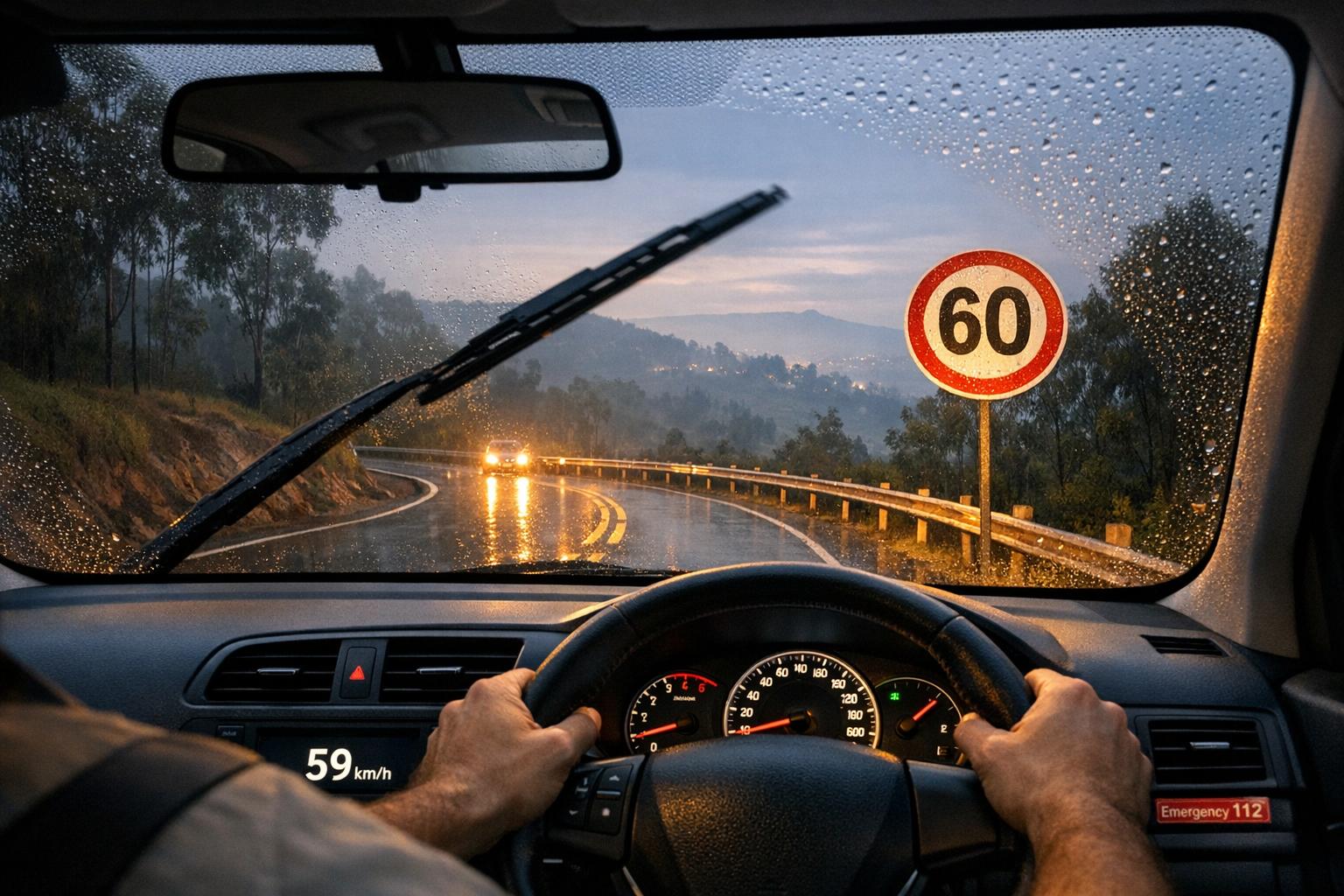
Driving in Rwanda is challenging, especially for new drivers. From navigating Kigali’s busy streets to handling rural, hilly terrain, understanding local traffic laws and road conditions is essential. Here’s what you need to know:
- Drive on the right-hand side and overtake on the left.
- Speed limits: 30 km/h in residential areas, 40 km/h in cities, and 80 km/h on highways.
- Fines: Speeding can cost up to RWF 50,000 ($37), and not wearing a seatbelt is RWF 10,000 ($7.50).
- Rainy seasons: March–May and September–December bring slippery roads and reduced visibility.
- Night driving: Avoid it outside cities due to poor lighting and unpredictable conditions.
- Vehicle checks: Ensure your car has working lights, brakes, and a spare tire. Always carry your license, insurance, and registration.
Stay alert for pedestrians, cyclists, and livestock on the roads. Police checkpoints are frequent, so keeping your documents ready is a must. For emergencies, dial 112. Driving safely in Rwanda requires preparation, awareness, and following the rules.
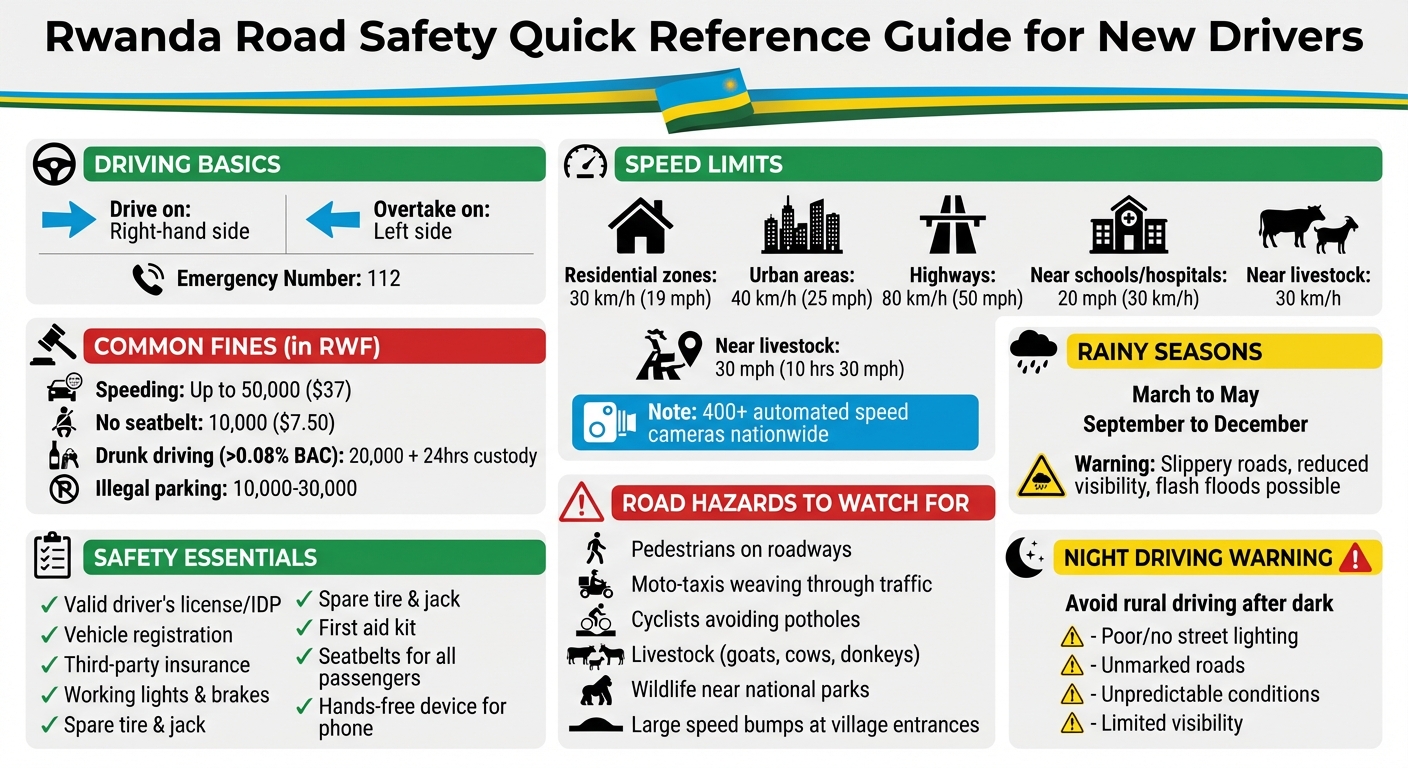
Rwanda Road Safety Quick Reference Guide: Speed Limits, Fines, and Essential Rules
Rwanda’s Traffic Laws and Road Rules
Navigating Rwanda’s roads requires a good grasp of the country’s traffic laws and driving practices. Rwanda enforces its rules through a mix of automated systems and direct police oversight. Below, we’ll cover the essential regulations and guidelines to help you drive safely and confidently.
Drive on the Right-Hand Side
In Rwanda, vehicles drive on the right, with most cars featuring left-hand steering. When overtaking, always pass slower vehicles on the left-hand side. At roundabouts, give way to vehicles already in the circle and use your turn signal to indicate when you’re exiting.
Speed Limits and Safety Essentials
Speed limits in Rwanda depend on the area:
- Residential zones: Approximately 30 km/h (19 mph)
- Urban areas: Around 40 km/h (25 mph)
- Highways: Up to 80 km/h (50 mph), though some provincial roads may limit speeds to 60 km/h (37 mph)
Rwanda has over 400 automated speed cameras, and tickets are typically issued for speeds exceeding 10% above the posted limit.
Safety requirements include mandatory seat belt use for all passengers, with fines of about RWF 10,000 for violations. Drivers must use hands-free devices for phone calls. The legal blood alcohol limit is 0.08%; exceeding this limit results in a RWF 20,000 fine and 24 hours in custody. Always carry a valid driver’s license, vehicle registration, and proof of third-party insurance.
Lane Usage and Overtaking
Main roads in Rwanda are usually well-maintained, but secondary roads often lack clear lane markings, shoulders, and adequate street lighting. Exercise caution, especially when driving outside urban centers. When overtaking, pass on the left and return to the right lane only when it’s safe. Be mindful of abrupt lane changes on local roads. At intersections and crossings, always give priority to pedestrians, who have the right of way at marked crossings.
Reading Road Signs and Navigating Rwanda’s Roads
Being able to interpret road signs and markings is key to driving safely on Rwanda’s diverse roads. These visual cues guide you through traffic, help you avoid accidents, and make your journey smoother. While Rwanda uses standard international traffic symbols, recognizing and understanding them ensures safer and more confident navigation. Let’s break down the common signs, proper signaling, and unique road markings you’ll encounter.
Common Traffic Signs You’ll See
Regulatory signs are there to manage traffic and demand immediate action. For instance, the Stop sign means you must come to a complete stop before moving forward. No Overtaking signs are frequently placed on curves or hills where visibility is limited, making passing particularly risky. You’ll also come across No Parking signs, which limit parking to under five minutes for loading or unloading, and No U-turn signs, which forbid reversing your direction.
Priority signs dictate the right of way. The Yield (Give Way) sign instructs you to reduce speed or stop to allow vehicles on the main road or those already in a roundabout to continue. Zebra Crossings, marked with black and white stripes, require you to stop for pedestrians waiting to cross.
Warning signs prepare you for potential hazards ahead. For example, Men at Work signs indicate construction zones. Emergency Vehicle Warning signs near fire stations or hospitals alert you to the possibility of fast-moving emergency vehicles entering the road unexpectedly, so keep the area clear. Traffic lights use the familiar three-color system: red means stop, yellow (or amber) signals caution or prepare to stop, and green means go.
How to Use Turn Signals Properly
Reading road signs is one thing, but effectively communicating with other drivers is just as important. Always signal when turning or changing lanes to clearly indicate your intentions. At roundabouts, it’s crucial to signal when exiting to inform drivers behind you that you’re leaving the circle. Before every trip, check that your turn signals, headlights, and brake lights are functioning properly. On winding rural roads, using your horn to alert drivers around blind corners is also a good safety practice.
Rwanda-Specific Road Markings
Understanding road markings is another essential part of navigating safely. A continuous white line down the center of the road means overtaking is prohibited. You’ll often see this on bends or hilly areas where passing poses a danger. When the line changes to a broken white line, overtaking is allowed, but only if it’s safe to do so. On many secondary roads, lane markings and shoulders may be absent, so stay vigilant and adjust your driving to the conditions.
Driving in Cities and Rural Areas
Rwanda’s roads offer a mix of urban hustle and rural tranquility, each presenting its own challenges. Whether you’re navigating the busy streets of Kigali or tackling the winding paths of the countryside, staying alert and adapting to the conditions is key to safe driving.
Getting Around Kigali’s City Streets
Kigali’s streets are lively and often congested, especially during rush hours. Traffic jams are common at hotspots like Nyabugogo, Kimironko market, and near the Kigali Convention Centre. To avoid the worst of the gridlock, plan your trips outside peak hours whenever possible.
Motorcycle taxis and mini-buses are a common sight and tend to weave unpredictably through traffic. Keep a safe distance – about 2 meters – to give yourself enough time to react. Many streets lack sidewalks, so pedestrians often walk along the edges of the road. Be extra cautious, especially in areas with heavy foot traffic. Speed limits in urban areas generally range from 25 to 30 mph (40 to 50 km/h), with stricter limits of about 20 mph (30 km/h) near schools and hospitals.
To avoid fines ranging from RWF 10,000 to 30,000 or even towing, make sure to park only in designated blue zones. Once you leave the city, you’ll encounter a different set of driving conditions.
Driving on Rural and Hilly Roads
Rural roads in Rwanda can be quite the adventure. Narrow, unpaved stretches, steep inclines, and sharp curves are common, demanding slower speeds and careful handling. Although speed limits are typically around 37 mph, road conditions often call for more cautious driving.
If you’re planning to explore rural areas, especially during the rainy seasons (March to May and October to December), a 4×4 vehicle is a smart choice. Roads can turn muddy and slippery, making navigation tricky. Keep an eye out for livestock – cows, goats, and donkeys often wander onto the roads, particularly near national parks like Akagera or Volcanoes. By law, drivers must yield to livestock herders, slowing to about 30 km/h when animals are nearby.
Rural roads often lack streetlights and clear markings, making nighttime driving particularly risky. It’s best to stick to daylight hours for rural travel. Before heading into hilly terrain, check your brakes, tire pressure, and tread depth. Long descents can put a lot of strain on your brakes, so it’s better to prepare in advance.
Driving in Rain and at Night
Driving in Rwanda during rain or at night demands extra care. Poor visibility and slippery roads can quickly turn an ordinary trip into a risky venture.
Rainy Season Driving Tips
Rwanda experiences two rainy seasons: March to May and September to December. Heavy rains during these times can lead to flash floods, landslides, and unexpected road obstacles like fallen trees or rocks. The first 30 minutes of rainfall are particularly hazardous as oil and grime mix with water, creating dangerously slick surfaces.
CP Rafiki Mujiji, Commissioner for Traffic and Road Safety, highlights the importance of adapting to conditions:
"When driving under such weather conditions, you don’t have to move at 40km/hr or 60km/hr just because the traffic signpost grants that speed; it comes back to your individual responsibility to set your rules below the set maximum speed as the weather dictates."
Before heading out, inspect your vehicle. Ensure windshield wipers, lights, brakes, and tires are in good condition to handle wet and hilly roads. Adjusting to weather changes is crucial – turn on your headlights with a dipped beam during rain or fog to increase visibility. Also, extend your following distance from the usual 3 seconds to 5–6 seconds to account for longer braking on wet surfaces.
ACP Boniface Rutikanga, RNP Spokesperson, advises:
"If you cannot observe clearly in at least 100 meters ahead, wait until the weather normalize; always turn on the headlights preferably on a dipped beam."
Avoid driving through flooded roads. Instead of slamming on the brakes, ease off the accelerator to reduce the risk of skidding. When approaching curves, shift to a lower gear and slow down beforehand to keep control. These precautions for rainy weather also lay the groundwork for handling the challenges of nighttime driving.
Staying Safe When Driving at Night
Driving at night, especially outside major cities, presents its own set of risks. Many roads lack streetlights, shoulders, and clear markings, making it harder to see pedestrians, cyclists, or livestock. The U.S. Embassy even prohibits its personnel from driving outside Kigali after 6:00 p.m. due to safety concerns. You may also encounter vehicles with dim or faulty headlights.
Whenever possible, plan trips to finish before nightfall. If nighttime driving is unavoidable, ensure all your lights are functioning, reduce your speed below posted limits, and avoid overtaking in areas with poor visibility. Be particularly cautious near national parks like Akagera or Nyungwe, where animals might unexpectedly cross the road. Additionally, after-market tinted windows are banned in Rwanda as they further limit visibility. In case of an emergency, you can contact the Rwanda National Police by dialing 112 or 311.
sbb-itb-7bc66b5
Staying Alert and Driving Defensively
When driving in Rwanda, staying alert is crucial. Whether you’re navigating the bustling streets of Kigali or winding through quieter rural roads, defensive driving is your best bet for staying safe.
Watching for Pedestrians and Cyclists
Pedestrians are a common sight along roadways, especially in areas where sidewalks are missing. In cities, roadside markets can spill over into the streets, creating additional hazards as vendors and shoppers move unpredictably. Always give priority to pedestrians at marked crossings, but be ready for them to cross at unmarked spots too.
Cyclists, on the other hand, often swerve to avoid potholes or debris. When overtaking, keep at least one meter of space between your vehicle and the cyclist. Avoid honking – it can startle both cyclists and pedestrians.
In rural areas or near national parks like Akagera and Volcanoes, you’ll often encounter livestock and wildlife on the roads. Self Drive East Africa advises, "goats, cows, donkeys, and dogs roaming freely on the roads… always drive slowly and expect the unexpected". Near park boundaries, larger animals like elephants or antelopes might cross without warning.
By staying vigilant, you’ll be better prepared to handle the unpredictable movements of pedestrians, cyclists, and animals.
Preparing for Unexpected Driver Behavior
Beyond pedestrians and cyclists, you’ll also need to anticipate erratic behavior from other drivers. In Kigali, moto-taxis are known for weaving unpredictably through traffic, so make it a habit to check your mirrors and blind spots frequently. At intersections, even if you have the right-of-way, proceed cautiously – drivers may not always follow traffic rules at roundabouts or signals.
Maintain a safe distance from the vehicle ahead to allow for sudden stops. Large speed bumps are common at village entrances, so reduce your speed significantly to maintain control. Jean Baptiste Habumugisha from AutoMag.RW reminds drivers that "using a mobile phone while driving is prohibited unless you use a hands-free device. Distracted driving is a major cause of accidents". Staying focused on the road is essential, especially since others may not be as attentive.
Keeping Your Vehicle Road-Ready
Taking care of your vehicle is crucial for avoiding breakdowns, especially when navigating Rwanda’s diverse and often challenging roads. A quick inspection before you hit the road can save you from unexpected hassles.
What to Check Before Each Trip
Start with the tires – check both the pressure and tread depth. If you’re planning to travel through rural or mountainous regions, make sure your vehicle is fitted with off-road tires. Test the brakes and keep an eye on the brake fluid to ensure you’re prepared for Rwanda’s steep and winding terrain.
Next, make sure all lights and signals are working properly. Also, check the levels of essential fluids like oil, coolant, and brake fluid. Poorly functioning or dim lights are a common issue on Rwandan roads and can lead to dangerous situations.
Always begin your journey with a full tank of fuel, especially if you’re heading to remote areas where gas stations are few and far between. Double-check that all seat belts are functional, including those in the back seats. Lastly, carry printed copies of essential documents such as your driver’s license (or International Driving Permit), vehicle insurance, and registration papers, as police checks are frequent.
What to Keep in Your Emergency Kit
Even with regular maintenance, unexpected situations can arise. Equip your vehicle with essentials like a spare tire, car jack, jump starters, and a fire extinguisher. For personal safety, pack a first aid kit, medical supplies, drinking water, and a power bank for your phone.
It’s also a good idea to carry some cash for unforeseen expenses during your trip. Keep a list of emergency contacts, including your rental agency and the Rwanda National Police emergency number, 112. Additionally, have a printed copy of your car rental agreement on hand. Staying prepared ensures a safer and smoother drive, whether you’re in the city or exploring Rwanda’s more remote areas.
Using GPS and Local Knowledge
GPS and smartphone navigation apps are great for navigating Kigali’s well-planned streets, but they often fall short in rural areas. These digital tools can miss important details like narrow, unpaved roads or potholes that are common outside urban centers. Plus, internet connectivity in remote areas is unreliable, which can cause GPS signals to drop or prevent maps from loading. So, just like prepping your vehicle for the journey, understanding your route and the current road conditions is equally important. When technology lets you down, old-school methods can save the day.
When GPS Isn’t Enough
To avoid getting stranded, download offline maps for areas where internet access might be spotty. Keep a physical map handy as a backup. If GPS directions seem questionable, ask locals for real-time updates on road conditions and hazards – they often know best. Before heading out on any trip beyond Kigali, it’s a good idea to talk to local guides or your rental agency. They can offer insights into potentially tricky areas or specific road challenges you might face.
Another tip: use ride-hailing apps to familiarize yourself with common routes before attempting to drive them yourself. This allows you to get a feel for traffic patterns and road layouts without the stress of navigating solo right away.
Stay Informed with AutoMag.RW
In addition to navigation tools, staying updated through trusted local resources is key. Check out AutoMag.RW for the latest on traffic laws, road safety updates, and vehicle maintenance tips tailored for Rwandan drivers. The platform covers everything from traffic penalties to practical driving advice, helping you stay safe and confident on the road.
Conclusion
As you navigate Rwanda’s roads, every drive is a chance to sharpen your skills and boost your confidence. Key to this is understanding that Rwanda follows right-hand driving and adhering to strict speed limits: 30 km/h in residential zones, 40 km/h in urban areas, and 80 km/h on highways. These rules aren’t just guidelines – they’re in place to ensure safety for everyone. Always stick to speed limits and buckle up to avoid fines and, more importantly, to stay protected.
Before hitting the road, make sure your vehicle is in good condition and that you have all necessary documents handy for routine police checks. Rwanda’s roads require heightened awareness, especially when it comes to navigating around moto-taxis, pedestrians, and even livestock that may wander onto the streets.
Beyond following traffic laws, defensive driving is your best ally. Be cautious of unpredictable drivers, slow down during heavy rain, and avoid driving at night when visibility is poor. Keep the Rwanda National Police emergency number (112) saved in your phone – it’s a lifeline in case of any traffic emergencies.
For reliable road safety updates and vehicle maintenance tips, turn to AutoMag.RW. This resource offers practical advice tailored to driving in Rwanda, helping you feel more prepared and secure behind the wheel. Stay informed, follow the rules, and prioritize safety every time you drive.
FAQs
What are the speed limits in Rwanda, and what happens if you exceed them?
In Rwanda, speed limits are set based on the type of area you’re driving through. Residential areas have a limit of 30 km/h (around 19 mph), while urban zones allow speeds between 40 and 60 km/h (25–37 mph). On highways, you can drive up to 80 km/h (50 mph). These rules are enforced rigorously to maintain road safety.
When it comes to fines for speeding or other traffic violations, the penalties vary depending on the offense. However, the exact amounts aren’t always easy to find. To avoid trouble and ensure safety, it’s always a good idea to stick to the speed limits, especially in spots with a lot of pedestrians or vehicles.
What should I do to prepare my car for driving in Rwanda’s rural and hilly areas?
Before heading out to explore Rwanda’s rural and hilly regions, it’s crucial to make sure your vehicle is ready to handle the journey. Start with a thorough check of your tires, brakes, and lights. Ensure your tires have sufficient tread, are properly inflated, and that your brake pads are in good condition. Functional lights are also essential for navigating winding roads, especially in low-light conditions.
Don’t forget to bring all the required documents with you. This includes your driver’s license (or international driving permit), vehicle registration, and insurance certificate. These may be requested during routine police checks, so it’s good to have them easily accessible. Double-check that your insurance is current and that you’ve cleared any outstanding fines to avoid unnecessary complications.
Given Rwanda’s challenging terrain – steep hills and occasional unpaved roads – pay extra attention to your engine, cooling system, and fuel level. It’s also wise to avoid driving at night, as visibility on rural roads can be limited, making travel riskier. By taking these precautions, you’ll be better prepared to navigate Rwanda’s beautiful but demanding landscapes with ease.
What safety tips should I follow when driving during Rwanda’s rainy season?
Driving during Rwanda’s rainy season comes with its own set of challenges. Roads can get slippery, and visibility often takes a hit. To stay safe, always keep your headlights on low beam – this helps you see better without blinding other drivers. Double-check that all your lights, including brake and turn signals, are functioning properly. It’s also a good idea to inspect your windshield wipers to ensure they’re in top shape and confirm your tires are properly inflated with enough tread to handle slick surfaces.
Take it slow – wet roads mean longer stopping distances. Stick to a slower speed than the posted limit and keep a safe following distance, at least the length of your car. When overtaking, only do so if you have a clear view of at least 100 yards ahead. Watch out for hazards like fallen branches, rocks, or debris, which are common after heavy rains. And if you come across standing water, resist the urge to drive through it. Instead, turn around and find a safer path.
If the rain gets so heavy that you can’t see clearly, pull over to a safe spot, switch on your hazard lights, and wait it out. Staying alert and cautious isn’t just smart – it’s essential for navigating the rainy season safely while protecting yourself and others on the road.
Related Blog Posts
- Ultimate Guide to Off-Road Driving in Rwanda
- Vehicle Inspection Checklist for Rwandan Drivers
- Rwanda Traffic Rules: Full Guide for New Drivers
- Emergency Road Safety Tips for Rwanda Drivers