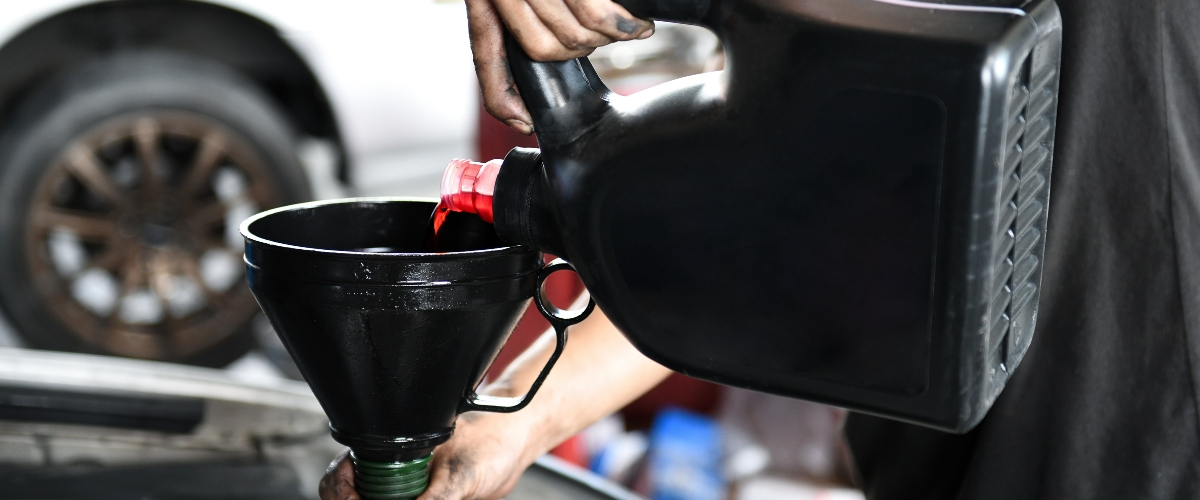
There is a particular kind of bad car advice that sounds completely reasonable — the kind that gets passed down from one driver to the next, repeated at garages, and eventually accepted as fact simply because nobody bothered to question it. Transmission fluid advice is full of exactly this kind of mythology.
From Kigali’s busy workshops to roadside mechanics across Rwanda, transmission fluid misconceptions are everywhere. Some are harmless. Others quietly lead drivers toward gearbox failures that could cost millions of Rwandan francs to repair. Whether you drive a Toyota Wish, a Subaru Impreza, a Nissan Serena, or a Mitsubishi Galant — understanding the truth about transmission fluid is one of the most valuable pieces of automotive knowledge you can have.
In this article, we cut through ten of the most persistent and damaging transmission fluid myths, replace each one with accurate, evidence-based information, and give you practical guidance for keeping your gearbox in the best possible shape — whatever road you are driving on in Rwanda.
For the latest automotive guides, road tips, and car care advice for Rwandan drivers, visit automag.rw — your trusted resource for everything automotive in Rwanda.
Before the Myths: A Quick Primer on What Transmission Fluid Actually Does
Understanding why the myths are wrong starts with understanding what transmission fluid is actually doing inside your gearbox. This is not a component you can see or interact with easily, which is part of why so much misinformation has taken root around it.
Your transmission — whether automatic, manual, CVT, or dual-clutch — is a highly engineered system of gears, clutches, and hydraulic components that transfers power from the engine to the wheels. Transmission fluid serves five essential functions within this system:
• Lubrication: It creates a protective film between gears, bearings, and shafts to prevent metal-on-metal contact and reduce wear.
• Hydraulic actuation: In automatic and CVT transmissions, the fluid itself is the medium through which gear changes happen — it carries hydraulic pressure that engages and releases clutch packs and bands.
• Heat dissipation: Transmission components generate significant heat, especially in stop-and-go traffic and on steep gradients. Fluid carries this heat away from critical components.
• Friction management: Automatic transmission fluid (ATF) contains precisely balanced friction modifiers that control how clutch packs engage — too much friction causes harsh shifts, too little causes slip. This balance degrades as the fluid ages.
• Corrosion and oxidation protection: Chemical additives in the fluid protect metal surfaces from rust and oxidation, and keep the internal seals pliable and functional.
Every myth in this article attacks one or more of these functions — usually by encouraging drivers to ignore the fluid, use the wrong type, or make changes at the wrong time. Let us go through them.
Myth 1: Transmission Fluid and Engine Oil Are Interchangeable in a Pinch
❌ THE MYTH: Transmission Fluid and Engine Oil Are Interchangeable in a Pinch
✅ THE TRUTH: This is one of the most damaging myths in this list. Engine oil and transmission fluid are formulated very differently. Engine oil prioritises film strength and detergency. Automatic transmission fluid contains specific friction modifiers calibrated to control clutch engagement. Manual gearbox oil (typically GL-4 or GL-5 gear oil) has extreme pressure additives designed for the sliding and rolling contact of gear teeth. Putting engine oil into a transmission — or vice versa — disrupts these carefully engineered properties. In an automatic transmission, engine oil can cause erratic gear changes, clutch pack damage, and seal swelling or shrinkage. Using the wrong fluid is not a temporary fix; it is the beginning of transmission damage. If you have done this, drain the fluid and replace it with the correct type as soon as possible.
Myth 2: You Can Tell If Transmission Fluid Is Still Good by Its Colour Alone
❌ THE MYTH: You Can Tell If Transmission Fluid Is Still Good by Its Colour Alone
✅ THE TRUTH: Colour is a starting point, not a verdict. Fresh ATF is typically bright red and transparent. As it ages, it darkens toward brown or black. A dark colour suggests degraded fluid — but the opposite is not reliably true. Fluid can appear reasonably pink or red while its friction modifiers, anti-wear additives, and anti-oxidation compounds have been fully depleted. This happens particularly in vehicles driven in demanding conditions: heavy traffic, mountain routes, towing, and frequent short trips that heat the fluid repeatedly without full warm-up cycles. The only reliable indicators of fluid health are its smell (a burnt smell is a serious warning regardless of colour), its mileage since last change, and for a more technical assessment, a fluid analysis test. Do not let red-looking fluid give you false confidence.
Myth 3: Automatic Transmission Fluid Works Fine in Any Automatic Gearbox
❌ THE MYTH: Automatic Transmission Fluid Works Fine in Any Automatic Gearbox
✅ THE TRUTH: The words ‘automatic transmission fluid’ on a bottle describe a category, not a specification. Within that category there are dozens of incompatible formulations: Dexron VI, Mercon LV, Toyota WS (World Standard), Honda ATF-DW1, ZF Lifeguard 6 and 8, Aisin ATF0K, JWS 3309, and many more. Each is engineered to match the friction coefficient, viscosity, and additive requirements of a specific family of transmissions. Mixing them — or substituting one for another — can cause immediate problems including shuddering during gear changes (particularly on Honda and Toyota CVT and automatic units), overheating, and accelerated clutch pack wear. Always find the specific ATF specification in your owner’s manual and match it exactly. ‘Universal ATF’ products exist but should be used cautiously — verify your manufacturer’s acceptance of a universal fluid before trusting your gearbox to one.
Myth 4: Manual Gearboxes Do Not Need Their Fluid Checked — They Are Sealed Units
❌ THE MYTH: Manual Gearboxes Do Not Need Their Fluid Checked — They Are Sealed Units
✅ THE TRUTH: Manual gearboxes are more robust than automatics in some respects, but they are not maintenance-free. The gear oil inside a manual gearbox degrades over time just like any other lubricant — heat cycles, contamination with metal particles worn from gear surfaces, and chemical breakdown of additives all reduce its effectiveness. Many manual gearboxes also have fill plugs and drain plugs that allow oil changes, and most manufacturers specify a service interval. Furthermore, manual gearboxes can develop leaks at the output shaft seal, the input shaft seal, or the gearbox casing gasket. A slow leak can gradually reduce the oil level until gear surfaces run dry — at which point damage is rapid and severe. Check your manual gearbox oil level during every major service, and inspect underneath the vehicle for any sign of gear oil drips.
Myth 5: Transmission Fluid Flushes Are Always Better Than Drain-and-Fill Services
❌ THE MYTH: Transmission Fluid Flushes Are Always Better Than Drain-and-Fill Services
✅ THE TRUTH: A transmission flush — which uses a machine to force new fluid through the entire system, displacing virtually all of the old fluid — sounds like the gold standard. But whether it is better than a drain-and-fill depends significantly on the vehicle’s condition and service history. On a well-maintained transmission with no known problems and a consistent service history, a flush can be a legitimate choice. On a neglected transmission with degraded fluid and accumulated sludge, a flush can dislodge debris that then clogs valve bodies and passages, causing new problems that did not exist before the service. In this situation, a careful drain-and-fill — possibly done in multiple stages over successive services — is the safer approach. The correct choice depends on the specific transmission and its history, which is why a blanket recommendation either way is misleading.
Myth 6: A Slipping Transmission Just Needs More Fluid — Top It Up and It Will Be Fine
❌ THE MYTH: A Slipping Transmission Just Needs More Fluid — Top It Up and It Will Be Fine
✅ THE TRUTH: Gear slippage — where the transmission fails to maintain drive between gear changes, or where the engine revs without corresponding acceleration — is a symptom, not a standalone problem. Low fluid level can cause slippage, yes. But so can worn clutch packs, a failing solenoid, a degraded torque converter, a malfunctioning valve body, or a pressure control issue that has nothing to do with fluid level. Adding fluid to a slipping transmission that is already at the correct level does nothing except create a false sense of having addressed the problem. Worse, if the slippage is caused by a significant mechanical fault that requires repair, every kilometre driven while slipping causes further damage. A slipping transmission needs diagnosis by a qualified mechanic with a diagnostic scanner, not just a top-up.
Myth 7: CVT Fluid Is Just a Type of ATF — Any Compatible ATF Will Do
❌ THE MYTH: CVT Fluid Is Just a Type of ATF — Any Compatible ATF Will Do
✅ THE TRUTH: CVT transmissions — Continuously Variable Transmissions, common in many modern Japanese vehicles sold into the Rwandan market — use a unique fluid that is categorically different from standard ATF. A CVT uses a belt or chain running between two variable-diameter pulleys to provide infinite gear ratio variation. The fluid in a CVT must maintain a very precise friction coefficient: enough grip to prevent the belt or chain from slipping on the pulleys, but with the correct flow properties for the hydraulic control system. Standard ATF has different friction characteristics that can cause belt slip in a CVT, leading to rapid and very expensive CVT failure. CVT fluid is labelled specifically — Nissan NS-2 or NS-3, Toyota CVTF TC, Subaru CVTF II, and equivalents. Using anything else in a CVT is a serious and costly mistake.
Myth 8: Transmission Fluid Never Needs Changing If the Gearbox Shifts Smoothly
❌ THE MYTH: Transmission Fluid Never Needs Changing If the Gearbox Shifts Smoothly
✅ THE TRUTH: Smooth shifting is a sign that the transmission is currently functional — it is not a measure of fluid health or a reason to skip maintenance. This myth is the equivalent of saying you do not need to change your engine oil as long as the engine is running without knocking. The friction modifiers and anti-wear additives in transmission fluid deplete through normal use. The fluid accumulates metal particles and combustion contamination. Its viscosity shifts with heat cycling. All of this happens gradually and silently, without causing noticeable shifting problems until a threshold is crossed. By the time smooth shifting becomes rough or erratic, the degraded fluid has already been doing incremental damage for thousands of kilometres. Regular changes based on mileage — not feel — are the correct approach.
Myth 9: You Should Always Change Transmission Fluid After Buying a Used Car
❌ THE MYTH: You Should Always Change Transmission Fluid After Buying a Used Car
✅ THE TRUTH: This sounds like responsible maintenance, and in many cases it is — but it is not a universal rule. The important nuance is how degraded the existing fluid is and how well the transmission is currently performing. If a used car’s transmission is shifting smoothly, has no fault codes, and the fluid — while dark — shows no burnt smell or metallic contamination, a careful drain-and-fill with the correct fluid is appropriate. However, if the transmission has been poorly maintained and shows signs of wear, abruptly flushing all the old fluid can sometimes reveal or worsen underlying problems, as noted in Myth 5. The best approach after buying a used car is to have a mechanic assess the fluid condition and the transmission’s health before deciding on the service approach — not to automatically flush and hope for the best.
Myth 10: Transmission Fluid Leaks Are Minor and Can Be Ignored If the Level Is Topped Up
❌ THE MYTH: Transmission Fluid Leaks Are Minor and Can Be Ignored If the Level Is Topped Up
✅ THE TRUTH: A transmission fluid leak is always a problem that needs to be fixed, not managed. Here is why topping up a leaking system is not an acceptable long-term solution. First, the leak will typically worsen over time as seals degrade further. Second, transmission fluid is flammable — drips onto hot exhaust components create a fire risk. Third, if the leak rate increases suddenly — as can happen when a seal fails completely rather than seeping slowly — the transmission can be drained of fluid before the driver notices a problem. Catastrophic transmission damage from sudden fluid loss happens far faster than engine damage from oil loss. Identify the source of any leak — output shaft seal, input shaft seal, pan gasket, cooler line fitting, or elsewhere — and have it repaired properly.
The Practical Guide: What Rwandan Drivers Should Actually Do
Now that the myths are out of the way, here is a clear, actionable guide to transmission fluid maintenance that reflects the realities of driving in Rwanda:
Step 1: Find Your Correct Fluid Specification
Open your vehicle’s owner’s manual and look for the transmission fluid specification. It will be listed in the maintenance section, usually alongside the engine oil specification. Note the exact designation — not just ‘ATF’ but the specific grade or brand approval. If you have lost your manual, search online for your vehicle’s year, make, model, and engine code alongside ‘transmission fluid specification’ — this information is widely published by manufacturers.
Step 2: Know Your Service Interval
Service intervals vary significantly by transmission type and manufacturer. As a general guide:
• Standard automatic (ATF): Every 40,000 to 60,000 km under normal conditions; 30,000 to 40,000 km under heavy use
• CVT fluid: Every 40,000 to 60,000 km — do not extend this, as CVT fluid degrades faster than standard ATF under load
• Dual-clutch transmission (DSG/DCT): Every 60,000 to 80,000 km, or more frequently if you drive in heavy traffic
• Manual gearbox oil: Every 50,000 to 80,000 km, depending on the manufacturer’s specification
For Rwandan conditions — particularly stop-and-go Kigali traffic, frequent hill climbing, and periodic rural road driving — apply the shorter end of any recommended interval range.
Step 3: Choose a Reputable Mechanic for Transmission Services
Transmission fluid services require the correct fluid, the correct quantity, and in many vehicles, a specific fill procedure (such as filling to the correct level with the engine running and at operating temperature). An experienced mechanic who is familiar with your specific vehicle type is far preferable to a general workshop that may use whatever fluid is on the shelf. If you have a Japanese vehicle — Toyota, Honda, Nissan, Subaru, or Mazda — seek a mechanic with experience in Japanese drivetrains.
Step 4: Monitor Between Services
If your vehicle has a transmission dipstick, check the level and condition every three months — cold engine, vehicle on level ground, and following the specific procedure in your manual (some dipsticks require checking with the engine running and warmed up, in a specific gear selector position). If your vehicle has a sealed transmission with no dipstick, rely on your service schedule and be alert to any shifting irregularities that might indicate a developing problem.
�� Rwanda Driving Tip: Kigali’s infamous hills and the country’s mountainous driving routes are harder on automatic transmissions than flat highway driving. If you regularly drive routes with sustained climbs — Musanze, Rubavu, Nyungwe, or regular loaded driving — consider shortening your ATF change interval by 25 to 30 percent compared to the manufacturer’s standard recommendation.
Transmission Fluid and Used Cars: What Buyers Need to Know
Rwanda’s used car market is active and diverse — and the transmission is one of the most important components to assess when evaluating any pre-owned vehicle. A transmission that has been poorly maintained, run on the wrong fluid, or driven with degraded fluid for too long may show no obvious symptoms at a test drive, but will develop problems within months of purchase.
When inspecting a used vehicle, always ask:
• When was the transmission fluid last changed, and what fluid type was used?
• Is there any service history documenting gearbox services?
• Can a mechanic check for diagnostic fault codes related to the transmission before purchase?
• Is there any hesitation, shudder, or delay in gear engagement during the test drive?
If transmission service history is unclear or unavailable, budget for a professional fluid condition assessment and potentially a drain-and-fill as part of your post-purchase maintenance.
For a transparent and well-curated selection of used vehicles in Rwanda — including models like the Toyota Allion, Nissan Wingroad, Honda Vezel, Mazda Atenza, and Subaru Exiga, all with detailed vehicle information — browse the listings on auto24.rw. Having vehicle details in hand before purchase makes it much easier to research the specific transmission type and fluid requirements before you commit.
The One Situation Where Transmission Fluid Is Not a Concern
There is one category of vehicle where this entire conversation becomes largely irrelevant — and that is electric vehicles. Most EVs use a simple single-speed reduction gear that requires minimal lubrication and has no complex clutch packs, torque converters, or hydraulic systems to maintain. There is no ATF to change, no CVT fluid to worry about, and no gear oil intervals to track.
For drivers looking to explore sustainable mobility and dramatically simplify their maintenance routine, EV24.africa offers import options for electric cars, expanding choices for eco-conscious drivers across Africa. While the charging infrastructure and purchase economics still favour conventional vehicles for many Rwandan drivers today, the EV option is worth understanding as part of your long-term vehicle planning.
Frequently Asked Questions (FAQs)
Q: My mechanic says my transmission fluid looks fine and doesn’t need changing. How do I know if they’re right?
Ask them to show you the fluid on a white rag or a piece of white paper — and ask them to smell it. A burnt smell is a definitive sign of degraded fluid regardless of colour. If they cannot show you the fluid directly, or if the vehicle’s mileage suggests it is overdue based on the manufacturer’s interval, seek a second opinion. Fluid condition assessment is not an exact science by visual inspection alone, but a burnt smell or very dark, gritty fluid that has clearly not been changed in a long time is a reliable indicator.
Q: Can I use a ‘universal ATF’ that says it is compatible with many vehicles?
Some universal ATF products are legitimate and can work acceptably in certain applications. However, they carry risk in vehicles with very specific friction modifier requirements — particularly Honda automatic transmissions, Subaru CVTs, and newer Toyota units with narrow WS specification tolerances. For these vehicles, using the manufacturer-specified fluid is safer. For vehicles with less sensitive transmissions — many older Japanese automatics — a quality universal ATF from a reputable brand may be acceptable. Check online forums for your specific vehicle and transmission combination before deciding.
Q: My car shudders when changing from 2nd to 3rd gear. Is this a fluid problem?
Gear-change shudder — a vibration or hesitation during a specific gear transition — can indeed be caused by degraded or incorrect ATF. In Honda and some Toyota automatic transmissions, this is a known symptom of fluid that has lost its friction modifier performance, and a fluid change with the correct OEM-specification ATF frequently resolves it. However, shudder can also be caused by worn clutch packs, a faulty solenoid, or torque converter problems. A diagnostic scan combined with a fluid change using the correct fluid is the recommended first step. If the shudder persists after a correct fluid change, the cause is mechanical rather than fluid-related.
Q: Is it true that a sealed transmission never needs a fluid change?
The term ‘sealed for life’ is one of the most misunderstood phrases in automotive maintenance. It means sealed against external contamination — not that the fluid inside lasts indefinitely. The fluid still degrades thermally and chemically over time. ‘Lifetime’ in a manufacturer’s context often refers to the expected warranty period of the vehicle under ideal conditions, not the realistic working life of a vehicle driven in variable real-world conditions. Most independent transmission specialists recommend servicing even so-called sealed transmissions based on a mileage interval — typically every 80,000 to 100,000 km.
Q: What is the difference between a transmission service and a transmission rebuild?
A transmission service involves draining and replacing the fluid (and sometimes the transmission filter and pan gasket) while the transmission remains in the vehicle. It addresses fluid degradation and contamination. A transmission rebuild involves removing the gearbox, fully disassembling it, inspecting and replacing worn mechanical components (clutch packs, bands, seals, solenoids, bearings), and reassembling to specification. A rebuild is required when there is mechanical failure — not just fluid degradation. The cost difference is significant: a service might cost RWF 30,000 to RWF 80,000; a rebuild can cost RWF 500,000 to RWF 2,000,000 or more. Regular fluid services are the primary way to avoid ever needing a rebuild.
Q: How do I know if a transmission fluid change made my transmission worse?
If a fluid change is followed by new or worsened symptoms — increased shudder, harsher shifts, slipping that was not present before — there are two likely explanations. First, the wrong fluid type was used, which is disrupting the transmission’s friction calibration. This can usually be corrected by draining the incorrect fluid and replacing it with the proper specification. Second, if the correct fluid was used, the fluid change may have revealed pre-existing mechanical wear that was being partially masked by the old, degraded fluid’s changed characteristics. In this case, the fluid change did not cause the damage — it uncovered it. Have the transmission inspected by a specialist.
Final Thoughts: Knowledge Is the Best Transmission Protection
Transmission fluid myths persist because gearboxes are complex, largely invisible, and expensive to repair — which makes drivers anxious and susceptible to oversimplified advice. The ten myths in this article all share a common root: they encourage drivers to treat the transmission as either indestructible or too sensitive to touch, when the reality is that it is neither.
A well-maintained transmission — kept clean with the right fluid, changed at the right interval, and monitored for early warning signs — is one of the most durable components in any modern vehicle. It will outlast many engines. It will survive Rwanda’s hills, Kigali’s traffic, and long cross-border runs. All it asks for is the correct fluid, changed on schedule.
For more in-depth guides on keeping your vehicle in top condition on Rwanda’s varied roads, visit automag.rw. And for drivers currently exploring the used car market in Rwanda, head to auto24.rw — where you can find well-presented options like the Toyota Wish, Nissan Serena, and Honda Vezel, with the vehicle details you need to make a confident, informed purchase.