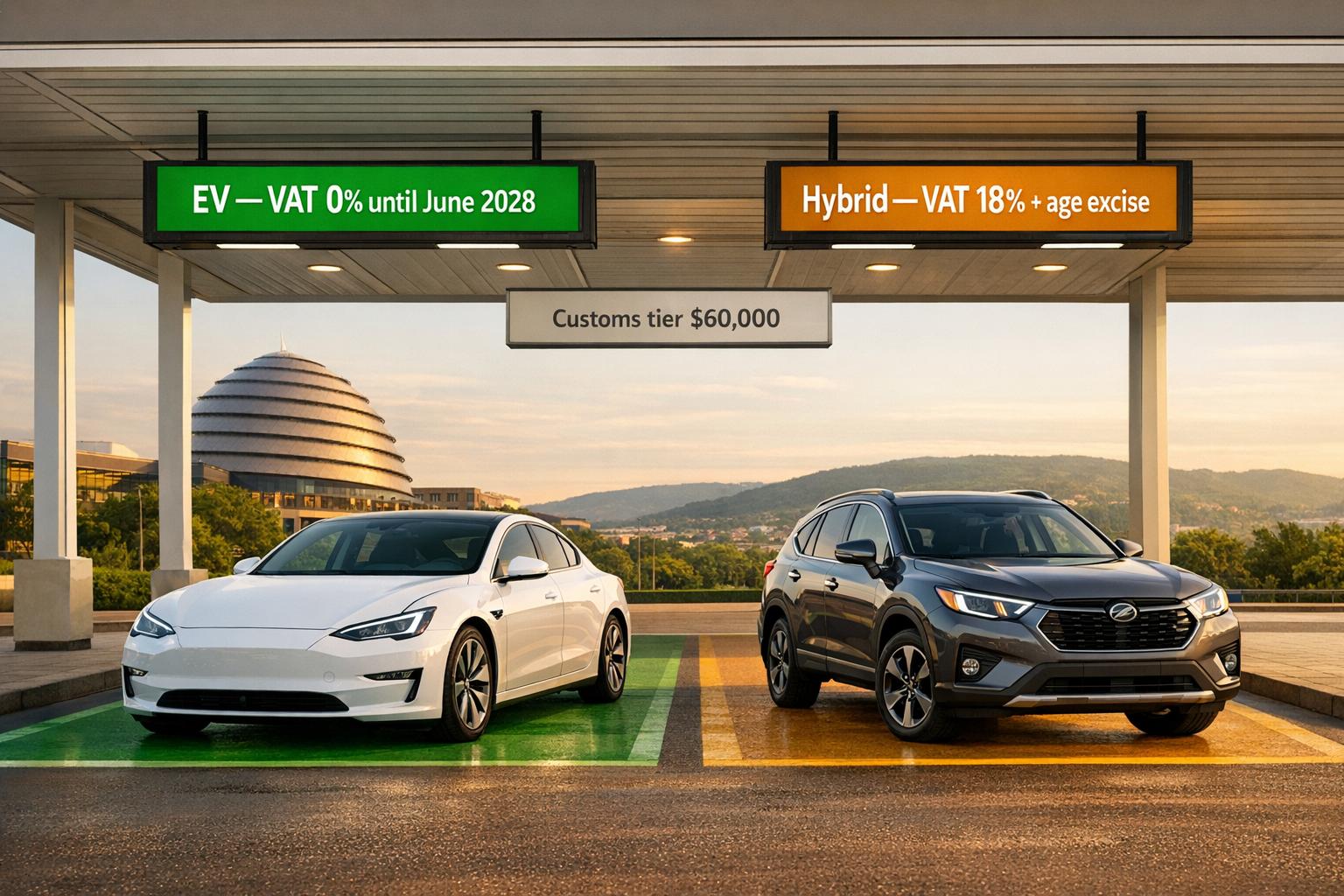
In 2026, Rwanda introduced new rules for importing hybrid and electric vehicles (EVs), shifting focus toward promoting fully electric cars. Here’s what you need to know:
- Electric Vehicles (EVs):
- VAT Exemption: EVs remain VAT-free until June 30, 2028.
- Customs Duty: EVs priced above $60,000 are exempt, while those at or below $60,000 incur a 25% duty.
- Annual Levy: FRW 50,000 ($37) for cars and jeeps.
- Hybrid Vehicles:
- VAT Added: Hybrids now face an 18% VAT.
- Excise Duties Based on Age:
- 0–3 years: 5%
- 3–8 years: 10%
- Over 8 years: 15%
- Customs Duty: Still 0%, but higher overall costs make hybrids less attractive.
- Other Costs:
- Fuel levy increased to FRW 50 per liter, raising operating costs for hybrids.
- New compliance standards, including Euro 4 emissions and UN battery safety regulations, apply to imports.
These changes reflect Rwanda’s push for zero-emission transportation under its National Strategy for Transformation (NST-2), aiming for a greener future by 2030.
Understanding Rwanda‘s journey to e-mobility
sbb-itb-7bc66b5
Import Rules Before 2026
Before 2026, Rwanda implemented policies that encouraged the import of hybrid and electric vehicles. A major milestone came in June 2023 when the government removed customs taxes on all imported electric vehicles, hybrid vehicles, and electric motorcycles. This move was seen as a significant step forward in promoting cleaner transportation. Finance Minister Uzziel Ndagijimana highlighted the goal behind this decision:
"To expedite the adoption of electric vehicles and mitigate emissions associated with petroleum-based transportation, imported electric cars, hybrid cars, and even imported electric motorcycles will be exempt from customs taxes."
These measures laid the groundwork for more refined policies in the years that followed.
Tax Structure and Duties Before 2026
Initially, Rwanda offered broad incentives for all vehicle types, but these were later adjusted to focus more specifically on electric vehicles. Between 2023 and mid-2025, electric and hybrid vehicles enjoyed customs duty waivers and VAT exemptions. However, starting July 1, 2025, the tax structure shifted toward a more nuanced approach.
One notable change came in May 2025, when a fixed annual road maintenance levy of FRW 50,000 was introduced for cars and jeeps, signaling a move toward balancing incentives with infrastructure funding.
Compliance Standards for Imported Vehicles
In addition to tax incentives, Rwanda introduced stricter compliance standards that influenced vehicle imports. Beginning in July 2025, excise duty rates for hybrid vehicles were tied to their manufacturing dates. For electric vehicles, the policy included specific tariff adjustments: those valued at $60,000 or less were subject to a reduced East African Community Common External Tariff of 25%, while vehicles priced above $60,000 were entirely exempted.
Other changes included an environmental levy of 0.2% on the customs value of any imported goods packaged in plastic materials, which took effect on July 1, 2025. This levy impacted vehicle parts and accessories. Additionally, the government raised the strategic petroleum reserve levy from FRW 32.73 per liter to FRW 50 per liter later that year, indirectly increasing costs for hybrid vehicle owners .
What Changed in 2026
In 2026, Rwanda introduced significant updates to its import policies, making a clear distinction between fully electric vehicles and hybrids. Fully electric vehicles now enjoy expanded tax benefits, while hybrid vehicles face new duties. These changes reflect a shift in priorities under Rwanda’s National Strategy for Transformation (NST-2).
New Tax Incentives for Electric Vehicles
Rwanda’s NST-2 initiative continues to prioritize electric vehicles with substantial tax advantages. Imported EVs and charging station equipment remain exempt from VAT until June 30, 2028. The customs duty policy now has a two-tier system based on the vehicle’s price:
- EVs priced above $60,000 are fully exempt from customs duties.
- EVs priced at or below $60,000 incur a 25% customs duty.
This tiered structure separates luxury EVs from more affordable options, encouraging broader adoption of electric vehicles. However, while EVs benefit from these incentives, hybrid vehicles experience a different tax treatment in 2026.
Updated Excise Duties for Hybrid Vehicles
Hybrid vehicles no longer qualify for tax exemptions under the updated NST-2 policies. Starting in 2026, hybrids are subject to an 18% VAT and a tiered excise duty based on vehicle age:
- 5% for vehicles aged 0–3 years
- 10% for vehicles aged 3–8 years
- 15% for vehicles older than 8 years
Despite these added costs, hybrids still enjoy a 0% customs duty under the East African Community framework. These tax changes are part of a broader effort to align with Rwanda’s evolving environmental and economic goals.
New Compliance Standards
Rwanda has also introduced stricter compliance measures in line with NST-2 objectives. Imported vehicles must now meet Euro 4 emissions standards, and the government has adopted UN lithium battery regulations to ensure EV battery safety. Additionally, a 0.2% environmental levy is applied to the customs value of imported vehicle parts and accessories. These updates aim to support Rwanda’s transformation goals, which extend through 2030.
How the Changes Affect Buyers, Dealers, and the EV Market
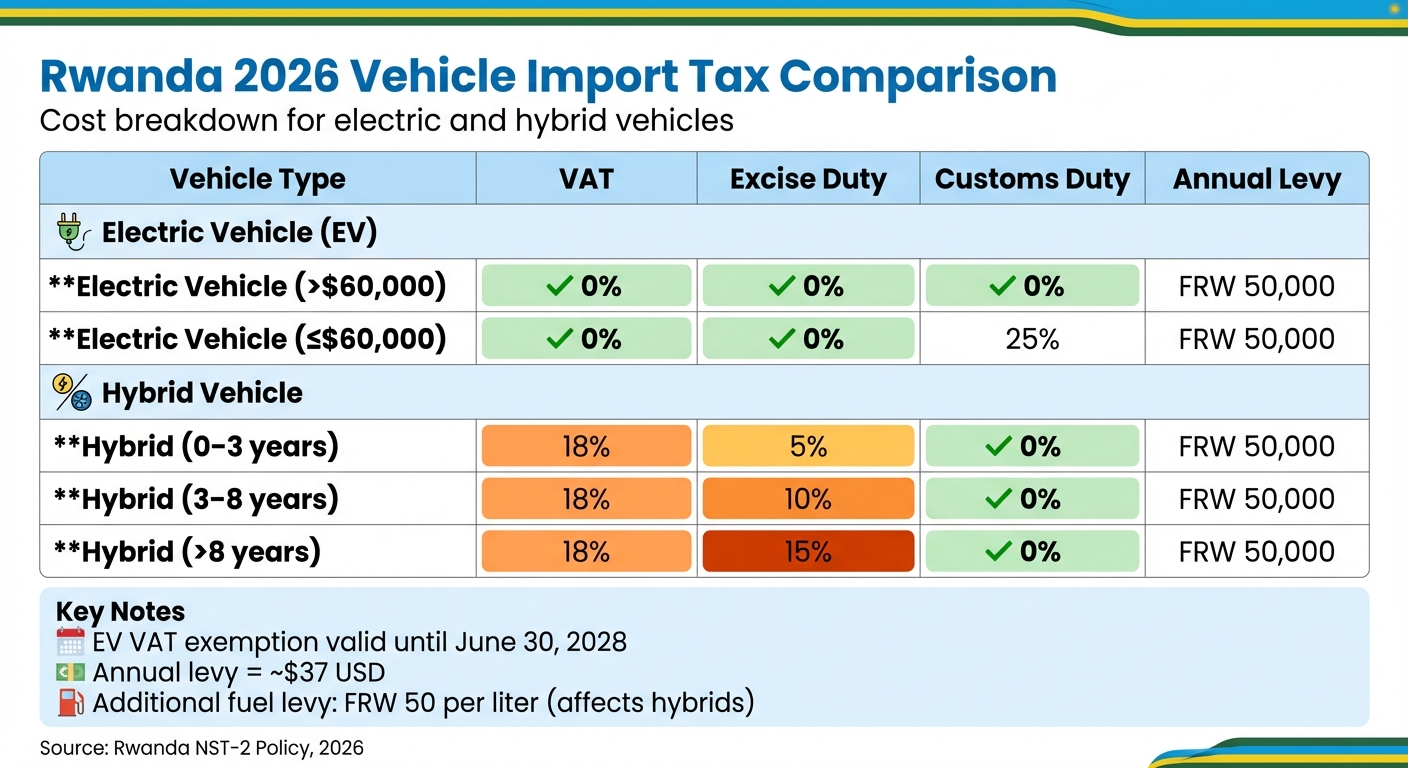
Rwanda 2026 EV vs Hybrid Import Tax Comparison
Cost Changes for Vehicle Buyers
The 2026 regulations introduce a clear cost distinction between fully electric and hybrid vehicles. For fully electric vehicles (EVs), those priced above $60,000 remain free from VAT and customs duties. Meanwhile, EVs priced at or below $60,000 are subject to a 25% customs duty, though they still benefit from an 18% VAT exemption until June 30, 2028. These measures aim to encourage the adoption of zero-emission vehicles.
Hybrid vehicles, on the other hand, are becoming more expensive. All hybrids now incur an 18% VAT, alongside additional excise duties based on their age. Vehicles less than three years old are subject to a 5% excise duty, those aged three to eight years incur a 10% excise duty (resulting in a combined rate of 28%), and hybrids older than eight years face a 15% excise duty. Buyers of hybrids also need to account for an annual road maintenance levy of FRW 50,000 (around $37) and higher fuel costs due to a FRW 50 per liter strategic petroleum reserve levy.
| Vehicle Type | VAT | Excise Duty | Customs Duty | Annual Levy |
|---|---|---|---|---|
| EV (>$60,000) | 0% | 0% | 0% | FRW 50,000 |
| EV (≤$60,000) | 0% | 0% | 25% | FRW 50,000 |
| Hybrid (0–3 years) | 18% | 5% | 0% | FRW 50,000 |
| Hybrid (3–8 years) | 18% | 10% | 0% | FRW 50,000 |
| Hybrid (>8 years) | 18% | 15% | 0% | FRW 50,000 |
These shifts in costs require dealers to rethink their strategies.
What Dealers Need to Know
Dealers will need to adjust their pricing and inventory strategies to align with the new tax structure. Importing newer hybrid models – those under three years old – will help minimize excise duties as these vehicles attract only a 5% rate. Older hybrids, however, will carry higher excise rates, making them less attractive to buyers. Fortunately, the VAT exemption on charging station equipment remains in place until June 30, 2028, providing an incentive for dealers to support EV infrastructure.
This shift also opens doors for dealerships to build proprietary charging networks, boosting EV sales and enhancing customer convenience. Additionally, dealers who focus on local assembly can avoid excise duties altogether, giving them a competitive edge in the market.
These adjustments are shaping the trajectory of Rwanda’s EV market.
Effects on Rwanda’s EV Market Growth
The updated policies highlight Rwanda’s dedication to transitioning to electric mobility. By continuing to provide tax breaks for electric vehicles, such as VAT and customs duty exemptions, while imposing higher costs on hybrid models, the government is clearly prioritizing zero-emission technology. This aligns with Rwanda’s National Strategy for Transformation, which emphasizes sustainability.
New fuel-related taxes, including a 15% duty on the CIF value of imported petrol and diesel and the FRW 50 per liter strategic petroleum reserve levy, further widen the cost gap between traditional internal combustion vehicles and EVs. These measures are expected to accelerate the adoption of electric vehicles, pushing Rwanda closer to its electrification goals.
Conclusion
Rwanda’s 2026 regulations signal a clear move toward fully electric vehicles, stepping away from hybrids. The updated tax structure exempts fully electric vehicles from VAT until June 30, 2028, while hybrids now face an 18% VAT alongside age-based excise duties ranging from 5% to 15%. These changes align with the National Strategy for Transformation (NST-2), which emphasizes advancing zero-emission transportation by 2030.
For buyers, electric vehicles – particularly those priced above $60,000 – remain a cost-efficient choice, while older hybrids face steeper import duties. Additionally, all vehicle owners are required to pay an annual road maintenance levy of FRW 50,000 (around $37) by December 31 each year.
For dealers, adapting to these changes is essential. Stocking hybrids less than three years old can help reduce excise tax liabilities, while investing in EV charging infrastructure offers the advantage of VAT exemptions on equipment. The excise duty exemption for locally assembled vehicles also presents a strategic opportunity for businesses ready to innovate.
These policy updates are part of Rwanda’s broader commitment to sustainable, zero-emission mobility. With added fuel levies discouraging combustion engine use, the transition to electric vehicles is set to accelerate, supporting the country’s NST-2 goals through 2030.
To stay competitive in Rwanda’s evolving automotive market, keep an eye on these regulations, which take effect immediately upon their publication in the Official Gazette.
FAQs
How do I know if my EV is above or below the $60,000 duty threshold?
To determine if your electric vehicle (EV) qualifies for benefits, check its declared value or purchase price. EVs priced below $60,000 might be eligible for full customs duty exemptions or reduced tariffs in Rwanda. These benefits depend on the 2026 import regulations, so make sure to review the latest policies to confirm your vehicle’s eligibility.
What documents prove a hybrid’s age for the excise duty brackets?
To determine a hybrid vehicle’s age for excise duty purposes, you’ll need either the registration papers or import documents. These documents provide the manufacturing date or model year, which are critical for establishing the vehicle’s age and the corresponding tax rate.
What do Euro 4 and UN battery rules mean for passing import inspection?
Euro 4 and UN battery rules set specific emissions and safety standards for vehicles. These regulations play a key role in ensuring compliance during import inspections in Rwanda. For hybrid and electric vehicles, meeting these standards is a must to gain approval for entry into the country.
Related Blog Posts
- Rwanda’s EV Incentives: What Drivers Need to Know
- Car Imports in Rwanda: What’s Changing in 2025
- Car import duties in Rwanda: Updated costs and procedures for 2025
- Rwanda Car Import Taxes Explained: What You Really Pay in 2026