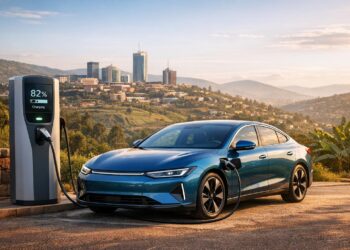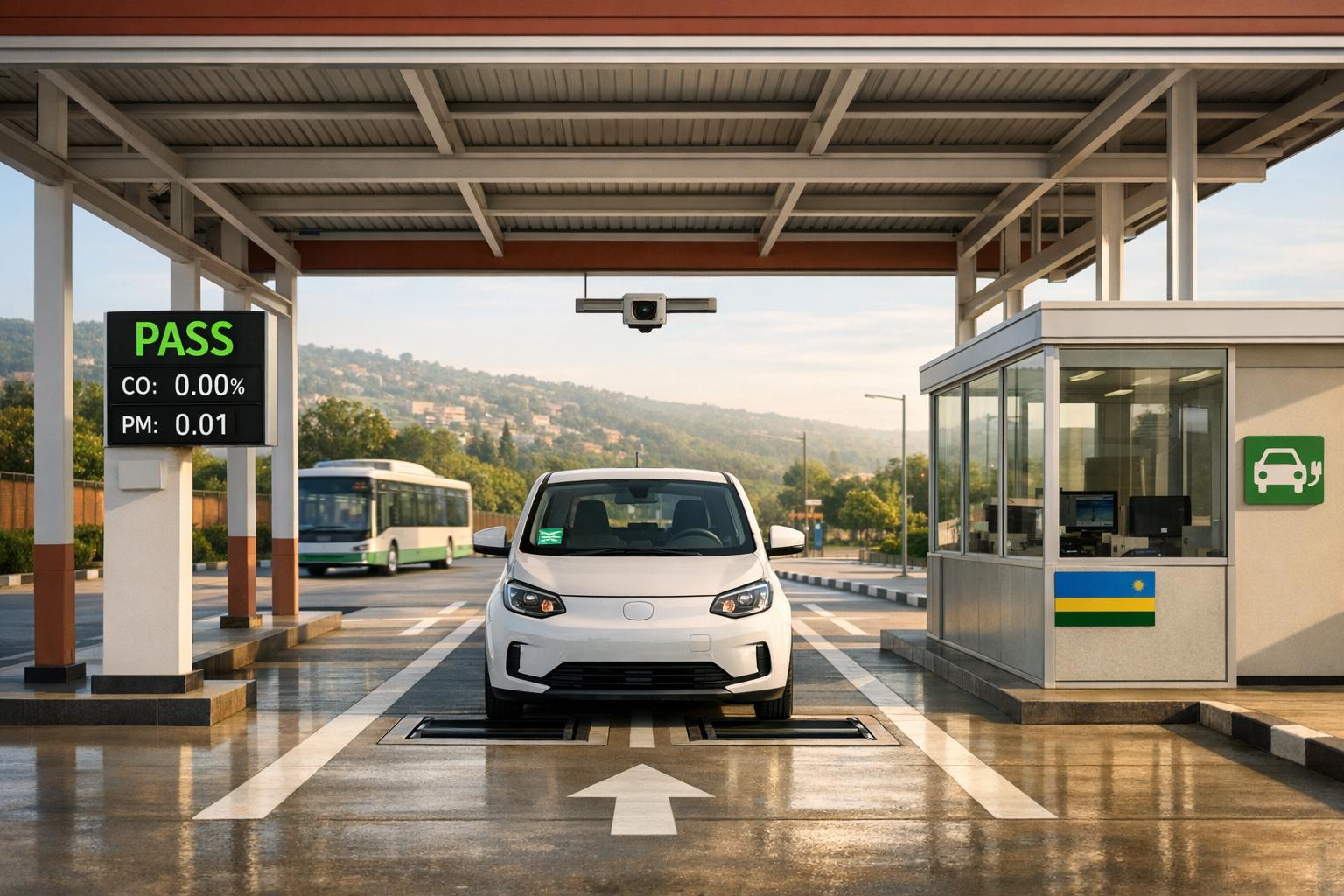
Rwanda is leading the charge in improving vehicle standards across East Africa, focusing on reducing harmful emissions and improving public health. Key measures include mandatory emissions testing for non-electric vehicles, VAT exemptions for electric vehicles, and penalties for noncompliance. These reforms are part of Rwanda’s Vision 2050 and its goal to cut greenhouse gas emissions by 38% by 2030.
Key Points:
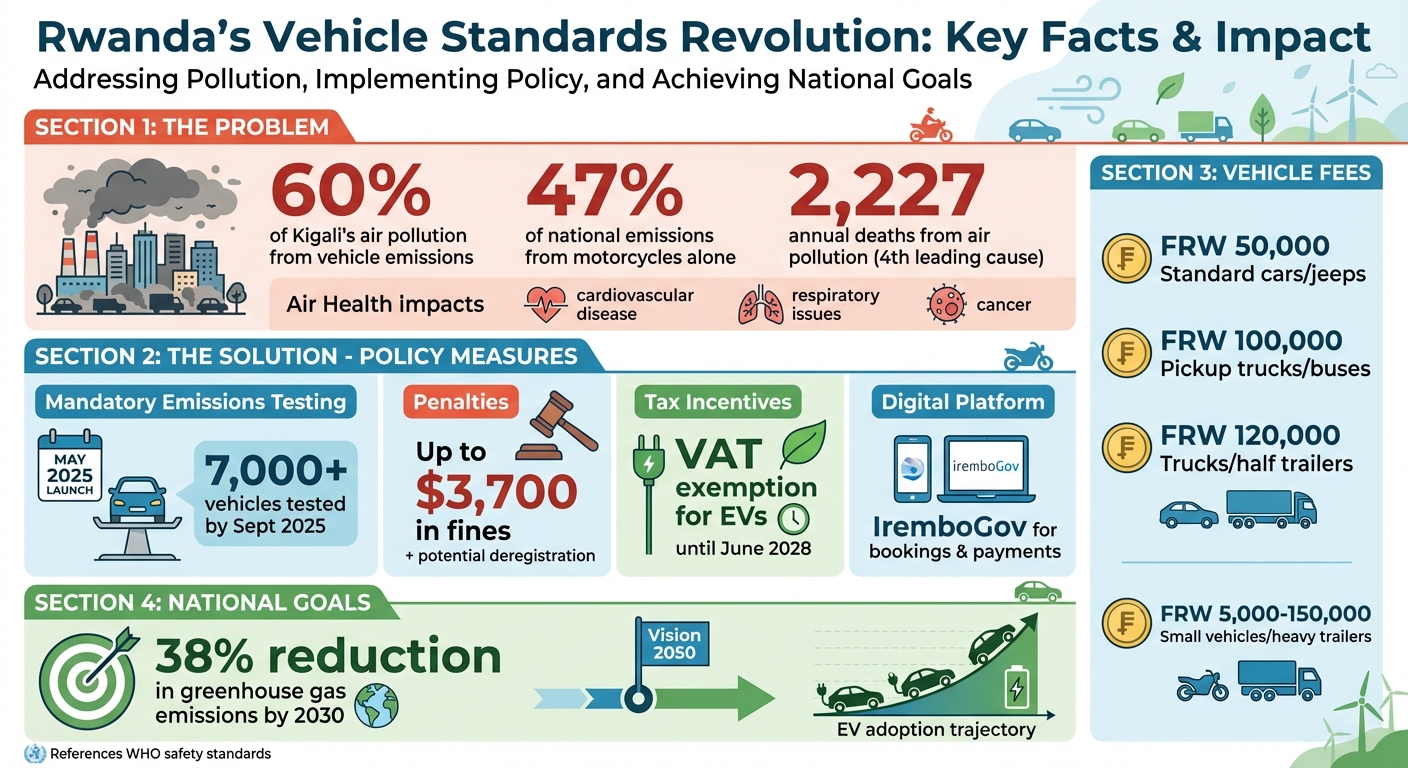
- Mandatory Emissions Testing: Introduced in May 2025 for all non-electric vehicles and motorbikes. Over 7,000 vehicles were tested by September 2025.
- Penalties: Fines up to $3,700 and potential deregistration for noncompliance.
- Tax Incentives: VAT exemptions for electric vehicles and charging equipment until June 2028.
- Digital Integration: The IremboGov platform simplifies inspection bookings and payments.
Vehicle emissions account for over 60% of Kigali’s air pollution, with motorcycles contributing 47% of national emissions. These policies aim to reduce pollutants like PM2.5 and NO2, which cause respiratory and cardiovascular diseases. Rwanda’s efforts showcase how developing nations can modernize transportation systems while addressing pressing health and environmental concerns.
Rwanda Vehicle Emissions Standards: Key Statistics and Policy Impact
Environmental and Health Problems Driving the Changes
Vehicle Emissions and Air Pollution in Rwanda
In Rwanda, vehicle emissions have become the primary source of air pollution, particularly in the bustling city of Kigali. Along heavily trafficked roads, levels of particulate matter (PM2.5 and PM10) and nitrogen dioxide (NO2) have surged, mainly due to older vehicles with inefficient combustion systems. A 2017 study conducted over three months in Kigali found that PM2.5 and PM10 concentrations far exceeded the safety levels recommended by the World Health Organization (WHO). While pollutants like sulfur dioxide and carbon monoxide generally stayed within WHO’s safe limits, the high levels of particulate matter and nitrogen dioxide remain a serious concern. Ukwishaka David, Climate Change Data Officer at the Rwanda Environment Management Authority (REMA), underscored this issue:
In Rwanda, high concentrations of these pollutants were largely attributed to vehicle emissions.
Health Effects on the Population
The consequences of poor air quality in Rwanda are devastating, with air pollution responsible for 2,227 deaths annually. This makes it the fourth-leading global cause of death. Emissions from vehicles are linked to a range of health problems, including cardiovascular diseases, respiratory issues like asthma, and even cancer. Urban residents living near major roads bear the brunt of these health risks. Highlighting the importance of tackling this issue, Ukwishaka David explained:
Improving air quality will benefit public health by reducing cardiovascular, respiratory diseases, and cancer.
In response to these health threats, the Rwandan government has prioritized stricter vehicle standards to shield its population from avoidable illnesses and premature deaths. This pressing public health challenge has become a driving force behind the country’s new policies.
sbb-itb-7bc66b5
Rwanda’s New Policies and Implementation Schedule
Main Regulations and Requirements
Rwanda is rolling out policies aimed at cutting harmful emissions and safeguarding public health, with a focus on cleaner transportation. Here are the key measures:
- VAT exemption: Fully electric vehicles and charging station equipment are exempt from VAT until June 30, 2028.
- Hybrid vehicles: Subject to VAT, withholding tax, and excise duties, with excise rates set at 5% for vehicles 0–3 years old, 10% for those 3–8 years old, and 15% for vehicles older than 8 years.
- Fuel levies: A 15% road maintenance levy applies to petrol and diesel fuel based on their CIF value. Additionally, the strategic petroleum products reserve levy increased from FRW 32.73 to FRW 50 per liter for petrol and gas oil.
- Environmental levy: A 0.2% levy is imposed on the customs value of imported goods packaged in plastic materials.
These policies are part of Rwanda’s broader strategy to promote sustainable transportation and reduce environmental impact.
Implementation Schedule
The changes to taxes and levies on hybrid vehicles became effective on July 1, 2025. Meanwhile, the VAT exemption for electric vehicles will remain active through June 30, 2028. Fixed annual road levies have also been introduced, categorized as follows:
- FRW 50,000 for standard cars and jeeps
- FRW 100,000 for pickup trucks, microbuses, minibuses, and buses
- FRW 120,000 for trucks and half trailers
- FRW 5,000 to FRW 150,000 for smaller vehicles or heavy trailers
These measures are designed to align with Rwanda’s sustainability goals while ensuring equitable contributions across vehicle types.
Coverage of Motorbikes and Other Vehicle Types
The new regulations extend beyond cars to include motorcycles, public transport buses, school buses, and goods transport vehicles. Here’s how these modes are impacted:
- Motorcycles: Public transport motorcycles must now adhere to standardized regulations.
- Public and goods transport vehicles: These vehicles are required to install mandatory road speed governors to enhance safety.
- Public transport buses: Must implement intelligent connected fare meters and automated fare collection systems.
- School buses: Held to specific safety and operational standards introduced in 2023.
To ensure compliance, RURA released updated guidelines for enforcement in May 2024. These steps underline Rwanda’s commitment to modernizing its transportation sector while prioritizing safety and efficiency.
Rwanda vs. Other East African Countries
Timeline and Standards Comparison Table
Rwanda has taken a leading role in vehicle standards compared to its East African neighbors. A regional roadmap for vehicle emission standards was developed during 2016–2017 through consultations with national standards organizations, environmental agencies, and transport ministries. Even within this collaborative framework, Rwanda has set itself apart.
One noticeable difference is Rwanda’s use of a right-hand traffic system, while its neighboring countries follow left-hand traffic. Additionally, Rwanda enforces strict road safety measures, including a zero-tolerance policy for driving under the influence, urban speed limits of 40–60 km/h (about 25–37 mph), highway limits up to 100 km/h (around 62 mph), and mandatory seat belt use for all passengers. These measures align with the country’s broader push for environmental and public safety reforms.
Distinctive Factors Driving Rwanda’s Progress
Rwanda’s advancements in vehicle standards stem from a strong governmental dedication to green initiatives and a well-developed enforcement system. The centralized mandatory vehicle inspection process ensures all vehicles comply with emission and safety standards before they are allowed on the roads. This centralized approach not only streamlines compliance but also reinforces Rwanda’s commitment to sustainable growth and environmental responsibility.
Rwanda to enforce mandatory vehicle checks under new environmental campaign
Enforcement Methods and Infrastructure Improvements
Rwanda is stepping up its efforts to ensure vehicles meet stricter environmental standards by combining advanced enforcement methods with infrastructure upgrades.
Testing Centers and Mobile Inspection Units
Rwanda has made vehicle emission testing a mandatory part of its mechanical inspection process at "Contrôle Technique" centers. These centers are located in Rwamagana, Huye, Musanze, and Ndera. The Ndera facility is specifically equipped to handle heavy trucks (weighing 3.5 tons, or about 7,716 pounds) and non-electric motorcycles. Notably, motorcycles, which were previously excluded, are now required to undergo both emission and mechanical testing.
Inspection schedules depend on the type of vehicle. Motorcycles and private vehicles must be tested annually, while commercial vehicles are inspected twice a year. To encourage timely repairs, vehicle owners who fail their initial emission test are offered a 50% discount on the second inspection if completed within 14 days. Fully electric vehicles and international vehicles staying in Rwanda for less than three months are exempt from these emission inspections.
Digital Tools for Compliance
The IremboGov platform (www.irembo.gov.rw) plays a key role in streamlining compliance. Through this online system, vehicle owners can book inspection appointments, pay fees using mobile money services like MTN and Airtel or through cards like Visa and MasterCard, and instantly access their digital inspection certificates.
A "no-clearance, no-inspection" policy ensures that vehicle owners settle all outstanding traffic fines before booking an inspection. To keep the process efficient, billing IDs expire within one hour, and digital certificates are issued immediately after passing inspections.
These digital tools are paired with extensive public outreach to keep vehicle owners informed and compliant.
Public Education and Government Campaigns
The Rwanda Environment Management Authority (REMA) is leading the charge in raising awareness about the importance of emissions testing. Their campaigns emphasize the health risks posed by pollutants, the benefits of regular vehicle maintenance, and the push toward adopting green, electric vehicles.
To make the process more efficient, vehicle owners are encouraged to schedule both mechanical and emission inspections at the same time through IremboGov. This minimizes the need for multiple visits and ensures quicker service.
Expected Benefits of the New Vehicle Standards
Rwanda’s focus on stricter regulations and infrastructure upgrades highlights its dedication to advancing sustainable mobility.
Environmental Improvements
Rwanda’s new standards aim to significantly cut harmful pollutants, including carbon dioxide (CO2), nitrogen oxides (NOx), particulate matter (PM), and hydrocarbons. These efforts represent a solid step toward reducing the nation’s environmental impact. The regulations also encourage the adoption of advanced emission-control technologies like selective catalytic reduction (SCR) and particulate filters, which are integral to vehicles meeting Euro 6 standards.
"International car emission standards are critical in the global fight against climate change and air pollution. By setting increasingly stringent limits on pollutants, these standards push automakers toward cleaner technologies." – Sarah, Author, XNmotors
Globally, the transportation sector is a major contributor to CO2 emissions. By targeting greenhouse gas emissions and reducing smog-forming agents like volatile organic compounds (VOCs), Rwanda’s standards are expected to lead to cleaner urban air. This environmental progress is closely tied to potential public health benefits.
Better Public Health Outcomes
Cleaner air directly translates to better health outcomes, especially in urban areas. Modern standards like Euro 6 are designed to curb emissions of particulate matter and nitrogen oxides, which are known to cause respiratory and cardiovascular problems.
As these regulations take hold, Rwanda expects to see a drop in pollution-related health issues, particularly in densely populated cities where air quality concerns are most pressing.
Encouraging Cleaner Vehicle Options
Beyond environmental and health benefits, these standards are reshaping Rwanda’s vehicle market. By enforcing stricter emission limits, the country is encouraging the adoption of electric vehicles (EVs) and other low-emission technologies. Automakers and importers are being nudged toward cleaner solutions, including fully electric vehicles and advanced fuel-efficient engines. Additionally, the regulations demand better fuel quality, enabling traditional vehicles to operate with lower emissions.
"The shift toward EVs is a key strategy for reducing the automotive industry’s carbon footprint." – Beach Automotive Group
This strategy aligns with successful examples from other countries, such as India’s rapid adoption of stricter emission standards. In Rwanda, these measures are expected to create a market that increasingly favors vehicles with zero tailpipe emissions, gradually phasing out the dominance of internal combustion engines.
Conclusion: Rwanda Leading the Region in Vehicle Standards
Rwanda has set itself apart in the region with its strong enforcement and innovative digital compliance tools, driving a major shift in vehicle standards. Through its Inspection and Maintenance program, the country focuses on reducing key pollutants like carbon monoxide, nitrogen oxides, and hydrocarbons, paving the way for cleaner transportation.
The government backs these efforts with smart economic policies, such as VAT exemptions for electric vehicles and higher excise duties on older, more polluting cars. These initiatives are firmly tied to Rwanda’s National Strategy for Transformation, which aims for significant progress by 2030.
"Switching to electric vehicles is a means to reduce greenhouse gas emissions and improve air quality in the City of Kigali." – Ukwishaka David, Climate Change Data Officer, REMA
Vehicle emissions have a direct impact on public health, contributing to conditions like cardiovascular and respiratory diseases. By addressing pollutants like nitrogen dioxide and particulate matter, Rwanda aims to improve the quality of life for its citizens.
Rwanda’s approach shows how developing nations can bypass traditional paths of automotive development. With strict emission policies, advanced compliance systems, and growing support for electric vehicle infrastructure, the country offers a model for sustainable mobility. This strategy not only protects the environment but also prioritizes public health, positioning Rwanda as a leader in promoting cleaner, greener transportation across the region.
FAQs
Which vehicles are exempt from emissions testing in Rwanda?
In Rwanda, vehicles powered entirely by electricity are not required to undergo emissions testing. This policy aligns with the nation’s efforts to promote cleaner and more environmentally friendly transportation options. By encouraging the use of electric vehicles, Rwanda is taking a step toward reducing air pollution and supporting sustainable mobility initiatives.
What happens if my vehicle fails the emissions test?
If your vehicle doesn’t pass the emissions test, you’ll need to take care of the required repairs before scheduling a retest. Make sure all suggested fixes are completed to ensure your vehicle meets the necessary standards.
How do these rules change the cost of owning a gas car vs. an EV?
Stricter vehicle standards in Rwanda, such as emissions rules and recycling policies, are likely to increase the costs associated with gas-powered cars. This is due to higher taxes, additional fees, and the expenses tied to meeting compliance requirements. On the other hand, electric vehicles (EVs) could see advantages like incentives, reduced operating costs, and fewer regulatory hurdles. These efforts are designed to encourage the use of cleaner transportation options and gradually make EV ownership more accessible, further widening the price difference between gas-powered cars and EVs.
Related Blog Posts
- Rwanda’s ICE Vehicles: Carbon Emissions Impact
- Rwanda’s Plan for 20% Electric Buses by 2030
- Rwanda’s EV Road Projects: Progress and Impact
- EV Policy Updates for 2025/2025 in Rwanda