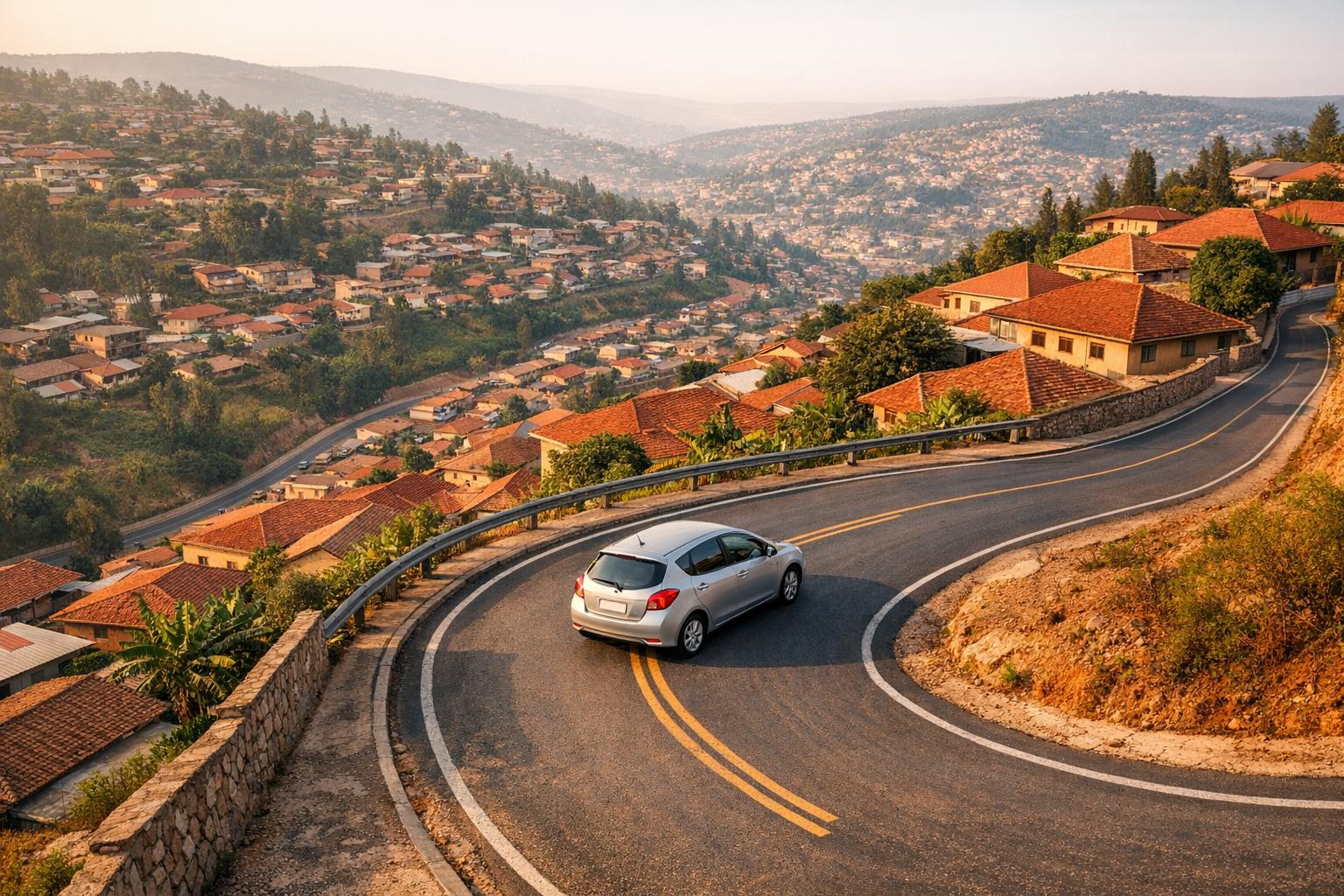
Small, fuel-efficient cars are the best choice for Rwanda’s unique driving conditions. Here’s why:
- Hilly Terrain: Rwanda’s steep slopes and winding roads demand vehicles that handle inclines efficiently.
- High Fuel Costs: As a landlocked country, Rwanda faces steep fuel prices, making fuel-efficient cars a cost-saving necessity.
- Urban Traffic: Compact cars excel in Kigali’s dense traffic and limited parking spaces.
- Government Incentives: Tax exemptions for electric vehicles (EVs) are encouraging a shift toward cleaner transportation.
- Environmental Goals: Smaller cars help reduce emissions, aligning with Rwanda’s carbon neutrality plans.
Models like the Toyota Levin Hybrid and Suzuki Swift are popular due to their reliability, fuel efficiency, and ease of navigation in both urban and rural areas. Maintenance, smart driving habits, and route planning can further maximize their benefits. For Rwandan drivers, these vehicles offer a practical and cost-effective solution to everyday challenges.
Rwanda’s Driving Environment
Hilly Terrain and Narrow Roads
Rwanda, often called the "Land of a Thousand Hills", lives up to its name with its diverse and challenging terrain. Elevations range from 950 meters (around 3,117 feet) at the Rusizi River to an impressive 4,507 meters (nearly 14,785 feet) at Mount Karisimbi. Most mountainous areas sit between 1,500 and 2,500 meters (approximately 4,920 to 8,200 feet) above sea level. In Kigali, the capital, drivers contend with winding roads and steep inclines, a reflection of the city’s rolling topography. The western border’s Albertine Rift features dramatic slopes leading down to Lake Kivu, adding to the complexity of driving conditions.
Rainy seasons – March through May and October through December – bring heavy rainfall, often exceeding 1,500 mm (about 59 inches) in the mountains. This not only accelerates soil erosion but also worsens road conditions, making driving more challenging and costly. These factors influence vehicle choices and operating expenses for drivers in the region.
High Fuel Costs and Economic Factors
As a landlocked country, Rwanda faces higher-than-average fuel prices due to logistical hurdles. This has shaped consumer preferences toward vehicles that are simple to maintain and highly fuel-efficient. Compact models are especially popular, offering a balance between affordability and practicality.
Despite these challenges, Rwanda is making strides in modernizing its infrastructure and exploring more sustainable transit options to address these economic pressures.
Growing Infrastructure and Urban Areas
Rwanda’s urban areas are undergoing rapid transformation, aligning with the nation’s focus on sustainable mobility. In Kigali, the city is incorporating dedicated bicycle and bus lanes into its urban planning, enhancing public transportation and micro-mobility options. By the end of 2024, the government aims to establish 38 EV charging stations nationwide, ensuring that a charging point is available roughly every 100 kilometers.
These developments have fueled a notable increase in sustainable vehicle adoption. From just 19 electric vehicles (EVs) in 2020, the number has surged to over 7,000 electric and hybrid vehicles by 2024. Additionally, more than 5,200 electric motorbikes are now in use. Urban delivery services like VubaVuba highlight the growing demand for small, agile vehicles capable of navigating busy streets efficiently. This shift reflects Rwanda’s commitment to evolving its urban transportation landscape toward smaller, fuel-efficient, and sustainable solutions.
sbb-itb-7bc66b5
Drive 500km for only 27,000 francs? Inside Kigali’s EV boom || CEVR showroom tour
Benefits of Small and Fuel-Efficient Cars in Rwanda
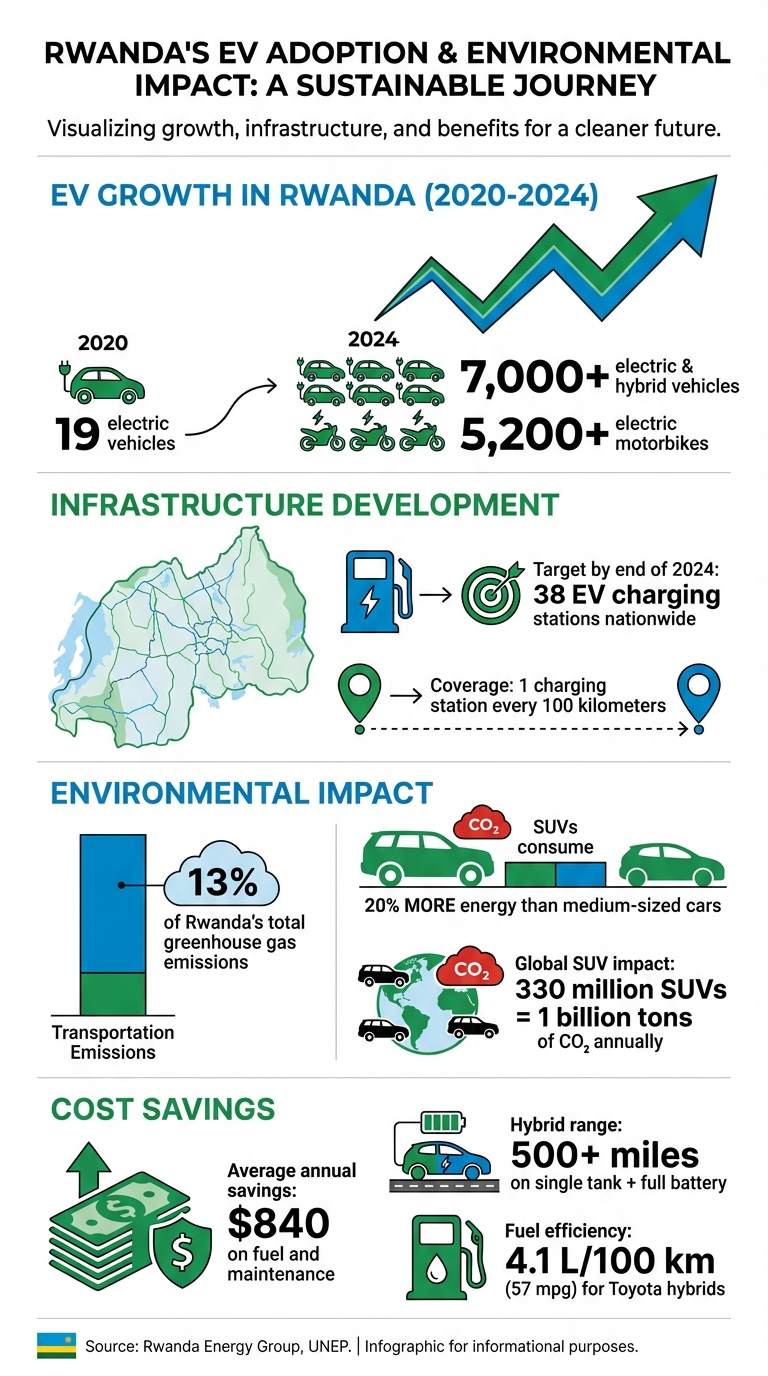
Rwanda’s EV Growth and Environmental Impact Statistics 2020-2024
Lower Fuel and Maintenance Costs
In Rwanda, where fuel prices are steep and the terrain can be demanding, small, fuel-efficient cars offer both financial relief and practical advantages. These vehicles can significantly cut monthly fuel expenses, freeing up more of a household’s budget. For instance, some hybrid models can travel over 500 miles on a single tank of gas and a fully charged battery – perfect for long trips between cities.
Plug-in hybrids are particularly effective for short commutes, as they can rely solely on electric power, eliminating daily fuel costs. Features like regenerative braking and advanced transmissions also reduce wear and tear on brakes and other components, which means lower maintenance costs over time. On average, switching to these vehicles could save drivers about $840 annually on fuel and upkeep. Beyond the financial perks, these smaller vehicles are better suited to Rwanda’s rugged roads, offering improved handling and durability.
Easier Navigation and Parking
Rwanda’s narrow, twisting roads and steep hills pose challenges for many vehicles, but small cars are well-equipped to handle them. Their agility makes them ideal for navigating Kigali’s hilly streets or the winding paths near Lake Kivu. Parking also becomes less of a headache, especially in crowded urban areas like bustling market zones or expanding commercial districts. Their compact size makes it easier to find and fit into tight spaces, adding a layer of convenience for drivers.
Alignment with Environmental Goals
Small, fuel-efficient cars play a key role in Rwanda’s ambitious goal of achieving carbon neutrality by 2050. Transportation currently accounts for 13% of the country’s greenhouse gas emissions, so transitioning to more efficient vehicles is a crucial step. Among the various strategies, adopting lighter, fuel-efficient models is one of the most effective ways to cut emissions, second only to fully electric vehicles.
The environmental impact of these cars is clear. SUVs and large 4×4 vehicles consume roughly 20% more energy than medium-sized cars. Globally, the 330 million SUVs on the roads contribute nearly 1 billion tons of CO₂ emissions annually. By choosing smaller sedans like the Toyota Corolla or Vitz for urban driving, Rwandan motorists can reduce their environmental footprint and conserve resources. Regular maintenance further amplifies these benefits, as well-maintained vehicles emit less pollution and operate more efficiently.
Rwanda’s shift toward efficient cars is already evident. Hybrid vehicle registrations, which were nearly nonexistent in 2020, are expected to reach 6,660 by 2024. This rapid adoption reflects a collective effort to embrace cleaner transportation, benefiting both individual drivers and the country’s environmental goals.
Popular Small and Fuel-Efficient Cars in Rwanda
Navigating Rwanda’s hilly terrain and urban streets requires cars that combine efficiency with reliability. Models from Toyota, in particular, stand out as favorites among Rwandan drivers.
Toyota Levin Hybrid: Compact and Efficient
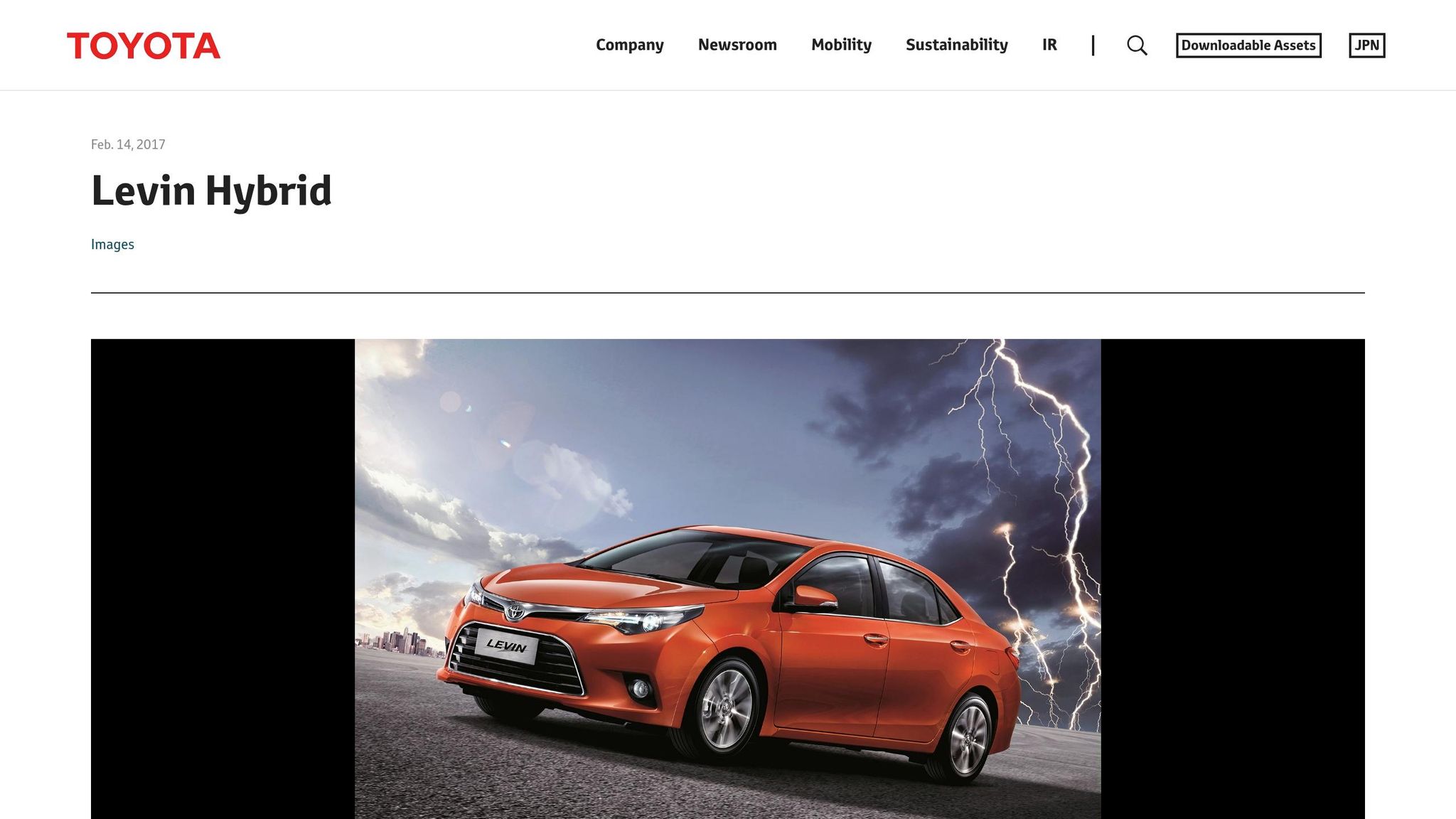
The Toyota Levin Hybrid is a go-to option for drivers dealing with Rwanda’s steep hills and tight city roads. Its compact size makes it ideal for urban navigation, yet it still offers enough space to seat five passengers comfortably. Powered by a 1.8L hybrid system that pairs an Atkinson cycle engine with an electric motor, this car delivers around 136–138 horsepower. It achieves impressive fuel efficiency at approximately 4.1 L/100 km (or about 57 mpg). The CVT automatic transmission, combined with the instant torque from the electric motor, ensures smooth and reliable performance on inclines. Ventilated disc brakes on all four wheels enhance safety with consistent stopping power.
In Kigali’s used car market, you’ll typically find 2017–2018 models with mileage between 61,000 and 105,000 kilometers. Prices range from about $14,000 for standard versions to around $18,000 for models equipped with extras like sunroofs and advanced hybrid monitoring systems. With a fuel tank capacity of 45 liters, the Levin Hybrid is a practical choice for fuel-conscious drivers.
Toyota Corolla Hybrid: Reliable and Cost-Effective
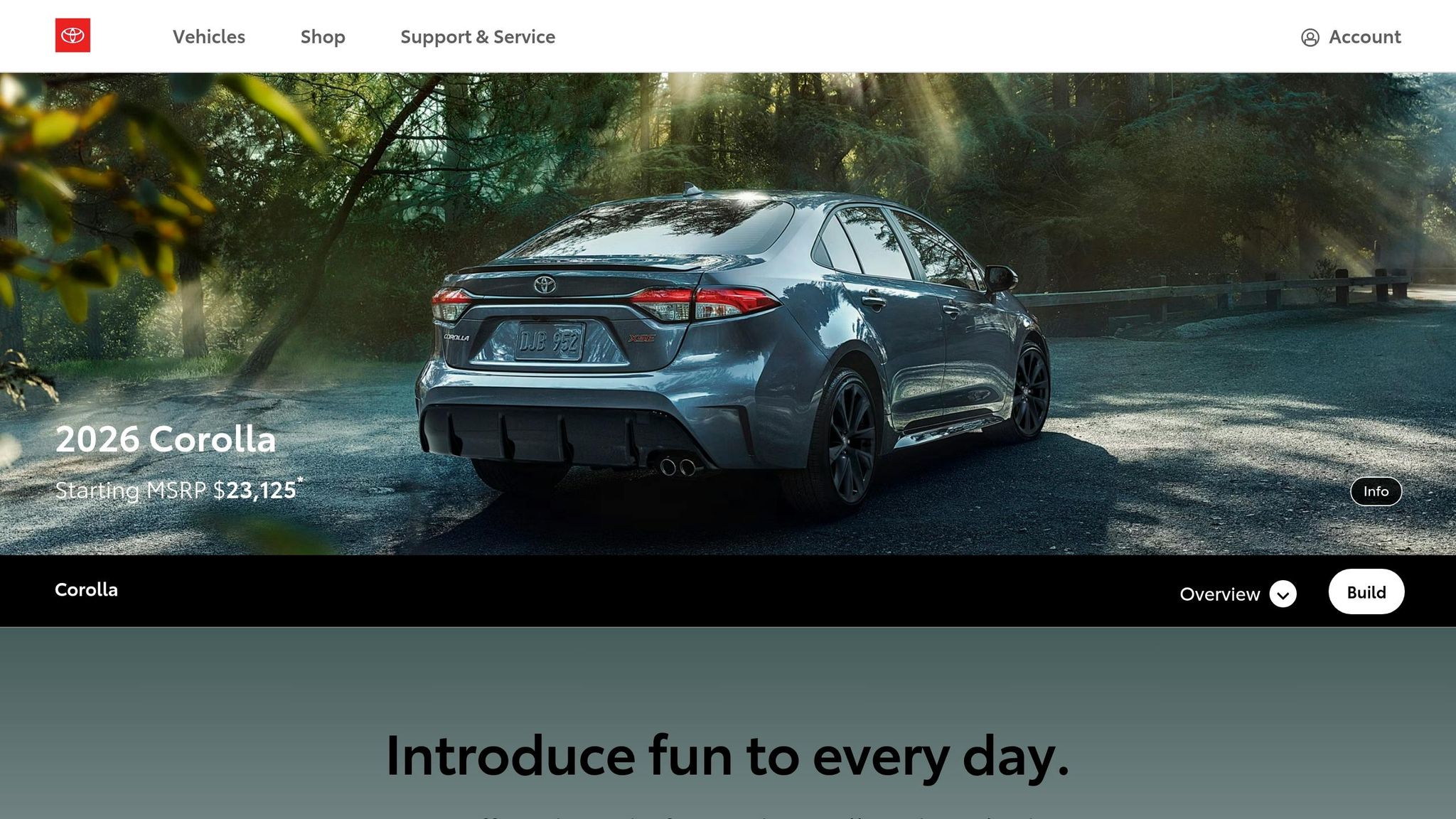
For those who appreciate the benefits of the Levin Hybrid but seek a slightly different option, the Toyota Corolla Hybrid is another strong contender. Sharing the same efficient 1.8L hybrid engine and fuel economy (approximately 4.1 L/100 km or 57 mpg), the Corolla Hybrid is equally adept at handling Kigali’s urban streets and the rugged rural roads across Rwanda.
Toyota’s dominant 40% market share in Rwanda ensures that Corolla owners benefit from an extensive service network and readily available spare parts, keeping maintenance costs low. Features like regenerative braking not only enhance efficiency but also reduce wear on brake components, lowering long-term repair expenses. Additionally, the Corolla Hybrid is known for its durability, retaining a strong resale value – a critical factor in a market where fuel costs remain high.
Getting the Most from Small Cars in Rwanda
To make the most of your fuel-efficient car in Rwanda, a combination of regular maintenance and thoughtful driving is key. Rwanda’s hilly terrain and unique driving conditions demand extra care to keep your vehicle running smoothly and efficiently. By adopting smart habits, you can maximize both performance and savings.
Regular Maintenance and Tire Care
Routine maintenance is essential, especially in Rwanda’s demanding environment. Make it a habit to:
- Inspect brakes regularly and keep an eye on coolant levels, as steep roads can lead to higher engine temperatures.
- Check tire pressure every two weeks to reduce rolling resistance and improve fuel economy.
- Replace air filters more frequently during the dry season to maintain a proper air-to-fuel ratio for the engine.
These small but consistent efforts can significantly improve your car’s performance and lifespan.
Fuel-Efficient Driving Habits
How you drive has a big impact on fuel consumption. Here are some tips to save on fuel:
- Use smooth throttle control and avoid aggressive acceleration. A steady, moderate RPM is more fuel-efficient.
- Stick to speeds between 31–37 mph (50–60 km/h) for optimal fuel economy.
- On downhill stretches, use engine braking by shifting to a lower gear, and activate Eco-Mode if your car has it.
- Turn off the engine if you’re stopping for more than a minute to avoid wasting fuel.
These adjustments not only save fuel but also reduce wear and tear on your vehicle.
Smart Route Planning
Efficient route planning can further enhance fuel savings. Use navigation apps or GPS to steer clear of heavy traffic in Kigali or other busy areas, as stop-and-go driving increases fuel consumption. Combine multiple errands into one trip to reduce cold starts, which are less fuel-efficient. When possible, plan routes that avoid steep inclines, and remove roof racks when they’re not needed to reduce drag. Additionally, clear out any unnecessary items from your trunk to lighten the load, especially when tackling hilly terrain.
Conclusion
Small, fuel-efficient cars are a perfect match for Rwanda’s unique landscape. They handle Kigali’s narrow streets and hilly terrain effortlessly, all while offering considerable savings on fuel and maintenance. These cars are known for their dependability, with easy access to parts and service, keeping upkeep costs manageable.
On top of the economic perks, these vehicles align with Rwanda’s push for greener transportation. The rise in electric vehicle adoption – from just 28 in 2021 to an impressive 6,660 in 2024 – highlights a growing commitment to sustainability. Whether you opt for a fuel-efficient gasoline car or take advantage of tax breaks for electric models, you’re contributing to lower emissions and reducing your running costs. This makes compact cars not only practical but also a step toward a cleaner future.
Their ability to park in tight spots, maneuver through traffic, and handle both city and rural roads adds to their appeal. When you combine cost efficiency, ease of use, and environmental benefits, the choice becomes clear.
As you think about your next vehicle, remember to look beyond the initial price tag. Consider factors like fuel economy, the availability of parts, and any government incentives. Pick a car that balances affordability, reliability, and Rwanda’s specific needs for efficiency and sustainability.
FAQs
Is a small car powerful enough for Rwanda’s steep hills?
Small cars are often praised for their fuel efficiency and compatibility with Rwanda’s roads. However, their performance on steep hills can vary depending on the make and model. Many newer small cars come equipped with engines that can handle hilly terrain effectively. To ensure better performance, look for vehicles with higher torque or those specifically designed to tackle rugged landscapes.
Should I buy a hybrid, a regular gas car, or an EV in Rwanda?
Choosing the right vehicle in Rwanda – be it a hybrid, gas-powered car, or an electric vehicle (EV) – depends on several factors like terrain, expenses, and available infrastructure. Hybrids tend to be the most practical option, combining improved fuel efficiency with reduced emissions, all while handling local conditions effectively. While EVs are environmentally friendly, they come with hurdles such as a lack of widespread charging stations and higher initial purchase prices. For now, hybrids offer a well-rounded solution for the majority of drivers.
What should I check before buying a used fuel-efficient car in Rwanda?
Before purchasing a used fuel-efficient car in Rwanda, it’s crucial to verify the seller’s reliability to steer clear of potential scams. Carefully examine the car’s condition, paying special attention to key components like the engine, brakes, tires, and its maintenance history – especially since Rwanda’s challenging terrain can lead to extra wear and tear.
Make sure to review all necessary documentation, such as registration papers and service records, to confirm the car’s legitimacy and upkeep. Taking the car for a test drive is equally important to ensure it aligns with your expectations. For added confidence, consider having a professional mechanic conduct a thorough inspection.