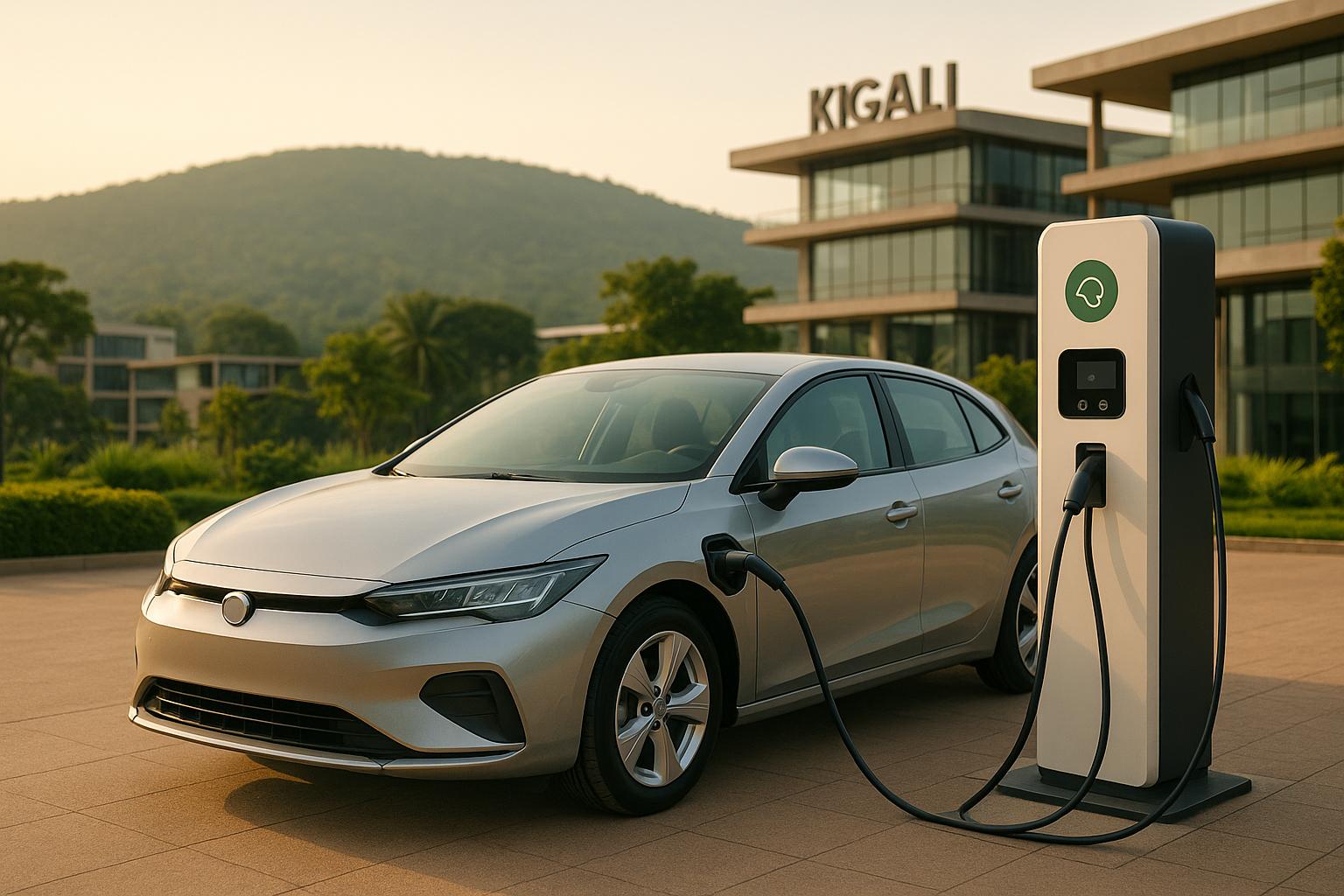
Rwanda is rapidly advancing its electric vehicle (EV) market, driven by government policies, private sector involvement, and a need to reduce reliance on imported fuel. The country offers a variety of EV models, including compact cars for city driving, SUVs for rural areas, and electric motorcycles for commercial use. Charging infrastructure is expanding, with stations in urban hubs and along key routes, supported by mobile payment options and fast-charging capabilities. Tax incentives and lower maintenance costs make EVs an increasingly appealing choice for Rwandans, aligning with the nation’s goals for cleaner transportation and economic stability.
Inside KABISA: Rwanda’s EV Revolution | WIB Documentary
Electric Car Models Available in Rwanda
Rwanda’s electric vehicle (EV) market is growing, offering a variety of models that cater to different needs – from compact city cars to rugged SUVs. Local importers have introduced advanced options like Tesla, Leapmotor, and ROX, making EVs accessible to Rwandan drivers.
Thanks to Rwanda’s moderate climate, EV batteries perform efficiently, while the vehicles’ torque ensures smooth handling on both Kigali’s urban streets and the country’s hilly terrain. This makes electric cars a practical choice for navigating city traffic and tackling rural or mountainous roads alike.
Here’s a closer look at some of the EV models tailored to Rwanda’s diverse driving demands.
Popular Electric Car Models
For city driving in Kigali, compact and efficient models shine. The Leapmotor T03 is ideal for navigating tight urban spaces, while the BYD Dolphin stands out with its regenerative braking system, which is especially useful on Kigali’s hills. Other strong contenders include the Xpeng G3 and the Volkswagen ID.3, both of which combine modern technology with reliable performance. These vehicles are perfect for daily commutes, offering ranges that comfortably handle the distances typically covered in urban areas.
When it comes to rural or provincial driving, EVs with greater range, higher ground clearance, and all-wheel drive become essential. The Tesla Model Y is a standout option, offering an impressive range and all-wheel drive capabilities, making it suitable for exploring Rwanda’s varied landscapes. The BYD Tang, available as both a fully electric and a plug-in hybrid, provides versatility for longer trips. For those tackling rougher roads, the AION V offers higher ground clearance, while the Xiaomi SU7 supports fast-charging, ensuring convenience during extended journeys.
For commercial purposes, there are specialized EVs designed to meet business needs. The Farizon V6E van is a great choice for companies requiring ample cargo space, while the Farizon X7E truck delivers powerful electric solutions for heavier loads. Families, on the other hand, may prefer the Geely Galaxy E5, which offers spacious seating and a large cargo area, or the Geely Starwish, a compact SUV that balances size and efficiency.
Choosing the right EV in Rwanda means aligning the vehicle’s features with the specific demands of local driving conditions. For urban areas, compact models with regenerative braking are ideal, while rural roads call for extended-range vehicles with higher ground clearance. Up next, we’ll dive into Rwanda’s EV charging infrastructure to see how these vehicles are supported.
Charging Points: Locations and How They Work
Rwanda’s electric vehicle (EV) charging infrastructure is still in its early stages, with charging costs currently aligned with industrial electricity rates. However, digital payment options have made the process more convenient for EV owners.
The charging network faces some big hurdles. For instance, Kigali’s peak power demand is expected to rise by 64% by 2030. Without proper grid upgrades, the introduction of EVs could put immense pressure on power lines, potentially quadrupling the load. Smart charging solutions, such as shifting charging times to off-peak hours to match solar energy output, could ease this strain by as much as 15%.
Major Charging Networks in Rwanda
Both public and private entities are working to expand Rwanda’s charging network. Public charging stations are strategically placed near government offices, public parking lots, and busy commercial hubs as part of the government’s push toward electric mobility. Meanwhile, private companies are stepping up by installing charging points in locations like hotels, shopping malls, and office buildings. This dual effort aims to make charging more accessible, especially in urban areas.
Types of Charging and How to Access Them
Rwanda’s charging stations typically offer both AC and DC charging options. AC charging provides power between 7 kW and 22 kW, making it ideal for places where vehicles are parked for extended periods, such as workplaces or residential areas. On the other hand, DC fast chargers deliver power between 50 kW and 150 kW, enabling most EVs to charge up to 80% in just 30 to 60 minutes.
Payment at these stations is straightforward, with most accepting mobile money, credit or debit cards, and digital wallets like Apple Pay and Google Pay. Cash payments are increasingly rare. To access a station, users usually rely on a mobile app, an RFID card, or contactless payment methods.
The World Bank has emphasized the importance of adopting smart charging practices and cost-reflective tariffs to optimize Rwanda’s charging infrastructure. Tarek Keskes, Energy Specialist at the World Bank’s ESMAP program, remarked:
"Our analysis shows that Rwanda can achieve its goals if smart charging, cost-reflective tariffs, and integrated planning are prioritized."
Efforts are already underway to introduce time-of-use tariffs, which encourage charging during off-peak hours and align better with solar energy production. Additionally, there are plans to require new buildings and major renovations to include EV-ready infrastructure. Up next, learn practical tips for travel planning, managing costs, and maintaining EVs in Rwanda.
sbb-itb-7bc66b5
Practical Guide for EV Owners in Rwanda
With Rwanda’s growing network of charging stations, this guide offers practical tips on planning trips, managing costs, and maintaining your electric vehicle (EV).
Owning an EV in Rwanda comes with its own set of considerations. The country’s unique terrain, climate, and developing infrastructure create both opportunities and challenges for EV drivers.
Travel and Charging Planning
When traveling outside Kigali, route planning becomes essential since most charging stations are concentrated in urban areas. For trips to places like Nyungwe Forest or Akagera National Park, it’s smart to map out available charging points ahead of time.
Unlike traditional gas stations, DC fast chargers can restore your EV’s battery to 80% in about 30–60 minutes. To save time, many drivers plan charging stops during meals or meetings. Rwanda’s hilly terrain can affect your battery range, so keeping your charge above 30% is a good idea. Having a portable EV charging cable can also be a lifesaver in areas where only standard outlets are available.
Cost and Maintenance Overview
Electric vehicles in Rwanda come in a range of prices, typically between $25,000 and $60,000, depending on the model and associated import duties. Government tax exemptions make EVs more affordable, adding to their appeal.
Charging costs are relatively low, reflecting industrial electricity rates. Charging your EV from 20% to 80% capacity usually costs between 3,000 and 6,000 Rwandan francs ($2.40–$4.80), offering significant savings compared to gasoline.
EVs also require less maintenance. There’s no need for oil changes, spark plug replacements, or many of the services associated with traditional engines. However, EV-certified technicians are mostly based in Kigali, so if you’re in a remote area, you might need to plan ahead for servicing.
Rwanda’s Terrain and Climate for EVs
Rwanda’s mountainous landscape can impact battery performance. Steep uphill drives tend to drain the battery faster, but regenerative braking on downhill stretches helps recover some energy. Still, these inclines might slightly reduce your EV’s overall range.
The tropical climate in Rwanda is generally favorable for EVs. With temperatures ranging from 60–80°F (15–27°C) year-round, battery efficiency tends to remain stable. However, the wet season’s heavy rains can make some charging stations harder to access, especially on unpaved roads, so extra caution is advised.
Government Incentives and Policies
The Rwandan government has introduced significant incentives to encourage the adoption of electric vehicles and motorcycles. Pure electric vehicles and their spare parts, batteries, and charging equipment are exempt from import duties. Additionally, VAT exemptions on fully electric vehicles and charging equipment will remain in place until June 30, 2028. Pure electric cars are also exempt from withholding tax.
For hybrid vehicles, a different tax structure will take effect starting July 1, 2025.
The Future of Electric Cars in Rwanda
Rwanda’s electric vehicle (EV) market is poised for exciting growth as both the government and private sector continue to invest in electric mobility and explore cutting-edge technologies. The country’s commitment to sustainable transportation signals a promising future for EV adoption.
Infrastructure Expansion Plans
Efforts to expand EV infrastructure are set to make charging more accessible across Rwanda, reaching both urban hubs and rural communities. Key plans include adding renewable energy sources to charging stations, installing fast chargers along major highways, and increasing the availability of charging points at workplaces and residential areas. These upgrades aim to create a reliable and efficient charging network that supports the growing number of EV users.
New Models and Technologies Coming Soon
The next wave of electric cars will be designed with Rwanda’s unique driving conditions in mind. Manufacturers are working on models that cater to local needs, incorporating improvements in battery performance, energy management, and smart charging systems. These advancements will not only enhance efficiency but also make EVs more practical and appealing for Rwandan drivers.
Rwanda’s Role in Africa’s EV Market
Rwanda is quickly establishing itself as a key player in Africa’s electric mobility sector. With its stable political environment and forward-thinking policies, the country is fostering local assembly projects, promoting sustainable practices like battery recycling, and building partnerships that extend across the continent. This leadership is positioning Rwanda as a hub for innovation and collaboration in the EV industry.
As these developments unfold, Rwanda’s EV infrastructure and market influence are set to grow, paving the way for a greener future in transportation.
Conclusion: Electric Cars in Rwanda
Rwanda is reshaping transportation in East Africa by embracing electric vehicles (EVs). Through a mix of forward-thinking government policies, expanding infrastructure, and a growing range of EV models tailored to local needs, the country is paving the way for a cleaner and more efficient future.
The charging network has grown significantly, now covering urban hubs and key routes. This expansion directly addresses "range anxiety", a common concern for new EV users, and ensures that both daily commutes and cross-country trips are well-supported.
Rwanda’s natural conditions also favor EV adoption. The moderate climate helps maintain battery health, while the hilly terrain makes the most of electric motors’ instant torque and regenerative braking capabilities – perfect for navigating the country’s roads.
For EV owners, the benefits extend beyond the environment. Lower operating and maintenance costs, coupled with government incentives, make EVs an appealing alternative to fuel-dependent vehicles. These measures also reduce reliance on imported fuel, aligning with Rwanda’s broader economic goals.
The government’s commitment to promoting EVs remains strong. Policies not only encourage adoption but also provide a supportive framework for businesses and consumers alike, creating a sense of confidence in the market’s future.
As Rwanda cements its role as a leader in sustainable transport within the region, the potential for EV adoption continues to grow. Improved technology, expanding infrastructure, and policy backing make this an ideal time for anyone considering the switch to electric vehicles. Whether you’re a first-time buyer or upgrading your ride, Rwanda’s EV market offers clear benefits and a vision for a cleaner tomorrow.
FAQs
What challenges does Rwanda face in developing its electric vehicle charging network?
Rwanda is grappling with several hurdles as it works to build a more extensive electric vehicle (EV) charging network. One of the biggest obstacles is the scarcity of charging stations, which leaves EV owners hesitant to embark on long trips due to concerns about running out of power. On top of that, the financial strain of importing charging equipment, setting up grid connections, and training technicians adds another layer of complexity to the expansion process.
There are also technical and social challenges to consider. For instance, occasional grid instability can disrupt the reliability of charging services. Moreover, many people are still unfamiliar with EVs and the advantages they bring, which slows down broader adoption. When you factor in the steep upfront costs required to establish charging stations, it’s clear why scaling the network remains a tough task.
What incentives does the Rwandan government offer to make electric vehicles more affordable?
The Rwandan government has introduced a range of measures to make electric vehicles (EVs) more affordable and accessible to its citizens. Among these are reduced import duties and tax exemptions on EVs and the equipment needed to support them. To further boost the transition, the government is also offering free land for charging stations, making it easier and less expensive for businesses to set up the necessary infrastructure.
These initiatives are designed to promote EV adoption across the country, positioning them as an economical and convenient option for drivers now and in the future.
What features make electric cars a good fit for Rwanda’s terrain and climate?
Electric vehicles (EVs) with high ground clearance, usually starting at 6 inches (150 mm), are a great match for Rwanda’s hilly and often uneven roads. Their ability to deliver instant torque ensures smooth and dependable performance, even on steep inclines, making them an excellent choice for navigating the country’s terrain.
On top of that, Rwanda’s moderate climate provides an optimal environment for EV batteries, which tend to perform best in temperatures that avoid extreme heat or cold. These characteristics make EVs a practical and dependable option for everyday travel throughout the region.
Related Blog Posts
- Popular Hybrid and Electric Cars in Rwanda
- Where to charge your electric vehicle in Rwanda: Kigali & beyond
- Rwanda’s EV Road Projects: Progress and Impact
- EV Policy Updates for 2025/2025 in Rwanda