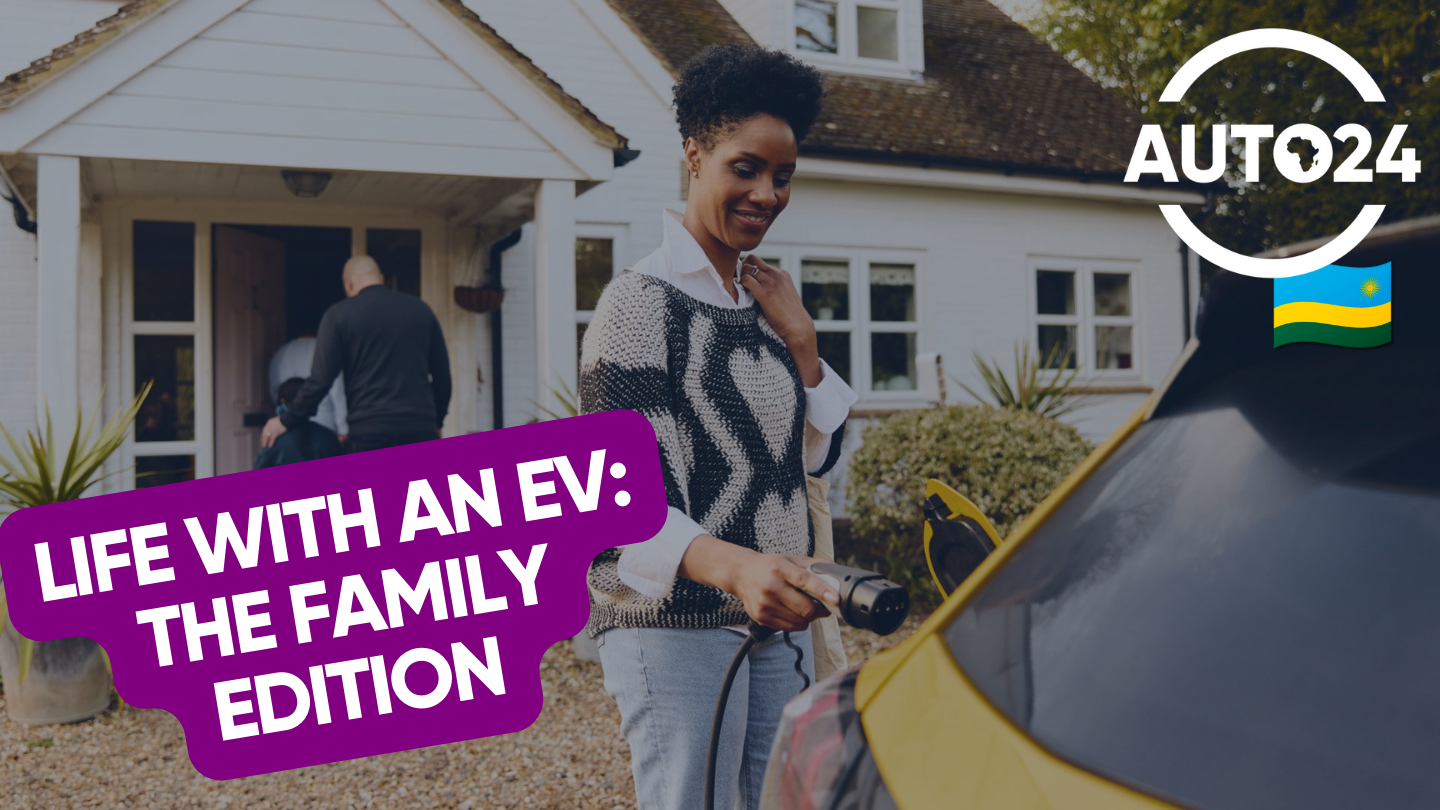
Most families buying an electric car in Rwanda expect to save on fuel.
What they don’t expect is how much it changes everyday family life — in ways that have nothing to do with charging cables or carbon footprints.
Here are five things Rwandan families genuinely love about their electric vehicles once they’ve lived with one for a few months.
❶ The quiet that changes every journey
No engine noise. No vibration. Just calm.
For families, this is one of the first things that hits after buying an electric car — and it’s hard to explain until you’ve experienced it. Conversations are easier. The kids actually hear each other. A tired toddler nods off on the way back from a weekend trip upcountry without being rattled awake by engine noise.
After a full day of school runs, meetings, and Kigali traffic, the silence inside an electric vehicle feels less like a feature and more like a gift.
❷ Waking up to a full “tank” every morning
Picture this: it’s 6:45am. School bags are packed. Everyone’s ready. And nobody has to stop for fuel.
Electric car owners in Rwanda plug in at home overnight and wake up to a fully charged vehicle every single day. No detours to the petrol station. No last-minute queues. No realising mid-commute that you’re running on fumes.
For families managing school drop-offs, work commutes, and weekend errands around Kigali, this one shift in routine quietly removes a surprising amount of daily friction. It sounds small. Parents who’ve made the switch say it doesn’t feel small at all.
❸ Climate control before anyone gets in
Rwanda’s afternoons get warm. School pickup at 3pm with a car that’s been sitting in the sun is nobody’s favourite moment.
Most modern electric cars in Rwanda can be pre-conditioned from your phone — cooling or warming the cabin before the family steps inside. Kids pile into a comfortable car instead of a hot one. On cooler highland mornings, everyone’s warm before the seatbelts are buckled.
It’s one of those electric vehicle features that sounds like a luxury until it becomes part of your daily routine. Then going back to a car without it feels oddly wrong.
❹ The running costs that families actually feel
This one has real numbers behind it — and Rwandan families notice them quickly.
Electric cars cost significantly less per kilometre to run than petrol vehicles. Electricity is cheaper than fuel. And because EVs have fewer moving parts, maintenance costs are lower too — no oil changes, no timing belt replacements, no exhaust repairs.
For a family running a vehicle daily across school runs, weekend road trips, and everything in between, those savings add up fast. Money that used to go to the fuel station and the mechanic stays in the household budget instead. Over a year, the difference is substantial — and most families say they underestimated it before switching to an electric car in Rwanda.
❺ More space, better organised
Many electric vehicles have no large front engine block — which creates extra storage space at the front of the car, commonly called a “frunk.”
For families, this is quietly brilliant. Sports kits, weekend bags, a stroller, groceries — things that used to compete for boot space now have a dedicated second home. Combined with the generous boot most EVs offer, a family road trip to Musanze or Rubavu suddenly feels far more manageable.
Less “who’s sitting on the bag” energy. More “everyone’s comfortable” energy.
The Part Nobody Puts in the Brochure
The fuel savings and environmental case for electric vehicles are well documented. But the reasons families fall in love with their EVs are usually quieter than that.
It’s the peaceful school run through Kigali. The cool car at afternoon pickup. The full charge waiting every morning. The end-of-year service bill that’s half what it used to be.
Rwanda’s roads are seeing more electric cars every month — and the families driving them are finding that the best reasons to switch weren’t in any spec sheet.
Thinking about an electric car for your family? Browse EV listings on Auto24.rw — or send us a message and we’ll help you find the right fit for your household, your routes, and your budget.