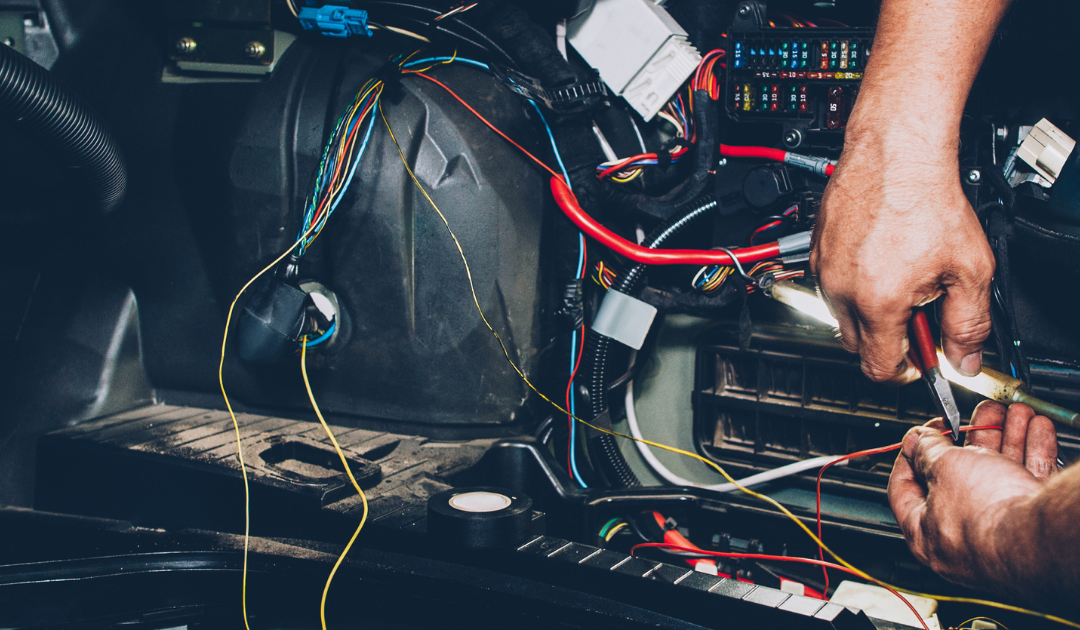
Kigali is one of Africa’s cleanest and most well-organised cities — but anyone who has lived or driven here through the dry season knows that fine dust is a persistent reality. When the wind picks up across the city’s hills, particularly between June and August, a layer of reddish-brown dust settles over everything: pavements, parked cars, garden furniture, and — critically — the electrical systems hidden inside your vehicle.
Most drivers notice the dust on their windscreen or bonnet and give the car a wash. Far fewer think about what that same dust is doing to their car’s wiring, connectors, fuse boxes, and sensors. Yet dust-related electrical faults are among the most frustrating and expensive problems a vehicle owner can face: intermittent failures that are hard to diagnose, connections that corrode slowly over months, and sensors that give false readings because a fine layer of conductive dust has crept into places it should never reach.
This guide is written specifically for drivers in Kigali and across Rwanda’s drier regions. We explain how dust damages automotive electrical systems, what you can do to protect your vehicle, and how to identify and address early warning signs before they become serious problems.
For more practical guides, vehicle news, and driving tips tailored to Rwandan conditions, visit automag.rw — the trusted automotive resource for Rwandan drivers and enthusiasts.
Understanding the Problem: How Dust Damages Car Electrics
To appreciate why dust is so harmful to automotive electrical systems, it helps to understand what automotive dust in Kigali actually is. The fine reddish soil common across Rwanda’s hills — laterite — is rich in iron oxide and fine mineral particles. This type of dust is not simply an irritant; it has properties that make it genuinely damaging to electrical components.
Dust Is Mildly Conductive
Fine metallic dust particles, particularly those containing iron or other mineral compounds, can conduct small amounts of electricity. When dust accumulates on electrical connectors, circuit boards, or relay terminals, it can create unintended electrical pathways — called short circuits or ground faults — that cause bizarre, intermittent electrical behaviour. Warning lights may illuminate randomly, accessories may malfunction unpredictably, and sensors may give false readings.
Dust Traps Moisture
Dust is highly hygroscopic — it absorbs moisture from the air readily. In Kigali’s climate, which alternates between dry dusty periods and wet rainy seasons, this creates a damaging cycle: dust accumulates during dry months, then absorbs moisture when the rains arrive. Wet, mineral-rich dust is far more corrosive and conductive than dry dust. Electrical connectors that are merely coated in dust during the dry season become sites of active corrosion once the rains come.
Dust Accelerates Connector Corrosion
The electrical connectors throughout your vehicle — the plastic plugs that join wiring harnesses to sensors, modules, and components — rely on clean metal-to-metal contact to conduct electricity reliably. Dust, combined with the moisture it traps, creates a mildly acidic environment at these contact points. Over time, this causes oxidation and corrosion of the metal terminals, increasing electrical resistance. Higher resistance means less current reaching sensors and components, which leads to malfunction or failure.
Dust Causes Heat Buildup in Electrical Components
Fuse boxes, relays, and control modules generate small amounts of heat during normal operation. Under normal circumstances, this heat dissipates harmlessly into the surrounding air. When thick dust accumulates on or around these components, it acts as an insulating layer that traps heat. Over months and years, elevated operating temperatures accelerate the degradation of wire insulation, solder joints, and plastic connector housings — shortening the lifespan of the entire electrical system.
�� Rwanda-Specific Context: Kigali’s dry season (June to August and December to February) coincides with periods of elevated dust and wind. Vehicles parked outdoors or driven on unpaved roads feeding into the city’s construction zones are particularly vulnerable. Drivers in Nyamirambo, Kimironko, Kicukiro, and areas near ongoing development sites will recognise the severity of seasonal dust accumulation.
The Most Vulnerable Electrical Components
Not all parts of your car’s electrical system are equally exposed to dust damage. Some components — by their location, design, or function — are at significantly higher risk:
The Main Fuse Box and Relay Box
The main fuse box is typically located in the engine bay, often near the battery. It is directly exposed to dust entering through the grille and any gaps in the engine bay sealing. Many vehicles have a secondary fuse box inside the cabin (usually beneath the dashboard), which is better protected but can still accumulate dust over time through the ventilation system. When dust enters relay contacts or fuse terminals, it can cause intermittent electrical faults that are notoriously difficult to track down.
Wheel Speed Sensors and ABS Sensors
These small sensors are positioned very close to the wheel hub — one of the dustiest, dirtiest areas of any vehicle. They detect wheel rotation speed and feed that data to the ABS (anti-lock braking) and traction control systems. Dust and mud accumulation on the sensor tip or around its connector can cause the ABS warning light to illuminate, or — more dangerously — cause the ABS system to malfunction during emergency braking.
Mass Airflow Sensor (MAF Sensor)
The MAF sensor measures the volume of air entering the engine and helps the engine control unit calculate the correct fuel injection quantity. It sits in the intake air path, downstream of the air filter. If the air filter becomes clogged with dust (which happens faster in Kigali’s dry season), fine particles bypass the filter and coat the delicate sensing element inside the MAF sensor. A contaminated MAF sensor causes poor fuel economy, rough idling, hesitation under acceleration, and in severe cases, a check engine light.
Oxygen Sensors and Exhaust Temperature Sensors
These sensors are located in or near the exhaust system. While the exhaust environment is hot enough to burn off most contaminants, the electrical connectors for these sensors are often routed along the underside of the car — directly in the path of dust kicked up from the road surface. Connector corrosion on oxygen sensors leads to poor fuel mixture control and increased fuel consumption.
Battery Terminals and Ground Connections
Battery terminal corrosion is one of the most common and most visible electrical problems in dusty environments. The combination of battery acid vapour, dust, and moisture creates a powdery white or blue-green crust on the terminals. This corrosion dramatically increases electrical resistance at the battery connection, causing hard starts, dim lights, and unpredictable electrical behaviour across the entire vehicle. Ground connections — the points where the wiring harness connects to the car’s metal bodywork — suffer similarly and are even less frequently inspected.
Infotainment and Control Module Connectors
Modern vehicles have dozens of electronic control modules (ECMs) — for the engine, transmission, body systems, climate control, and more. These modules communicate via networks of connectors and wiring harnesses that run throughout the car. While most module connectors are sealed, age, heat, and vibration can cause seals to crack or pull away, allowing dust infiltration into connectors that were never designed to handle it.
Practical Protective Measures: What You Can Do
The good news is that dust damage to automotive electrical systems is largely preventable with consistent, straightforward maintenance. Here is what every driver in Kigali should be doing:
1. Change Your Air Filter More Frequently Than the Standard Interval
The air filter is your engine’s — and your MAF sensor’s — first line of defence against dust. In standard driving conditions, most manufacturers recommend replacing the air filter every 15,000 to 20,000 km. In Kigali’s dusty dry season, that interval can be dangerously optimistic. During the peak dust months of June to August, inspect your air filter every 5,000 to 8,000 km and replace it when it appears significantly grey or brown rather than its original white or cream colour. A clean air filter costs very little; a damaged MAF sensor costs significantly more.
2. Apply Dielectric Grease to Electrical Connectors
Dielectric grease is a non-conductive, silicon-based grease designed specifically to protect electrical connectors. Applied sparingly to the inside of connector housings and to metal terminals, it creates a moisture and dust barrier that prevents corrosion and maintains reliable electrical contact. It is available at automotive shops in Kigali and is one of the most cost-effective protective measures available. Apply it to battery terminals, main harness connectors, sensor connectors, and any connector that has been opened for inspection or repair.
�� Pro Tip: When applying dielectric grease to connectors, use only a small amount — a thin film is sufficient. Over-application can push excess grease onto contact surfaces, temporarily increasing resistance. The goal is to coat the surrounding housing and seal gaps, not to pack the connector full of grease.
3. Keep the Engine Bay Clean
An annual engine bay cleaning — done carefully to avoid water entering sensitive components — removes accumulated dust and grime before it works its way into electrical connections. Use a low-pressure water rinse (never a high-pressure jet directly onto electrical components), mild degreaser, and careful hand cleaning around the fuse box, battery, and major connectors. After cleaning, allow the engine bay to dry thoroughly before starting the engine, and consider applying a light film of electrical contact protector spray to exposed connectors.
4. Inspect and Clean Battery Terminals Regularly
Check your battery terminals every two to three months, especially during and after the dry season. If you see white or coloured crust forming on the terminals, clean it off using a mixture of baking soda and water (which neutralises the acidic corrosion), a wire brush, and then rinse with clean water. Dry thoroughly and apply dielectric grease or a dedicated battery terminal protector spray. Ensure the terminal clamps are tightened securely — loose connections corrode faster and cause voltage drops.
5. Inspect and Protect Ground Connection Points
Ground connections are the unsung heroes of automotive electrical systems — and the most neglected. Locate the main ground straps on your vehicle (usually running from the battery negative terminal to the chassis and engine block) and check that they are tight and corrosion-free. A high-resistance ground connection can cause an enormous range of bizarre electrical symptoms across the whole vehicle. Clean any corroded ground points with a wire brush, apply a thin layer of dielectric grease, and reattach securely.
6. Seal Any Known Entry Points
Inspect the grommets — the rubber seals where wiring harnesses pass through the firewall (the panel separating the engine bay from the cabin). Cracked or missing grommets allow dust, moisture, and fumes to enter the cabin wiring. Replace any damaged grommets and seal gaps with appropriate automotive sealing tape or silicone. Similarly, check that the engine bay fuse box cover is correctly seated and latched — a fuse box left uncovered is an open invitation for dust.
7. Park Smartly During Dust Events
When a dust event is anticipated — particularly during the dry season when wind picks up in the afternoon — park your vehicle in a garage, carport, or at minimum with the nose pointing away from the prevailing wind direction. A car cover provides additional protection for vehicles parked outdoors for extended periods. While this does not protect the engine bay from dust that enters during driving, it significantly reduces accumulation on the exterior and through ventilation gaps when the vehicle is stationary.
8. Have the Wiring Harness Inspected on Used Vehicles
If you have recently purchased a used vehicle — especially one with an unknown service history — have an auto electrician inspect the main wiring harness, fuse box, and key sensor connectors before Kigali’s next dry season. Used cars in Rwanda may have accumulated years of dust damage that is not visible at a glance but shows up clearly when connectors are opened and terminals are examined. Addressing corrosion early is far cheaper than diagnosing and repairing the intermittent electrical faults it eventually causes.
Warning Signs That Dust Has Already Damaged Your Electrics
Dust-related electrical damage tends to develop gradually and quietly. By the time a fault becomes obvious, the underlying cause has often been building for months. Watch for these warning signs:
• Intermittent warning lights: Dashboard lights that come on and off without apparent cause — ABS light, check engine light, traction control light — are classic signs of dirty or corroded sensor connectors.
• Unexplained starting difficulties: If the engine cranks slowly, clicks but does not start, or starts normally some days and not others, suspect battery terminal corrosion or a corroded ground connection before assuming the battery or starter motor is faulty.
• Flickering or dim lights: Interior lights, headlights, or dashboard illumination that flicker or appear dimmer than normal are often symptoms of high-resistance connections caused by dust and corrosion.
• Random accessory failures: Power windows, central locking, or infotainment systems that work intermittently or stop working after periods of heavy dust exposure often have connector corrosion at their control modules or switch connectors.
• Rough idling or poor fuel economy: These can indicate a contaminated MAF sensor, oxygen sensor fault, or clogged air filter — all dust-related problems in Kigali’s environment.
• Burning or unusual smell from the engine bay: Dust accumulation on hot components like exhaust manifolds can smoulder. An electrical burning smell may indicate that dust-related corrosion has created a high-resistance connection generating abnormal heat.
• Unpredictable behaviour after rain: If electrical faults appear or worsen after Kigali’s rains arrive following the dry season, the moisture-plus-dust combination is almost certainly to blame. This is a strong indicator that connectors need cleaning and protective treatment.
⚠️ Do Not Ignore Intermittent Faults: An electrical fault that ‘fixes itself’ is not fixed — it is waiting to reappear at a worse moment. Intermittent faults are harder to diagnose the longer they persist, as corrosion continues to progress even when the symptom is temporarily absent. Have an auto electrician investigate intermittent faults promptly.
What You Can Do Yourself vs. What Needs a Professional
Some electrical maintenance tasks are genuinely manageable for confident, careful DIY owners. Others require specialised knowledge and tools. Knowing the boundary protects both your car and your safety.
Suitable for Careful DIY
• Cleaning and protecting battery terminals
• Replacing the air filter
• Applying dielectric grease to accessible connectors after careful disconnection
• Inspecting and cleaning visible ground connections
• Gently cleaning exterior sensor connectors with electrical contact cleaner spray
• Checking and replacing fuse box covers and grommets
Requires a Professional Auto Electrician
• Diagnosing intermittent electrical faults using a diagnostic scan tool (OBD reader)
• Inspecting internal wiring harness connectors deep within the dashboard or engine loom
• Cleaning or replacing the MAF sensor (delicate component — incorrect cleaning causes damage)
• Testing and repairing ABS sensor circuits
• Addressing any fault codes stored in the ECU
• Full wiring harness inspection on vehicles with unknown service history
In Kigali, reputable auto electricians are available — always choose one with experience in your specific vehicle brand, as Japanese, European, and Korean vehicles have significantly different electrical architecture. A good auto electrician will have a diagnostic scanner compatible with your car’s ECU communication protocol.
Electrical Health and Used Car Purchases in Rwanda
The electrical system is one of the most important — and most overlooked — aspects of any used car purchase. A vehicle that has spent years in a dusty environment may have wiring harness corrosion, contaminated sensors, and degraded connectors that are invisible during a casual inspection but begin to cause problems within months of purchase.
Before buying any used vehicle in Rwanda, ask specifically for an electrical inspection by a qualified auto electrician. Request a diagnostic scan that reads any stored fault codes from the car’s computer — these codes can reveal ongoing or historical problems that the seller may not disclose or may not even be aware of.
If you are searching for quality second-hand vehicles in Rwanda, auto24.rw offers a well-curated selection of pre-owned cars — including popular models like the Toyota Allion, Mazda Atenza, Subaru Legacy, Honda Freed, and Nissan Wingroad — presented with transparent vehicle details to help you make a well-informed purchase. Whichever vehicle you choose, pair it with a thorough electrical inspection as part of your post-purchase maintenance routine.
Electric Vehicles and Dust: A More Complex Relationship
Electric vehicles bring a new dimension to the dust-and-electrics conversation. On one hand, EVs have far fewer traditional wiring connectors, relays, and sensors compared to combustion-engine vehicles — there is no MAF sensor, no oxygen sensor, no ignition system. On the other hand, EVs carry high-voltage battery packs and power electronics that are extremely sensitive to moisture and conductive dust ingress. The sealing standards on quality EVs are generally very high, but regular inspection of high-voltage connector housings and the battery pack venting system remains important in dusty environments.
For drivers looking to explore sustainable mobility in Rwanda, EV24.africa offers import options for electric cars, expanding the choices available for eco-conscious drivers across Africa. If you are considering an EV in Kigali’s environment, ask specifically about the vehicle’s IP (Ingress Protection) rating for dust and moisture — a rating of IP65 or higher on the battery pack and key electrical components provides meaningful protection for Rwanda’s conditions.
Recommended Electrical Maintenance Schedule for Kigali Drivers
Build these checks into your routine, aligning them with the seasons where possible:
• Monthly: Visual check of battery terminals for corrosion. Check that the fuse box cover is correctly closed. Listen for any new electrical anomalies.
• Every 5,000–8,000 km during dry season: Inspect and replace the air filter if noticeably grey or dirty.
• Every 3 months: Clean battery terminals if corrosion is present. Check all accessible ground connections for tightness and corrosion.
• Every 6 months (pre-dry season and pre-rainy season): Apply or re-apply dielectric grease to key connectors. Inspect engine bay for dust accumulation and clean carefully if necessary. Check all firewall grommets and fuse box seals.
• Annually: Full electrical inspection by an auto electrician, including diagnostic scan for stored fault codes. Inspect wiring harness routing for chafing, cracks, or exposed wire.
• When buying a used car: Full electrical inspection immediately, regardless of the vehicle’s apparent condition.
Recommended Products for Electrical Protection
The right products make electrical protection straightforward and affordable. Look for these at automotive shops in Kigali:
• Dielectric grease (silicone grease): For connector protection. Brands such as Permatex, WD-40 Specialist, or Bosch are widely available. A small tube lasts a very long time.
• Electrical contact cleaner spray: For cleaning corroded connector terminals without moisture. Spray into the connector, work the connection several times, and allow to dry completely.
• Battery terminal protector spray: A waxy coating that seals terminals after cleaning. Red for positive, green for negative, or clear — any of these work.
• Baking soda and water solution: The simplest and cheapest terminal corrosion cleaner. Mix one tablespoon of baking soda into 250 ml of water. Apply with a toothbrush, rinse, and dry.
• Automotive electrical tape: For resealing any wiring that shows cracked or deteriorating insulation. Use proper automotive-grade tape, not standard office tape, which melts under engine bay heat.
• Quality replacement air filters: Choose OEM (Original Equipment Manufacturer) or reputable aftermarket brands. Cheap air filters allow more dust through and save nothing in the long run.
Frequently Asked Questions (FAQs)
Q: How do I know if dust has caused an electrical problem versus a mechanical one?
Dust-related electrical problems tend to be intermittent — they come and go without obvious mechanical cause, often worsening after dusty periods or improving after rain (temporarily, before the moisture-plus-dust effect takes hold). A diagnostic scan using an OBD-II reader will often reveal stored fault codes pointing to specific sensors or circuits. Mechanical faults tend to be more consistent and are usually associated with specific operational conditions like speed, load, or temperature. When in doubt, an auto electrician can help differentiate the two.
Q: Can I clean my MAF sensor myself?
Technically yes, but it requires care. Use only a product specifically labelled as MAF sensor cleaner — never use general electrical contact cleaner, carburettor cleaner, or compressed air directly on the sensing wire. Hold the sensor with the element facing down and spray from a distance. Do not touch the sensing wire or element with anything. Allow to dry completely before reinstalling. However, if you are not confident in this process, have a mechanic do it — a damaged MAF sensor is an expensive replacement.
Q: My car developed electrical problems right after Kigali’s rains began. What happened?
This is the moisture-plus-dust effect described earlier. Dust that accumulated during the dry season has now been activated by moisture, increasing its conductivity and corrosive properties. Connectors and terminals that were borderline during the dry season can fail rapidly when the rains arrive. The immediate step is to have the affected connectors cleaned, dried, and treated with dielectric grease. Longer term, a pre-dry-season protection routine (as described in this guide) will prevent the problem from recurring.
Q: How often should I scan my car for fault codes in Kigali’s conditions?
At minimum, once a year as part of your annual service. If you drive regularly in dusty conditions — on construction routes, unpaved access roads, or through industrial areas — a scan every six months is a sensible precaution. Many auto electricians in Kigali offer a basic diagnostic scan for a modest fee. The information it reveals about your car’s sensor health is well worth the cost.
Q: Is it safe to wash my engine bay to clean dust?
Yes, if done carefully. Use a low-pressure rinse, not a high-pressure jet. Cover the alternator, fuse boxes, and air intake opening with plastic bags before washing. Use a mild degreaser and rinse thoroughly. Allow the engine to run for a few minutes after washing to evaporate residual moisture before normal driving. Never point a high-pressure washer directly at any electrical connector, sensor, or the fuse box — the pressure forces water past seals that are not designed to resist it.
Q: Will using a car cover really protect my electrics from dust?
A car cover helps significantly for dust accumulation on the exterior — reducing how much dust settles around the bonnet edges, door seals, and grille. It does not protect against dust that enters the engine bay during driving. Think of a car cover as reducing the cumulative dust load on your parked vehicle, which in turn reduces how much works its way into the engine bay over time. Combined with regular maintenance, it is a worthwhile habit for outdoor parking.
Q: My battery keeps dying even though it is relatively new. Could dust be the cause?
Yes, very possibly. Battery terminal corrosion is one of the most common causes of a battery that appears to discharge overnight or that causes slow starts despite being relatively new. Corrosion dramatically increases resistance at the terminal connection, preventing the battery from being properly charged by the alternator and preventing full current from reaching the starter motor. Clean the terminals thoroughly, check the ground connection from the battery to the chassis, and have the alternator output and battery health tested. Do not simply replace the battery without addressing the underlying corrosion.
Q: Are Japanese used car imports more susceptible to dust damage in Rwanda?
Japanese used cars — which make up the majority of Rwanda’s used vehicle market — are generally well-built with good quality wiring harnesses and connectors. However, they are designed and tested for Japanese conditions, which are typically much less dusty than Kigali’s dry season. Age also matters: a 10 or 15-year-old Japanese import may have original connector seals that have hardened and cracked over time, making them more vulnerable to dust infiltration than they were when new. This is why a thorough electrical inspection of any used import is particularly important.
Final Thoughts: Protect What Powers Your Car
Kigali’s dust is a fact of life for anyone who drives in this city — but electrical damage from that dust is not inevitable. With consistent attention to your air filter, battery terminals, connector health, and protective measures like dielectric grease, you can keep your vehicle’s electrical system reliable and fault-free regardless of what the dry season throws at it.
The key principle is simple: prevention is dramatically cheaper than cure. A few thousand francs spent on dielectric grease, a replacement air filter, and annual inspection by an auto electrician can save you from the far larger bills that come with sensor replacement, wiring harness repair, or persistent intermittent faults that consume hours of diagnostic time.
For more vehicle care guides, road tips, and automotive news for Rwandan drivers, visit automag.rw. And if you are in the market for a used car in Rwanda, browse the listings on auto24.rw — where you can find reliable vehicles like the Toyota Allion, Mazda Atenza, and Subaru Legacy, and make a confident purchase backed by transparent vehicle information.