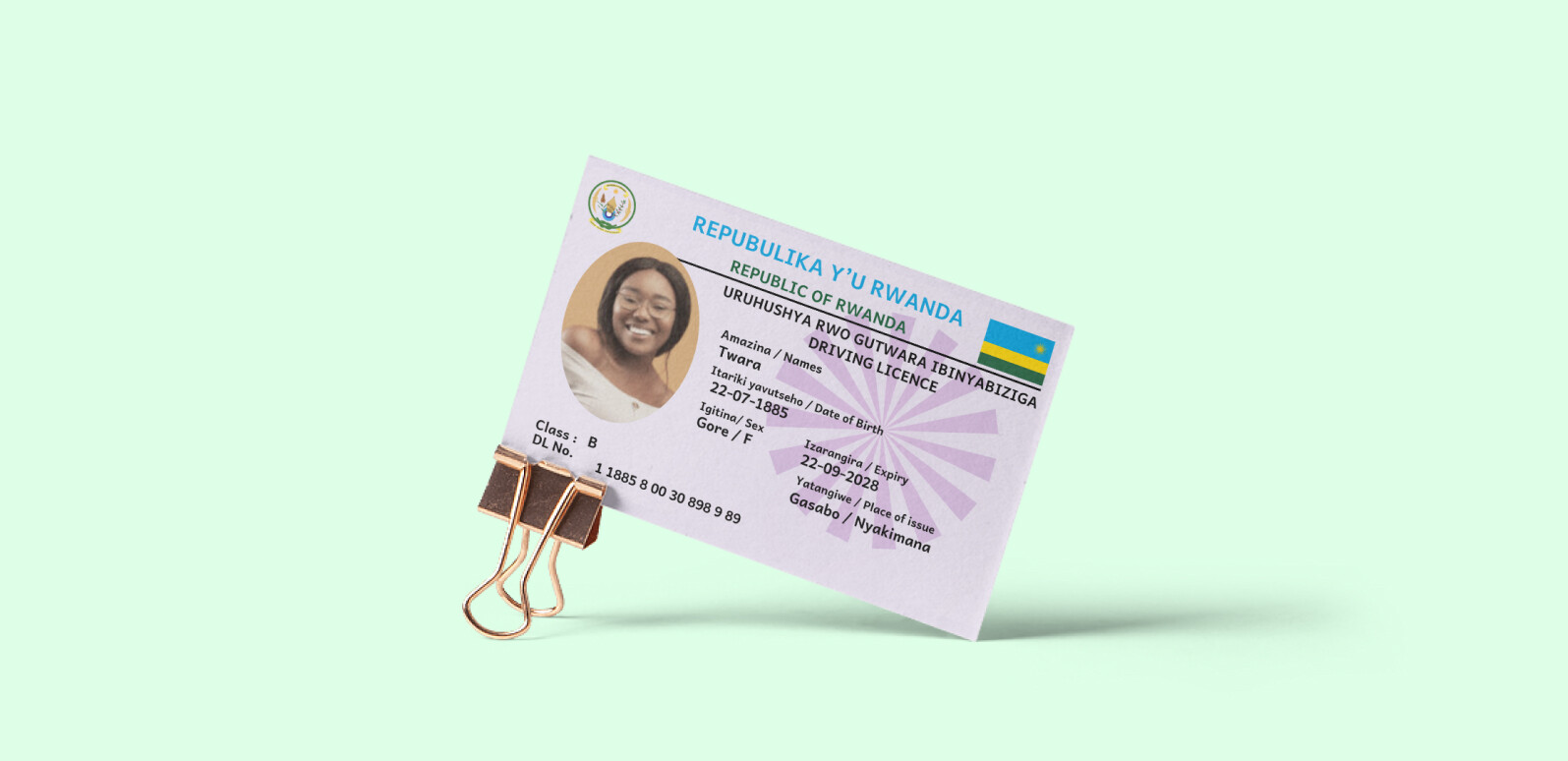
Getting a driver’s license is one of the most important milestones in anyone’s life — and in Rwanda, it’s also a legal requirement for anyone who wants to operate a motor vehicle on public roads. Whether you’re a first-time applicant working through driving school, a foreign national looking to convert your existing license, or someone renewing an expired document, understanding the full process will save you time, money, and a great deal of frustration.
This guide covers everything you need to know about obtaining, renewing, and managing your driver’s license in Rwanda — written clearly and practically for anyone at any stage of the journey.
Why Your Driver’s License Matters More Than You Think
A driver’s license is more than just permission to drive. In Rwanda, it serves as:
- A legal document confirming you have met the minimum competency standards to operate a vehicle safely
- An official form of identification accepted across many institutions and services
- A safety guarantee — for you, your passengers, and every other road user around you
- A prerequisite for vehicle registration, insurance, and other transport-related formalities
Driving without a valid license in Rwanda is a serious offence that can result in heavy fines, arrest, and vehicle impoundment. Beyond the legal risk, an unlicensed driver is statistically more likely to cause or be involved in accidents — putting lives at risk. Simply put, there is no shortcut worth taking here.
Who Is Responsible for Driver’s Licensing in Rwanda?
Driver’s licensing in Rwanda falls under the authority of the Rwanda Transport Development Agency (RTDA), which operates under the Ministry of Infrastructure. RTDA is responsible for:
- Setting the standards for driving schools and instructors
- Administering theoretical and practical driving examinations
- Issuing, renewing, and replacing driver’s licenses
- Managing the national driver registry
All applications, renewals, and replacements are processed through RTDA’s systems, either at their offices or through the Irembo government services platform — Rwanda’s integrated e-government portal that has made many official processes far more accessible.
Categories of Driver’s Licenses in Rwanda
Rwanda’s licensing system uses categories based on the type of vehicle you intend to drive. Understanding which category applies to you is the first step in the application process.
| Category | Vehicle Type |
| A | Motorcycles and motor tricycles |
| B | Private motor vehicles up to 3,500 kg (most standard cars) |
| C | Heavy goods vehicles/trucks over 3,500 kg |
| D | Passenger-carrying vehicles (buses, minibuses) |
| E | Trailers and articulated vehicles (combined with C or D) |
| F | Agricultural and special-purpose vehicles |
The vast majority of private car owners apply for a Category B license. If you intend to drive a motorcycle, you need Category A. Commercial drivers operating trucks or public transport vehicles require Category C or D, respectively.
Requirements for a First-Time Driver’s License Application
Before you can apply for a driver’s license in Rwanda, you must meet the following basic requirements:
- Minimum age: 18 years old for Category B (cars); 16 years for Category A (motorcycles) in some circumstances — always confirm current requirements with RTDA
- Medical fitness: A certificate from an approved medical practitioner confirming you are physically and visually fit to drive
- National ID: A valid Rwandan national identity card (or passport for foreign nationals)
- Passport photos: Recent colour photographs as specified by RTDA
- Driving school enrollment: Completion of a certified driving course at an RTDA-approved driving school
- Application fee: Payment of the prescribed licensing fees
Step-by-Step: How to Get Your Driver’s License in Rwanda
Step 1: Enroll in an RTDA-Approved Driving School
The first — and most important — step is choosing a reputable, government-approved driving school. Rwanda has a growing number of accredited driving schools across Kigali and in major towns such as Musanze, Rubavu, Huye, and Rwamagana.
At driving school, you will receive:
- Theoretical instruction covering the Highway Code, road signs, traffic rules, and safe driving practices
- Practical driving lessons with a certified instructor in a dual-control vehicle
- Preparation for both the written and practical examinations
The number of required lessons varies by school and your prior experience, but do not rush this phase. The skills you develop here stay with you for life — and they could save it.
Step 2: Obtain a Medical Certificate
Visit an RTDA-approved medical facility and undergo a basic health assessment. The doctor will check your vision, hearing, and general physical fitness. The resulting medical certificate confirms you are fit to drive and is submitted as part of your license application.
Step 3: Apply Through Irembo
Rwanda’s Irembo portal (irembo.gov.rw) allows you to initiate your driver’s license application online. You will need to:
- Create or log into your Irembo account
- Navigate to RTDA transport services
- Select “Driver’s License Application”
- Upload required documents (ID, medical certificate, photos)
- Pay the application fee via Mobile Money or bank card
- Receive confirmation of your examination date and location
Step 4: Sit the Theory (Written) Examination
The theory test assesses your knowledge of Rwanda’s Highway Code, traffic signs, road rules, and safe driving principles. It is typically conducted at RTDA examination centres and involves multiple-choice questions. Preparation matters — study the official Highway Code thoroughly and use practice tests if available through your driving school.
You must pass the theory examination before proceeding to the practical test.
Step 5: Sit the Practical (Driving) Examination
The practical test is conducted by an RTDA-certified examiner in a vehicle provided by your driving school or, in some cases, your own vehicle. You will be assessed on:
- Vehicle control and confidence
- Observation and hazard awareness
- Adherence to traffic rules and road signs
- Parking, reversing, and manoeuvring
- Smooth and safe interaction with other road users
If you fail, you are entitled to resit after a waiting period. Use the time to identify and address the specific areas where the examiner found you lacking.
Step 6: Collect Your License
Once you pass both examinations and all documents are verified, your driver’s license will be processed and issued. You may be given a provisional or temporary document initially while the physical card is produced. Keep both documents safely — the physical card should be carried with you whenever you drive.
How to Renew Your Driver’s License in Rwanda
Driver’s licenses in Rwanda are not permanent — they have an expiry date and must be renewed periodically. The renewal process is straightforward:
- Log into Irembo (irembo.gov.rw)
- Navigate to RTDA transport services and select license renewal
- Upload your current (or expired) license and any updated documents required
- Submit a fresh medical certificate if required by RTDA at the time of renewal
- Pay the renewal fee via Mobile Money or bank transfer
- Await processing and collection of your renewed license
Renewing your license before it expires is strongly recommended. Driving with an expired license is treated as driving without a valid license under Rwandan law — and carries the same penalties.
Replacing a Lost or Damaged Driver’s License
If your license is lost, stolen, or damaged to the point of being unreadable, you can apply for a replacement through Irembo. You will need to:
- Submit a police report in cases of theft or loss
- Provide your national ID
- Pay the replacement fee
- Submit updated photographs if required
Do not attempt to drive while awaiting a replacement — keep a copy of your police report or application confirmation with you in the interim and consult with the Rwanda National Police on how to handle any checks during this period.
Converting a Foreign Driver’s License to a Rwandan License
If you are a foreign national residing in Rwanda, or a Rwandan returning from abroad with a foreign license, you may be eligible to convert your existing license rather than going through the full application process from scratch.
The conversion process typically involves:
- Submitting your valid foreign license for verification
- Providing proof of residency in Rwanda
- Completing a medical fitness assessment
- Paying the applicable conversion fee
- In some cases, sitting a theory examination to confirm knowledge of Rwandan traffic laws
The East African Community’s mutual recognition framework means that licenses from EAC partner states — Uganda, Kenya, Tanzania, Burundi, and South Sudan — are generally treated more favourably in the conversion process. However, always confirm current requirements with RTDA directly, as policies may be updated.
The International Driving Permit (IDP)
If you’re a Rwandan license holder planning to drive in another country, you may need an International Driving Permit (IDP) — a document that translates your license details into multiple languages and is recognised in over 150 countries under the Geneva Convention on Road Traffic.
IDPs are issued in Rwanda through authorised channels and are typically valid for one year. They must always be carried alongside your original Rwandan driver’s license — the IDP alone is not sufficient without it.
Driving Schools in Rwanda: Choosing the Right One
With dozens of driving schools operating across Rwanda, quality varies. Here’s what to look for when selecting a school:
- RTDA certification — verify the school is officially registered and authorised
- Qualified instructors — ask about instructor credentials and experience
- Modern vehicles — look for well-maintained, dual-control training vehicles
- Pass rate — a school confident in its quality will be willing to discuss its examination pass rates
- Location and flexibility — consider how easily you can fit lessons into your schedule
- Comprehensive curriculum — the best schools cover theory, road sign recognition, defensive driving, and first aid basics
Don’t be swayed solely by the lowest price. A slightly higher investment in quality driving instruction pays dividends in safety and confidence for the rest of your driving life.
For more guidance on responsible driving, road safety tips, and automotive news in Rwanda, automag.rw is a trusted platform built specifically for Rwandan drivers and enthusiasts — well worth bookmarking from day one of your driving journey.
What Happens After You Get Your License? Practical Next Steps
Getting your license is the beginning, not the end. Here’s what smart new drivers in Rwanda do next:
Register your vehicle properly. If you’re buying a car, ensure registration with RTDA is completed in your name before you drive it. Platforms like auto24.rw feature a wide selection of second-hand vehicles suited to new drivers — from the compact and fuel-efficient Toyota Vitz and Suzuki Alto to the more versatile Nissan Note and Honda Fit — all listed with details that help you make an informed purchase as a newly licensed driver.
Get insured immediately. No vehicle should be driven without at least third-party insurance. Sort your cover before your first solo drive — not after.
Understand your road tax obligations. A registered vehicle requires annual road tax payment through the RRA. Stay current from the start.
Invest in a defensive driving mindset. A license confirms minimum competency — not mastery. The most dangerous drivers are often newly licensed ones who overestimate their skill. Drive conservatively, follow speed limits, avoid distractions, and always leave a safe following distance.
Keep your documents accessible. Carry your license, insurance certificate, and vehicle registration at all times. Rwanda National Police conduct routine checks, and being caught without documentation adds unnecessary complications.
Electric Vehicles and Driver’s Licensing: What You Should Know
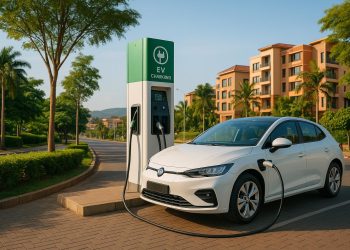
As Rwanda’s electric vehicle landscape grows rapidly, many drivers are curious about whether a standard driver’s license covers EV operation. The good news: a standard Category B license covers electric cars just as it does petrol or diesel vehicles — no additional licensing category is required.
What does differ is the driving experience. EVs have different acceleration characteristics, regenerative braking, and of course require no gearbox knowledge for automatic models. New drivers choosing an electric vehicle as their first car may find the learning curve gentler in some respects.
For those interested in entering Rwanda’s EV market, EV24.africa specialises in electric vehicle imports across Africa — a valuable resource for licensed drivers who are ready to take their first step toward sustainable, fuel-free mobility on Rwandan roads.
Tips for Passing Your Driving Test First Time
Failing your driving test wastes time and money. Here’s how to maximise your chances of passing on the first attempt:
- Don’t rush your lessons. Take the number of hours you actually need, not the minimum your school offers
- Study the Highway Code seriously. Many theory test failures come from candidates who underestimated the written component
- Practice in varied conditions. Drive in light traffic, heavy traffic, at night, and in rain if possible before your test
- Learn Kigali’s road signs. Rwanda uses a mix of international and locally specific signage — make sure you know them all
- Manage test-day nerves. Sleep well the night before, arrive early, and remember that the examiner is assessing your safety — not trying to trick you
- Listen to your instructor’s feedback. Every correction during lessons is a potential test failure avoided
Frequently Asked Questions (FAQs)
Q: What is the minimum age to apply for a driver’s license in Rwanda? A: The minimum age for a Category B (car) license is 18 years. For motorcycles (Category A), requirements may vary — confirm current age limits with RTDA.
Q: How long does it take to get a driver’s license in Rwanda? A: The timeline depends on your driving school schedule and exam availability, but most applicants complete the process within one to three months from enrollment to license collection.
Q: Can I drive while waiting for my license after passing the test? A: You should receive a provisional or temporary document after passing. Do not drive without some form of official documentation from RTDA confirming your status — consult with your driving school or RTDA directly.
Q: How much does a driver’s license cost in Rwanda? A: Fees include driving school tuition, application fees, and examination fees. Total costs vary by school and category, but it’s advisable to budget between 100,000 and 250,000 RWF for the full process including lessons. Confirm current official fees on the Irembo portal.
Q: How long is a Rwandan driver’s license valid? A: Rwandan driver’s licenses are issued for a specific validity period (typically several years) before renewal is required. Check the expiry date on your card and plan your renewal in advance.
Q: Can I use my Rwandan license to drive in other East African countries? A: Yes, in most cases. Rwanda is a member of the East African Community, and licenses are broadly recognised across EAC partner states. For travel further afield, obtain an International Driving Permit.
Q: What happens if I’m caught driving without a license in Rwanda? A: Penalties include fines, arrest, and vehicle impoundment. Repeat offences carry progressively severe consequences. There is no legal or safe excuse for driving without a valid license.
Q: Do I need a separate license to drive an electric vehicle? A: No. A standard Category B license covers electric passenger vehicles. No additional license category is required for EVs.
Final Thoughts
Your driver’s license is one of the most valuable documents you’ll ever hold — and earning it properly, through an accredited school, legitimate examinations, and responsible preparation, sets the foundation for a lifetime of safe driving. In Rwanda, where road safety remains a national priority and infrastructure continues to improve, being a licensed, informed, and responsible driver is something to take genuine pride in.
Whether you’re at the very start of the process or simply refreshing your knowledge before a renewal, approach each step seriously. The roads of Rwanda — from Kigali’s Avenue de la Paix to the scenic routes of the Western Province — are waiting to be explored safely and legally.
For more driving tips, road safety guides, and automotive news tailored for Rwandan roads, visit automag.rw — your trusted companion behind the wheel.