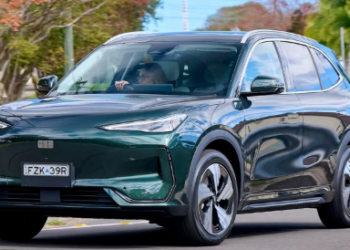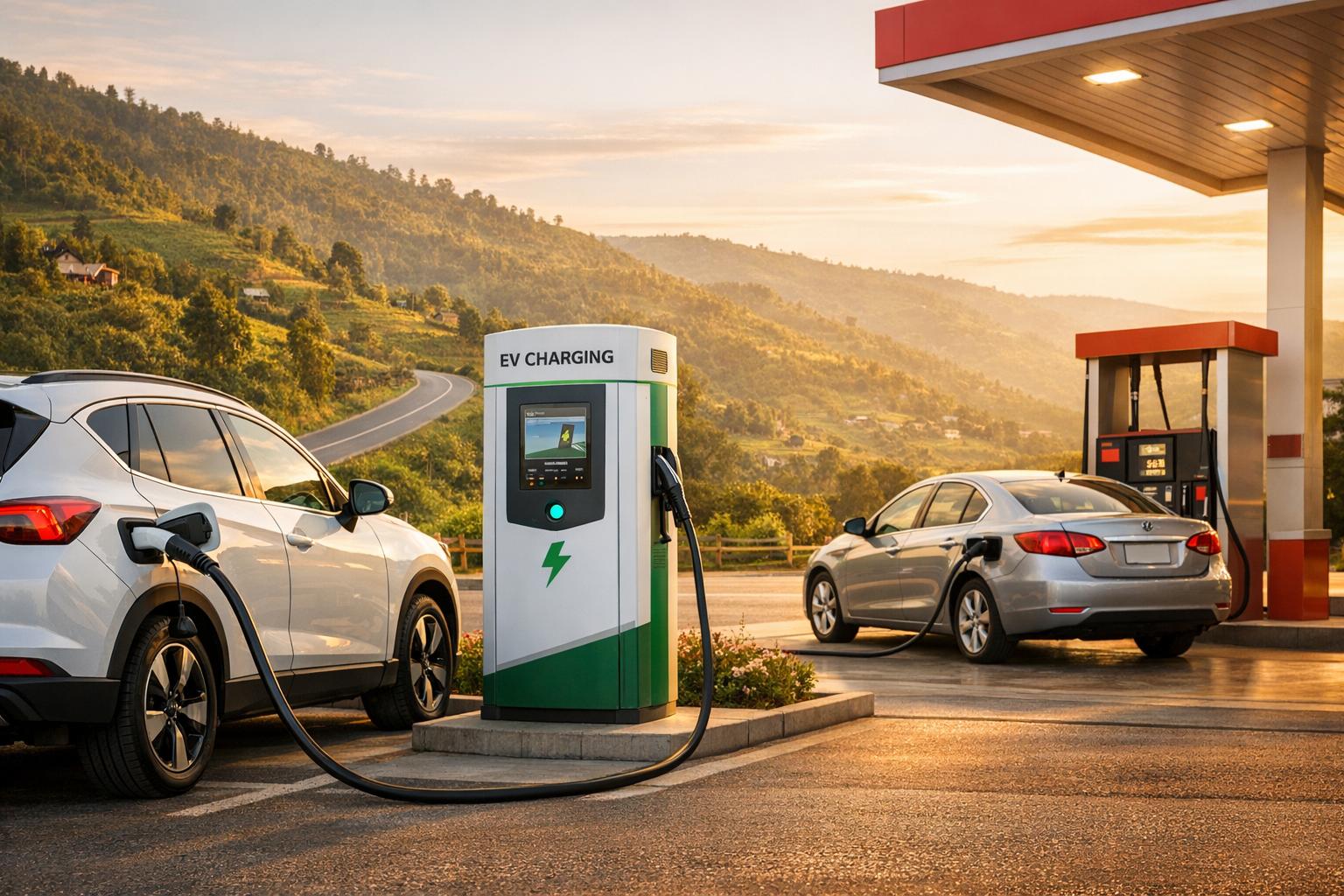
EVs are far cheaper to run than gas-powered cars in Rwanda. Here’s why:
- Electricity Costs: Charging an EV at a public station costs RWF 110/kWh ($0.08), while gasoline costs RWF 1,989 per liter ($1.29).
- Cost Per Kilometer: EVs cost RWF 22–28/km ($0.015–$0.020) depending on size, compared to RWF 178–199/km ($0.122–$0.135) for gas cars. EVs are 84–88% cheaper to operate per kilometer.
- Annual Savings: Driving 12,000 km/year, EV owners save around RWF 1.8M–1.9M ($1,230–$1,300) in fuel costs.
- Maintenance: EVs require less upkeep, saving owners about 41% compared to gas cars over five years.
While EV charging infrastructure is still developing, Rwanda’s government is investing in public charging stations and offering incentives like 0% import duty on EVs. These efforts make EVs an affordable and practical choice for drivers.
Quick Comparison
| Metric | EVs | Gas Cars (ICE) |
|---|---|---|
| Cost per km | RWF 22–28 ($0.015–$0.020) | RWF 178–199 ($0.122–$0.135) |
| Fuel/Charging Cost | RWF 2,200–2,842/100 km | RWF 15,912–19,890/100 km |
| Annual Fuel Savings | RWF 1.8M–1.9M ($1,230–$1,300) | – |
| Maintenance Savings | ~41% less | – |
Switching to EVs not only reduces running costs but also benefits the grid through smart charging solutions. Rwanda’s push for electrification is making EVs a smart long-term choice for drivers.

EV vs Gas Car Cost Comparison in Rwanda: Per Kilometer and Annual Savings
Which is CHEAPER to fuel? Gas Cars vs. Electric Cars
sbb-itb-7bc66b5
Electricity Costs for EV Charging in Rwanda
Rwanda introduced a new electricity pricing structure on October 1, 2025, marking a significant shift aimed at encouraging EV adoption. Under this change, the Rwanda Utilities Regulatory Authority (RURA) classified EV charging stations under the "Large Industries" tariff bracket, regardless of their size or energy consumption. This move effectively lowers the operating costs for businesses running EV charging infrastructure.
Residential and Industrial Charging Rates
Charging an EV at home versus at a public station comes with a stark cost difference. EV charging stations equipped with smart meters are charged RWF 110 per kWh (around $0.08), while residential users consuming more than 50 kWh per month pay RWF 369 per kWh, over three times the station rate. Even households using between 20 and 50 kWh monthly face a price of RWF 310 per kWh, which is still significantly higher.
| Category | Rate (RWF/kWh) | Rate (USD/kWh) |
|---|---|---|
| EV Charging Stations (Smart Meter) | 110 | ~$0.08 |
| Residential (0-20 kWh/month) | 89 | ~$0.06 |
| Residential (20-50 kWh/month) | 310 | ~$0.22 |
| Residential (>50 kWh/month) | 369 | ~$0.27 |
| Commercial (>100 kWh/month) | 376 | ~$0.27 |
Charging at a dedicated EV station is about 70% cheaper than the highest residential rates. Industrial users without smart meters, however, pay a slightly higher rate of RWF 124 per kWh, which represents a 12.7% premium compared to stations with smart meters. These pricing tiers pave the way for adopting smart charging practices.
Time-of-Use Incentives
To address grid stress, which has reached 136% line loading in some regions, Rwanda is rolling out smart charging strategies. One key recommendation from the World Bank is the introduction of cost-reflective, time-of-use tariffs. These tariffs would encourage EV owners to charge during off-peak hours or when solar energy production is at its peak. According to Tarek Keskes, an energy specialist with the World Bank, such measures could reduce distribution network stress by as much as 15%.
The government’s implementation of smart meters allows for billing based on consumption patterns. While specific off-peak rates have yet to be announced, the groundwork is being laid to align charging habits with lower-demand periods. This approach not only lowers costs for EV users but also helps manage the grid’s growing load, a critical step as Kigali’s peak power demand is expected to rise by 64% by 2030.
Fuel Costs for ICE Vehicles in Rwanda
As of December 22, 2025, gasoline in Rwanda is priced at 1,989 RWF per liter ($1.29), while diesel costs 1,900 RWF per liter ($1.28). These prices highlight the fluctuating nature of fuel costs for internal combustion engine (ICE) vehicles when compared to the more predictable expenses of charging electric vehicles (EVs).
Fuel prices in Rwanda are regulated by RURA, which adjusts them based on two key factors: international crude oil prices and the USD-to-RWF exchange rate, currently set at 1,456.35 RWF per USD. About 50–53% of the fuel price comes from crude oil costs, with the remainder covering refining, transportation, taxes, and duties. Recent global trends show Brent crude oil prices dropping from $81 to $69 to $55 per barrel between 2024 and 2026, but the final pump price still incorporates these additional costs.
The Rwandan government also imposes a 25% import duty on ICE vehicles valued up to $60,000, whereas electric and hybrid vehicles benefit from a 0% import duty. This policy not only incentivizes EV adoption but also leaves ICE vehicle owners more exposed to the unpredictability of oil price swings.
Regionally, Rwanda’s gasoline prices are competitive but vary when compared to its neighbors. For instance, gasoline is more expensive in Kenya (2,068.14 RWF per liter) but cheaper in Tanzania (1,645.50 RWF) and slightly lower in Burundi (1,969.44 RWF).
Cost Per Kilometer: EV Charging vs. ICE Fueling
EV Efficiency and Charging Costs
Electric vehicles (EVs) generally consume 15.5 to 20 kWh per 100 kilometers (around 25–32 kWh per 100 miles). If you’re charging at home, where the electricity rate is 142.1 RWF/kWh ($0.098), an EV averaging 17.5 kWh per 100 km would cost about 24.87 RWF per kilometer ($0.017). That works out to approximately 2,487 RWF ($1.71) per 100 kilometers.
For a clearer picture, consider this: a compact EV consuming 15.5 kWh per 100 km would cost about 22.03 RWF per kilometer ($0.015), while a larger electric SUV using 20 kWh per 100 km would cost around 28.42 RWF per kilometer ($0.020). These numbers set the stage for comparing EV costs to those of internal combustion engine (ICE) vehicles.
ICE Fuel Efficiency and Costs
Now let’s look at ICE vehicles. In Rwanda, these cars typically use 8 to 10 liters of fuel per 100 kilometers, depending on the vehicle size and driving conditions. With gasoline priced at 1,989 RWF per liter ($1.29), an ICE vehicle averaging 9 liters per 100 km would cost about 178.01 RWF per kilometer ($0.122) – or 17,901 RWF ($12.29) per 100 kilometers.
Driving conditions, especially stop-and-go traffic, can further reduce ICE efficiency. By contrast, EVs thrive in urban settings like Kigali, where their electric motors consume little energy when idle and even recover energy through regenerative braking. This makes EVs even more economical in such environments.
Comparison Table: EVs vs. ICE Costs
Here’s a side-by-side breakdown of the costs for EVs and ICE vehicles across various types:
| Vehicle Type | Energy Use | Energy Price | Cost per 100 km | Cost per km | Annual Savings vs. Average ICE* |
|---|---|---|---|---|---|
| Compact EV | 15.5 kWh/100 km | 142.1 RWF/kWh | 2,203 RWF | 22.03 RWF | 1,883,760 RWF |
| Mid-size EV | 17.5 kWh/100 km | 142.1 RWF/kWh | 2,487 RWF | 24.87 RWF | 1,849,680 RWF |
| Large EV SUV | 20 kWh/100 km | 142.1 RWF/kWh | 2,842 RWF | 28.42 RWF | 1,807,080 RWF |
| Efficient ICE | 8 L/100 km | 1,989 RWF/L | 15,912 RWF | 159.12 RWF | – |
| Average ICE | 9 L/100 km | 1,989 RWF/L | 17,901 RWF | 178.01 RWF | – |
| Large ICE SUV | 10 L/100 km | 1,989 RWF/L | 19,890 RWF | 198.90 RWF | – |
*Assuming 12,000 kilometers driven annually.
When you compare the two, EVs cost just 12%–16% of what an average ICE vehicle costs to operate. That’s a savings of 84% to 88% in fuel expenses.
"For a typical U.S. driver in 2025, the electricity cost of an electric car usually works out to about 4–9 cents per mile at home, often around half (or less) of the cost per mile of a comparable gas car." – Recharged.com
Infrastructure and Ownership Costs
When comparing EVs to traditional internal combustion engine (ICE) vehicles, infrastructure and ownership costs play a significant role alongside operational fuel expenses.
Charging Station Setup Costs
Setting up EV charging infrastructure comes with a hefty initial price tag. Basic AC chargers are priced at around $21,000 per unit, while installing a DC fast charger can soar to $200,000. On the other hand, home charging setups are much more budget-friendly, starting at $799. However, costs can exceed $3,000 if an electrical panel upgrade is required.
A notable example of investment in EV infrastructure is Kigali’s Nyabugogo transit hub. In October 2025, the World Bank announced a $7.7 million investment in the project. This initiative includes the installation of 18 chargers, an 800-kW rooftop solar photovoltaic system, and battery storage. The Rwanda Urban Mobility Improvement (RUMI) Project, supported by ESMAP, is spearheading this effort to showcase how decentralized energy solutions can support e-mobility while reducing the need for costly grid upgrades.
"The shift to BEBs [Battery Electric Buses] cannot be planned in isolation. Power lines, transformers, and substations must be upgraded to keep the lights on and the buses moving." – Tarek Keskes, Energy Specialist, World Bank
Fuel Station Accessibility
ICE vehicles currently have the upper hand in refueling convenience, thanks to the widespread availability of fuel stations across Rwanda. In contrast, EV charging infrastructure is still in its early development stages, with only a limited number of fast chargers operational as of 2024. However, for most EV owners, this isn’t a dealbreaker – approximately 90% of EV charging happens overnight at home, allowing drivers to start their day with a fully charged battery.
To meet the growing demand for public charging, Rwanda is focusing on building strategic charging hubs in high-traffic areas like Kigali’s CBD, Remera, Kimironko, Nyanza, and Kabuga.
Maintenance and Long-Term Savings
One of the standout financial benefits of EVs is their reduced maintenance costs. Over five years, EV owners typically spend around $4,600 on maintenance, compared to $7,800 for ICE vehicles – a difference of about $3,200, or 41% savings. This cost reduction stems from the simpler design of EVs, which generally require fewer repairs, focusing primarily on tire rotations, brake pad replacements, and windshield wiper maintenance.
Fuel savings further tip the scales in favor of EV ownership. For instance, an EV driver covering approximately 13,489 miles annually (about 21,700 km) spends roughly $693 on electricity for home charging. In comparison, an ICE vehicle owner spends between $1,600 and $2,100 on gasoline. This translates to an annual fuel savings of $950 or more, making EVs an increasingly appealing choice for those who charge at home.
Key Takeaways: EV Charging vs. ICE Fueling Costs
Charging an electric vehicle (EV) is significantly cheaper than fueling a gasoline-powered car – about 2 to 3 times less per kilometer driven. Over the lifespan of an EV, owners can expect to save between $6,000 and $10,000. This includes approximately $3,200 in maintenance savings over five years and annual fuel savings of around $950.
Rwanda is setting a strong example in promoting EV adoption. A standout initiative is the $7.7 million investment in the Nyabugogo transit hub, which includes 18 charging stations powered by an 800-kW solar system. This project underscores the government’s commitment to building sustainable transportation infrastructure, paving the way for everyday cost savings for EV owners.
Most EV charging – about 80% – happens at home. This allows drivers to take advantage of lower residential electricity rates, especially when paired with time-of-use tariffs that encourage charging during off-peak hours when electricity demand is lower.
Recent updates by the Rwanda Utilities Regulatory Authority (RURA) have introduced stable pricing for EV charging, making long-term ownership more predictable and affordable. Combined with Rwanda’s national master plan for expanding EV charging stations, these measures are steadily closing the gap between EV and gasoline infrastructure. While traditional fuel stations are still more widespread, the growing EV network is catching up.
Smart charging strategies also play a role in reducing strain on Rwanda’s power grid – by as much as 15%. With lower operating costs, reduced maintenance needs, and strong government support, EVs are becoming an increasingly attractive option for drivers in Rwanda.
FAQs
How does Rwanda’s electricity pricing affect the cost of charging an EV?
Rwanda uses a tiered system for electricity pricing, where the cost per kilowatt-hour (kWh) depends on how much energy you consume and whether you’re charging at home or at a public station.
For residential charging, the rates are lower up to a certain monthly usage threshold. Once you exceed that limit, higher rates apply. Charging at home during overnight hours is the most affordable option, thanks to off-peak discounts that significantly lower the cost.
In contrast, commercial rates – applied to public charging stations and businesses – are higher and don’t include off-peak discounts. This means using public fast chargers can cost 30–40% more per kWh compared to charging at home.
If you’re looking to save money while powering your EV in Rwanda, charging at home during off-peak hours is your best bet.
What are the long-term cost savings of owning an EV compared to a gas-powered car in Rwanda?
Owning an electric vehicle (EV) in Rwanda can lead to substantial savings over time compared to driving a gas-powered car. One of the biggest advantages is the cost of charging versus fueling. Electricity in Rwanda is generally more stable and affordable than fuel prices. On average, charging an EV costs about RWF 30–40 per kilometer, while fueling a gas-powered car can cost around RWF 200–250 per kilometer. That’s an impressive savings of up to 80%.
EVs also have lower maintenance costs. They don’t require oil changes, have fewer moving parts, and benefit from regenerative braking, which reduces brake wear. On top of that, Rwanda’s expanding network of public charging stations makes it increasingly convenient to charge your EV. Add in government incentives like tax breaks and reduced registration fees, and it’s clear why EVs are becoming a financially smarter option compared to traditional gas-powered vehicles.
What steps is Rwanda taking to develop EV charging infrastructure?
Rwanda is making strides in expanding its EV charging infrastructure through a well-rounded national strategy. This approach combines supportive policies, collaboration between public and private sectors, and attractive investment incentives. The government has set an ambitious target: to have at least 200 fast-charging stations installed in Kigali and along major highways by 2027. To attract private investors, they’ve rolled out measures like tax exemptions, streamlined licensing processes, and financial support through a $30 million program funded by the World Bank.
Addressing challenges like grid capacity, Rwanda is focusing on renewable energy sources and battery storage to keep charging stations running smoothly. Both state utilities and private businesses, including Rwanda’s top EV importer, are establishing charging points in strategic locations such as shopping malls, airports, and main roadways. These initiatives aim to build a dependable and cost-effective network for electric vehicles and motorcycles, solidifying Rwanda’s position as a regional leader in clean transportation.
Related Blog Posts
- EVs vs. ICE Cars: Performance on Rwanda’s Roads
- Electric vs Petrol cars in Rwanda
- Car Price Trends in Rwanda: Petrol vs Hybrid vs Electric
- EV or petrol car for Rwanda: what’s better in the long term?