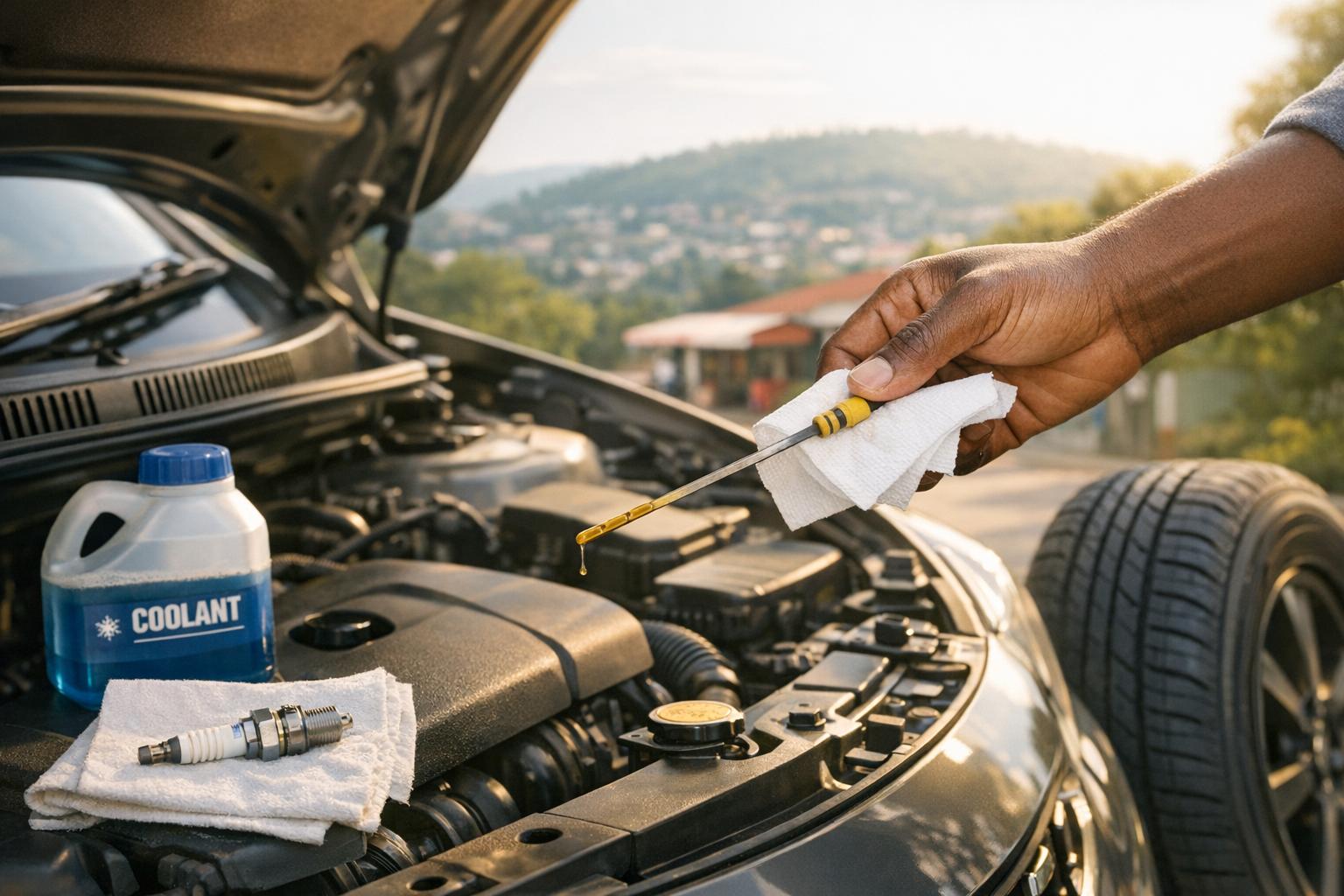
Maintaining your car in Rwanda can be challenging due to intense sunlight, rough roads, and strict inspection rules. Ignoring basic upkeep not only risks expensive repairs but also compromises safety. Here’s what to watch out for:
- Oil and Fluids: Skipping oil changes or neglecting fluid levels can lead to engine damage. Use synthetic oil for better performance in hot, stop-and-go traffic.
- Tires: Unchecked tire pressure and worn treads reduce safety on tough roads. Inspect monthly and replace tires every six years or when tread depth falls below 1.6 mm.
- Spark Plugs: Worn spark plugs cause misfires, poor fuel efficiency, and engine strain. Replace them sooner if driving in dusty or demanding conditions.
- Cheap Parts: Low-quality parts may fail faster and increase long-term costs. Always opt for professional service to ensure repairs meet safety standards.
- Seasonal Adjustments: Prepare for Rwanda’s rainy season by maintaining wipers, brakes, and lights, and cleaning mud from your car regularly.
These small steps help avoid breakdowns, save money, and keep your car safe on the road. Follow your owner’s manual and schedule regular checks to stay ahead of problems.
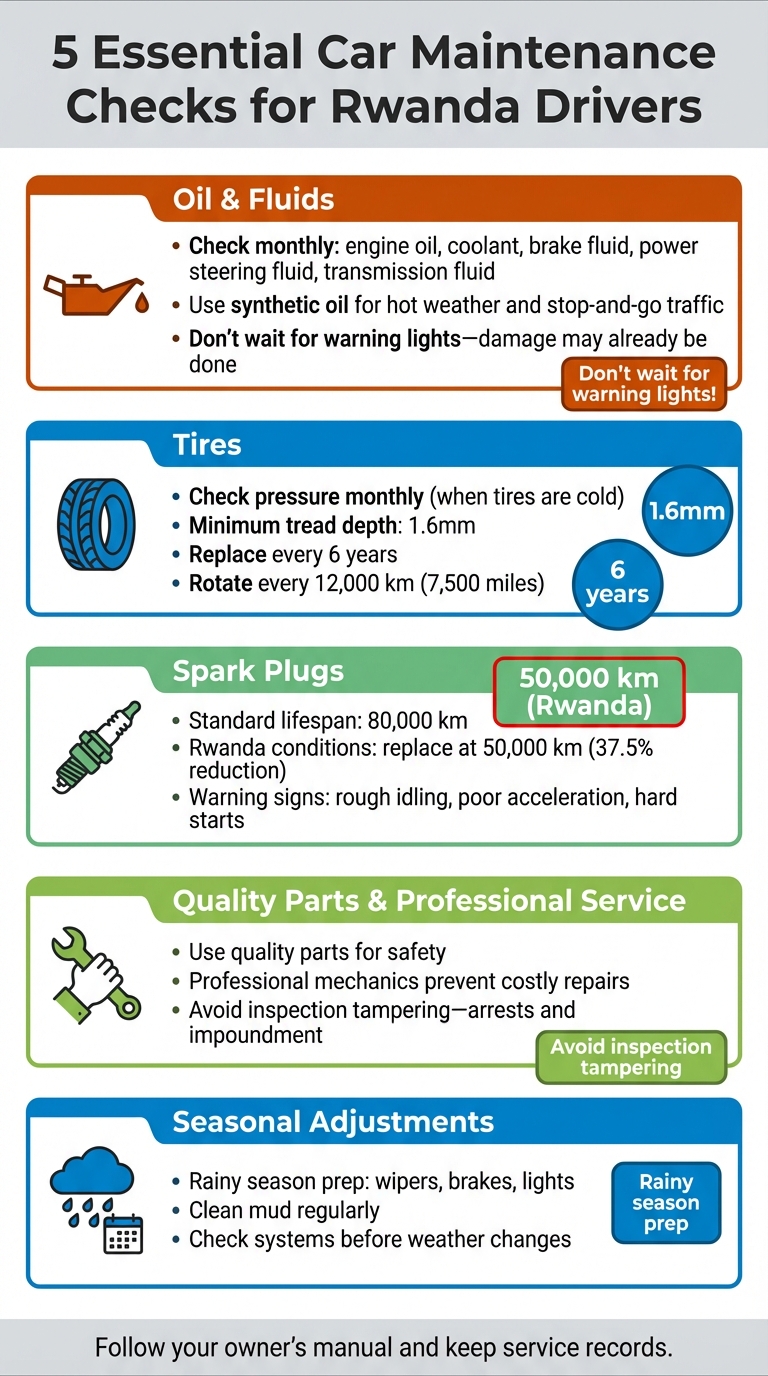
5 Essential Car Maintenance Checks for Rwanda Drivers
How to chack my car at morning/ጠዋት ጠዋት መታየት ያለበት የመኪና ክፍሎች /
sbb-itb-7bc66b5
Skipping Oil Changes and Fluid Checks
In Rwanda, many drivers put off oil changes to save money, often opting for conventional oil. However, Kigali’s frequent stop-and-go traffic and high temperatures can cause conventional oil to break down faster, leading to engine trouble down the line.
Another common misstep is waiting for dashboard warning lights to take action. By the time a red oil pressure light appears, significant engine damage may have already occurred.
Why Oil Changes Matter
Routine oil changes are key to avoiding engine misfires, fuel system problems, and transmission failures – issues that can lead to expensive repairs. It’s important to select the right oil for your driving conditions. For drivers navigating Kigali’s traffic or dealing with hot weather, synthetic oil is a smarter choice. While it may cost more upfront, it handles thermal stress much better than conventional oil. AutoXpress Rwanda explains:
Conventional oil is the cheapest option but does not last as long as synthetic or semi-synthetic oils.
Stick to the oil change intervals recommended in your vehicle’s owner’s manual. These guidelines are tailored to your car’s engine type – whether petrol or diesel – and your driving habits. Beyond oil, other fluids also need regular attention to keep your engine running smoothly.
Monitoring Other Fluids
Engine oil isn’t the only fluid your car relies on. Coolant, brake fluid, power steering fluid, and transmission fluid all need to be checked monthly to ensure they’re at proper levels and free from contamination. Rwanda’s warm climate makes it especially important to maintain adequate coolant levels to prevent overheating. Similarly, having enough brake fluid is critical for safe driving, particularly on uneven roads. If you’re unsure, a mechanic can inspect these fluids during routine service visits. Be on the lookout for signs of contamination, such as unusual discoloration or debris.
AutoXpress Rwanda highlights:
Regular inspections can help extend the life of the vehicle by identifying and fixing minor issues before they become major problems.
If you’re not confident in spotting issues yourself, consider scheduling a comprehensive 30-point car inspection. This thorough check can help uncover potential problems before they turn into costly repairs.
Neglecting Tire Care and Pressure Checks
Just like keeping an eye on your car’s fluids, regular attention to your tires can save you from expensive repairs – especially on Rwanda’s notoriously tough roads. Many drivers in Rwanda tend to overlook tire maintenance until something goes wrong, like a blowout or a noticeable drop in fuel efficiency. But neglecting tire care isn’t just a financial issue; it’s a safety risk. Worn tires struggle to grip the road during the rainy season, while underinflated tires increase rolling resistance, burning more fuel and wearing out faster .
Rwanda’s roads, often riddled with potholes, rough patches, and unpaved stretches, are especially hard on tires. Overinflated tires are more prone to damage from these hazards, while underinflated ones wear unevenly, often along the shoulders. And when the rainy season hits, even a small reduction in tread depth can severely impact your ability to brake and steer.
Checking Tread Depth and Tire Wear
To stay safe and legal, your tires should have at least 1.6 mm (1/16 inch) of tread depth. The easiest way to tell if it’s time for new tires is by looking for the tread wear indicators – those small raised bars between the grooves. If they’re visible, it’s time to replace the tires. Uneven tread wear can also reveal issues: for instance, worn shoulders usually mean underinflation, while excessive center wear points to overinflation.
If your car has low-profile, sporty tires (with an aspect ratio below 50), you’ll need to inspect them more often – about every 1,860 miles (3,000 km) – because their shorter sidewalls are more vulnerable to damage on rough terrain. After driving on pothole-ridden roads, check for bulges, cuts, or bumps that could signal internal damage. Additionally, heat speeds up the aging process of rubber, so it’s wise to replace your tires every 6 years, even if the tread still looks good.
Tire pressure is just as important as tread depth when it comes to keeping your car running smoothly and safely.
Maintaining Proper Tire Pressure
Make it a habit to check your tire pressure at least once a month. Use a reliable gauge and always measure when the tires are "cold" – that is, after the car has been parked for at least three hours or driven less than 1 mile (1.6 km). Driving heats up the tires and can increase pressure by 4 to 6 psi (28 to 41 kPa), which could give you an inaccurate reading. And don’t release air from warm tires to match the recommended pressure; this could lead to underinflation once they cool down.
The correct pressure can usually be found on a sticker inside the driver’s side door jamb – don’t rely on the number printed on the tire’s sidewall. Don’t forget to check your spare tire each month, and make sure valve caps are securely in place to prevent slow leaks. To extend the life of your tires, rotate them every 7,500 miles (12,000 km), which helps ensure even wear.
Postponing Spark Plug Replacement
Spark plugs play a crucial role in keeping your engine running smoothly. When they wear out, they can cause a host of problems like engine misfires, rough idling, and sluggish acceleration. They also lead to incomplete combustion, which not only lowers fuel efficiency but forces your car to burn more gas than necessary. On top of that, faulty spark plugs can let unburnt fuel escape into the exhaust, increasing emissions and potentially damaging the catalytic converter.
In Rwanda, driving conditions can accelerate spark plug wear. Dusty roads, stop-and-go traffic in Kigali, and carrying heavy loads all take a toll. While spark plugs are typically built to last up to 49,710 miles (80,000 km) under normal circumstances, these harsher conditions can cut their lifespan down to around 31,070 miles (50,000 km) – a 37.5% reduction. If you’re driving regularly in Rwanda, you might need to replace them sooner than your car’s manual recommends. Spotting these issues early can save you from expensive engine repairs.
Warning Signs of Worn Spark Plugs
Your car’s behavior can tell you a lot about the condition of your spark plugs. If you notice the engine stumbling, jerking, or hesitating while idling, it’s a strong indicator that the plugs are struggling. Other signs include slower acceleration or needing to shift gears more often to maintain speed, especially on hills. Struggling to start your car in the morning? That could mean the plugs are clogged with carbon deposits and not sparking effectively.
Strange noises can also point to trouble. Knocking, rattling, or ticking sounds during acceleration might mean the air-fuel mixture is firing at the wrong time due to failing spark plugs. And don’t ignore dashboard warnings: a yellow "Check Engine" light often signals a misfire or spark plug issue. If that light turns red, stop driving immediately to prevent severe engine damage.
Advantages of Replacing Spark Plugs on Time
Replacing spark plugs when needed not only prevents bigger problems but also keeps your engine running efficiently. Fresh spark plugs ensure complete combustion, which improves fuel economy and reduces emissions. Staying on top of replacements can also save you from costly repairs, like damage to pistons, cylinders, or even the engine itself.
When it’s time to replace them, swap out all the spark plugs at once and check for carbon buildup – especially if you frequently drive in dusty areas or heavy traffic. Catching wear early helps prevent breakdowns and keeps your car performing at its best.
Buying Cheap Parts and Avoiding Professional Service
Cutting corners by using cheap parts or skipping professional mechanics often leads to more trouble than it’s worth. Low-quality parts can jeopardize safety, especially on Rwanda’s challenging mountainous roads. Imagine dealing with brake failure or a cooling system breakdown in such conditions – it’s not just inconvenient, it’s downright dangerous. Modern vehicles are intricate, and improper handling of their components can cause even bigger, more expensive problems. Plus, when legal standards are ignored, the risks multiply.
Risks of Low-Quality Parts
Choosing substandard parts doesn’t just hurt your wallet – it can also put you in legal hot water. Take what happened in January 2023: the Rwanda National Police arrested four people at the Remera Automobile Inspection Centre for tampering with their vehicles to cheat emissions tests. They removed air filters to bypass inspections, but it didn’t end well. Their vehicles were impounded, and they were arrested. CP John Bosco Kabera, the Rwanda National Police Spokesperson, emphasized:
"If any mechanical fault is detected, fix it, bring your vehicle back for further roadworthy inspection, but any malpractices along the process will only lead to your arrest."
Using cheap parts can also increase emissions and hide underlying issues that only a trained mechanic would catch. This often results in even more expensive repairs down the line.
Why Professional Mechanics Matter
With so much at stake, relying on professional mechanics isn’t just a good idea – it’s essential. They have the expertise to diagnose problems accurately, preventing costly emergencies. Complex systems like air conditioning, brakes, and modern electronics aren’t things you can fix with a quick DIY attempt. These systems demand expert knowledge and specialized tools that only professionals can provide. Plus, they ensure your repairs meet Rwanda’s roadworthy inspection standards, saving you from failed tests and the associated fees.
Professional servicing also keeps your vehicle aligned with manufacturer recommendations and protects your warranty. Sure, you can handle basic tasks like checking tire pressure or fluid levels on your own, but when it comes to safety-critical components, it’s best to leave it to the experts. They’ll keep you – and your car – safe on the road.
Rwanda-Specific Maintenance Challenges
Rwanda’s unique environment adds extra layers of complexity to vehicle upkeep. The mountainous terrain, seasonal weather variations, and mix of paved and unpaved roads present challenges that go beyond your car’s manual. Staying on top of these factors can help prevent breakdowns and keep your vehicle in top condition throughout the year.
How Seasonal Weather Affects Vehicles
Rwanda’s rainy season brings its own set of obstacles. Heavy rains and flooding lead to hazards like landslides, fallen trees, and blocked roads. These conditions make it critical for your braking and lighting systems to work perfectly, as wet roads and poor visibility amplify the risks of driving.
CP Rafiki Mujiji, Commissioner for Traffic and Road Safety, emphasizes this point:
"In case you are driving or riding in the rain, it would be safer to anticipate how to deal with wet roads as well as poor visibility that characterize such weather; as usual your car should be in good condition with head and tail lights, brakes, turn signals, and windshield wipers working."
During the rainy season, frequent cleaning of your car’s exterior and windows is essential to remove mud and maintain clear visibility. The intense sun that follows the rains can dry out wiper blades, causing cracks. Replacing them before the next downpour is a simple but vital step to avoid failures when you need them the most.
Maintaining Vehicles for Different Road Types
Rwanda’s mix of road conditions, particularly unpaved rural roads, introduces additional wear and tear. Dust and debris can degrade fluids faster, while stones and uneven surfaces take a toll on tires and rims. If your travels often take you between Kigali’s smooth highways and rural roads, your vehicle will need more frequent inspections compared to city-only driving.
On unpaved roads, it’s especially important to regularly check your tire tread depth and pressure at service stations. Inspect rims for damage caused by rough terrain. Properly functioning headlights, brake lights, and indicators are crucial for navigating poorly lit rural roads, particularly in heavy rain. Additionally, cleaning your floor mats and interior regularly helps manage the buildup of mud and dust from these challenging routes.
These road and weather-related challenges highlight just how important regular maintenance is to ensure your vehicle remains reliable in any condition.
Creating a Maintenance Schedule
Having a solid maintenance schedule is key to avoiding common car troubles. Depending on local road conditions, you might need to perform checks more often. A well-thought-out plan helps you catch issues early, saving time and money down the road. Here’s how you can create a schedule that works for your driving habits and conditions.
Following the Owner’s Manual
Your vehicle’s owner’s manual is your go-to guide for maintenance. It spells out when to handle essentials like oil changes, tire rotations, and part replacements. Modern engines often allow for longer intervals between services, but the manual’s recommendations are tailored specifically for your car.
The manual also suggests periodic inspections to catch problems before they escalate. However, if you’re driving on Rwanda’s rural, unpaved roads, you’ll likely need to step up your maintenance game. For instance, checking tire pressure and fluid levels every month is a smart move in such conditions.
Keeping Service Records
Beyond following the manual, keeping detailed service records is a must. Record every oil change, tire rotation, spark plug replacement, and fluid refill. Be sure to include the date, mileage, and specifics of the service. This habit helps you stay on top of maintenance and ensures nothing gets missed. It’s particularly useful for items like wiper blades, which can wear out faster under Rwanda’s strong sun and may need replacing more often.
Conclusion
Taking care of your car isn’t just about keeping it running – it’s about extending its life, cutting down on repair costs, and ensuring a safer ride. Simple habits like regular oil changes, keeping an eye on tire pressure, and replacing spark plugs on time go a long way, especially when navigating Rwanda’s diverse and often demanding road conditions.
Set aside a few minutes each month to check your fluids, inspect tire wear, and clean your windshield. This small effort can make a big difference, particularly in a country where driving conditions can be tough. Plus, staying on top of these tasks helps you avoid costly breakdowns and ensures your vehicle meets emissions standards at inspection centers.
Rwanda’s roads can be hard on vehicles, so paying extra attention to maintenance is essential. Stick to the guidelines in your owner’s manual, keep track of service records, and address any issues as soon as they arise. Doing so not only saves you money but also improves safety and keeps your car running longer.
Don’t wait for warning lights to tell you something’s wrong. Regular maintenance is an investment in better fuel efficiency, fewer repair bills, and safer journeys.
FAQs
Which car fluids should I check regularly to keep my vehicle running smoothly in Rwanda’s climate?
To keep your car running smoothly, it’s important to routinely check engine oil, brake fluid, and coolant. These fluids are essential for maintaining your vehicle’s performance and ensuring safety, particularly when dealing with fluctuating temperatures and diverse road conditions.
- Engine oil: Keeps your engine well-lubricated, reducing wear and helping to prevent overheating.
- Brake fluid: Ensures your brakes function reliably, which is especially important for handling steep hills and unpredictable driving scenarios.
- Coolant: Helps regulate your engine’s temperature, protecting it from overheating in hotter climates.
Skipping these checks could lead to expensive repairs or unexpected breakdowns. Make it a point to inspect fluid levels at least once a month or before any long journey. Always stick to high-quality products that match your car’s specific requirements for optimal performance.
How do Rwanda’s road conditions impact tire care?
Rwanda’s combination of paved and unpaved roads, particularly in rural areas, can take a toll on your tires. The rough surfaces, potholes, and uneven terrain speed up wear and tear, making it crucial to stay on top of tire maintenance to ensure both safety and performance.
The frequent rains and muddy conditions add to the challenge, increasing the chances of punctures, skidding, and mud buildup. To keep your tires in good shape, it’s important to inspect them regularly for damage, maintain the correct tire pressure, and replace any that are excessively worn. Skipping these steps not only risks expensive repairs but also puts your safety at risk on these demanding roads.
Why should I rely on professional mechanics for car repairs in Rwanda?
Relying on professional mechanics for car repairs is crucial because they bring the right mix of expertise, tools, and training to the table. They can accurately diagnose and fix problems, ensuring your car stays safe and dependable. Trying to handle repairs yourself or going to unqualified individuals might not only cost you more in the long run but could also pose serious safety risks – especially given the specific challenges of Rwanda’s road conditions and infrastructure.
Certified mechanics also understand the local vehicle inspection standards and legal requirements, which means they can help you stay compliant and avoid fines. When you trust your vehicle to skilled professionals, you’re not just addressing immediate issues – you’re extending its lifespan, reducing the risk of accidents, and gaining the confidence that comes from knowing your car is in capable hands.
Related Blog Posts
- Vehicle Inspection Checklist for Rwandan Drivers
- Common Car Problems in Rwanda (And How to Prevent Them)
- Top 7 most common car breakdowns in Rwanda (and how to avoid them)
- 9 Tips to Keep Your Car in Top Shape in Rwanda