Brakes are your car’s most critical safety feature. Ignoring warning signs like unusual noises, a soft pedal, or dashboard alerts can lead to dangerous situations, especially on Rwanda’s steep roads. Here’s what you need to know:
- Noises: Squealing means worn pads, grinding signals metal-on-metal contact, and scraping might indicate debris.
- Soft Pedal: Could mean air in brake lines or fluid leaks – check for puddles near wheels.
- Burning Smell: Often caused by overheated brakes or leaking fluid.
- Dashboard Alerts: Red lights mean serious hydraulic issues; yellow ABS lights indicate anti-lock system problems.
- Increased Stopping Distance: Worn pads or damaged rotors reduce braking power.
If your brakes fail while driving: Stay calm, pump the brakes, downshift gears, carefully use the parking brake, and pull over safely.
Maintenance Tips: Inspect brakes every 3–6 months, monitor fluid levels every 12,000 miles, and replace pads when friction material is under ¼ inch. Rwanda’s hilly terrain demands extra care – don’t ignore early signs of wear.
Take action immediately to keep yourself and others safe on the road.
How To Tell If Your Brakes Are Going Bad – 7 Warning Signs
Warning Signs of Brake Failure
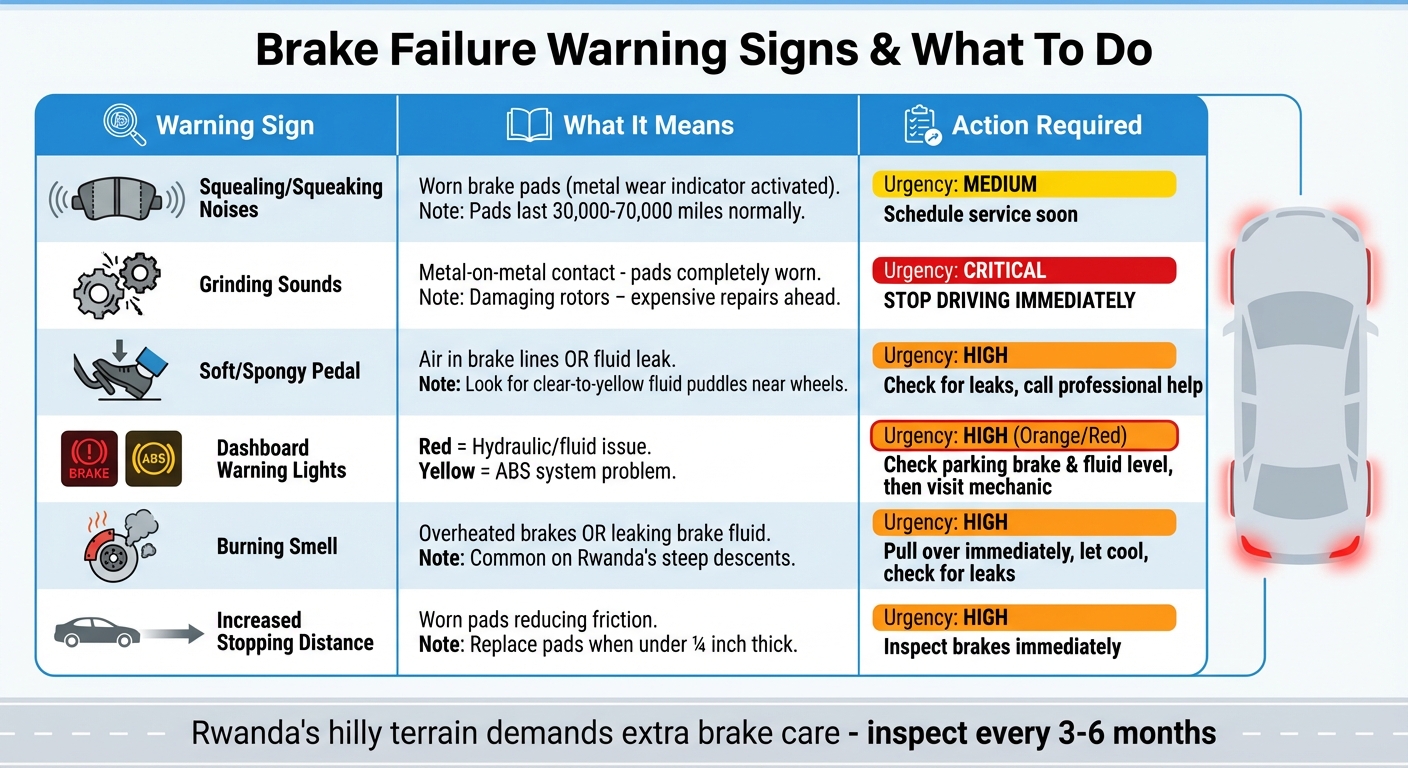
Brake Failure Warning Signs and Required Actions for Rwanda Drivers
Brake problems rarely appear without giving you some kind of heads-up. Recognizing these signals early can save you from dangerous situations and costly repairs. Here’s what to keep an eye (and ear) on when driving on Rwanda’s roads.
Unusual Noises When Braking
Strange sounds coming from your brakes are often the first sign of trouble.
Squealing or Squeaking
Modern brake pads are equipped with a small metal wear indicator that creates a high-pitched squeal when the pads have worn down. Magnus Sellén, a Certified Automotive Diagnostic Technician, explains:
"The most common symptom of bad brakes is noise. As the brake pads wear thin, you will start to hear a squeaking sound that is meant to get your attention".
If you hear this sound, it’s time to replace your pads. On average, brake pads last between 30,000 and 70,000 miles.
Grinding Sounds
A grinding noise is a clear sign that your brake pads are completely worn out, causing metal-on-metal contact between the backing plate and the rotor. Lithia Motors warns:
"If you hear a grinding sound and feel it in the brake pedal… your brake pads are completely worn, and you are grinding metal on metal".
At this stage, not only are you damaging the rotors, but your braking power is significantly reduced. If you hear grinding, stop driving as soon as it’s safe.
Scraping or Rattling
Scraping sounds often mean debris like small rocks or gravel has made its way into the brake assembly – a common issue on rough roads. If you notice this, have a mechanic check for and remove any trapped debris. You can also visually inspect your brake pads through the wheel spokes; if they’re thinner than ¼ inch (6.35 mm), it’s time for new ones.
| Noise Type | What It Means | Action Needed |
|---|---|---|
| Squealing/Squeaking | Worn brake pads (wear indicator) | Schedule service soon |
| Grinding | Metal-on-metal contact (worn pads) | Stop driving immediately |
| Scraping/Chirping | Debris trapped in brakes | Inspect and remove debris |
| Vibration/Pulsing | Warped or uneven rotors | Resurface or replace rotors |
Soft or Spongy Brake Pedal
A brake pedal that feels soft or spongy is a major red flag. It could mean air has entered the brake lines or there’s a leak in the brake fluid system. Since air compresses under pressure, it prevents the brake calipers from functioning properly.
If the pedal feels unusually soft or sinks to the floor, check for fluid leaks. Look for puddles of clear-to-yellow, oily liquid near the wheels or the master cylinder. Another possibility is overheating brake fluid, especially after repeated hard braking on long descents in Rwanda’s hilly regions. Overheated fluid can boil, forming gas bubbles that reduce braking power. If this happens, pull over immediately and call for professional help.
Dashboard Brake Warning Lights
Your dashboard lights are your vehicle’s way of alerting you to potential problems. A red brake warning light usually points to a serious hydraulic or fluid issue, while a yellow or orange ABS light signals a problem with the anti-lock braking system.
Start by checking the parking brake – sometimes the light stays on if it’s not fully disengaged. If the light persists, inspect the brake fluid reservoir. A low fluid level often triggers the warning light. Top it off with the manufacturer-recommended fluid, but have a mechanic check for leaks as soon as possible.
Modern vehicles also come with sensors that alert you when brake pads are nearing their limit. James Solomon, a training director at the National Safety Council, stresses:
"The braking system on your vehicle is critical in keeping you and your passengers alive and well and your vehicle out of the body shop".
If the red brake light stays on after checking the parking brake – or if it’s paired with a spongy pedal or longer stopping distances – stop driving immediately and get assistance. While a lit ABS light means your standard brakes still work, you’ve lost the anti-lock feature that prevents skidding during emergencies.
Burning Smell While Driving
A sharp, chemical burning odor after braking is a sign that your brakes are overheating. This often happens on long downhill drives where repeated braking generates excessive heat. Overheated brakes can develop a glazed surface that reduces their ability to grip effectively.
A burning smell might also indicate leaking brake fluid, which is flammable and has a distinct acrid odor. If you notice this, pull over immediately to let the brakes cool and check for leaks near the wheels and calipers. Continuing to drive under these conditions risks complete brake failure.
Increased Stopping Distance
If your vehicle takes longer than usual to stop, it’s a clear warning that something is wrong with your brakes. Worn brake pads provide less friction, which increases stopping distance – a serious hazard, especially on busy roads or steep descents.
Pay close attention to how much road you need to stop during everyday driving. If you find yourself pressing harder on the pedal or needing more distance to stop, have your brakes inspected immediately. Brake pads should be replaced when their friction material drops below ¼ inch (4/32 of an inch). Expect to pay between $300 and $500 per axle for replacement. Delaying repairs, however, could lead to rotor damage and total repair costs of $1,000 to $1,500.
What to Do If Your Brakes Fail While Driving
Brake failure can be a terrifying experience, but staying calm is key. Start by easing off the accelerator to let your vehicle slow down naturally. Many modern cars have dual braking systems, so press the brake pedal firmly and consistently (if it’s still functional). Turn on your hazard lights and use your horn to alert other drivers. From there, follow these steps to regain control and stop safely.
Pump the Brake Pedal
If your brake pedal feels soft or sinks to the floor, try pumping it. This can help build hydraulic pressure and restore some braking power in vehicles without ABS. If your car has ABS, though, avoid pumping the brakes. Instead, apply firm, steady pressure. ABS systems are designed to prevent wheel lockup, and pumping the brakes can interfere with their function.
Downshift to Lower Gears
Using your transmission to slow the car – known as engine braking – can be a lifesaver in this situation. For manual transmissions, press the clutch and shift down one gear at a time. For automatics, switch to "L", "3", or "2", or use paddle shifters if your vehicle has them. Be gradual and cautious – shifting too quickly into a low gear can cause the engine to over-rev or make the car skid. This method is especially useful on steep terrain.
Use the Parking Brake Carefully
The parking brake operates independently of the main hydraulic braking system, so it may still work even if your regular brakes fail. However, you must use it cautiously. Wait until your speed drops below 30 mph before engaging the parking brake. If your car has a manual parking brake, pull the lever slowly while holding the release button to prevent the wheels from locking. If your vehicle has an electronic parking brake, press and hold the activation button. If the car starts to skid, ease off the brake until you regain control, then reapply it gradually.
Signal and Pull Over Safely
Steer toward the right side of the road and look for a safe spot to stop, like a shoulder, grassy patch, or gravel area, which can help slow your vehicle naturally. Check your mirrors and blind spots before moving over. Keep the engine running to maintain power steering. If the car still won’t stop, use friction as a last resort – gently rub your tires against a curb or guardrail to slow down. Once you’ve come to a complete stop, keep your hazard lights on and call for roadside assistance. Don’t attempt to drive the car again, even if the brakes seem to work, until a professional has inspected the system.
sbb-itb-7bc66b5
Brake Maintenance Tips for Rwanda’s Driving Conditions
Rwanda’s hilly terrain and rainy seasons put extra strain on brake systems, making proper maintenance essential. Regular upkeep not only avoids costly repairs but also ensures safety, especially on steep descents. Vehicles operating in these challenging conditions demand extra care to keep brakes in top shape.
Schedule Regular Brake Inspections
If you frequently drive in mountainous areas, aim to inspect your brakes every 3–6 months. A good rule of thumb is to have your mechanic check the brake pads and rotors during each oil change. This is particularly important for vehicles navigating the steep climbs and sharp turns of the Northern Province. Don’t rely solely on mandatory inspections – address any warning signs, such as squealing noises or reduced braking power, as soon as they appear.
Monitor Brake Fluid Levels
Keep an eye on your brake fluid levels every 12,000 miles or during each oil change. Most vehicles have a translucent reservoir near the engine firewall with "full" and "low" markings, making it easy to check without opening the cap. Always use the type of fluid specified on the reservoir cap, typically DOT 3 or DOT 4. If the fluid level drops noticeably, it’s often a sign that your brake pads are wearing out and need professional attention. Before opening the cap, wipe it clean to prevent contamination. Plan to replace the brake fluid every 2 to 3 years, or around every 30,000 miles, as the heat generated by frequent hill braking can cause it to degrade more quickly.
Replace Brake Pads and Rotors as Needed
Under normal conditions, brake pads last between 30,000 and 70,000 miles. However, Rwanda’s constant hill braking can cause them to wear out in less than 20,000 miles. Replace your pads when the friction material measures less than 4/32 inch. You can check their thickness through the wheel spokes – if the metal squealer tab touches the rotor, it’s time for new pads. Also, inspect your rotors for signs of damage like grooves, cracks, or a shiny, glazed surface, which can indicate overheating. To reduce heat buildup on steep descents, rely on engine braking whenever possible.
Conclusion: Stay Safe with Proper Brake Care
Your brakes are the most important safety feature on your vehicle. Paying attention to warning signs like squealing noises, a soft or spongy brake pedal, dashboard warning lights, burning smells, or longer stopping distances can make all the difference between a minor fix and a dangerous situation.
Driving in Rwanda’s steep hills and winding roads puts extra stress on your brakes. Ignoring early warning signs doesn’t just jeopardize your safety – it can also turn simple, affordable repairs into costly ones. For example, that high-pitched squeal you hear is your brakes’ way of telling you they need attention. A soft pedal or your car pulling to one side during braking are also clear signals to visit a professional mechanic immediately.
This is why routine brake maintenance is so important. Make it a habit to inspect your brakes regularly, especially if you frequently drive in hilly or mountainous areas. Check your brake fluid every 12,000 miles, replace pads when they wear down to less than 1/4 inch, and never ignore dashboard alerts. In Rwanda’s challenging terrain, staying on top of brake care isn’t just smart – it’s necessary for your safety.
Taking proactive steps now can help you avoid emergencies later. Your safety – and the safety of everyone else on the road – relies on brakes that work exactly when you need them most.
FAQs
Why do I hear a grinding noise when I press the brakes?
If you notice a grinding noise when you press the brakes, it’s a strong indication that your brake pads are extremely worn. Once the pads wear down entirely, the metal backing begins to grind against the rotor. This not only damages the rotor but also compromises your vehicle’s ability to brake effectively. This is a problem that demands immediate attention to prevent further harm to your braking system and to ensure your safety.
Don’t wait – schedule an inspection with a reliable mechanic right away. Staying on top of brake maintenance can save you from expensive repairs and help keep your car safe on the road.
How often should I check my brakes when driving on Rwanda’s hilly roads?
Driving on Rwanda’s hilly roads can take a toll on your brakes, making regular inspections a must for your safety. Ideally, you should check your brakes once a month if you’re driving under normal conditions. But if you’re often navigating steep slopes or rough terrain, consider inspecting them more frequently to catch potential problems early.
Pay attention to warning signs like strange noises, a spongy brake pedal, reduced stopping power, or dashboard alerts. If anything feels off – or if your vehicle endures heavy use on challenging roads – don’t wait. Schedule an inspection immediately. Staying on top of brake maintenance can help prevent failures and keep you safe behind the wheel.
What should I do if my brakes stop working while driving?
If your brakes fail while driving, the most important thing to do is stay calm and avoid panic. Start by lifting your foot off the accelerator to allow the car to slow down naturally. Next, shift into a lower gear to take advantage of engine braking, which can help reduce your speed more gradually. If your vehicle is equipped with a parking brake, you can carefully engage it once your speed drops below 30 mph – this can still provide stopping power even if the main brakes aren’t working.
As your car slows, guide it toward the side of the road or another safe location. Turn on your hazard lights to warn other drivers and make your situation more visible. Avoid sudden actions like jerking the steering wheel or slamming the brakes, as these could cause you to lose control of the vehicle. Once you’ve come to a complete stop, contact roadside assistance and ensure a professional thoroughly inspects your brakes before you consider driving again.
Related Blog Posts
- 10 Common Road Signs in Rwanda
- Vehicle Inspection Checklist for Rwandan Drivers
- Top 7 most common car breakdowns in Rwanda (and how to avoid them)
- Common Car Maintenance Mistakes in Rwanda