There is a car maintenance task that most Rwandan drivers rarely think about until something goes wrong — and by then, it has already cost them money they did not need to spend. Wheel alignment is one of the quietest, most gradual, and most expensive forms of neglect a vehicle can suffer. Unlike a flat tyre or a dead battery, misalignment does not announce itself dramatically. Instead, it works silently in the background, chewing through your tyres, straining your steering components, and — most critically — compromising your safety on the road every single day.
In this article, we break down exactly what wheel alignment is, why it goes wrong, what the consequences are, and what you can do about it. Whether you navigate Kigali’s busy streets or drive long distances between Rwanda’s cities and towns, this guide is written for you.
For the latest automotive news, vehicle reviews, and practical driving tips for Rwandan roads, make sure to visit automag.rw — a trusted destination for everything car-related in Rwanda.
What Is Wheel Alignment, Exactly?
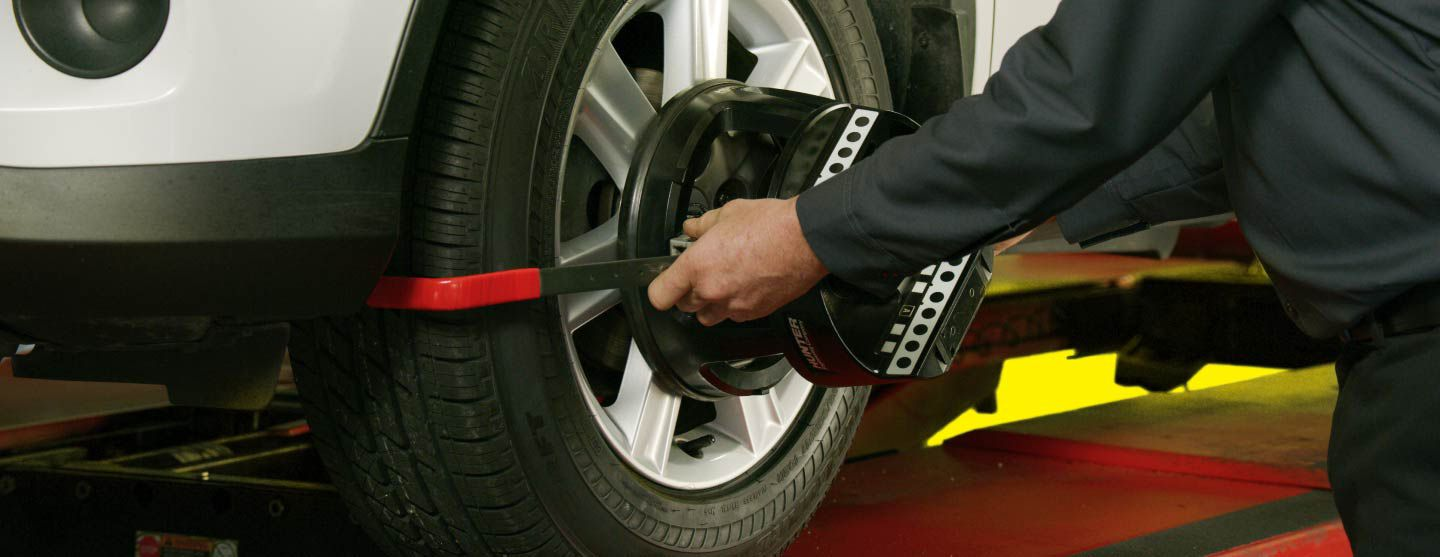
Wheel alignment — sometimes called tyre alignment or tracking — refers to the precise angle at which your tyres make contact with the road. It is not about the tyres themselves; it is about the suspension geometry, the system of arms, joints, and components that connects your wheels to your car’s body.
When your alignment is correct, all four tyres point in exactly the right directions and maintain the ideal contact patch with the road surface. When it is off — even by a small margin — your tyres no longer roll perfectly true. They scrub, drag, or pull, all of which creates uneven wear, increased rolling resistance, and unpredictable handling.
The Three Key Alignment Angles
Mechanics measure alignment using three main angles:
• Toe: The direction your tyres point when viewed from above — like looking down at your own feet. Toe-in means the fronts of the tyres angle slightly toward each other; toe-out means they angle away. Even tiny toe errors cause rapid tyre wear.
• Camber: The vertical tilt of the tyre when viewed from the front of the car. Negative camber means the top of the tyre leans inward; positive camber means it leans outward. Incorrect camber causes uneven wear on either the inner or outer tyre edges.
• Caster: The angle of the steering axis when viewed from the side. Caster mainly affects straight-line stability and steering feel. Incorrect caster can make a car pull to one side or feel unstable at speed.
A full four-wheel alignment check measures all of these angles on every wheel and compares them against your manufacturer’s specifications. Getting this done on a proper computerised alignment machine — not just a rough visual check — is the only way to know your alignment is truly correct.
Why Does Alignment Go Wrong? Common Causes in Rwanda
Alignment does not just deteriorate on its own. There is usually a trigger — and Rwandan roads, for all their improvements in recent years, still offer plenty of them:
• Potholes and speed bumps: Hitting a pothole or taking a speed bump too fast at the wrong angle is one of the most common causes of sudden misalignment. Rwanda’s urban and peri-urban roads still have enough of both to keep mechanics busy.
• Kerb strikes: Clipping a kerb while parking or taking a corner too tightly can immediately knock your front wheels out of alignment.
• Rough gravel or dirt roads: Extended driving on unpaved roads — common when accessing rural areas or construction zones — causes gradual wear on suspension joints and bushings, which slowly shifts alignment angles.
• Worn suspension or steering components: Ball joints, tie rod ends, control arm bushings, and wheel bearings all have finite lifespans. As they wear, they lose their ability to hold wheels in precise positions.
• Minor accidents: Even a low-speed collision — a light tap in a car park or a brush against a roadside barrier — can be enough to alter alignment.
• Tyre changes done incorrectly: If wheel bolts are not tightened evenly and to the correct torque, or if a spare tyre of a different size is fitted for too long, alignment can be affected.
⚠️ Rwanda-Specific Note: Drivers who frequently travel on routes with a mix of tarmac and unpaved sections — such as routes to national parks, border areas, or rural provinces — should check their alignment more frequently than the standard annual recommendation.
How Misalignment Destroys Your Tyres
Tyres are not cheap in Rwanda. A single decent-quality tyre for a mid-size sedan can cost between RWF 35,000 and RWF 100,000 or more, depending on the brand and size. When your alignment is off, you are not just wearing those tyres out — you are wearing them out unevenly and dramatically faster than you should be.
The Patterns of Misalignment Wear
• Feathering (sawtooth wear): Caused by toe misalignment. The tread blocks wear down sharply on one side and smoothly on the other, creating a feathered or sawtooth pattern across the tyre. You can feel this by running your hand across the tread.
• One-sided inner or outer wear: Caused by camber problems. One edge of the tyre wears much faster than the other. A tyre that should last 50,000 km may be dangerously worn on one edge at 20,000 km.
• Centre wear or shoulder wear: Can be caused by a combination of alignment and inflation issues. Correct inflation plus correct alignment gives the most even, longest-lasting tyre wear.
The maths is stark: a set of four tyres that should last 60,000 km under correct alignment might last only 25,000 to 30,000 km with persistent misalignment. Over the life of a vehicle, that could mean replacing two full sets of tyres more than you needed to — money that could have been saved with periodic alignment checks costing a fraction of that amount.
The Safety Consequences Nobody Talks About
Tyre wear is the cost you can see and measure. The safety consequences of misalignment are harder to quantify but arguably far more serious.
1. Reduced Braking Effectiveness
When tyres are not making full, even contact with the road surface, braking distances increase. A tyre worn unevenly on one edge has a reduced and compromised contact patch. In an emergency stop — the kind that happens suddenly and without warning — every centimetre of braking distance matters. Misaligned tyres can mean the difference between stopping in time and not.
2. Steering Pull and Driver Fatigue
A misaligned car constantly pulls to one side. On a short trip, this is an annoyance. On a long drive — say from Kigali to Musanze or Rubavu — it becomes genuinely dangerous. Drivers compensate by constantly correcting the steering wheel, which leads to fatigue. A fatigued driver on a mountain road at night is a serious risk, to themselves and to others.
3. Unpredictable Handling in Wet Conditions
Rwanda has two rainy seasons, and wet roads are a regular reality. Misaligned tyres with uneven wear have reduced ability to channel water away from the contact patch. This increases the risk of aquaplaning — where the tyre rides up on a film of water and loses contact with the road entirely, making steering and braking momentarily useless.
4. Suspension and Steering Component Stress
Misalignment does not just wear tyres. It puts abnormal stress on every connected component: tie rod ends, ball joints, wheel bearings, and even the steering rack. These components are significantly more expensive to replace than a tyre. A wheel bearing replacement, for example, can cost RWF 60,000 to RWF 200,000 or more. Alignment maintenance protects the entire system.
5. Increased Fuel Consumption
Tyres that are not rolling true create extra rolling resistance — your engine has to work harder to maintain the same speed. Depending on the severity of the misalignment, this can increase fuel consumption by 5 to 10 percent. With fuel prices in Rwanda being a significant running cost, this is money leaving your wallet at every fill-up.
Warning Signs Your Alignment Needs Checking
Here is what to watch and feel for:
• The car pulls to the left or right on a straight, level road when you release the steering wheel briefly
• The steering wheel sits off-centre (crooked) when you are driving straight
• You notice uneven tyre wear — one edge worn more than the other, or a feathered/sawtooth tread pattern
• The car vibrates or shudders through the steering wheel, especially at higher speeds
• Handling feels vague or imprecise — the car does not respond crisply when you steer
• Squealing tyres when cornering at normal speeds
• After hitting a significant pothole or kerb — even if nothing feels immediately different
�� Pro Tip: After any significant impact — a hard pothole, a kerb strike, or a minor collision — have your alignment checked even if the car still seems to drive fine. Misalignment can be subtle enough that you adapt to it without noticing, while the damage to your tyres and components accumulates.
How Often Should You Get Your Alignment Checked?
As a general rule, have your wheel alignment inspected:
• At least once every 12 months or every 15,000 to 20,000 km, whichever comes first
• After any significant impact — pothole, kerb strike, or minor accident
• When fitting a new set of tyres (always align before or alongside new tyre fitting)
• When any suspension or steering component is replaced
• If you notice any of the warning signs listed above
• After an extended period on rough unpaved roads
For drivers in Kigali’s congested traffic — where speed bumps, kerbs, and sudden stops are daily realities — an alignment check every 10,000 km is a sensible habit.
Alignment and Used Cars: What Buyers in Rwanda Need to Know
If you are buying a second-hand vehicle in Rwanda, wheel alignment should be near the top of your pre-purchase inspection checklist. Used cars — especially those imported from Japan, the UAE, or elsewhere — may have suffered impacts during their previous life that were never properly corrected. Even if the car looks great and drives acceptably, subtle misalignment could be silently destroying tyres from day one of your ownership.
Always ask for a pre-purchase mechanical inspection that includes a four-wheel alignment check. If the seller cannot provide this, factor alignment correction into your budget — it is typically a quick and affordable service once the car is yours.
If you are currently browsing for a quality pre-owned car in Rwanda, auto24.rw is a great place to start. Their listings include popular models like the Toyota RAV4, Subaru Forester, Honda Vezel, Mazda CX-5, and Toyota Prado — all detailed with key vehicle information so you can make a confident buying decision. Pair your purchase with a post-sale alignment check and you are off to the right start.
Electric Vehicles and Alignment: The Same Rules Apply
You might assume that electric vehicles are somehow exempt from alignment concerns — after all, they are a different kind of machine. But electric cars have wheels, suspension systems, and tyres just like any other vehicle, and they are just as susceptible to misalignment from potholes, kerbs, and worn components. In fact, because EVs are generally heavier than equivalent petrol cars (due to battery weight), correct alignment is arguably even more important for preserving their often-expensive tyres.
For drivers looking to explore sustainable mobility in Rwanda, EV24.africa offers import options for electric cars, expanding choices for eco-conscious drivers across Africa. If you do make the switch to electric, build alignment checks into your EV maintenance schedule just as you would for any conventional vehicle.
DIY vs. Professional Alignment: Know the Difference
It is worth being clear about this: wheel alignment is not a DIY job for the vast majority of drivers. Checking whether your car pulls slightly to one side, or eyeballing tyre wear, can give you clues — but actually setting alignment angles requires a computerised four-wheel alignment machine, calibrated reference points, and trained technicians who know how to interpret and adjust the readings.
What you can do yourself:
• Visually inspect your tyres for uneven wear patterns
• Notice and note any pulling, vibration, or steering wheel miscentring
• Check your tyre pressures regularly — incorrect inflation can mimic or compound alignment wear patterns
• Record when you last had an alignment check and track mileage since then
What requires a professional:
• Measuring toe, camber, and caster angles precisely
• Adjusting alignment to manufacturer specifications
• Identifying worn suspension components that need replacing before alignment can hold
• Verifying that all four wheels are correctly aligned relative to each other
In Kigali, reputable garages with modern alignment equipment are available. Always ask whether the garage uses a four-wheel laser or camera alignment system — older two-wheel systems only address the front axle and may miss rear alignment issues that are increasingly relevant on modern all-wheel drive and independent rear suspension vehicles.
What Does Wheel Alignment Cost in Rwanda?
The cost of an alignment check and adjustment is genuinely one of the best investments in car maintenance you can make, relative to what it protects. Here is a rough breakdown for the Rwandan market:
• Two-wheel (front) alignment check and adjustment: RWF 10,000 – RWF 20,000
• Four-wheel alignment check and adjustment: RWF 20,000 – RWF 40,000
• Alignment check only (no adjustment): RWF 5,000 – RWF 15,000 at most reputable garages
• Suspension component replacement (if needed before alignment): Varies significantly — tie rod ends from RWF 15,000, ball joints from RWF 20,000, wheel bearings from RWF 60,000
Compare that with the cost of a full set of tyres replaced prematurely, or a suspension repair caused by neglect, and the return on investment is clear.
Practical Alignment Maintenance Tips for Rwanda Drivers
• Set a calendar reminder: Mark your alignment check date and mileage so it does not slip through the cracks between other services.
• Pair it with other services: Alignment checks fit naturally alongside tyre rotation or an annual service — combine them to save time and trips to the garage.
• Maintain correct tyre pressure: Properly inflated tyres wear more evenly and help your alignment hold longer. Check pressures monthly.
• Rotate your tyres: Regular rotation (every 10,000 to 15,000 km) evening out wear across all four positions helps identify alignment issues early and extends tyre life.
• Drive thoughtfully: Slowing down for speed bumps, avoiding potholes where possible, and not mounting kerbs all reduce the frequency of alignment disruption.
• Inspect after any impact: Make it a personal rule — significant impact means alignment check. No exceptions.
Frequently Asked Questions (FAQs)
Q: Can I drive with bad alignment?
Technically yes — the car will still move. But every kilometre you drive with misalignment is accelerating tyre wear and increasing safety risk. There is no benefit to delaying correction, and the cost of doing so grows the longer you wait.
Q: Does alignment affect all four wheels or just the front?
Both axles matter. Front-wheel alignment directly affects steering feel and front tyre wear. Rear alignment affects straight-line stability and rear tyre wear. On modern vehicles with independent rear suspension — common on most Japanese imports popular in Rwanda — four-wheel alignment is the correct standard, not just a front-only check.
Q: How long does a wheel alignment take?
A standard four-wheel alignment check and adjustment at a well-equipped garage typically takes between 30 and 60 minutes. If suspension components need replacing first, additional time and cost will apply. It is worth calling ahead to confirm the garage has the right equipment and book a time slot.
Q: Will alignment fix my steering wheel being crooked?
In most cases, yes. A crooked steering wheel when driving straight is a classic symptom of alignment being off. After a proper alignment, the wheel should sit straight and centred. If it does not, there may be a steering column or component issue that requires separate attention.
Q: How do I know if a garage has done the alignment correctly?
A reputable garage should give you a printed alignment report showing the before and after readings for each angle on each wheel, compared against your manufacturer’s specifications. If a garage cannot provide this printout, consider whether their equipment is adequate for the job.
Q: Is alignment the same as balancing?
No — these are two different services, though they are often done together. Alignment corrects the angles at which your tyres meet the road. Balancing corrects uneven weight distribution in the tyre and wheel assembly, which causes vibration. Both matter, but they address different problems. If your car vibrates at highway speed but does not pull to one side, you likely need balancing. If it pulls but does not vibrate, you likely need alignment. If both, do both.
Q: My car is new — does it need alignment already?
New cars leave the factory with their alignment set correctly. However, even new vehicles can be knocked out of alignment during shipping or by the first significant pothole or kerb strike you encounter. It is not a bad habit to have your alignment checked after the first 10,000 km or at your first service, just to confirm everything has held correctly.
Q: Can worn tyres cause alignment problems, or is it the other way around?
Alignment problems cause uneven tyre wear — not the other way around. However, severely worn tyres can affect how accurately an alignment is measured and set. For this reason, if your tyres are very worn or unevenly worn, it is generally best to replace them first and then perform the alignment on the new tyres.
The Bottom Line: Alignment Is Not Optional
Wheel alignment is not a luxury service or an optional extra. It is fundamental maintenance that directly affects how long your tyres last, how much fuel you use, how safely your car handles in an emergency, and how much money you spend on suspension repairs. In a market like Rwanda — where tyres, fuel, and mechanical repairs all represent significant costs — getting your alignment right is one of the most cost-effective habits a driver can develop.
The rule is simple: check your alignment at least once a year, after any serious impact, and whenever you fit new tyres. The cost of the check is minimal. The cost of ignoring it keeps building, quietly, every single kilometre.
For more guides on keeping your car in top condition on Rwandan roads, visit automag.rw. And if you are looking for a reliable second-hand vehicle with a clean bill of mechanical health, explore the listings on auto24.rw — where you can find vehicles like the Toyota Aqua, Honda HR-V, Nissan X-Trail, and more, with the information you need to buy with confidence.