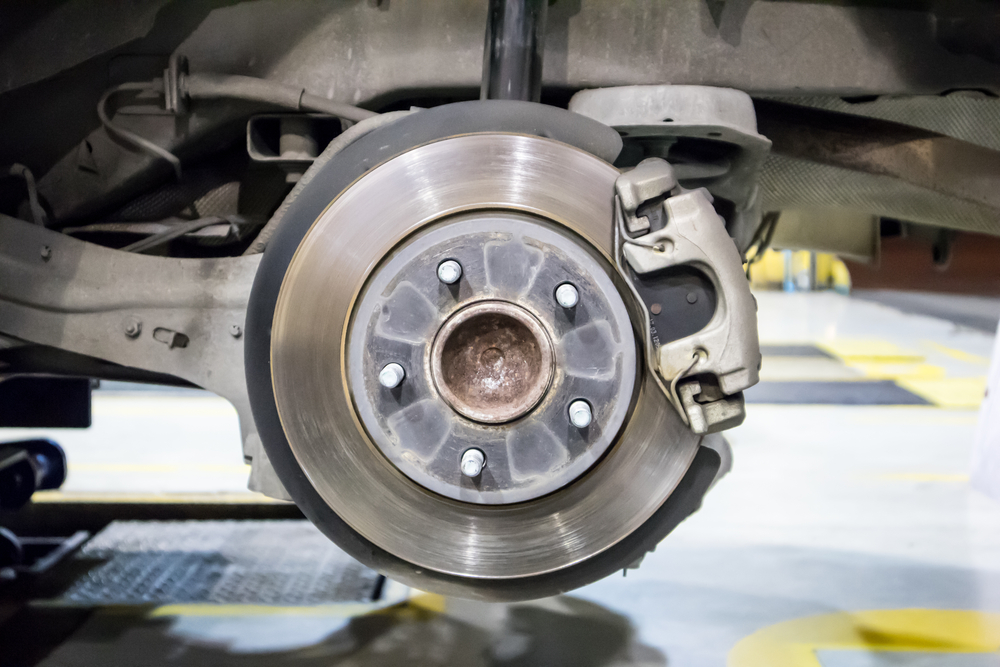
Here’s a number that surprises most drivers: how you drive can affect how long your brake pads last by as much as 40 to 60 percent. That means the difference between replacing your pads every year and stretching that same set to last a year and a half or more often comes down to nothing more than a few driving habits — no new parts, no special tools, no extra cost.
For Rwandan drivers, this matters more than it might elsewhere. Kigali’s hills, frequent traffic stops, and the wear and tear of unpaved or gravelled sections upcountry all put extra strain on brakes. The good news is that most of the damage isn’t caused by the roads themselves — it’s caused by how the brakes are used on those roads. Here’s exactly how to change that.
Why Braking Habits Matter So Much
Every time you brake, your car converts its forward motion into heat through friction between the brake pad and the rotor. The faster you’re going, the more energy has to be absorbed — and this relationship isn’t simple math, it’s exponential. Braking from 100 km/h generates roughly four times the heat of braking from 50 km/h. That heat is what wears pads down, and repeated hard, late braking from higher speeds is one of the single biggest reasons pads wear out faster than they should.
This is also why two drivers with identical cars, driving the same roads, can get very different lifespans out of the same set of brake pads. One brakes hard and late at every stop; the other reads the road ahead and slows down gradually. Over months of driving, that difference adds up significantly.
Habit 1: Brake Early, Not Hard
The single most effective change you can make is to stop waiting until the last moment to brake. Instead of approaching a junction or a slowing vehicle at speed and braking firmly close to the stop, lift off the accelerator as soon as you see the need to slow down, and let the car coast down in speed naturally before applying gentle, steady brake pressure.
This works because your pads arrive at the braking point with far less speed — and therefore far less heat — to deal with. On a typical approach to a red light or roundabout, easing off early rather than braking hard at the last second can cut the actual braking energy your pads need to absorb by a large margin, simply because you’re braking from a lower speed.
Habit 2: Keep Your Distance
Tailgating is one of the fastest ways to wear out a set of brake pads. Following too closely means you’re constantly forced into sudden, hard braking whenever the car ahead slows — which is exactly the high-heat, high-wear scenario that eats through pads quickly.
Leaving a generous following distance gives you room to slow down gradually rather than reactively, which naturally shifts your driving toward the gentler, more anticipatory braking style that protects your pads. This is especially useful in Kigali’s stop-and-go traffic, where sudden braking is common but rarely necessary if you’re watching the flow of traffic a few cars ahead rather than just the bumper in front of you.
Habit 3: Use Engine Braking on Hills
Rwanda’s terrain means most drivers are constantly climbing or descending, and long downhill stretches are one of the harder tests for any braking system. Riding the brake pedal continuously down a long hill generates sustained heat, which accelerates wear on pads, rotors, and even brake fluid.
Instead, shift into a lower gear before starting the descent (second or third gear, depending on the slope, or the equivalent “L” or manual mode setting in an automatic) and let the engine’s natural resistance do much of the slowing for you. This is engine braking, and it puts almost no wear on your brake pads at all. Reserve the brake pedal for adjusting your speed with light, intermittent pressure rather than constant contact.
Habit 4: Don’t Ride Two Pedals
Some drivers develop a habit of resting a foot lightly on the brake pedal while still accelerating, or keeping light, constant pressure on the brakes in slow traffic instead of coming to a full, clean stop. This is sometimes called “riding the brakes,” and it causes far more friction and wear over time than simply stopping completely and releasing the pedal.
If you anticipate needing to slow down but aren’t ready to brake yet, the better habit is to simply cover the brake — resting your foot near the pedal without pressing it — rather than applying constant light pressure.
Habit 5: Lighten the Load
The heavier your car, the more energy your brakes need to absorb to bring it to a stop, and the faster your pads wear down. If you regularly drive with unnecessary weight in the boot, or overload the car for trips, your brakes are working harder than they need to on every single stop.
Clear out anything you don’t need to be carrying regularly. It’s a small change, but it reduces strain on your brakes (and improves fuel economy as a bonus) every time you drive.
Routine Maintenance That Supports These Habits
Good driving habits do most of the work, but a few maintenance basics keep everything working as it should:
- Check brake fluid condition periodically. Old or contaminated brake fluid can affect braking performance and contribute to uneven wear.
- Have pads and rotors inspected at every service, and don’t wait for a squeal or grinding noise to have them checked.
- Maintain correct tyre pressure. Under-inflated tyres increase the distance and effort needed to stop, which puts more strain on your pads with every application.
- Get to know your specific vehicle’s engine braking options, whether that’s a manual gearbox, a “2” or “L” setting on an automatic, or paddle shifters — this varies by model and is worth understanding before you need it on a long descent.
If you’re shopping for a vehicle that’s a little kinder to its brakes by design — lighter weight, well-maintained braking components, or simply a car with a documented service history — it’s worth browsing what’s currently available on https://auto24.rw” target=”_blank” rel=”noopener”>auto24.rw</a>. Models like the Toyota Vitz, Premio, or Axio tend to be gentler on brake components than heavier SUVs, and checking a car’s brake condition and service records before buying is one of the easiest ways to avoid inheriting someone else’s worn-down braking system.
For more Rwanda-specific maintenance advice and driving tips that help your car go the distance, automag.rw has a growing library of guides worth exploring.
A Note on Electric Vehicles and Brake Wear
One of the quieter advantages of electric vehicles is how little their brake pads actually get used. Most EVs rely on regenerative braking, which slows the car by feeding energy back into the battery the moment you lift off the accelerator, meaning the physical brake pads are only called on for harder stops. This can extend pad life dramatically compared to a conventional petrol or diesel car. For Rwandan drivers curious about this shift, <a href=”https://ev24.africa” target=”_blank” rel=”noopener”>EV24.africa</a> offers import options for electric vehicles, expanding the choices available locally as interest in lower-maintenance driving continues to grow across the region.
Final Thoughts
Extending your brake pad life doesn’t require an expensive upgrade or a trip to the mechanic — it starts with how you approach every single stop. Brake earlier and more gently, keep a safe following distance, let your engine help on hills, avoid riding two pedals at once, and keep unnecessary weight out of the car. None of these habits cost anything, but together they can meaningfully change how often you’re paying for new brake pads — and how safely your car handles Rwanda’s roads in the meantime.