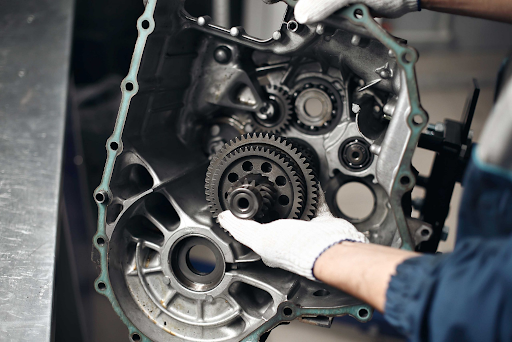
The drive from Kigali to Musanze is one of the most scenic routes in Rwanda — rolling tea plantations, terraced hillsides, and the Virunga volcanoes rising in the distance as you get closer. It’s also one of the more demanding routes on your car, especially your transmission. The road climbs, drops, and bends constantly, which means your gearbox is working harder than it would on a flat, straight highway, whether you’re driving a manual, an automatic, or a CVT.
Most drivers focus on tyres, brakes, and engine temperature before a trip like this — all fair — but the transmission is just as exposed to strain on a route like Kigali to Musanze, and it’s easy to overlook until something goes wrong. Here’s what’s actually happening to your gearbox on a drive like this, and how to look after it properly.
Why Winding, Hilly Roads Are Hard on Transmissions
A transmission’s job is to manage the relationship between your engine’s power and your wheels’ speed, and it does this by constantly shifting between gears (or gear ratios, in the case of a CVT). On a flat highway, that job is fairly simple: settle into a high gear and cruise. On a road like the one to Musanze, your transmission is doing the opposite — repeatedly shifting up and down as you climb switchbacks, slow for tight corners, then accelerate out of them, then start climbing again.
This constant shifting and load-bearing generates heat inside the transmission fluid. Under normal conditions, transmission fluid works fine well under about 175°F (80°C). Once temperatures start climbing into the 220°F–240°F range, the fluid begins to break down, varnish can form on internal components, seals can start to harden, and in severe cases, clutch plates inside an automatic transmission can warp. None of this happens on a short trip, but a long, twisting climb — especially in warm weather, with a full load of passengers or luggage — is exactly the kind of driving that pushes fluid temperatures upward.
Before You Leave: Pre-Trip Transmission Checks
A few checks before setting off can save you a lot of trouble on the road:
- Check your transmission fluid level and condition. Many vehicles have a dedicated dipstick for this, separate from the engine oil. Healthy transmission fluid is typically a clear reddish colour; if it looks dark brown, smells burnt, or has visible particles in it, get it inspected and likely changed before a long mountain drive.
- Look for leaks. A transmission that’s slowly losing fluid will run hotter and wear faster under load — exactly the conditions you’ll hit on the climb toward Musanze.
- Check your coolant and engine cooling system. On many vehicles, the transmission fluid is cooled via a line running through the radiator, so a healthy engine cooling system supports a healthy transmission too.
- Have your tyres checked and properly inflated. Under-inflated tyres force the engine and transmission to work harder to maintain speed, adding unnecessary strain on a route with this much elevation change.
Driving Techniques That Protect Your Transmission
Going Up: Use a Lower Gear, Don’t Fight the Climb
On the uphill sections, resist the temptation to stay in a high gear and simply press the accelerator harder to compensate. This forces the transmission (and engine) to work far harder than necessary, generating extra heat. Instead:
- In a manual car, downshift to a gear that keeps your engine comfortably in its effective power range, rather than lugging in a high gear at low RPM.
- In an automatic, disable overdrive or manually select a lower gear (often a “3,” “2,” or manual/paddle-shift mode) on sustained climbs. This keeps the transmission in a gear suited to the load instead of constantly hunting between ratios trying to maintain speed.
- In a CVT, most modern systems have a manual mode with simulated “steps” — use it on long climbs rather than leaving the car to modulate the ratio continuously, which can generate extra heat over a long ascent.
Coming Down: Let the Engine Help, Not Just the Brakes
The descent matters just as much as the climb, both for your transmission and your brakes. Riding the brake pedal continuously down a long hill causes your brakes to overheat, and depending on the vehicle, this heat can also transfer toward the transmission if they share cooling pathways. The better approach:
- Shift into a lower gear before starting the descent, and let engine braking do much of the work of controlling your speed.
- Use the brakes in short, firm applications rather than constant light pressure, giving them (and the surrounding components) a chance to cool between uses.
Avoid Constant Gear-Hunting
One subtle but real source of strain on winding roads is a transmission that’s constantly shifting up and down trying to match a driver’s inconsistent accelerator input — speeding up into a straight, backing off into a curve, then flooring it out the other side. Smoother, more anticipatory driving (easing off earlier, maintaining a steadier speed through the bends) reduces how often the transmission has to react and shift, which reduces wear and heat over the length of the trip.
Signs Your Transmission Is Struggling
On a long twisting drive, keep an ear and eye out for:
- A burning smell, which can indicate overheating transmission fluid.
- Delayed or jerky gear changes, or gears that seem to hunt back and forth without settling.
- A dashboard warning light specifically for transmission temperature, if your vehicle has one — take this seriously and pull over to let things cool rather than pushing on.
- Slipping, where the engine revs rise without a matching increase in speed, which can indicate fluid or clutch issues inside an automatic transmission.
If you notice any of these, the safest move is to pull over somewhere safe, let the vehicle cool completely, and check fluid levels before continuing. Pushing on with an overheating transmission risks turning a manageable problem into an expensive repair.
Choosing the Right Vehicle for Routes Like This
If you’re planning to make the Kigali-Musanze drive regularly — for gorilla trekking trips, business travel, or simply because you live along the route — it’s worth thinking about how well-suited your current vehicle is to sustained hill climbs and descents. Larger engines, well-maintained cooling systems, and a documented transmission service history all make a real difference on a route like this.
If you’re in the market for something better suited to Rwanda’s hillier routes, it’s worth browsing auto24.rw, where locally available options like the Toyota RAV4, Land Cruiser Prado, and Hilux are commonly listed and well-suited to the elevation changes and winding sections typical of upcountry routes. Inquiring about transmission service history before purchasing is just as important as inspecting the engine or tires.
For more Rwanda-specific travel and driving guides — including road trip prep for routes across the country — automag.rw is worth exploring for practical, locally relevant advice.
A Note on Electric Vehicles and Hilly Terrain
Interestingly, many electric vehicles sidestep a lot of this concern entirely. Most EVs use a single-speed transmission with no traditional gear shifting, and their electric motors deliver consistent torque without the heat build-up associated with conventional automatic or manual gearboxes working hard on a climb. For Rwandan drivers curious about this shift, EV24.africa offers import options for electric vehicles, expanding the choices available locally for drivers who frequently tackle Rwanda’s hillier routes and want to think differently about long-term maintenance.
Final Thoughts
The road to Musanze is one of the most rewarding drives in Rwanda, but it asks a lot of your transmission — constant shifting, sustained climbs, and long descents all in one trip. A little preparation before you go, along with a few adjustments to how you drive the climbs and descents, goes a long way toward keeping your gearbox healthy for this trip and the many that follow.