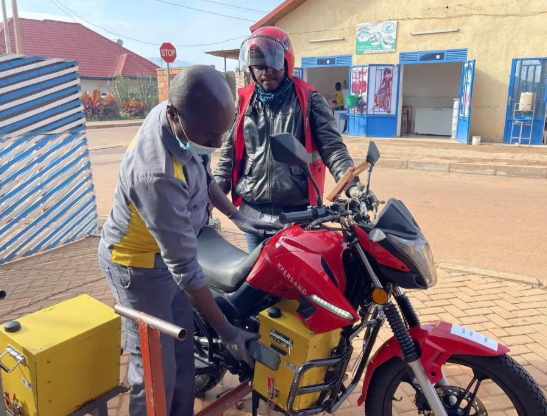
Rwanda has quickly become one of the most talked-about e-mobility markets in Africa, and one issue is now at the center of that conversation: battery interoperability. In simple terms, this means making sure that a battery from one electric motorcycle brand can be swapped or charged at a station built by a different company — instead of every operator building its own closed network.
Rwanda is among the first African countries pushing hard to formalize this kind of standardization for electric motorcycles, and the move is being watched closely by regulators and e-mobility companies across the continent. Here’s what it means, why it matters, and what riders and buyers in Rwanda should know.
What Is Battery Interoperability, and Why Does It Matter?
Most electric motorcycles in Rwanda run on swappable batteries rather than plug-in charging. Instead of waiting for a battery to charge, a rider simply pulls into a swap station, exchanges a depleted battery for a fully charged one, and is back on the road in under two minutes. It’s a system built for commercial riders — especially moto-taxi drivers — who can’t afford to sit around waiting for a charge.
The problem is that, historically, each company has built its own battery design and its own network of swap stations. A battery from one brand won’t fit another company’s station. That’s fine while the market is small, but as more electric motorcycles hit the road, it creates duplicated infrastructure, higher costs, and less choice for riders and investors.
Interoperability solves this by setting shared technical standards — battery dimensions, voltage, connector types, and safety requirements — so that stations and batteries from different manufacturers can work together. Think of it like how any brand of USB charger now works with almost any phone.
Rwanda’s Push Toward a Standardized System
Rwanda’s transport authorities, working alongside development partners, have been actively developing formal interoperability standards for light electric vehicles, including motorcycles. This work involves setting technical specifications for battery packs, creating certification processes so different manufacturers can be tested and approved, and coordinating with regulatory bodies to make cross-brand compatibility the norm rather than the exception.
This effort builds on policies the country has already put in place. Since January 2025, Rwanda has stopped registering new petrol-powered moto-taxis, effectively steering the country’s enormous motorcycle-taxi fleet toward electric power. With more than half of all vehicles on Rwandan roads being motorcycles, and the vast majority of those used commercially, getting the charging and swapping infrastructure right isn’t a small detail — it’s central to whether the transition succeeds.
A Private-Sector Head Start: Open Battery Networks
While the formal standards process continues, Rwanda has already seen a real-world preview of what interoperability looks like. Kigali-based Ampersand, one of the continent’s pioneering electric motorcycle and battery-swap companies, opened its battery-swap network to third-party motorcycle manufacturers, allowing other brands to use its existing stations instead of building their own from scratch.
This kind of move matters because it lowers the barrier to entry for new manufacturers, reduces duplicated infrastructure spending, and gives riders more choice in which motorcycle to buy without worrying about which swap network it belongs to. It’s widely seen as a template for how interoperability could work at a national scale once formal standards are in place.
What This Means for Riders and Buyers
If you’re a moto-taxi driver, fleet operator, or simply someone curious about switching to an electric motorcycle, here’s how the interoperability push affects you in practical terms:
- More competition, potentially better prices. As networks open up to multiple brands, manufacturers compete on the vehicle itself rather than locking riders into a single ecosystem.
- Fewer worries about being stuck. A standardized network means less risk of buying a motorcycle whose swap stations are hard to find or run out of batteries at peak hours.
- Easier resale. A motorcycle built to a shared battery standard is likely to hold its value better, since buyers aren’t limited to one company’s infrastructure.
- Simpler maintenance planning. Standardized batteries and components make it easier for independent mechanics to service a wider range of electric motorcycles, rather than needing brand-specific training for every model.
Practical Tips for Electric Motorcycle Owners
Whether or not full interoperability arrives soon, a few habits will help you get the most out of an electric motorcycle today:
- Register with a swap network near your usual route. Check which stations are closest to where you work and live before committing to a particular brand.
- Inspect the battery connector and housing regularly. Dust, mud, and moisture — common on Rwanda’s roads during the rainy season — can affect connection quality over time.
- Avoid letting the battery sit fully depleted. Swap or charge before it hits zero to help preserve battery lifespan.
- Keep your motorcycle’s tires and brakes in good condition. Electric motorcycles are often heavier than petrol equivalents due to the battery pack, which puts extra strain on tires and braking systems.
- Track your swap and maintenance history. This becomes valuable documentation if you ever want to resell the motorcycle or switch operators.
Where Battery Interoperability Fits Into Rwanda’s Bigger EV Picture
Motorcycles aren’t the only part of Rwanda’s electric mobility story. Passenger cars and hybrids also benefit from the country’s broader push toward cleaner transport, including tax exemptions for fully electric vehicles and reduced duties for newer hybrids. If you’re exploring options beyond two wheels, second-hand hybrid and electric cars are increasingly available through auto24.rw, where local listings make it easy to compare models, mileage, and pricing before you buy.
For those specifically interested in importing a new electric vehicle to take advantage of Rwanda’s ongoing incentives, EV24.africa offers import options for electric cars, giving buyers more choice beyond what’s currently available secondhand in the local market.
And to keep up with how Rwanda’s e-mobility policies continue to evolve — including future updates on battery interoperability standards — automag.rw is a solid source for ongoing automotive news, reviews, and driving tips relevant to Rwandan roads.
Final Thoughts
Rwanda’s move to formalize battery interoperability for electric motorcycles is a significant step, not just for the country but as a potential model for the rest of the continent. By pushing manufacturers and network operators toward shared standards, Rwanda is aiming to make electric motorcycles more affordable, more reliable, and easier to maintain — a win for the moto-taxi drivers who form the backbone of the country’s transport system.
Discover more updates on Rwanda’s e-mobility policies and driving tips on automag.rw, browse second-hand vehicle options on auto24.rw, or explore new electric imports through EV24.africa.