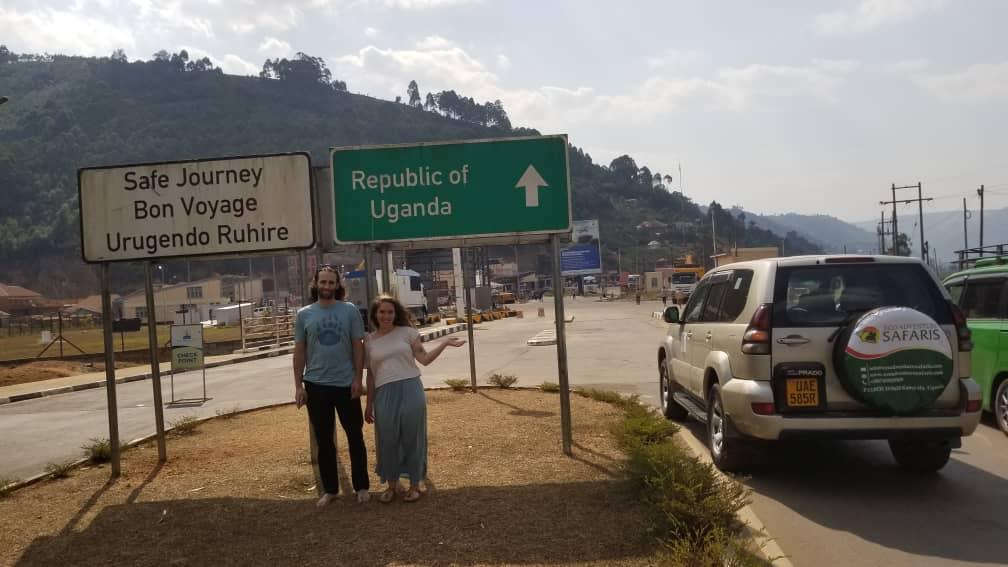
The Kigali to Kampala corridor is one of the busiest and most commercially important road routes in the East African Community. Every day, trucks, buses, minibuses, and private vehicles roll out of Rwanda’s capital heading north and west — through Musanze, past the Virunga foothills, and on toward the Kagitumba or Katuna border crossings into Uganda. For many drivers and transport operators, this journey is routine. For their vehicles, it is anything but.
The Rwanda–Uganda route combines multiple road environments into a single demanding journey: urban traffic in Kigali, long stretches of open highway, mountainous terrain with sustained climbs and descents, and in some sections, roads that are still unpaved or under construction. It covers anywhere from 330 to 500 kilometres depending on the route taken, and it crosses international borders where a vehicle with a mechanical failure or missing documentation can be held up for hours — or days.
A thorough pre-trip inspection is not just a best practice for cross-border hauls — it is an essential safeguard for the driver, the cargo, the business, and every other road user along the route. This guide covers every aspect of what that inspection should include, from mechanical checks to the documentation that border officials will expect to see.
For more driving guides, vehicle tips, and automotive news relevant to Rwandan roads and cross-border travel, visit automag.rw — Rwanda’s trusted automotive resource for drivers and enthusiasts.
Understanding What the Route Demands of Your Vehicle
Before running through the inspection checklist, it is worth understanding what the Rwanda-to-Uganda journey actually puts your vehicle through. This context shapes the inspection priorities.
Distance and Duration
From Kigali to Kampala via Kagitumba (the northern border crossing through Gatuna), the journey is approximately 500 kilometres and takes between 7 and 10 hours of driving time, depending on road conditions, traffic, and border processing. Via Katuna (the southern route through Cyanika or Kisoro), the distance is similar. Drivers on this route must be prepared for a full day of sustained driving — which demands a vehicle in genuinely good mechanical health, not just one that appears road-worthy for a short city trip.
Terrain Variety
The route passes through several distinct terrain types. Kigali’s hills demand confident brakes and good steering response in heavy traffic. The climb through the Northern Province toward Musanze and Cyanika involves long ascents that test the cooling system and transmission. Open stretches near the Ugandan border can involve higher sustained speeds that stress tyres and wheel bearings. Drivers need a vehicle that is competent across all of these, not just one or two.
Weather Variability
Rwanda’s two rainy seasons mean that cross-border drivers frequently encounter wet roads, especially in the highlands. Rain combined with steep gradients demands reliable brakes, good tyres with adequate tread depth, and effective windscreen wipers. Planning a trip during the dry season does not guarantee dry roads on the day, particularly in the Northern Province where localised rain is common even outside the main wet seasons.
Border Crossing Requirements
Both the Kagitumba-Mirama Hills and Katuna-Katuna border crossings require vehicles to be roadworthy and properly documented. Ugandan traffic authorities can inspect vehicles at the border or at weighbridges on the Ugandan side. A vehicle with clearly worn tyres, defective lights, or missing safety equipment is liable to be turned back or fined — causing delays that cost money and erode business relationships.
��️ Route Planning Note: The northern route via Kagitumba (Gatuna border) is generally faster for cargo trucks and is the preferred freight corridor. The southern Katuna route is more commonly used by private vehicles and smaller operators. Both routes have different road quality sections — research current road conditions before departure, as construction and improvement works can affect journey times significantly.
The Mechanical Pre-Trip Inspection: What to Check
This is the core of any cross-border preparation. Run through every item on this list at least 24 to 48 hours before departure — not on the morning you leave. If something needs a repair, you want time to get it done properly before the trip, not a rushed fix or a decision to proceed with a known problem.
1. Engine Oil — Level and Condition
Check the engine oil level using the dipstick with the engine cold and the vehicle on level ground. The oil should sit between the minimum and maximum marks. If it is low, top up with the correct grade for your engine (check the owner’s manual or the oil filler cap).
Equally important is the condition of the oil. Pull out the dipstick and wipe it on a white rag. Fresh oil is amber-coloured and translucent. Old oil is dark brown or black. Oil that looks milky or frothy indicates coolant contamination — a sign of a serious problem like a blown head gasket that must be fixed before any long journey. Do not proceed if the oil is milky.
If the oil is due for a change based on mileage, change it before the trip — not after. Running an engine on overdue oil across 500 kilometres of varied terrain is asking for avoidable damage.
2. Coolant — Level and Condition
Check the coolant level in the expansion tank when the engine is cold. It should sit between the minimum and maximum marks. Top up with the correct antifreeze-water mixture if needed — not plain water, which boils at a lower temperature and corrodes the system.
Inspect the coolant colour. It should be clear and brightly coloured (green, blue, orange, or pink depending on type). Rusty or brown coolant has degraded and should be flushed before a demanding long-distance journey. Check the main radiator hoses for cracks, soft spots, or bulging — these hoses can fail under the sustained high-load conditions of mountain driving en route to Uganda.
3. Brake System — Fluid, Pads, and Response
Brake failure is a vehicle emergency under any circumstances. On a loaded truck or bus descending a mountain pass with traffic on both sides of the road, it is catastrophic. Brake inspection before a cross-border haul is non-negotiable.
Check the brake fluid level in the reservoir. It should be at or near the maximum mark. If it is significantly low, the likely cause is brake pad wear (as pads wear down, the calliper pistons extend further, drawing more fluid from the reservoir) — which means the pads themselves need immediate inspection. Have a mechanic remove the wheels and inspect pad thickness on all four corners. Front pads should have at least 3mm of friction material remaining; rear pads at least 2mm. Below these thresholds, the pads need replacing before departure.
Brake fluid also absorbs moisture over time, which lowers its boiling point. For vehicles that haul heavy loads or drive mountainous routes frequently, a brake fluid change (every two years or as the vehicle’s manual specifies) helps prevent brake fade on long descents.
On the morning of departure, pump the brake pedal several times before moving. It should feel firm and consistent — not spongy or slowly sinking toward the floor. A spongy pedal indicates air in the brake lines, which requires bleeding before the journey proceeds.
4. Tyres — Pressure, Tread, and Condition
Tyres are the only contact point between your vehicle and the road. For a 500-kilometre cross-border journey, their condition is critical.
Check tyre pressure in all four tyres plus the spare when the tyres are cold (not after driving). The correct pressure is listed on the sticker inside the driver’s door jamb or in the owner’s manual. For loaded vehicles — trucks, pickup trucks, or SUVs with cargo — the rear tyre pressure often needs to be higher when loaded. Correct pressure for the load you are carrying is important; under-inflated tyres on a loaded vehicle generate excessive heat and are at high risk of blowout on long highway sections.
Inspect tread depth on all tyres. Rwanda’s legal minimum is 1.6mm, but for safe long-distance driving — especially in wet conditions — 3mm is a more realistic practical minimum. Use a tread depth gauge or the legal-minimum indicator bars moulded into the tyre grooves. If any tyre is at or near the legal limit, replace it before the trip.
Look at each tyre for visible damage: cuts in the sidewall, bulges or bubbles (which indicate internal structural failure and are extremely dangerous at highway speed), cracking in the rubber from age or UV exposure, and any embedded objects like stones or nails. A sidewall bulge or deep cut means the tyre must be replaced — no exceptions.
Finally, inspect the spare tyre. Verify it is inflated to the correct pressure and is in serviceable condition. A flat or damaged spare is no help at all when you need it most on a remote section of road.
5. Lights — All of Them
A complete lighting check is straightforward and takes only a few minutes. Turn on each lighting circuit and walk around the vehicle to verify that every light functions correctly:
• Headlights: Both low beam and high beam on both sides
• Tail lights and brake lights: Have someone press the brake pedal while you check from behind
• Indicators: All four corners, front and rear
• Hazard lights: Full four-way flash
• Reversing lights: Engage reverse gear to test
• Number plate light: Required by law and checked at borders
• Fog lights (if fitted): Particularly useful in highland mist near the Ugandan border
Replace any blown bulb before departure. Driving at night with a defective light is both illegal and dangerous. For older vehicles, carry spare bulbs in the tool kit — replacing a bulb on the road is a two-minute job if you have the spare.
6. Windscreen and Wipers
The windscreen must be clean and free of cracks or chips that obstruct the driver’s line of sight. A crack in the driver’s field of vision is grounds for failing a roadworthiness check at the border. If there is a minor chip in a non-critical area, monitor it — chips can spread into full cracks from temperature changes and road vibration on a long journey.
Test the windscreen wipers on both speeds and check that the washer fluid reservoir is full. On the highland sections of the route near Musanze and toward the Ugandan border, mist and rain are common even in the dry season. Worn wiper blades that smear rather than clear are a visibility hazard. Replace them if the rubber is cracked, split, or no longer making clean contact with the glass.
7. Steering and Suspension
At highway speeds and on mountain sections, steering precision and suspension stability are safety-critical. Before departure, check for these warning signs that indicate a problem requiring professional attention:
• The steering wheel has excessive play — you can move it several centimetres before the wheels respond
• The vehicle pulls noticeably to one side when driving straight on a flat road
• You hear clunking or knocking from the suspension when going over bumps or during slow-speed manoeuvres in the yard
• The vehicle bounces excessively after going over a bump — push down on each corner of the car and release; it should settle after one or two oscillations, not continue bouncing
• Vibration through the steering wheel at highway speeds, which can indicate worn wheel bearings, unbalanced tyres, or damaged CV joints
Any of these symptoms requires a mechanic’s attention before the trip. Steering and suspension faults that are manageable in slow city traffic become dangerous at highway speeds and on mountain descents.
8. Transmission and Drivetrain
Check the transmission fluid level and condition (see your owner’s manual for the correct procedure, as it varies by vehicle). Burnt-smelling or very dark transmission fluid on a vehicle that will haul loads up mountain passes is a warning sign — the fluid may not have the thermal capacity to handle the journey without transmission damage.
For 4WD vehicles and trucks, check transfer case oil and differential oil levels. These are less frequently inspected than engine oil but are just as important for vehicles operating under load on varied terrain. Listen for any whining or grinding from the drivetrain during a test drive before departure.
9. Battery and Alternator
A cross-border haul that runs into the night — common for long freight journeys — relies entirely on a functioning battery and alternator. Have the battery tested if it is more than three years old or has been showing signs of weakness (slow cranking, needing jump-starts). Clean any corrosion from the terminals and ensure the connections are tight. Check that the alternator belt is in good condition and correctly tensioned — a snapped alternator belt on a remote section of road means a battery that drains without being recharged, and eventually a vehicle that stops.
10. Fuel System and Range
Fill the fuel tank before departure. Do not rely on finding a station at a convenient point along the route — fuel availability on some sections of the northern Rwanda corridor can be limited, and prices near the border may be higher. Know your vehicle’s fuel consumption under load and calculate whether a full tank will cover the journey, or identify specific reliable stations along the route for top-ups.
While fuelling, check for any fuel smell around the engine bay or under the vehicle. A fuel leak — even a slow one — is a fire risk that must be repaired before any journey begins.
⚠️ Load Distribution Matters: For trucks and heavily loaded vehicles, correct load distribution is part of vehicle safety. An unbalanced load shifts the vehicle’s centre of gravity, affects braking distance, puts uneven stress on tyres and suspension, and can make the vehicle unstable on mountain bends. Ensure cargo is properly secured and balanced before departure.
Documentation: What You Must Carry for the Rwanda–Uganda Border
A mechanically perfect vehicle can still be stopped at the border if its documentation is not in order. Border crossings on the Rwanda–Uganda corridor are generally efficient — but only for vehicles and drivers who have prepared properly. Missing or expired documents cause delays that can stretch from hours to days.
For All Drivers and Vehicles
• Valid driving licence: A Rwanda driving licence is recognised in Uganda. An International Driving Permit (IDP) is advisable for private vehicles and is strongly recommended if you travel this route regularly. Ensure the licence covers the class of vehicle being driven.
• Vehicle registration certificate (logbook): The original logbook must be carried. Photocopies are not accepted at most border crossings.
• Valid third-party insurance covering Uganda: Rwanda insurance policies do not automatically extend to Uganda. You will need a Yellow Card (COMESA Third Party Motor Vehicle Insurance Certificate) or a Uganda-specific extension. This is available from major insurers in Rwanda and at the border, though purchasing it in advance is faster and usually cheaper.
• Vehicle roadworthiness certificate (Visite Technique): Issued by RURA (Rwanda Utilities Regulatory Authority) following a mechanical inspection. This must be valid and current.
• Passport or valid travel document: East African Community citizens can cross with a national ID. Confirm current requirements as policies evolve.
For Commercial Vehicles and Cargo Trucks
• Goods manifest / waybill: A full description of the cargo, its quantity, weight, and declared value. Customs officers on both sides will check this.
• Import/export permits (where applicable): Certain categories of goods require permits issued by relevant ministries.
• Axle load permit: Uganda enforces axle load limits strictly. Vehicles found overloaded at Ugandan weighbridges face significant fines and are required to offload excess cargo before proceeding.
• Transit bond documentation (for transit cargo): If the cargo is in transit to a third country (such as the DRC or South Sudan via Uganda), a transit bond is required.
• Driver’s medical certificate (for PSV and heavy trucks): Commercial drivers may be required to produce a valid medical fitness certificate.
�� Advance Preparation: Gather all documentation at least 48 hours before departure and organise it in a clearly labelled folder. Check expiry dates carefully — an insurance certificate that expired last week is as useless as no certificate at all. If anything needs renewal, allow adequate time to process it through the relevant authority.
Mandatory and Recommended Safety Equipment
Beyond the vehicle itself and its documentation, certain safety equipment is required by law in Rwanda and Uganda, and additional items are strongly advisable for long cross-border hauls.
Legally Required
• Reflective warning triangles: A minimum of two, placed behind the vehicle in case of a breakdown or accident. Rwanda and Uganda both require these.
• Fire extinguisher: Required for commercial vehicles. Strongly advisable for all vehicles on long journeys. Ensure it is within its service date and the driver knows how to operate it.
• First aid kit: Required for public service vehicles and advisable for all long-distance drivers.
• Reflective vest: For the driver to wear when exiting the vehicle on the roadside.
Strongly Recommended
• Spare tyre (in good condition and correctly inflated): Covered in the tyre inspection section above — ensure it is ready for actual use, not just present in the boot.
• Tyre jack and wheel brace: Verify they are in the vehicle before departure, not left behind at the garage after the last tyre change.
• Jump-start cables or a portable jump starter: For battery emergencies.
• Basic tool kit: Screwdrivers, pliers, adjustable spanner, spare fuses, and zip ties can handle minor roadside issues without requiring a mechanic.
• Tow rope or recovery strap: For vehicles that go off the road on muddy sections or need to assist another vehicle.
• Spare engine oil (correct grade) and coolant: One litre of each is enough to address minor losses and complete the journey safely.
• Drinking water and basic provisions: Long border queues can leave drivers waiting for hours in heat. Carry enough water and food for the full expected journey duration plus a reasonable buffer.
• Fully charged mobile phone and portable power bank: Communication is essential in an emergency. Know the roadside assistance numbers for both Rwanda and Uganda before you leave.
Choosing the Right Vehicle for Cross-Border Hauls
Not every vehicle is equally suited to the demands of regular cross-border travel between Rwanda and Uganda. The combination of distance, load, mountain terrain, and long daily hours in the driver’s seat favours vehicles with proven reliability, strong cooling systems, durable drivetrains, and good parts availability on both sides of the border.
Popular vehicles on the Rwanda–Uganda corridor include the Toyota Land Cruiser, Toyota Hilux, Isuzu trucks (for freight), Mitsubishi Canter (for medium loads), and Toyota Coaster buses (for passenger transport). For private drivers on the route, the Subaru Forester, Toyota RAV4, Nissan X-Trail, and Mitsubishi Pajero are common choices, valued for their ground clearance and reliability.
If you are looking to purchase a vehicle suited to Rwandan roads and cross-border travel — whether a capable SUV, a pickup truck, or a reliable saloon for regular long-distance journeys — browse the listings on auto24.rw. Platforms like auto24.rw feature a wide range of quality pre-owned vehicles including the Toyota Hilux, Mitsubishi Pajero, Nissan Patrol, and Subaru Forester, with detailed vehicle specifications so you can find the right match for your travel needs before you commit to a purchase.
Electric Vehicles on Cross-Border Routes: The Road Ahead
The Rwanda–Uganda cross-border corridor presents real challenges for electric vehicles in their current form — primarily the availability of fast-charging infrastructure along the route and the long distances involved. Rwanda has been proactive in developing EV-friendly policies, but charging infrastructure on intercity and cross-border routes is still in its early stages.
That said, the regional EV landscape is evolving rapidly. For drivers looking to explore sustainable mobility and wanting to understand what is available for African roads and conditions, EV24.africa offers import options for electric cars and keeps pace with expanding EV choices across the continent. As Rwanda’s road infrastructure and charging network develop, EVs on the Kigali–Kampala corridor will move from aspiration to practical reality.
Day-of-Departure Checks: The Final 30 Minutes
Your major inspection should have been done 24 to 48 hours before departure. On the morning of the trip, run through this shorter final checklist before pulling out:
1. Check tyre pressure: Temperature changes overnight can affect pressure. A quick check before loading takes two minutes.
2. Start the engine and check for warning lights: Any warning light that was not present yesterday needs to be investigated before departure, not explained away.
3. Test the brakes: Pump the pedal several times before moving. Confirm firm, consistent feel.
4. Check all mirrors and adjust if needed: Mirrors adjusted for someone else’s driving position are a safety hazard.
5. Verify the load is correctly secured: Check that cargo has not shifted overnight and that all load securing straps, chains, or covers are correctly fastened.
6. Confirm all documentation is in the vehicle: Logbook, insurance, roadworthiness certificate, driving licence, passport, and cargo documentation if applicable.
7. Fuel: Top up if needed. Leave with a full tank.
8. Communicate your route and ETA: Let someone know your planned route, estimated departure time, and expected arrival. Share your mobile number and a contact at the destination.
�� Time Your Departure Wisely: Avoid departing Kigali during the morning peak traffic hours of 7:00 to 9:00 AM if possible. Leaving earlier allows you to clear the city’s hills in lighter traffic and reach the mountain sections before midday heat peaks — both of which reduce cooling system stress during the most demanding part of the drive.
Planning for Breakdowns: What to Do If Something Goes Wrong
Even with the best preparation, mechanical problems happen. Having a plan for breakdowns on the Rwanda–Uganda route means the difference between a managed inconvenience and a crisis.
• Know the major towns along your route: Musanze, Cyanika, and Gatuna on the Rwandan side; Kabale, Mbarara, and Masaka on the Ugandan side all have garages. Knowing where help is available reduces panic in a breakdown situation.
• Carry the numbers of roadside assistance providers: Rwanda National Police emergency line (112) and Uganda’s equivalent (999) are important, as is the number of your insurer’s roadside assistance service if your policy includes it.
• Use hazard lights and triangles immediately: If you need to stop on the road, activate hazard lights immediately and place warning triangles at least 50 metres behind the vehicle in each direction before doing anything else.
• Do not attempt repairs you are not qualified to do: A poorly executed roadside repair can create a second problem more serious than the first. Know your limits — tyre changes are standard; anything involving the braking system, steering, or drivetrain under load should wait for a qualified mechanic.
• Notify your dispatcher or destination contact: For commercial operators, keeping your chain of communication active during a breakdown minimises the downstream impact on cargo delivery and business relationships.
Frequently Asked Questions (FAQs)
Q: How far in advance should I do my pre-trip inspection?
Ideally 24 to 48 hours before departure. This gives you time to address any problems found during the inspection — whether that means fitting new brake pads, renewing your insurance Yellow Card, or replacing a worn tyre — without rushing or cutting corners. A pre-trip inspection done on the morning of departure leaves no room to fix anything before you leave.
Q: Is the Yellow Card (COMESA insurance) purchased in Rwanda valid at the Ugandan border?
Yes. The Yellow Card is a COMESA-wide Third Party Motor Vehicle Insurance Certificate accepted across all COMESA member states, including Uganda. You can purchase it from licensed insurance brokers in Kigali or, in some cases, at the border itself — though buying at the border is slower and may cost more. Ensure it is valid for the entire duration of your stay in Uganda.
Q: What are the common reasons vehicles are turned back at the Rwanda–Uganda border?
The most common reasons include expired or missing insurance (particularly the COMESA Yellow Card), expired roadworthiness certificate (Visite Technique), missing or mismatched cargo documentation for freight vehicles, visibly unsafe tyres or defective lights identified during a border inspection, and overloaded vehicles that will fail Uganda’s weighbridge checks. Preparing all documentation and completing the mechanical inspection eliminates most of these risks.
Q: How strict are Uganda’s weighbridge checks on trucks?
Uganda is one of the stricter countries in East Africa for axle load enforcement. Weighbridges are operational at multiple points on routes from the border toward Kampala. Overloaded vehicles are fined and required to offload excess cargo before proceeding — a process that can cause significant delays and additional costs. Ensure your cargo weight is within the legal axle load limits for your specific vehicle before crossing, and carry your axle load permit.
Q: Should I drive at night on the Rwanda–Uganda route?
Many experienced drivers on this corridor prefer to avoid night driving, particularly on the mountainous sections. Reasons include reduced visibility of road hazards, higher risk of encountering unlit vehicles or pedestrians, and greater fatigue risk on a long journey. If night driving is unavoidable, ensure all lights are functioning perfectly, take regular breaks, and drive at a speed that allows you to stop safely within the distance illuminated by your headlights.
Q: What should I do if my vehicle overheats on the mountain sections?
Pull over safely as soon as possible. Do not continue driving a significantly overheating engine — even a short distance can cause serious and expensive damage. Switch off the engine, allow it to cool for at least 30 to 45 minutes, then cautiously open the bonnet and check coolant level. Do not open the radiator cap while the engine is hot. If coolant is low, add premixed coolant or clean water slowly once the system has cooled. If the temperature immediately climbs again after restarting, do not proceed — call for roadside assistance or a tow.
Q: Can I cross to Uganda on a Rwanda national ID instead of a passport?
Citizens of EAC (East African Community) member states — including Rwanda and Uganda — are generally permitted to cross between member states using valid national identification documents rather than a passport. However, this policy should be verified before travel as requirements can change, and the documentation requirements for drivers of commercial vehicles may differ from those for private travellers. When in doubt, carry your passport.
Q: How do I find a reliable mechanic if I break down inside Uganda?
Major towns on the Kigali–Kampala corridor — Kabale, Mbarara, and Masaka — all have garages experienced with the Japanese and Asian vehicles common on this route. Before departure, save the contact details of garages in at least two towns along your planned route on the Ugandan side. Your transport company, freight forwarder, or Rwandan insurer may also have a list of recommended mechanics or roadside assistance contacts in Uganda. Fellow drivers at truck stops and border facilities are also often excellent sources of practical local knowledge.
Final Thoughts: Prepare Thoroughly, Drive Confidently
The Rwanda–Uganda cross-border route is a vital artery for commerce, travel, and connection between two growing East African economies. For drivers and transport operators on this corridor, the journey demands both preparation and professionalism. A vehicle that has been properly inspected, loaded correctly, and equipped with the right documentation and safety gear is a vehicle that is genuinely ready for the road ahead.
The cost of a thorough pre-trip inspection — in time, effort, and the price of any parts or repairs it uncovers — is a fraction of the cost of a breakdown in the middle of the route, a fine at the border, or a delay that damages a business relationship. The inspection is not a bureaucratic formality; it is the foundation of a successful journey.
For more driving guides, road safety tips, and automotive news tailored to Rwanda’s roads and cross-border routes, visit automag.rw. And if your cross-border work has you thinking about upgrading to a more capable and reliable vehicle, explore the available options on auto24.rw — where you can find vehicles like the Toyota Land Cruiser, Nissan Patrol, Mitsubishi Pajero, and Toyota Hilux that are proven performers on exactly these kinds of routes.